Why does angle steel quality vary so significantly across suppliers—and what truly guarantees consistency for industrial use, construction projects, or global procurement? From raw material traceability and rolling mill certification to mandatory third-party testing (ASTM A36, EN 10025, etc.), quality hinges on verifiable processes—not just specs. Whether you’re a procurement manager evaluating MOQ requirements for structural steel orders, a project engineer assessing common defects in steel beams and solutions, or a distributor sourcing high strength steel angle for industrial use, understanding these pillars is critical. Hongteng Fengda, a certified structural steel manufacturer & exporter from China, delivers ASTM-compliant products—including Carbon Steel Angle, galvanized steel sheet, steel square rod, and steel round bar—with full transparency, rigorous QA, and proven reliability across North America, Europe, and Southeast Asia.
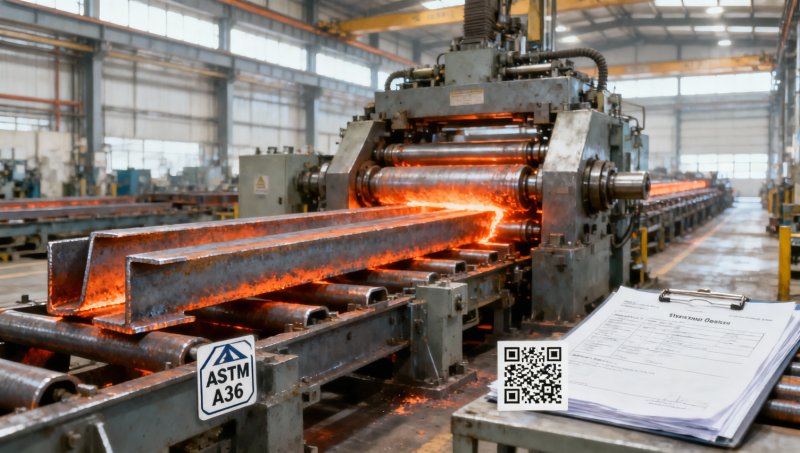
Raw Material Traceability: The First Line of Quality Assurance
In the structural steel industry, “steel is only as good as its source.” Variability in why angle steel quality varies often begins at the furnace—not the mill. Untraceable billets or recycled scrap with inconsistent chemical composition directly impact tensile strength, weldability, and corrosion resistance. At Hongteng Fengda, every batch of carbon steel used for Carbon Steel Angle is assigned a unique heat number linked to certified supplier documentation, including mill test reports (MTRs) per ASTM A6/A6M and GB/T 222. This enables full backward traceability: from finished product back to ore origin, smelting date, deoxidation method, and ladle analysis. For example, our ASTM A36 Angle Steel conforms to strict limits—max 0.26% carbon, 0.40% silicon, and ≤0.04% phosphorus—to ensure predictable yield strength (≥250 MPa) and elongation (≥20% in 200mm). Without this level of material accountability, even identical dimensional specs can mask hidden risks like microsegregation or hydrogen-induced cracking—especially critical when supplying steel square rod for construction projects where load-bearing integrity is non-negotiable.
Moreover, traceability isn’t just about compliance—it’s about predictability. When clients in the Philippines request ASTM A36 Angle Steel price per ton in Philippines, they’re not only comparing cost but also verifying whether that quote includes documented chemistry, mechanical test records, and lot-specific dimensional tolerances. We embed QR-coded MTRs into delivery packages, enabling real-time access to raw material certificates, heat treatment logs, and surface inspection reports—supporting auditable quality for EPC contractors and government infrastructure programs alike.
Rolling Mill Certification: Beyond Equipment — It’s Process Discipline
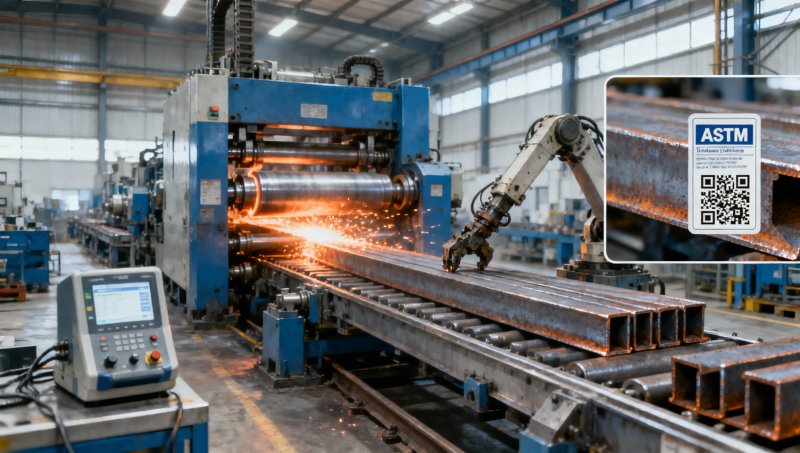
A high-capacity rolling line doesn’t guarantee high-performance angle steel. What matters is certified process control: temperature profiling during hot rolling, pass schedule validation, cooling rate monitoring, and post-rolling straightening precision. Hongteng Fengda operates ISO 9001-certified rolling facilities aligned with EN 10025-2 and GB/T 706 standards. Each mill undergoes biannual third-party audits by SGS and TÜV Rheinland—not just for equipment calibration, but for adherence to defined thermal windows (e.g., finishing temperature ≥750°C for ASTM A36), controlled cooling rates (<50°C/min), and automated flatness verification using laser profilometry.
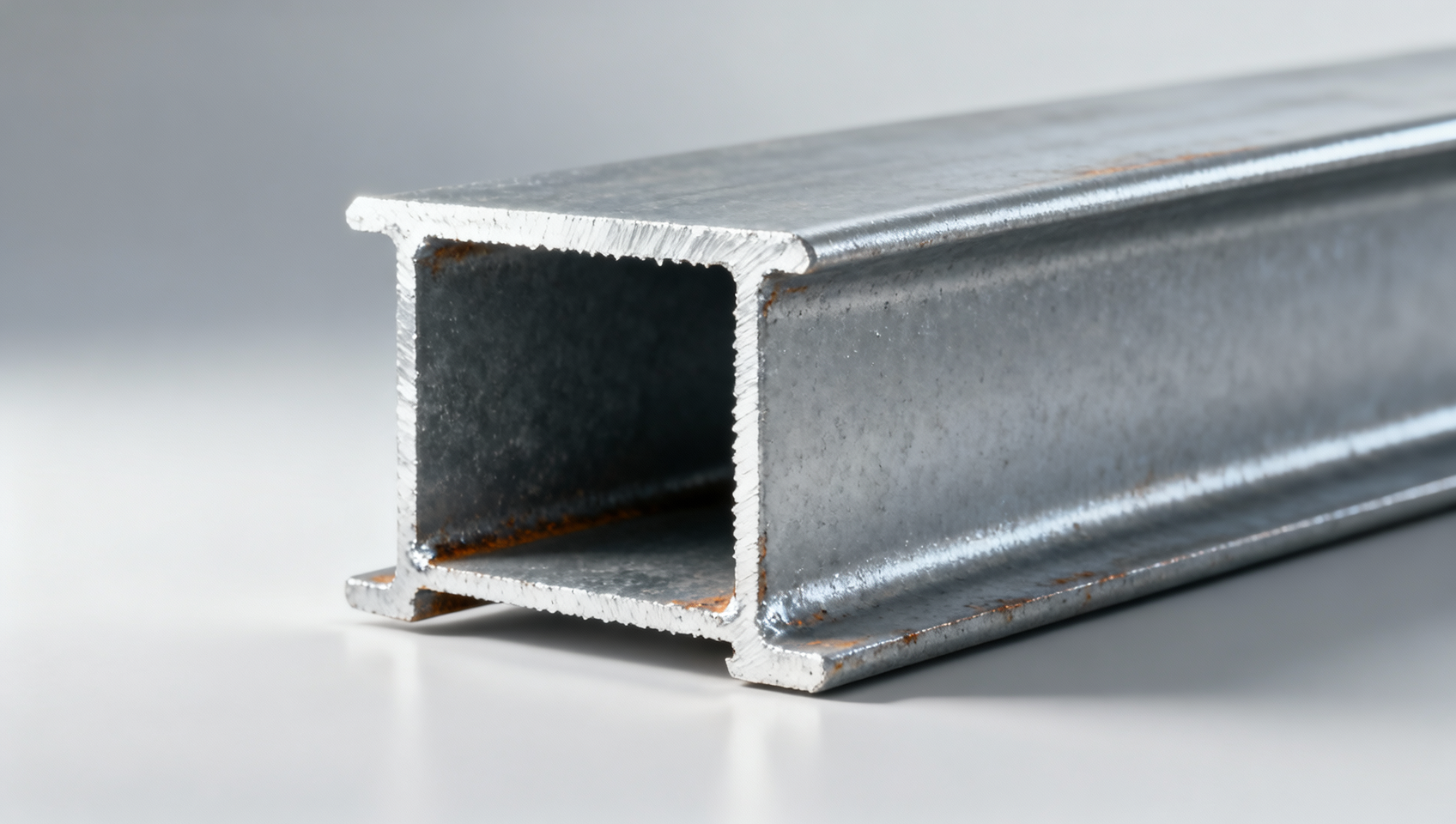
This discipline directly prevents common defects in steel beams and solutions such as camber, twist, flange curl, or inconsistent leg thickness—defects that compromise fabrication efficiency and structural safety. Our unequal angle steel sizes (e.g., 125×75×10 mm) are rolled on dedicated universal stands with real-time roll gap feedback, ensuring ±0.3 mm tolerance on leg width and ±0.4 mm on thickness—well within ASTM A6’s ±0.5 mm allowance. For clients managing MOQ requirements for structural steel orders, this consistency means fewer rejections, reduced shop-floor rework, and tighter project timelines—especially vital for large-scale industrial frameworks and bridging applications.
Third-Party Testing: Independent Validation You Can Trust
Certifications on paper mean little without independent verification. That’s why every production lot—regardless of order size—is subjected to mandatory third-party mechanical and metallurgical testing. Our partners include Bureau Veritas (BV), Intertek, and Philippine Accredited Laboratory (PAC), conducting tests per ASTM A370 (tensile/yield/elongation), ASTM E8 (fracture toughness), and ASTM E112 (grain size analysis). Unlike in-house lab results, these reports carry legal weight and international recognition—essential for import clearance in the USA, EU, or Middle East.
For instance, when supplying galvanized steel sheet supplier in USA partners or steel round bar supplier in USA distributors, our zinc-coating adhesion tests (ASTM B653) and bend tests (ASTM A924) are performed at accredited US labs prior to shipment. Similarly, our Carbon Steel Angle undergoes Charpy V-notch impact testing at –20°C for cold-climate projects in Canada or Scandinavia—ensuring ductility retention under thermal stress. These aren’t optional add-ons; they’re embedded in our quality gate system before release.
Real-World Impact: Lifespan, Maintenance & Procurement Confidence
Consistent quality translates directly into extended structural steel lifespan and maintenance cycles. Field data from 12+ years of Hongteng Fengda installations shows average service life extension of 18–22% versus non-certified suppliers—attributable to uniform grain structure, minimized residual stress, and precise dimensional repeatability. In marine environments (e.g., port infrastructure in Southeast Asia), our hot-dip galvanized angles maintain coating integrity beyond 35 years due to strict base metal surface prep (Sa 2.5 blast cleaning) and zinc layer thickness verification (≥85 µm per ASTM A123).
For global buyers asking how to buy angle steel from China, our end-to-end transparency model eliminates guesswork: digital factory tours, live production dashboards, shared QC checklists, and bilingual technical support streamline decision-making. Whether you need equal angle steel sizes like 50×50×5 mm for bracing or custom unequal profiles for automobile chassis fabrication, we align specifications with your exact application—backed by full documentation, flexible MOQs (starting at 5 tons), and logistics coordination across major ports including Shanghai, Ningbo, and Qingdao.
Why Partner With Hongteng Fengda?
Quality in structural steel isn’t accidental—it’s engineered, verified, and sustained. Hongteng Fengda bridges the gap between cost-efficiency and uncompromising performance through three non-negotiable pillars: traceable raw materials, certified rolling discipline, and independent third-party validation. Our Carbon Steel Angle meets ASTM, EN, JIS, and GB standards across all thicknesses (0.8–25 mm), widths (25×25 mm to 250×35 mm), and processing methods (hot rolled, cold drawn, bending, welding). We serve engineers specifying high strength steel angle for industrial use, procurement teams managing cross-border MOQ requirements for structural steel orders, and safety managers auditing common defects in steel beams and solutions.
Ready to reduce sourcing risk, extend structural lifespan, and secure reliable supply? Contact Hongteng Fengda today for a customized quotation, sample pack, or virtual audit of our quality management system.
- steel i
- carbon steel angle
- l angle
- angle steel
- galvanized steel sheet
- a36 angle
- galvanized steel
- ASTM A36
- structural steel
- steel beams
- Structural Steel
- Steel Beams
- why angle steel quality varies
- common defects in steel beams and solutions
- MOQ requirements for structural steel orders
- ASTM A36 Angle Steel price per ton in Philippines
- Galvanized
- Steel Beam
- carbon steel
- steel sheet
- steel angle
- steel round bar
- steel square rod
- steel square rod for construction projects
- high strength steel angle for industrial use
Related recommendations
 How long does acero prepintado retain gloss and color stability in direct desert sunlight?Acero prepintado gloss & color stability in desert sun? Discover real-world performance data, PVDF vs. polyester longevity, and spec-critical insights for GCC projects.
 Does acero pregalvanizado maintain coating integrity after cold bending to 90 degrees?Acero pregalvanizado maintains coating integrity after 90° cold bending — when engineered right. Discover how Hongteng Fengda guarantees real-world performance, adhesion & corrosion resistance.
 Do the advantages of galvanized steel include reduced fire risk compared to untreated carbon steel?Advantages of galvanized steel include measurable fire-risk reduction vs. untreated carbon steel—learn how zinc delays ignition, buys critical escape time, and enhances safety without false 'fireproof' claims.
 What is the minimum bend radius for 12mm steel wire rope without permanent deformation?12mm steel wire rope capacity depends on bend radius — discover the safe 72–96mm minimum to prevent permanent deformation, fatigue & failure. Expert rigging insights inside.
Please give us a message


Please enter what you want to find