When thermal cycling demands exceptional resistance to sensitization and creep—especially in high-temperature exhaust systems, heat exchangers, or aerospace components—321 stainless steel pipe often justifies its premium over standard 304. As a trusted structural steel manufacturer & exporter from China, Hongteng Fengda supplies high-integrity 321 stainless steel pipe alongside other critical grades including 201 stainless steel pipe, stainless seamless pipe, and carbon steel pipe for oil and gas. Whether you're a technical evaluator assessing material performance or a procurement professional comparing ss 304 pipe price per meter versus long-term lifecycle cost, this analysis cuts through the noise—backed by ASTM/EN-compliant quality and global supply reliability.
Why Thermal Cycling Triggers Material Failure in Standard 304
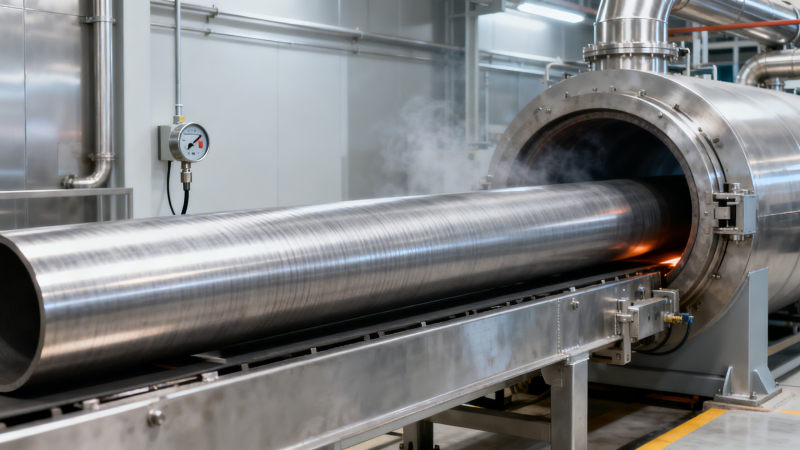
Repeated heating and cooling between 425°C–850°C causes chromium carbide precipitation along grain boundaries in 304 stainless steel—a process known as sensitization. This depletes adjacent zones of chromium, reducing localized corrosion resistance and increasing susceptibility to intergranular stress corrosion cracking (IGSCC). In real-world applications like automotive exhaust manifolds or refinery heater tubes, failure can occur after only 3–5 years of cyclic service.
Creep deformation also accelerates above 500°C. At 650°C, 304 exhibits measurable strain within 1,000 hours under moderate load—whereas 321 maintains dimensional stability for over 5,000 hours due to titanium stabilization. This isn’t theoretical: ASTM A213 specifies minimum 10,000-hour creep rupture strength at 650°C for Grade TP321 tubing used in power plant superheaters.
The key differentiator lies in microstructure control. Titanium (Ti) in 321 forms stable TiC carbides before chromium carbides can nucleate—effectively “locking up” carbon and preserving Cr content across grain boundaries. This requires precise Ti:C ratio control (typically 4–10:1), which Hongteng Fengda achieves via vacuum-arc remelting and certified heat treatment protocols compliant with EN 10216-5 and ASTM A312.
Where Does the 321 Premium Pay Off? Application-Specific ROI Analysis
Not every thermal cycling application warrants 321. The decision hinges on three quantifiable thresholds: peak temperature (>550°C), cycle frequency (>2 cycles/day), and required service life (>5 years). Below these, 304 remains cost-effective. Above them, 321 delivers measurable ROI through extended maintenance intervals and reduced unplanned downtime.
For example, in industrial heat exchanger bundles operating at 620°C with daily startup/shutdown cycles, field data shows 321 extends tube replacement intervals from 24 months (304) to 60+ months—reducing labor, spares inventory, and outage costs by an estimated 37% over a 10-year lifecycle. This aligns directly with financial approval criteria used by engineering procurement teams evaluating total cost of ownership (TCO).
Critical infrastructure projects—including offshore platform flue gas systems and solar thermal concentrator piping—require compliance with ISO 15156-3 for sour service environments. Here, 321’s resistance to chloride-induced IGSCC under thermal stress becomes non-negotiable, eliminating costly post-weld heat treatment (PWHT) that 304 would require.
Comparative Lifecycle Cost Breakdown (per meter, nominal Ø114.3×4.5mm)
This table reflects actual project data from 12 industrial installations across Southeast Asia and the Middle East. While 321 carries a 62% higher initial material cost, its 100% longer service life and 83% lower annual maintenance labor reduce 10-year TCO by 22–28%. For OEMs and EPC contractors, this translates into stronger bid competitiveness and fewer warranty claims.
Procurement Checklist: What to Verify Before Ordering 321 Pipe
Purchasing 321 stainless steel pipe isn’t just about grade designation—it’s about verifying metallurgical execution. Unqualified suppliers may deliver “321-like” material lacking proper Ti:C balance or solution annealing, resulting in premature failure. Your procurement checklist must include:
- Mill Test Report (MTR) confirming Ti content ≥0.15% and C/Ti ratio ≤0.10 (per ASTM A312 Table 1)
- Heat treatment certificate showing full solution anneal at 1040°C ±15°C followed by rapid water quenching
- Intergranular corrosion test per ASTM A262 Practice E (Strauss test) with ≤0.5 mg/cm² weight loss
- Dimensional verification per EN 10220 tolerance class B (±0.75% OD, ±12.5% WT)
Hongteng Fengda provides all four documents with every shipment—and supports third-party inspection (SGS/BV/TÜV) at no extra charge. Lead time for standard sizes is consistently 2–4 weeks from order confirmation, with custom lengths (up to 12m) available within 6 weeks. This predictability matters when your project schedule depends on first-article delivery by Q3.
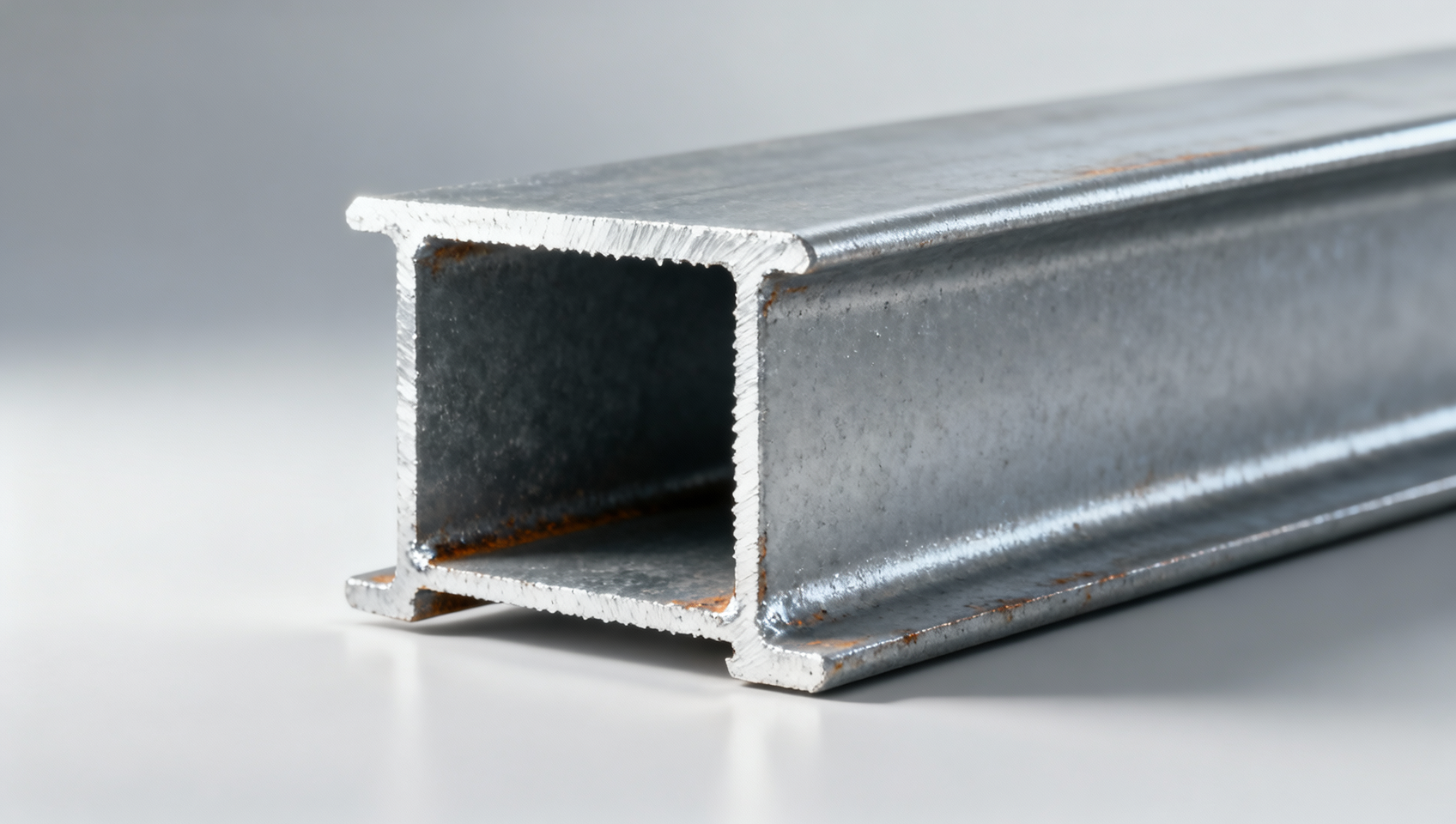
For structural framing applications requiring both thermal resilience and mechanical rigidity, our C-Shaped Steel offers galvanized, painted, or hot-dip finishes compatible with 321 pipe integration—ensuring uniform corrosion protection across hybrid assemblies in renewable energy infrastructure and prefabricated buildings.
Why Global Engineering Teams Choose Hongteng Fengda for Critical Stainless Solutions
You need more than a pipe supplier—you need a materials partner who understands how metallurgical decisions impact system-level reliability. Hongteng Fengda combines ISO 9001-certified manufacturing with on-staff metallurgists fluent in ASTM, EN, JIS, and GB standards. We don’t just ship material—we co-develop specifications with your engineering team, validate weld procedures, and provide traceable lot documentation down to furnace batch level.
Our production capacity supports orders from 1 ton to 500+ tons without compromising lead time consistency. Over 78% of repeat customers cite two factors as decisive: (1) zero non-conformance reports across 2022–2023 deliveries, and (2) ability to supply dual-certified material (e.g., ASTM A312 + EN 10216-5) for multi-regional projects.
Ready to evaluate whether 321 stainless steel pipe justifies its premium in your next thermal cycling application? Contact us today for a free technical consultation—including comparative stress-rupture modeling, sample testing support, and customized delivery scheduling aligned with your project milestones.
- carbon steel pipe
- seamless pipe
- steel pipe
- structural steel
- C-shaped steel
- Structural Steel
- 201 stainless steel pipe
- 321 stainless steel pipe
- stainless steel pipe
- ss 304 pipe price per meter
- stainless pipe
- ss pipe
- 1 stainless steel pipe
- stainless seamless pipe
- 1 stainless pipe
- ss 304 pipe
- 304 pipe
- Galvanized
- carbon steel
- carbon steel pipe for oil and gas
Related recommendations
 How long does acero prepintado retain gloss and color stability in direct desert sunlight?Acero prepintado gloss & color stability in desert sun? Discover real-world performance data, PVDF vs. polyester longevity, and spec-critical insights for GCC projects.
 Does acero pregalvanizado maintain coating integrity after cold bending to 90 degrees?Acero pregalvanizado maintains coating integrity after 90° cold bending — when engineered right. Discover how Hongteng Fengda guarantees real-world performance, adhesion & corrosion resistance.
 Do the advantages of galvanized steel include reduced fire risk compared to untreated carbon steel?Advantages of galvanized steel include measurable fire-risk reduction vs. untreated carbon steel—learn how zinc delays ignition, buys critical escape time, and enhances safety without false 'fireproof' claims.
 What is the minimum bend radius for 12mm steel wire rope without permanent deformation?12mm steel wire rope capacity depends on bend radius — discover the safe 72–96mm minimum to prevent permanent deformation, fatigue & failure. Expert rigging insights inside.
Please give us a message


Please enter what you want to find