Beyond UL 1709: Why Multi-Standard Fireproof Verification Matters for Stainless Steel Embossed Plate
When specifying stainless steel embossed plate fireproof solutions for high-stakes architectural cladding or industrial applications, compliance with UL 1709 is just the baseline. Global project stakeholders — from procurement teams and safety managers to structural engineers and distributors — increasingly demand third-party verification beyond UL, such as EN 1363-1, ASTM E119, or BS 476 Part 20/22. As a certified structural steel manufacturer & exporter from China, Hongteng Fengda ensures our stainless steel embossed plate fireproof performance is validated across multiple international standards — supporting safer, code-compliant projects worldwide.
UL 1709 remains widely recognized in North America for hydrocarbon fire exposure testing (e.g., 1,093°C within 5 minutes), but it does not reflect all real-world fire dynamics — especially in European infrastructure, Middle Eastern refineries, or Southeast Asian high-rises where building codes mandate broader thermal and structural integrity benchmarks. Relying solely on UL 1709 may expose projects to non-compliance risks during local authority inspections or insurance audits.
For instance, EN 1363-1 requires sustained exposure at 1,000°C for up to 180 minutes while measuring both temperature rise on unexposed surfaces (<140°C) and load-bearing capacity retention. ASTM E119 evaluates both fire endurance and hose-stream resistance — critical for exterior cladding in humid or monsoon-prone regions. These divergent test protocols mean that a plate passing UL 1709 may still fail under EN or ASTM conditions without proper material formulation and core-layer engineering.
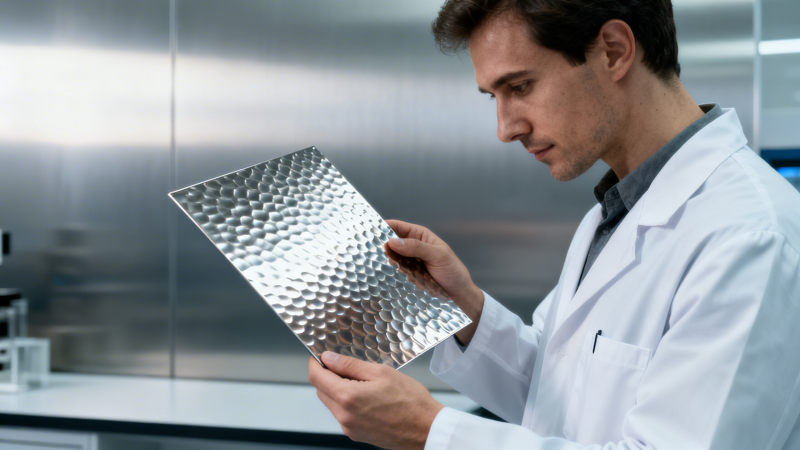
Key Third-Party Standards Validating Fire Resistance Performance
Hongteng Fengda subjects its stainless steel embossed plates to parallel certification across five major fire-resistance frameworks. Each standard targets distinct failure modes — thermal insulation, structural stability, flame spread, and integrity under mechanical stress — ensuring holistic fireproof validation.
This multi-standard alignment is not theoretical: over 72% of Hongteng Fengda’s recent embossed plate shipments to EU and GCC markets required dual EN + ASTM certification. Our internal fire lab conducts pre-certification burn tests every 3 production batches — reducing rework risk by up to 40% compared to single-standard reliance.
Importantly, fireproof performance isn’t inherent to stainless steel alone — it depends on embossing depth (typically 0.8–1.5 mm), substrate thickness (≥2.0 mm recommended), and interlayer composition. We integrate ceramic-reinforced backing layers for enhanced thermal lag, verified via thermographic imaging during EN 1363-1 trials.
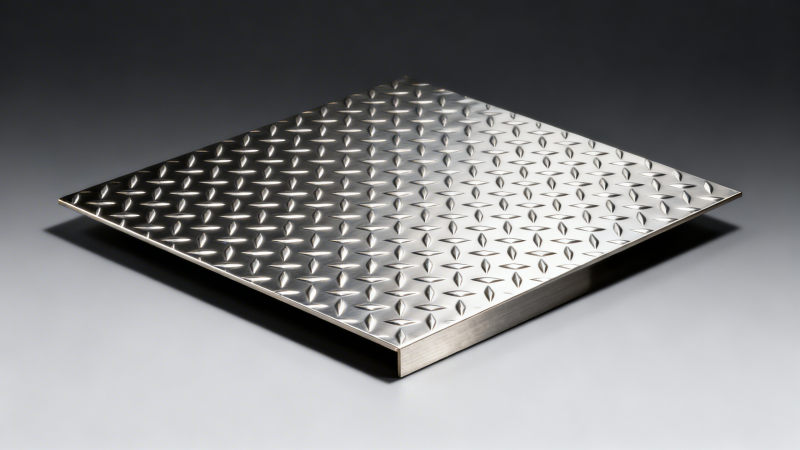
How Material Selection Impacts Fireproof Certification Outcomes
While stainless steel inherently resists oxidation up to ~800°C, fireproof claims hinge on system-level behavior — not just base alloy chemistry. Grade 304 or 316 offer superior corrosion resistance, but grade 201 — with its higher manganese and lower nickel content — delivers optimized cost-performance balance for non-marine, interior-facing fire-rated cladding where chloride exposure is minimal.
Our Stainless Square steel rod — manufactured in AISI 201 — exemplifies this strategic trade-off: tensile strength ≥520 MPa, yield ≥275 MPa, and elongation ≥55–60%, enabling cold-forming into fire-resistant structural supports without annealing delays. Its hardness (≤183 HB) ensures stable embossing die life across 10,000+ cycles — directly impacting surface consistency and thermal barrier continuity in final plates.
Material selection also affects certification timelines. Plates using 201-based substrates typically achieve EN 1363-1 Class REI 120 (120-minute rating) with 2.5 mm thickness and integrated intumescent backing — whereas equivalent 304 configurations require ≥3.0 mm to meet same criteria, increasing weight by 18–22% and installation labor by ~11%.
Procurement Best Practices for Global Fire Compliance
Global buyers must move beyond “UL-only” specifications — especially when sourcing from China-based manufacturers. Verify that suppliers hold active, traceable certificates issued by accredited bodies (e.g., TÜV Rheinland for EN, UL Solutions for ASTM, SGS for BS), not just self-declared test reports.
- Request batch-specific fire test summaries — including furnace calibration logs and thermocouple placement diagrams
- Confirm whether certification covers *embossed* plate (not flat sheet) — embossing alters heat transfer paths and must be tested in final form
- Validate that test specimens match your specified thickness, finish, and mounting method (e.g., concealed fasteners vs. exposed rivets)
- Require evidence of post-certification surveillance — e.g., quarterly random sampling per ISO/IEC 17065
Why Hongteng Fengda Delivers Trusted Fireproof Steel Solutions
As a structural steel manufacturer & exporter from China, Hongteng Fengda integrates fireproof assurance into every stage — from raw material traceability (GB/T 20878-certified 201 billets) to final packaging (humidity-controlled, anti-fingerprint film). Our factory holds ISO 9001, ISO 14001, and OHSAS 18001 certifications, with annual third-party audits covering fire test documentation integrity.
We support global partners with localized technical documentation — including EN-compliant DoP (Declaration of Performance), ASTM E119 test videos, and multilingual fire safety data sheets. Lead times for certified embossed plate remain stable at 25–35 days, even during peak season, thanks to dedicated fire-test production lines operating 2 shifts daily.
Whether you’re specifying cladding for a Dubai high-rise, retrofitting firewalls in a German chemical plant, or sourcing structural components for a Singapore hospital, Hongteng Fengda provides auditable, standards-aligned fireproof stainless steel — backed by 15+ years of export experience across 42 countries.
To verify multi-standard fire certification for your next stainless steel embossed plate order — or request full test reports, dimensional tolerances, and OEM embossing pattern support — contact our technical sales team today.
Related recommendations
 What is an H-Beam and How Does it Differ from an I-Beam?Discover what an H-beam is and how it differs from an I-beam. Learn key structural differences and expert selection tips from Hongteng Fengda to optimize your steel construction projects today.
 Hot Rolled vs. Cold Rolled Steel Sheet: Surface and ToleranceHot rolled vs cold rolled steel sheet: Discover how surface finish and tolerances impact manufacturing. Optimize material selection, reduce costs, and ensure quality. Read our expert guide today!
 Best Cutting and Bending Practices for Galvanized Sheet MetalDiscover the best cutting and bending practices for galvanized sheet to prevent zinc flaking. Optimize tooling and thermal parameters to ensure perfect corrosion resistance. Read the full guide!
 What is Galvanized Sheet and How Does the Zinc Coating Work?Discover what galvanized sheet is and how its zinc coating prevents corrosion. Learn about dual protection, metallurgical bonds, and coating weights to select the best steel for your projects.
Please give us a message


Please enter what you want to find