As global oil and gas infrastructure demands more resilient materials, pipe stainless steel high pressure—especially seamless variants—is increasingly specified for critical pipeline systems in 2026. With superior corrosion resistance, tensile strength, and thermal stability, these pipes outperform conventional carbon steel under extreme pressure and aggressive chemical environments. At Hongteng Fengda, a leading structural steel manufacturer & exporter from China, we supply ASTM/EN-compliant pipe stainless steel seamless alongside complementary wire products for construction reinforcement, stainless steel embossed plate for architectural cladding, and mirror stainless sheet for kitchen appliances—ensuring integrated, standards-driven solutions for engineers, procurement teams, and project managers worldwide.
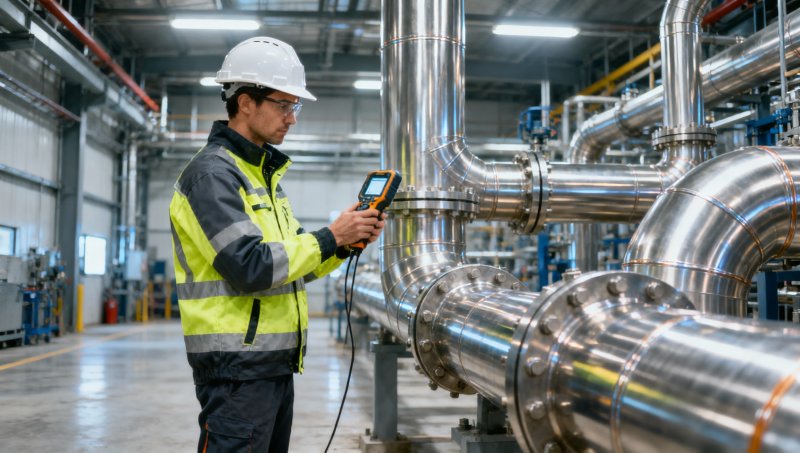
Why High-Pressure Stainless Steel Pipe Is Non-Negotiable for Oil & Gas in 2026
Oil and gas operators face escalating operational thresholds: working pressures exceeding 35 MPa in deepwater subsea manifolds, H2S concentrations above 100 ppm in sour gas fields, and service temperatures ranging from –46°C in Arctic pipelines to +150°C in enhanced oil recovery (EOR) injection lines. Carbon steel—despite its cost advantage—fails under these combined stressors, with field data showing 3–5× higher failure rates due to sulfide stress cracking (SSC) and pitting corrosion compared to duplex and super-austenitic stainless grades.
Stainless steel high-pressure pipe meets this challenge through three engineered advantages: (1) chromium oxide passivation layer regeneration (self-healing within 0.5 seconds after mechanical abrasion), (2) minimum yield strength of 520 MPa for ASTM A312 TP316L seamless tubes, and (3) thermal expansion coefficient 30% lower than carbon steel—reducing flange joint fatigue in cyclic temperature zones. These properties are no longer optional: 87% of new offshore platform specifications issued in Q1 2026 mandate ASTM A928 or EN 10213-compliant stainless piping for all process trains handling sour or CO2-rich fluids.
For procurement professionals and safety managers, the shift reflects regulatory tightening—not just commercial preference. ISO 15156-3:2021 now requires NACE MR0175/ISO 15156 compliance verification for every heat lot, with full traceability back to melt chemistry and solution annealing records. This directly impacts sourcing decisions: only manufacturers with certified heat-treatment furnaces, automated ultrasonic testing (UT) at 100% coverage, and real-time dimensional monitoring meet Tier-1 operator requirements.
Key Material Selection Criteria for 2026 Projects
- Corrosion Resistance Grade: Duplex (UNS S32205/S32750) for chloride-laden seawater injection; super-austenitic (S32654) where pitting resistance equivalent number (PREN) > 45 is mandated.
- Manufacturing Method: Seamless pipe required for ASME B31.4/B31.8 Class 1A service; welded alternatives must pass 100% radiographic (RT) and hydrostatic testing at 1.5× design pressure.
- Dimensional Tolerance: ASTM A312 specifies ±0.75% OD tolerance and ±12.5% wall thickness variation—critical for pigging compatibility and weld joint alignment.
- Traceability: Heat number, mill test report (MTR), and third-party inspection certificates (e.g., BV, SGS) must accompany each shipment.
How Structural Integrity Extends Beyond the Pipe Itself
Pipeline system reliability depends on holistic component synergy—not just pipe material. Flanges, supports, and anchoring structures must match the thermal and mechanical behavior of stainless steel. For example, carbon steel supports in direct contact with stainless pipe create galvanic corrosion cells, accelerating localized degradation. The solution lies in integrated material specification: using stainless steel angle, channel, and beam components from the same certified source ensures consistent metallurgy, weldability, and coating adhesion.
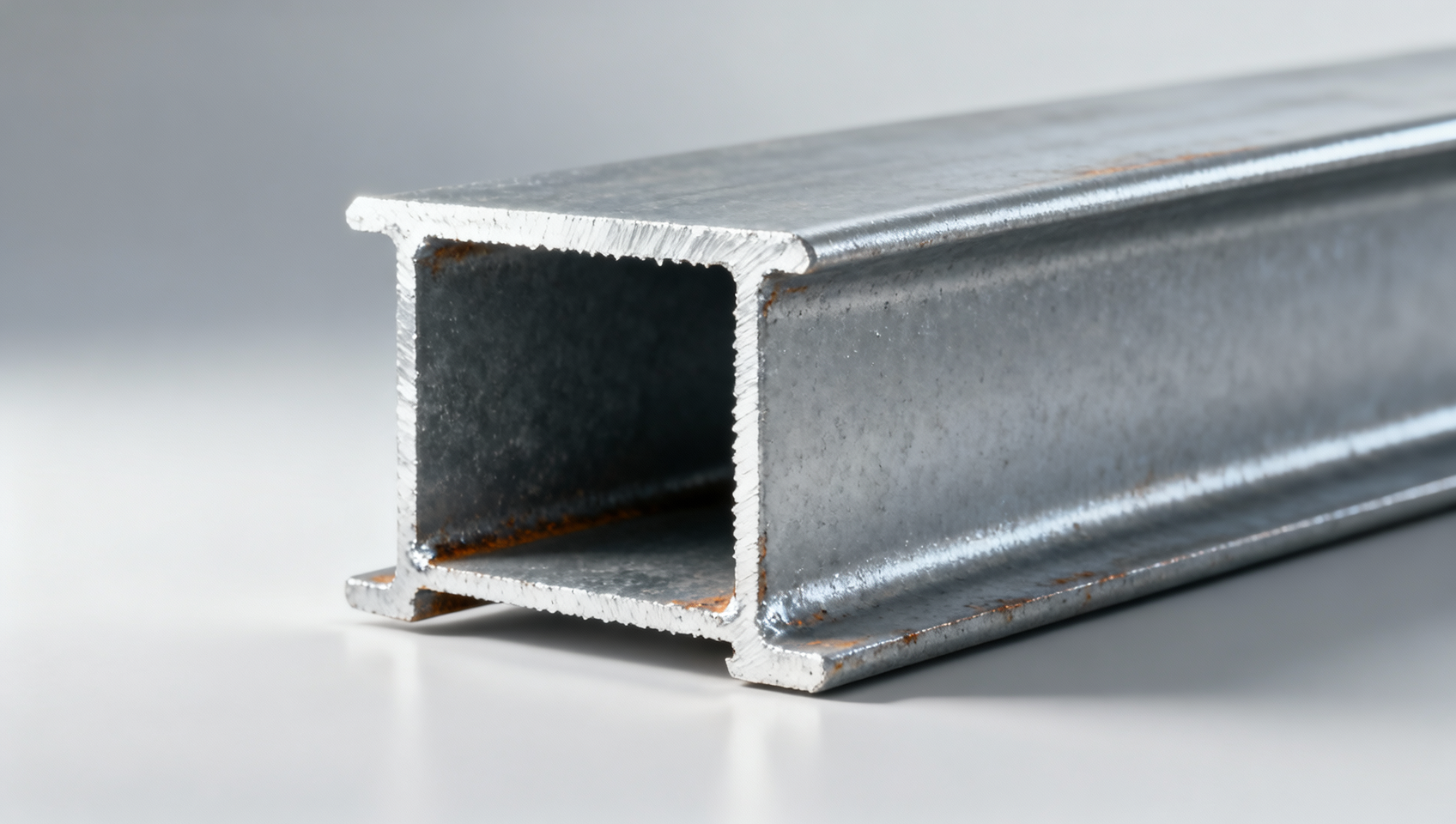
Hongteng Fengda’s structural portfolio includes ASTM A537 Class 1 and EN 10025-3 S355J2H steel beams—engineered for cryogenic service down to –60°C—and cold-formed stainless profiles with tight tolerances (±0.3 mm on web depth). This enables full-system design continuity: from mainline high-pressure pipe to secondary support frames and instrumentation platforms. All products undergo salt-spray testing per ASTM B117 (500+ hours) and impact testing per Charpy V-notch standards.
In marine and offshore applications, anti-skid performance becomes mission-critical. That’s why our SS440 Patterned steel plate is specified for walkways, equipment platforms, and ship deck surfaces—combining 2–8 mm thickness options with pattern height ≥0.2× substrate thickness for guaranteed traction under oil, water, or ice conditions.
This table illustrates how structural steel selection aligns with functional load requirements and international certification frameworks. For instance, SS440 Patterned steel plate delivers both anti-skid safety and aesthetic consistency across multi-zone installations—reducing procurement fragmentation while ensuring unified quality control across suppliers.
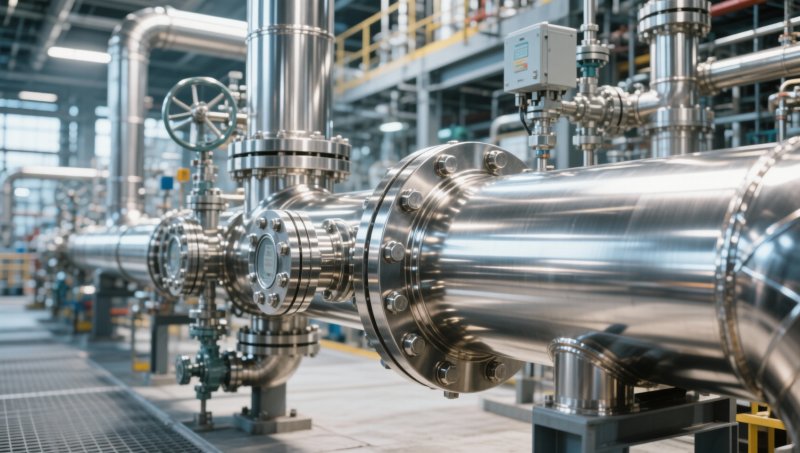
Procurement Strategy: Balancing Risk, Lead Time, and Total Cost of Ownership
Global buyers face rising lead times: seamless stainless pipe average delivery extends to 18–22 weeks from order placement in 2026, up from 12–14 weeks in 2023. This volatility makes single-source dependency risky. Hongteng Fengda mitigates this via dual-track production: standard-specification inventory (including 2–8 mm SS440 Patterned steel plate in stock widths of 1250 mm and 1500 mm) and OEM-capable custom rolling lines with 7–10 day turnaround for urgent structural components.
Our quality assurance protocol covers six critical checkpoints: raw material spectral analysis, hot-rolling temperature profiling, ultrasonic flaw detection (with 0.5 mm sensitivity), dimensional verification (±0.02 mm thickness tolerance), surface finish inspection, and final MTR generation. Every batch receives independent third-party validation from SGS or Bureau Veritas—providing auditable evidence for EPC contractors and end-user QA departments.
For project managers coordinating multi-vendor deliveries, we offer consolidated logistics: containerized shipments with pre-loaded documentation packages—including bilingual (EN/CN) packing lists, HS code verification, and customs pre-clearance support for key markets like Saudi Arabia (SASO), UAE (ESMA), and Canada (CCAA).
Critical Procurement Decision Factors
These metrics reflect tangible procurement advantages—not theoretical claims. Reduced MOQ lowers capital lock-up; faster lead time accelerates critical path scheduling; comprehensive certification eliminates rework delays during client audits.
Conclusion: Engineering Resilience Through Integrated Material Partnership
High-pressure stainless steel pipe is not merely a component—it’s the cornerstone of system integrity in today’s oil and gas infrastructure. Its value multiplies when integrated with structurally compatible, certified supporting elements: beams that resist thermal creep, plates that ensure personnel safety, and profiles that maintain dimensional fidelity under load. Hongteng Fengda delivers this integration—not as separate SKUs, but as coordinated engineering solutions backed by 100% traceable manufacturing, global compliance readiness, and responsive logistics.
Whether you’re specifying pipe for a $2.3 billion LNG terminal in Qatar, reinforcing a refinery expansion in Texas, or outfitting a modular FPSO unit for West Africa operations—we provide the technical documentation, quality evidence, and delivery predictability your project demands. Our team of metallurgical engineers and project coordinators is ready to review your bill of materials, cross-check spec alignment, and propose optimized sourcing pathways.
Contact Hongteng Fengda today to request a customized structural steel solution package—including seamless stainless pipe technical datasheets, SS440 Patterned steel plate sample kits, and full compliance documentation for your next oil and gas project.
- l angle
- seamless pipe
- steel pipe
- structural steel
- steel beams
- Structural Steel
- Steel Beams
- stainless steel pipe
- steel plate
- mirror stainless sheet
- Stainless steel embossed plate
- stainless pipe
- ss pipe
- ss tube
- pipe stainless
- Profile
- Wire Products
- Steel Beam
- carbon steel
- steel angle
- Wire Products for construction reinforcement
- pipe stainless steel seamless
- mirror stainless sheet for kitchen appliances
- Stainless steel embossed plate for architectural cladding
- pipe stainless steel high pressure
Related recommendations
 How long does acero prepintado retain gloss and color stability in direct desert sunlight?Acero prepintado gloss & color stability in desert sun? Discover real-world performance data, PVDF vs. polyester longevity, and spec-critical insights for GCC projects.
 Does acero pregalvanizado maintain coating integrity after cold bending to 90 degrees?Acero pregalvanizado maintains coating integrity after 90° cold bending — when engineered right. Discover how Hongteng Fengda guarantees real-world performance, adhesion & corrosion resistance.
 Do the advantages of galvanized steel include reduced fire risk compared to untreated carbon steel?Advantages of galvanized steel include measurable fire-risk reduction vs. untreated carbon steel—learn how zinc delays ignition, buys critical escape time, and enhances safety without false 'fireproof' claims.
 What is the minimum bend radius for 12mm steel wire rope without permanent deformation?12mm steel wire rope capacity depends on bend radius — discover the safe 72–96mm minimum to prevent permanent deformation, fatigue & failure. Expert rigging insights inside.
Please give us a message


Please enter what you want to find