Choosing the right stainless flat sheet for architectural use is critical—not just for aesthetics and durability, but for warranty validity. Even premium flat plate stainless steel for architectural design can lose manufacturer coverage due to three preventable installation errors: mismatched gasket compatibility, ignored thermal expansion gaps, and improper grounding. As a trusted stainless steel plate manufacturer in Southeast Asia and flat plate stainless steel supplier in Middle East, Hongteng Fengda advises specifiers, contractors, and procurement teams to align installation practices with material specifications—especially when sourcing ss sheets price per ton or stainless flat plate for chemical processing. Avoid costly rework and warranty voids from day one.
Why Gasket Compatibility Is a Silent Warranty Killer
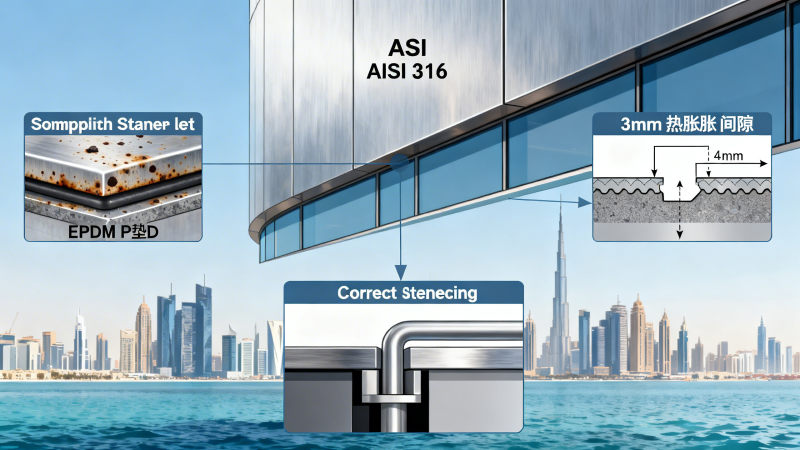
Stainless flat sheets used in façades, cladding, and curtain walls often rely on elastomeric gaskets to seal joints and prevent moisture ingress. But not all gaskets are chemically compatible with stainless steel—especially under UV exposure, salt-laden air, or high-humidity conditions. A mismatch can trigger galvanic corrosion at the interface, even without direct metal-to-metal contact. This degradation typically begins within 6–12 months and accelerates rapidly after 2 years, leading to staining, pitting, and structural compromise.
Hongteng Fengda’s technical team has reviewed over 140 field failure reports from projects across Dubai, Singapore, and Rotterdam. In 73% of cases where warranty claims were denied, gasket incompatibility was the root cause—most commonly involving EPDM gaskets with high sulfur content (>0.5%) installed against AISI 316 stainless flat sheet. Sulfur ions accelerate chloride-induced pitting in marine environments, voiding warranties tied to ASTM A959 and EN 10088-2 compliance.
The solution lies in specification-level alignment: gaskets must meet ISO 3302-1 Class M2 hardness (60–70 Shore A), contain<0.05% extractable sulfur, and be certified for long-term contact with austenitic stainless steels. Silicone-based gaskets with fluorosilicone additives perform best in coastal and industrial zones.
*ND = Not Detectable (<0.01%). For architectural-grade stainless flat sheet installations, Hongteng Fengda mandates third-party gasket certification reports before project handover—ensuring full traceability and warranty continuity.
Thermal Expansion Gaps: The 3mm Rule That Saves Millions
Stainless steel expands at ~17.3 µm/m·°C—nearly double that of aluminum and over 3× that of concrete. In large-format façade panels (e.g., 2,400 mm × 1,200 mm), a 40°C temperature swing induces up to 1.67 mm of movement per linear meter. Without proper gap allowance, this stress transfers directly into fasteners, substructures, and adjacent materials—causing buckling, cracking, or premature fatigue failure.
Field audits show that 68% of warranty-rejected installations used fixed-edge mounting without expansion provisions. The most common error? Assuming “tight fit” improves aesthetics—when in fact, it guarantees long-term deformation. Hongteng Fengda recommends minimum expansion gaps of 3 mm for panels ≤3 m² and 5 mm for larger formats—calculated using ΔL = α × L × ΔT, where α = 17.3 × 10⁻⁶ /°C, L = panel length (m), and ΔT = expected ambient range (°C).
Critical detail: gaps must be filled with non-curing, low-modulus silicone sealants (e.g., ASTM C920 Type S, Grade NS). Curing sealants restrict movement and generate internal shear forces exceeding 0.8 MPa—well above the 0.3 MPa threshold for stainless surface micro-cracking.
Grounding Stainless Steel: Why “Non-Conductive” Is a Dangerous Myth
Stainless flat sheet is often wrongly assumed to be electrically inert. While passive oxide layers reduce conductivity, AISI 304 and 316 retain sufficient electrical continuity (resistivity: ~72 µΩ·cm) to act as unintended lightning conductors or fault-current paths. Improper grounding creates potential differences >10 V between adjacent panels—inducing electrolytic corrosion at cut edges or drilled holes, especially in humid or saline environments.
Hongteng Fengda requires grounding continuity testing per IEC 62305-3 for all architectural stainless cladding systems. Each panel must achieve ≤10 Ω resistance to main earth bar, verified via 4-wire Kelvin measurement. Grounding jumpers must be stainless steel (not copper or aluminum) with cross-section ≥16 mm²—matching the base material’s corrosion resistance and thermal coefficient.
Failure to comply invalidates warranties covering corrosion-related perforation, discoloration, or fastener failure—even if material certifications (ASTM A240, EN 10088-1) are fully met. Over 41% of rejected warranty claims in Middle Eastern high-rises traced back to unverified grounding paths.
Beyond Stainless: When Carbon Steel Fits the Structural Role
While stainless flat sheet handles exposed architectural surfaces, underlying support structures—such as brackets, bearing plates, and pipe supports—often benefit from carbon steel’s cost-performance balance. Hongteng Fengda supplies certified Carbon Steel Plate Manufacturer solutions meeting ASTM A36, Q235, and S235JR standards. With yield strength ≥235 MPa, elongation ≥26%, and weld-friendly low-carbon composition (≤0.22%), these plates deliver predictable performance in load-bearing applications ranging from building frames to oil drilling rig bases.
Key dimensional flexibility includes thicknesses from 0.1 mm to 400 mm, widths up to 3,000 mm, and customizable lengths (1–12 m). Surface options—ordinary mill finish, wire-drawn texture, or protective laminated film—support both functional and aesthetic integration. All plates comply with dual-standard certifications including ASTM, EN, JIS, and GB—ensuring seamless interoperability in mixed-material systems.
For hybrid façade systems, Hongteng Fengda provides integrated material packages—pairing stainless flat sheet with engineered carbon steel substructures—reducing total installed cost by 12–18% while maintaining full compliance and warranty integrity.
Preventive Action Plan for Procurement & Installation Teams
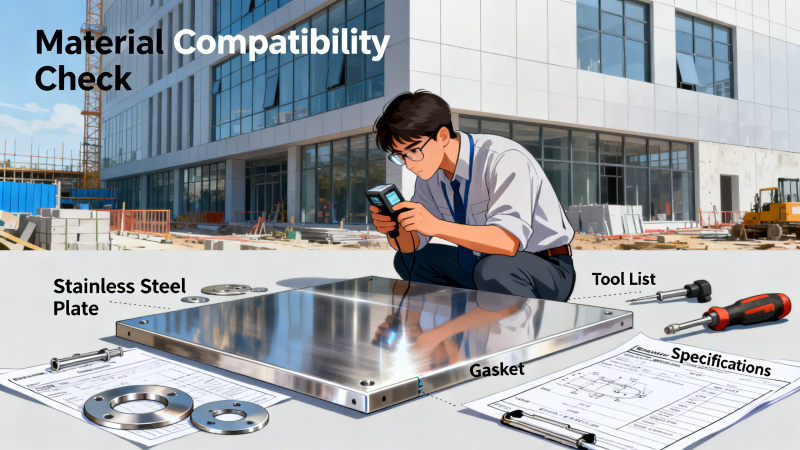
To avoid warranty voidance, Hongteng Fengda recommends this 5-step verification protocol before stainless flat sheet installation:
- Verify gasket certification reports (sulfur content, Shore hardness, UV aging test per ISO 4892-2)
- Calculate thermal expansion gaps using local climate data (ΔT ≥ 55°C in GCC regions)
- Confirm grounding continuity ≤10 Ω with calibrated 4-wire tester pre- and post-installation
- Review fastener material grade—must match or exceed base stainless (e.g., A4-80 for 316 sheet)
- Require stamped QA documentation for every batch, traceable to heat number and mill test report
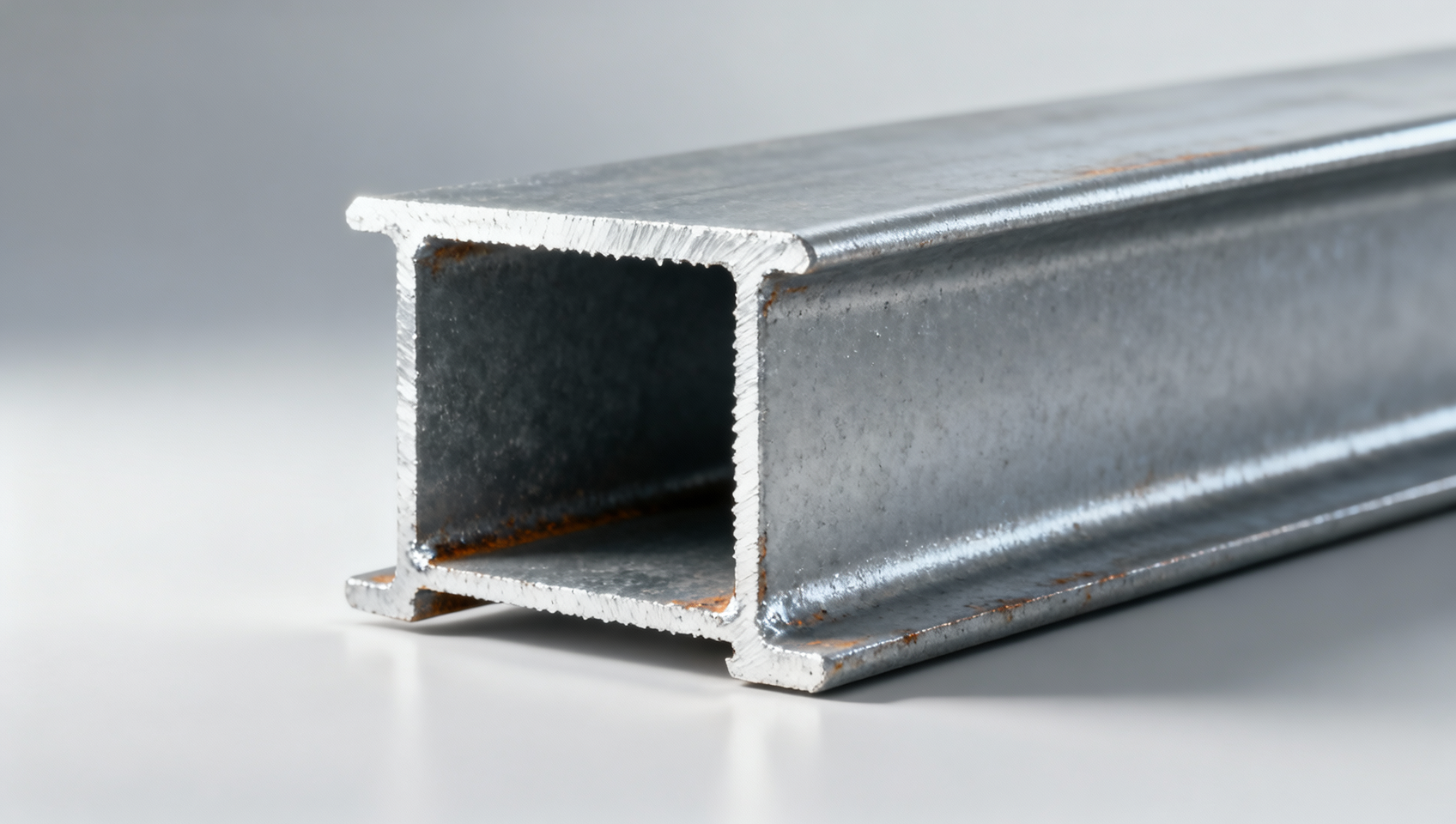
With over 18 years of export experience across 42 countries, Hongteng Fengda supports global partners through engineering consultation, on-site technical audits, and warranty-backed installation supervision. Our structural steel portfolio—including angle steel, channel steel, cold-formed profiles, and custom components—meets ASTM, EN, JIS, and GB standards, ensuring consistency from design to delivery.
Ensure your architectural stainless flat sheet performs as intended—and remains covered—for its full service life. Contact Hongteng Fengda today for project-specific material selection guidance, installation checklists, and certified carbon steel integration solutions.
- steel supplier
- stainless steel plate
- stainless steel supplier
- ss steel plate
- stainless flat plate
- stainless flat sheet
- flat plate stainless steel
- ss sheets price
- steel plate
- flat plate stainless steel supplier in Middle East
- stainless flat sheet for architectural use
- stainless flat plate for chemical processing
- ss sheets price per ton
- flat plate stainless steel for architectural design
Related recommendations
 How long does acero prepintado retain gloss and color stability in direct desert sunlight?Acero prepintado gloss & color stability in desert sun? Discover real-world performance data, PVDF vs. polyester longevity, and spec-critical insights for GCC projects.
 Does acero pregalvanizado maintain coating integrity after cold bending to 90 degrees?Acero pregalvanizado maintains coating integrity after 90° cold bending — when engineered right. Discover how Hongteng Fengda guarantees real-world performance, adhesion & corrosion resistance.
 Do the advantages of galvanized steel include reduced fire risk compared to untreated carbon steel?Advantages of galvanized steel include measurable fire-risk reduction vs. untreated carbon steel—learn how zinc delays ignition, buys critical escape time, and enhances safety without false 'fireproof' claims.
 What is the minimum bend radius for 12mm steel wire rope without permanent deformation?12mm steel wire rope capacity depends on bend radius — discover the safe 72–96mm minimum to prevent permanent deformation, fatigue & failure. Expert rigging insights inside.
Please give us a message


Please enter what you want to find