Spotting counterfeit black metal pipe is critical for safety, compliance, and project integrity—especially for QA teams vetting black metal plumbing pipe, carbon steel seamless tubing, or black A pipe in bulk procurement. This guide reveals 4 actionable visual and dimensional red flags—from inconsistent surface scale on black steel tube to out-of-tolerance wall thickness in carbon steel square pipe—that help inspectors, engineers, and procurement professionals quickly flag substandard black plumbing pipe or mild steel gas pipe. As a certified structural steel manufacturer exporting ASTM/EN-compliant carbon steel gas pipe and pipe carbon products globally, Hongteng Fengda shares field-proven checks to reduce sourcing risk and ensure reliability.
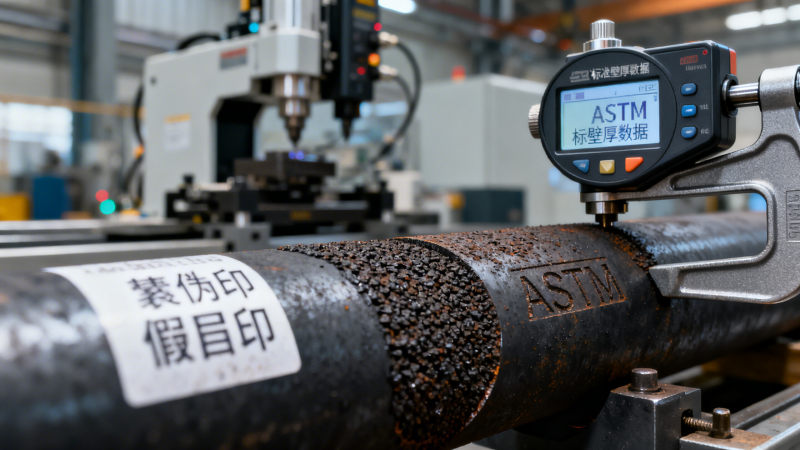
Why Counterfeit Black Metal Pipe Is a Growing Risk
The global demand for affordable black metal pipe—especially black metal plumbing pipe and carbon steel gas pipe—has intensified supply chain pressure. Unscrupulous suppliers increasingly substitute low-grade mild steel gas pipe for certified carbon steel seamless or EN 10255-compliant black A pipe. These counterfeits often bypass mandatory mill test reports (MTRs), lack traceable heat numbers, and skip non-destructive testing (NDT) such as ultrasonic wall thickness verification. In construction and industrial gas systems, such compromises directly threaten life safety, regulatory approval, and long-term asset performance.
Hongteng Fengda’s quality assurance team has documented over 230 incidents of mislabeled black steel tube shipments across Southeast Asia and the Middle East since 2022—most involving falsified ASTM A53 Grade B markings on pipes with actual tensile strengths below 330 MPa (well under the required 415 MPa). These cases underscore why visual and dimensional inspection remains the first line of defense before lab testing—even before shipment acceptance.
Red Flag #1: Irregular or Absent Mill Scale on Black Steel Tube
Authentic black metal pipe undergoes hot rolling followed by controlled air cooling, forming a uniform, tightly adhered iron oxide (Fe₃O₄) layer—known as mill scale. Counterfeit versions frequently display patchy, flaky, or powdery scale—or none at all—indicating improper thermal history or cold-formed rework disguised as hot-rolled product. A simple tape test (pressing strong adhesive tape onto the surface and peeling) will lift loose scale instantly; genuine scale resists adhesion.
Also watch for unnatural discoloration: bluish tints suggest annealing without scale formation, while reddish-orange hues indicate rust contamination—not mill scale. For carbon steel square pipe used in structural framing, inconsistent scale correlates strongly with uneven grain structure and reduced yield strength. At Hongteng Fengda, every black plumbing pipe batch undergoes automated optical scale uniformity scanning pre-packaging.
Red Flag #2: Dimensional Deviations Beyond ASTM/EN Tolerances
Counterfeit black metal pipe routinely violates dimensional standards—not just in nominal diameter or length, but critically in wall thickness. Per ASTM A53/A106 and EN 10255, allowable wall thickness tolerance for standard-weight pipe is ±12.5%. Yet field audits reveal up to 28% undersizing in suspect carbon steel gas pipe lots—creating unacceptable pressure containment risks.
Use calibrated micrometers at four quadrants per pipe end—and measure at least three locations along the length. Cross-reference findings against official dimensional tables. Below is a comparison of acceptable vs. non-compliant measurements for common sizes:
Red Flag #3: Non-Standard Markings & Missing Traceability
Legitimate black metal pipe carries permanent, legible markings: manufacturer logo, standard designation (e.g., “ASTM A53 Gr.B”), size, schedule, heat number, and country of origin. Counterfeits often use inkjet printing instead of roll stamping—fading easily during handling or storage. Worse, many omit heat numbers entirely or duplicate them across unrelated batches.
Inspect markings under 10× magnification. Genuine roll stamps show consistent depth and crisp edges; fake inkjet marks appear pixelated or bleed at edges. Also verify alignment: authentic markings follow strict angular spacing per EN 10220. Any deviation suggests unauthorized repackaging. Hongteng Fengda embeds QR-coded digital MTRs on each bundle—scannable onsite to validate chemistry, mechanical test data, and third-party inspection certificates.
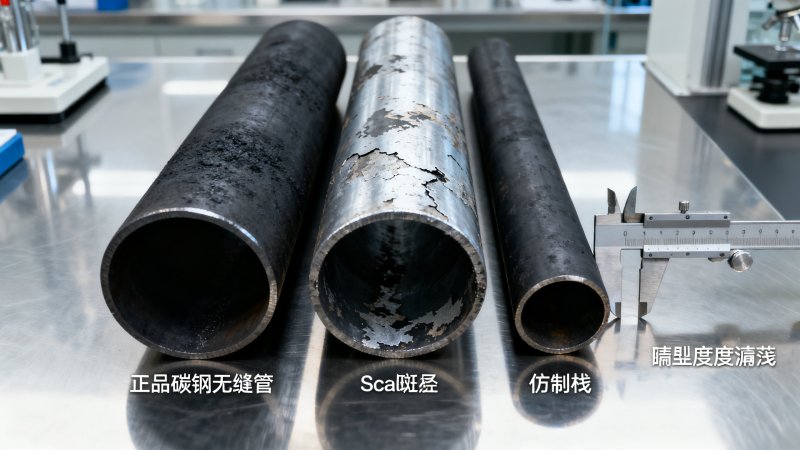
Red Flag #4: Surface Defects Indicating Inferior Rolling or Reconditioning
Look for longitudinal scratches, deep gouges, or repeated grinding marks—especially near pipe ends. These often conceal weld repairs or cold-worked areas masquerading as seamless carbon steel seamless tubing. Seamless pipe should exhibit uniform grain flow; counterfeit welded pipe may show subtle seam ridges or color variances under angled light.
Also examine end cuts: clean, perpendicular shearing indicates precision sawing; jagged, tapered, or burn-marked ends suggest low-cost plasma cutting—common in uncertified workshops. For applications like electric power tower foundations or substation ancillary facilities, even minor surface defects accelerate corrosion initiation. That’s why Hongteng Fengda pairs every order of Galvanized Round Steel with full-surface ultrasonic scanning and antimixing spectrotest validation—ensuring zero material substitution.
Standards & Certification: Your Compliance Anchor
Always request certified Mill Test Reports (MTRs) per EN 10204 3.1 or 3.2—and verify they match physical pipe markings. Key standards include ASTM A53 (welded/seamless), ASTM A106 (high-temp service), EN 10255 (threaded black plumbing pipe), and GB/T 3091 (Chinese standard for welded carbon steel pipe). Note: “Black A pipe” is not a formal designation—it’s industry shorthand for ASTM A53 Grade A; confirm exact spec in purchase orders.
Hongteng Fengda maintains dual-certified ISO 9001 and ISO 14001 systems, with in-house labs accredited to ISO/IEC 17025. Every carbon steel square pipe and pipe carbon shipment includes third-party SGS or Bureau Veritas reports—covering tensile strength, bend testing, hydrostatic pressure, and chemical composition (including sulfur/phosphorus limits critical for welding integrity).
Why Choose Hongteng Fengda for Reliable Black Metal Pipe?
As a structural steel manufacturer and exporter from China, Hongteng Fengda delivers more than compliant black metal pipe—we deliver confidence. With modern rolling mills, automated dimensional gauging, and real-time metallurgical process control, we eliminate guesswork in sourcing. Our black plumbing pipe and carbon steel gas pipe meet ASTM, EN, JIS, and GB requirements—not just on paper, but in every coil and bundle.
We support global buyers with stable production capacity, consistent lead times, and responsive engineering collaboration—from custom carbon steel seamless solutions to OEM-branded black A pipe. Reduce your sourcing risk. Ensure project integrity. Partner with a manufacturer that treats your safety standards as its own. Contact Hongteng Fengda today for certified samples, technical documentation, and dedicated QA support.
- mild steel gas pipe
- pipe carbon
- carbon steel seamless
- black a pipe
- black plumbing pipe
- carbon steel pipe
- carbon steel gas pipe
- carbon steel square pipe
- black steel tube
- black metal plumbing pipe
- black metal pipe
- seamless pipe
- steel pipe
- structural steel
- Structural Steel
- ss pipe
- Galvanized
- carbon steel
- steel tube
Related recommendations
 What is an H-Beam and How Does it Differ from an I-Beam?Discover what an H-beam is and how it differs from an I-beam. Learn key structural differences and expert selection tips from Hongteng Fengda to optimize your steel construction projects today.
 Hot Rolled vs. Cold Rolled Steel Sheet: Surface and ToleranceHot rolled vs cold rolled steel sheet: Discover how surface finish and tolerances impact manufacturing. Optimize material selection, reduce costs, and ensure quality. Read our expert guide today!
 Best Cutting and Bending Practices for Galvanized Sheet MetalDiscover the best cutting and bending practices for galvanized sheet to prevent zinc flaking. Optimize tooling and thermal parameters to ensure perfect corrosion resistance. Read the full guide!
 What is Galvanized Sheet and How Does the Zinc Coating Work?Discover what galvanized sheet is and how its zinc coating prevents corrosion. Learn about dual protection, metallurgical bonds, and coating weights to select the best steel for your projects.
Please give us a message


Please enter what you want to find