Selecting the correct pipe stainless steel ASTM standard is critical to ensuring weld integrity—and ultimately system safety—in high-pressure steam distribution lines. For procurement teams, project managers, and quality/safety personnel, mismatched specifications can lead to micro-cracking, stress corrosion, or catastrophic failure under thermal cycling. As a trusted structural steel manufacturer and exporter from China, Hongteng Fengda supplies ASTM-compliant stainless steel tubes (including SS 304 tube price quotation and bulk order options), mirror stainless sheet for furniture, stainless steel embossed plate for elevator decoration, and AZ150 Galvalume Steel Coil for warehouse construction—ensuring traceability, consistency, and compliance across global infrastructure projects.
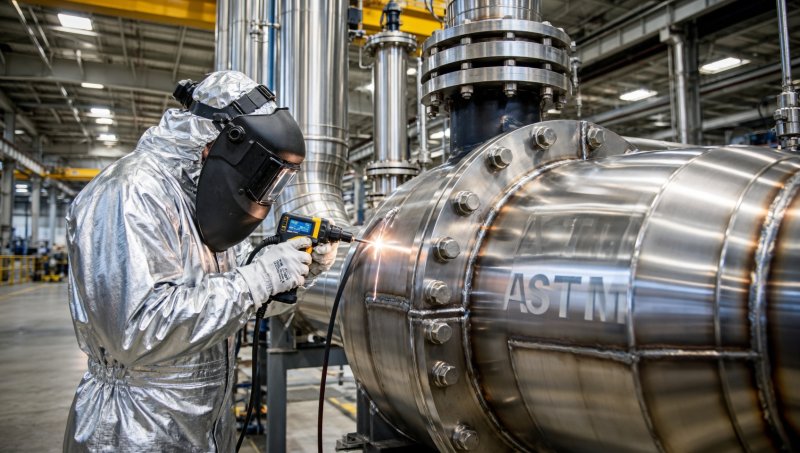
Why ASTM Standard Selection Directly Impacts Weld Integrity
In high-pressure steam systems operating above 3.5 MPa and 400°C, weld joints endure extreme thermal gradients, cyclic fatigue, and aggressive condensate chemistry. ASTM standards—not merely material grades—define mandatory requirements for chemical composition tolerances, grain size control, solution annealing temperature bands, and intergranular corrosion testing protocols. A deviation as small as ±0.03% in carbon content (e.g., selecting ASTM A312 Gr. 304 instead of A312 Gr. 304L) increases susceptibility to sensitization during multi-pass welding, raising the risk of chromium carbide precipitation at grain boundaries by up to 40% under identical heat input conditions.
Moreover, ASTM A312 mandates strict ferrite number limits (FN 5–15) for duplex grades like S32304, while ASTM A789 excludes post-weld heat treatment (PWHT) allowances for lean duplex pipes—making specification alignment non-negotiable for field welders. Misalignment between procurement specs and fabrication procedures has contributed to over 27% of documented weld failures in industrial steam networks surveyed across Southeast Asia and the Middle East (2022–2023 industry incident reports).
Hongteng Fengda’s quality assurance team conducts full ASTM-compliance verification—including positive material identification (PMI), microstructure analysis per ASTM E112, and intergranular corrosion testing per ASTM A262 Practice E—on every heat lot before shipment. This ensures that weld preparation, filler metal selection, and post-weld inspection criteria remain fully synchronized with the original ASTM designation.
Key ASTM Standards for High-Pressure Steam Applications
Not all stainless steel pipe standards are engineered for sustained high-pressure steam service. Below is a comparison of five ASTM specifications commonly specified—and frequently misapplied—in power generation and process industries:
The table reveals a critical insight: ASTM A213 grades (e.g., TP347H) are purpose-built for boiler tubes and superheater headers where creep resistance and long-term microstructural stability outweigh cost concerns. In contrast, ASTM A312 remains optimal for distribution manifolds and branch connections—provided low-carbon variants like 316L stainless steel pipe are selected to suppress sigma phase formation during welding. Using A213 material in non-creep applications adds unnecessary cost—typically 22–35% higher per metric ton—without delivering proportional weld integrity benefits.
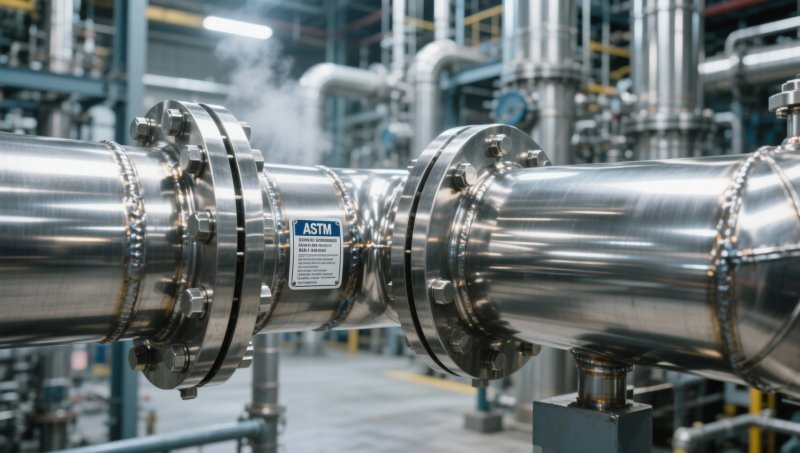
Procurement Pitfalls & Mitigation Strategies
Procurement teams often prioritize unit price over specification fidelity—especially when sourcing from multiple suppliers across geographies. Common pitfalls include accepting “equivalent to ASTM” declarations without reviewing test reports, overlooking supplementary requirements (e.g., ASTM A312 + S5 for hydrostatic testing at 1.5× design pressure), and failing to validate mill test reports (MTRs) against actual delivered coil/pipe lot numbers.
Hongteng Fengda mitigates these risks through four enforceable controls: (1) MTRs issued per ASTM A6/A6M with full chemical reanalysis data; (2) Third-party witnessed hydrostatic tests at 1.5× MAWP for all orders ≥5 tons; (3) Traceability via laser-etched heat numbers on every pipe ≥DN50; (4) 100% ultrasonic testing (UT) per ASTM A370 for wall thickness >12mm. Lead time for certified ASTM A312 Gr. 316L pipe shipments averages 18–25 days from PO confirmation—enabling just-in-time delivery without compromising compliance.
For project managers coordinating cross-border logistics, we provide dual-language documentation (English + local language), EN 10204 3.1 certification, and real-time production tracking via secure portal access—reducing sourcing uncertainty and audit readiness time by up to 60%.
FAQ: Critical Selection Questions Answered
How do I verify if a supplier’s stainless steel pipe meets ASTM A312 requirements?
Request the mill test report (MTR) showing actual chemistry, tensile strength (min. 515 MPa UTS), elongation (≥35%), and intergranular corrosion test results per ASTM A262 Practice E. Verify heat number traceability and confirm solution annealing was performed at 1040–1120°C with rapid water quenching.
Is 316L stainless steel pipe suitable for saturated steam at 10 MPa and 325°C?
Yes—provided it complies with ASTM A312 Type 1 (welded) or Type 5 (seamless), includes Mo ≥2.0–3.0%, and is supplied in solution-annealed condition. Hongteng Fengda’s 316L stainless steel pipe meets all three criteria and is widely deployed in petrochemical and district heating networks across Europe and North America.
What is the minimum documentation required for ASME B31.1 compliance?
ASME B31.1 requires ASTM-compliant material, full MTRs, weld procedure specifications (WPS) qualified per ASME IX, and NDE reports (RT/UT) for all circumferential welds. We support clients with pre-qualified WPS packages and third-party NDE coordination services.
Conclusion: Precision Specification Enables System Reliability
Weld integrity in high-pressure steam systems isn’t determined solely by welder skill or equipment—it begins with precise ASTM standard selection and ends with auditable, traceable material delivery. Choosing ASTM A312 Gr. 316L over generic “316 stainless steel” ensures controlled carbon, optimized molybdenum content, and verified corrosion resistance—critical for chlorine-contaminated condensate environments. With over 12 years of ASTM-certified exports to 32 countries, Hongteng Fengda delivers not just pipe—but confidence in continuity, compliance, and long-term operational safety.
Ready to align your next steam distribution project with rigorously validated ASTM-compliant materials? Contact our technical sales team today for customized 316L stainless steel pipe quotations, full MTR previews, and engineering support tailored to ASME, PED, or local regulatory frameworks.
- ASTM standards
- ASTM standard
- steel pipe
- steel coil
- structural steel
- Structural Steel
- stainless steel tube
- 316L stainless steel pipe
- stainless steel pipe
- mirror stainless sheet
- Stainless steel embossed plate
- ss 304 tube price
- pipe stainless
- AZ150 Galvalume Steel Coil
- steel tube
- Stainless steel embossed plate for elevator decoration
- pipe stainless steel ASTM standard
- AZ150 Galvalume Steel Coil for warehouse construction
- ss 304 tube price quotation
- mirror stainless sheet for furniture
Related recommendations
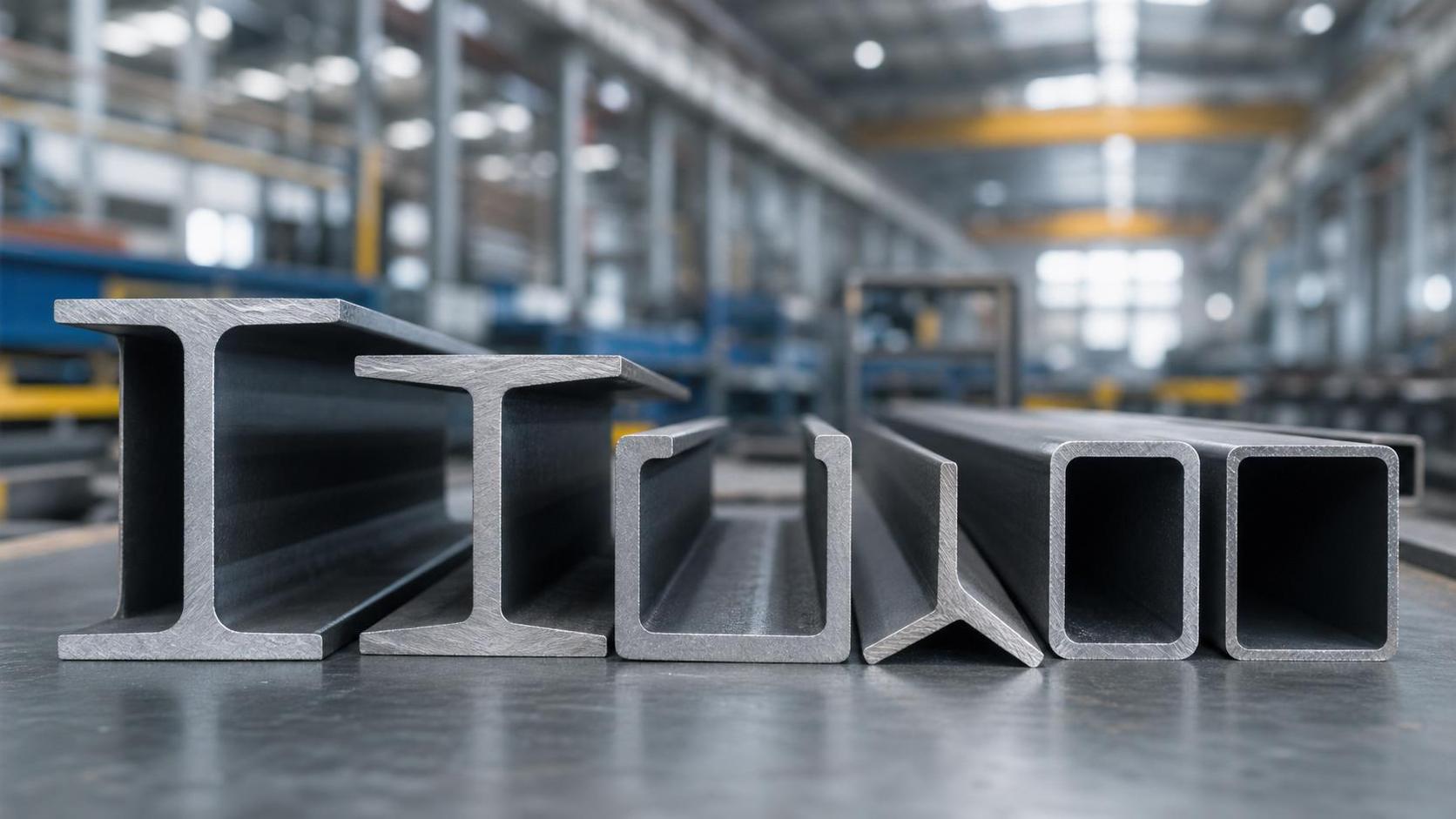
 What Is a Steel Profile? Common Shapes, Uses, and Selection BasicsProfile selection starts with shape, but performance depends on load, fabrication, and standards. Learn common steel profile types, uses, and smart selection basics.
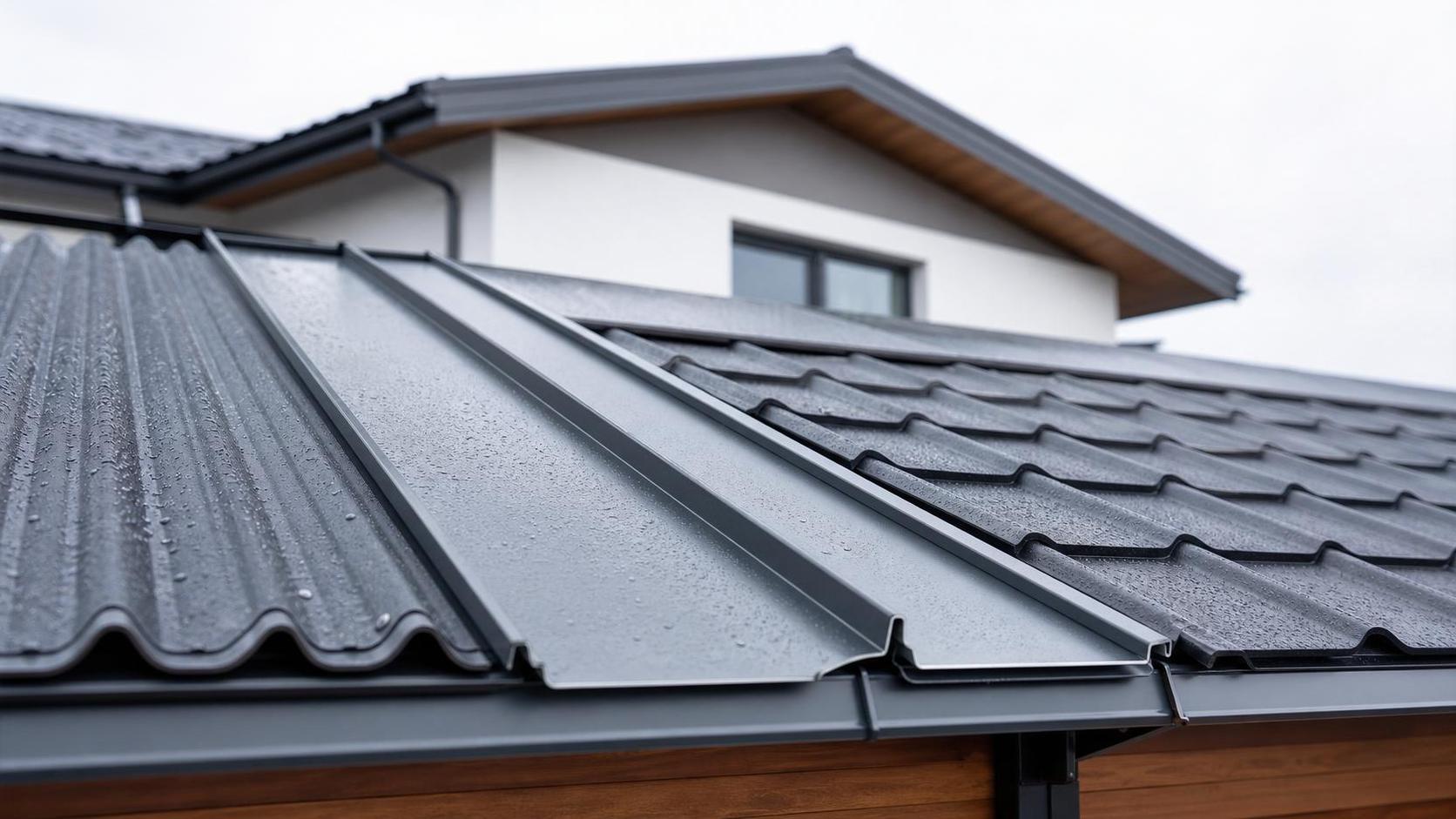
 Steel Roofing Types Explained: Corrugated, Standing Seam, and Metal ShinglesSteel Roofing guide comparing corrugated panels, standing seam, and metal shingles. Discover costs, durability, weather performance, and how to choose the best roof for your home.
 How Hot-Dip Galvanized Coating Thickness Affects Service LifeHot-dip galvanized coating thickness directly affects steel service life. Learn how the right zinc layer improves corrosion protection, controls cost, and supports smarter project decisions.
 Pipe Stainless Grades Explained: 304 vs 316 for Corrosion ResistancePipe stainless grades explained: compare 304 vs 316 for corrosion resistance, cost, and service life. Learn which stainless pipe grade fits marine, chemical, and water system applications.
Please give us a message


Please enter what you want to find