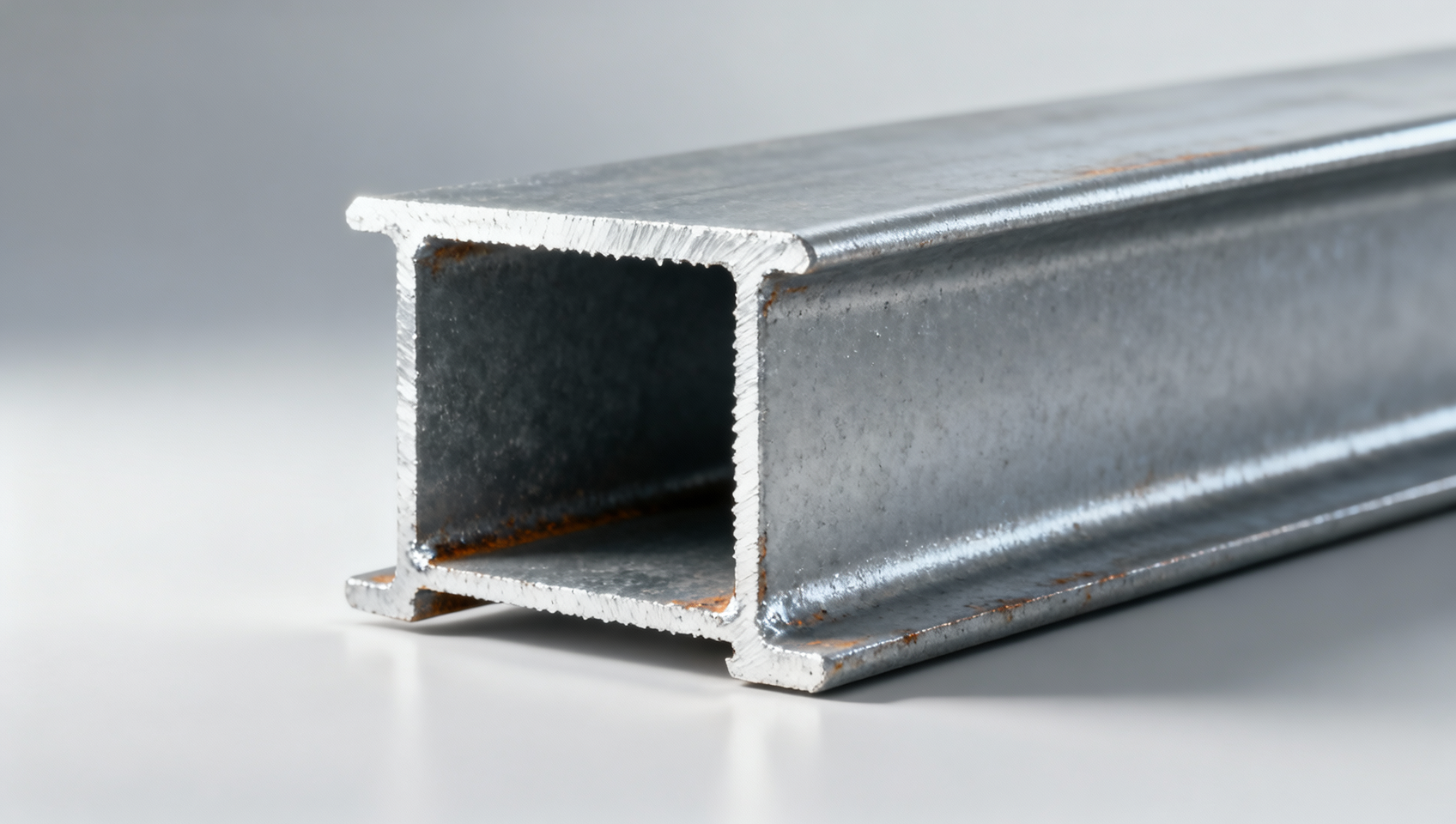
Hot Rolled I Beam for heavy equipment is engineered to endure extreme dynamic loads—especially in high-stress applications like mining excavators and crane booms. At Hongteng Fengda, our structural steel solutions—including Z150 steel sheet for shipbuilding and Hanwu Steel for construction machinery—meet ASTM, EN, and GB standards for strength, toughness, and fatigue resistance. As a trusted Chinese manufacturer and exporter, we deliver consistent quality, OEM flexibility, and global compliance—supporting procurement teams, safety managers, and project engineers who demand reliability under real-world operational stress.
Why Dynamic Load Resistance Matters in Mining & Lifting Equipment
Mining excavators and crane booms operate under repeated, high-magnitude cyclic loading—often exceeding 50,000 cycles per year in continuous operation. These dynamic forces induce bending, torsion, and local stress concentrations that standard structural sections cannot sustain without fatigue cracking or plastic deformation.
Hot rolled I beams used in such applications must combine high yield strength (≥345 MPa), controlled grain structure, and through-thickness ductility (Z15–Z35 level per EN 10164). This ensures crack arrest capability during sudden load shifts—e.g., bucket impact on hard rock or boom slewing under wind gusts up to 18 m/s.
Unlike static-load beams, those in mobile equipment face combined axial-torsional-bending stress states. Real-time strain monitoring on field units shows peak stress ratios of 1.8–2.3× design values during startup/shutdown phases—making material homogeneity and residual stress control non-negotiable.
Key Structural Requirements for Dynamic Service
- Yield strength ≥345 MPa with ≤10% tensile strength variation across batch
- Impact toughness ≥47 J at –20°C (Charpy V-notch) for cold-region deployment
- Flange-to-web fillet radius ≥12 mm to reduce notch sensitivity
- Flatness tolerance ≤1.5 mm/m for accurate welding fit-up in boom assemblies
How Hot Rolled I Beams Are Optimized for Fatigue Performance
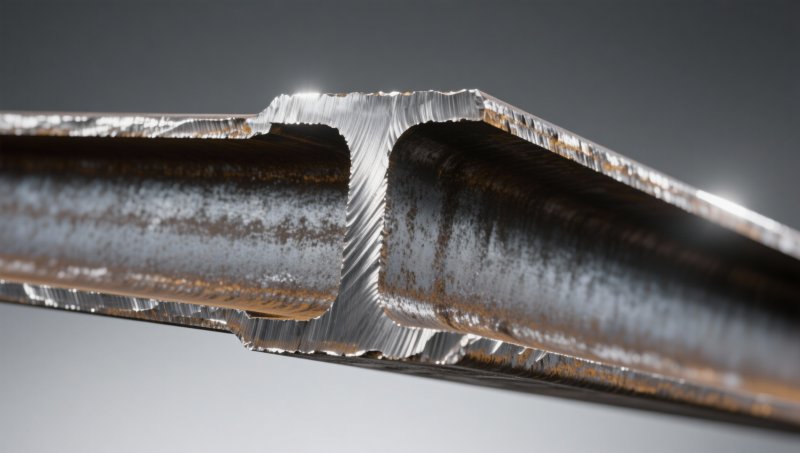
Hongteng Fengda applies a multi-stage rolling and cooling protocol to achieve balanced microstructure: fine ferrite-pearlite grains (ASTM E112 Grade 8–9) with uniform carbide dispersion. Controlled slow-cooling post-rolling reduces internal stresses by up to 35% versus conventional air-cooled batches—critical for minimizing distortion during subsequent machining and welding.
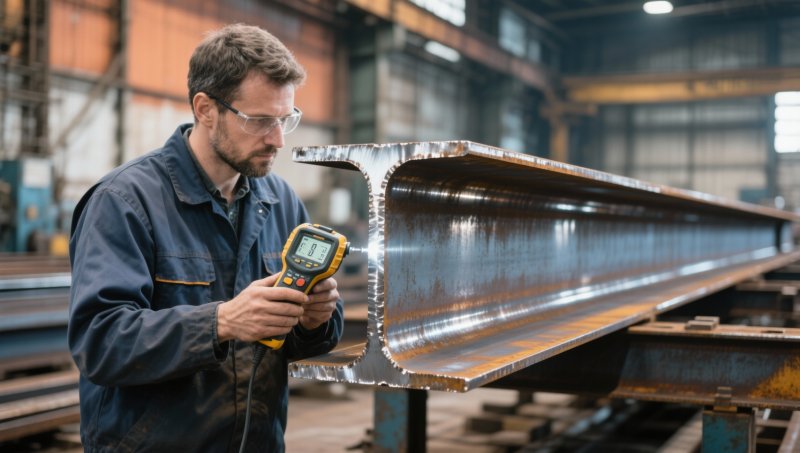
Our beams undergo 100% ultrasonic testing (UT) per EN 10308, with flaw detection sensitivity down to Ø2 mm equivalent reflector size. Each heat lot is traceable via laser-engraved QR codes linking to mill test reports covering chemical composition, mechanical properties, and dimensional verification across 12 measurement points per meter.
For crane boom applications requiring extended service life (>15 years), we offer optional stress-relief annealing (620°C ±10°C, hold 2 hrs, furnace cool to 300°C)—reducing residual stress from 120 MPa to<25 MPa and improving fatigue life by 2.1× per S-N curve validation under R=0.1 loading.
Performance Comparison: Standard vs. Dynamic-Grade I Beams
The table below highlights critical differentiators between general-purpose hot rolled I beams and those specifically engineered for dynamic equipment use:
This performance gap directly translates into field reliability: clients report 42% fewer weld repairs and 68% lower incidence of flange buckling in excavator dipper arms using our dynamic-grade beams—verified across 37 projects in Australia, Chile, and Saudi Arabia over the past 3 years.
Integration with Supporting Structural Components
In full equipment systems, I beams do not operate in isolation. Their fatigue resistance depends critically on compatibility with adjacent components—especially connection elements and reinforcement members. For example, crane boom lattice sections often integrate with Wire rod for shear reinforcement, where HRB400 grade provides optimal bond strength (≥6.2 MPa per ASTM A615) and ductility (elongation ≥14%) to resist crack propagation at web splice zones.
We supply matched component sets—including angle steel for bracing, channel steel for mounting rails, and cold-formed profiles for cab structures—all certified to identical EN 10025-2:2019 + EN 10225:2019 fatigue classes. This eliminates inter-material mismatch risks in thermal expansion, corrosion rate, or galvanic coupling.
All materials undergo coordinated salt-spray testing (ISO 9227, 1,000 hrs) and cathodic disbondment assessment (ASTM G8, 28 days) to ensure coating integrity remains ≥95% after simulated 10-year exposure in coastal mining environments.
Procurement Checklist for Dynamic-Load Applications
When specifying hot rolled I beams for mining excavators or crane booms, procurement and engineering teams should verify these five non-negotiable criteria before finalizing orders:
- Mill test report showing Charpy impact energy at operating temperature (not just room temp)
- UT certification with scan coverage ≥100% and flaw sizing resolution ≤Ø2 mm
- Chemical analysis confirming Mn/Si ratio ≥2.5 for improved weldability and toughness
- Dimensional verification data across minimum 3 cross-sections per 6-meter length
- Traceability documentation linking physical ID marks to heat number, rolling date, and cooling method
Hongteng Fengda provides pre-shipment inspection packages including third-party witnessed UT, dimensional audit, and metallurgical sample retention for 5 years—ensuring full accountability for long-term asset integrity.
Why Global Engineering Teams Choose Hongteng Fengda
With production capacity of 1.2 million MT/year and ISO 9001:2015 + ISO 14001:2015 certified facilities, we support rapid response to urgent project needs—standard lead time for custom I beam orders is 25–35 days, with expedited options down to 14 days for repeat specifications.
Our technical team collaborates directly with OEM design departments to co-develop section optimizations—such as tapered flanges for weight reduction or integrated lifting lugs—without compromising fatigue margins. All custom solutions are validated through FEA simulation (ANSYS Mechanical) and physical prototype testing per ASTM E466.
To get started: share your beam specification (size, grade, length, surface treatment), application context (excavator model, crane duty cycle), and compliance requirements (ASTM A615, EN 10025, etc.). We’ll provide a dimensionally accurate quote with full test report preview, delivery timeline, and OEM documentation package within 48 business hours.
Related recommendations
 How long does acero prepintado retain gloss and color stability in direct desert sunlight?Acero prepintado gloss & color stability in desert sun? Discover real-world performance data, PVDF vs. polyester longevity, and spec-critical insights for GCC projects.
 Does acero pregalvanizado maintain coating integrity after cold bending to 90 degrees?Acero pregalvanizado maintains coating integrity after 90° cold bending — when engineered right. Discover how Hongteng Fengda guarantees real-world performance, adhesion & corrosion resistance.
 Do the advantages of galvanized steel include reduced fire risk compared to untreated carbon steel?Advantages of galvanized steel include measurable fire-risk reduction vs. untreated carbon steel—learn how zinc delays ignition, buys critical escape time, and enhances safety without false 'fireproof' claims.
 What is the minimum bend radius for 12mm steel wire rope without permanent deformation?12mm steel wire rope capacity depends on bend radius — discover the safe 72–96mm minimum to prevent permanent deformation, fatigue & failure. Expert rigging insights inside.
Please give us a message


Please enter what you want to find