Selecting the right surface finish for black metal pipe—whether black metal plumbing pipe, carbon steel seamless tube, or mild steel gas pipe—is critical for corrosion resistance, weldability, and system safety. This guide breaks down industry-standard treatments: mill scale (as-rolled), acid pickling (for oxide removal), and protective oiling (for storage and transport)—all essential for carbon steel square pipe, black plumbing pipe, black A pipe, and carbon steel gas pipe used in structural, industrial, and utility applications. As a certified structural steel manufacturer & exporter from China, Hongteng Fengda ensures every black steel tube meets ASTM, EN, JIS, and GB compliance—helping procurement teams, project managers, and quality controllers make informed, standards-driven decisions.
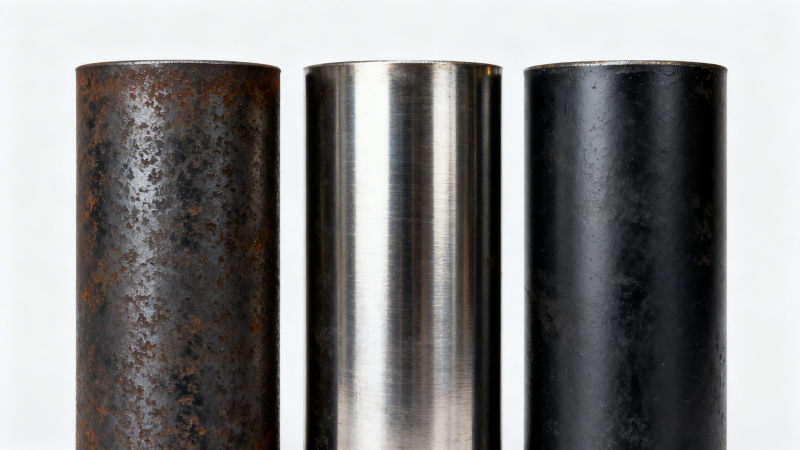
Definition & Purpose of Surface Finishes on Black Metal Pipe
Surface finish is not merely cosmetic—it directly impacts performance, longevity, and regulatory acceptance. For black metal pipe—including black metal plumbing pipe, carbon steel gas pipe, and carbon steel square pipe—the outer layer reflects both manufacturing history and functional readiness. Mill scale forms naturally during hot rolling; pickling chemically removes it; oiling adds a temporary barrier against moisture-induced rust. Each step serves distinct engineering goals: mill scale offers minimal protection but indicates as-delivered condition; pickling enables uniform coating adhesion and welding integrity; oiling preserves surface quality between factory and job site.
These finishes are especially vital for mild steel gas pipe and black A pipe used in pressurized systems, where surface irregularities can initiate pitting or interfere with thread sealing. Understanding their technical basis helps users avoid misapplication—such as installing unpickled black plumbing pipe in humid indoor mechanical rooms without post-installation priming.
Comparison Analysis: Mill Scale vs. Pickled vs. Oiled Surfaces
Choosing among surface options requires balancing cost, timeline, application environment, and downstream processing needs. Below is a comparative overview aligned with real-world usage scenarios:
Standards & Certification: Ensuring Global Compliance
International standards govern acceptable surface conditions for black steel tube and related products. ASTM A53/A106 specify mill-scale acceptance for seamless and welded carbon steel pipe, while EN 10255 permits pickled or oiled variants depending on end-use classification. For black metal plumbing pipe destined for North America, ANSI/ASME B31.9 mandates visual inspection for scale-free weld zones—making pickling non-negotiable for many installations.
Hongteng Fengda’s quality control protocol includes third-party verification per ISO 9001 and adherence to ASTM A500 (structural tubing), EN 10210 (hot-finished hollow sections), and GB/T 3091 (galvanized/non-galvanized welded pipe). Every batch of carbon steel gas pipe undergoes magnetic particle testing and hydrostatic pressure validation—ensuring that surface treatment never compromises structural integrity.
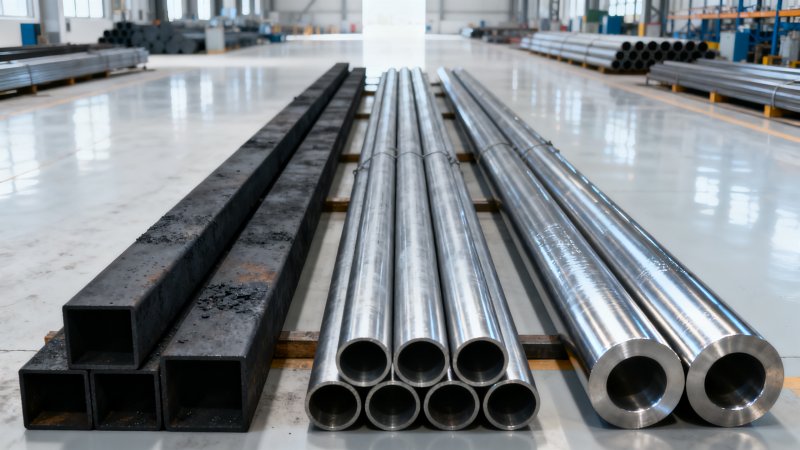
Procurement Guide: Matching Finish to Your Project Needs
Procurement professionals face nuanced trade-offs. For large-scale infrastructure projects—like Middle Eastern desalination plants using carbon steel square pipe—oil-coated delivery prevents flash rusting during monsoon-season port delays. In contrast, European HVAC contractors prefer pre-pickled black plumbing pipe to accelerate on-site welding and reduce labor-intensive cleaning steps.
Key decision factors include:
• Lead time sensitivity — pickling adds 2–4 days; oiling adds<1 day
• End-market certification — UL-listed gas systems require SSPC-SP10 near-white metal cleanliness
• Storage duration — >60-day warehouse hold? Oil + VCI paper recommended
• Downstream process — powder coating vendors often reject mill-scaled black A pipe outright
For distributors and agents sourcing black metal pipe globally, specifying finish at order stage avoids costly rework or rejection at destination ports. Hongteng Fengda provides finish-specific mill test reports (MTRs) and optional SGS/CCIC inspection support—reducing compliance risk across diverse regulatory landscapes.
Why Choose Hongteng Fengda?
As a professional structural steel manufacturer & exporter from China, Hongteng Fengda delivers more than product—we deliver predictability. Whether you need black metal plumbing pipe for a high-rise MEP package or carbon steel seamless tubes for industrial boiler systems, our vertically integrated production line supports rapid finish customization: mill scale, pickled, oiled, or dual-treated (e.g., pickled + light oil). With ISO-certified facilities and full traceability from billet to bundle, we help procurement teams meet tight deadlines without compromising ASTM/EN/GB compliance.
Beyond black metal pipe, we offer complementary solutions like 306 Stainless Steel Welded Mesh for filtration and screening in chemical and mining applications—extending material consistency across your supply chain. Contact our export team today for finish-specific quotations, sample kits, and project-tailored logistics planning.
- mild steel gas pipe
- carbon steel seamless
- black a pipe
- black plumbing pipe
- carbon steel pipe
- carbon steel gas pipe
- carbon steel square pipe
- black steel tube
- black metal plumbing pipe
- black metal pipe
- steel pipe
- structural steel
- Structural Steel
- ss tube
- Stainless Steel Welded Mesh
- Galvanized
- carbon steel
- steel tube
Related recommendations
 What Is a Steel Profile? Common Shapes, Uses, and Selection BasicsProfile selection starts with shape, but performance depends on load, fabrication, and standards. Learn common steel profile types, uses, and smart selection basics.
 Steel Roofing Types Explained: Corrugated, Standing Seam, and Metal ShinglesSteel Roofing guide comparing corrugated panels, standing seam, and metal shingles. Discover costs, durability, weather performance, and how to choose the best roof for your home.
 How Hot-Dip Galvanized Coating Thickness Affects Service LifeHot-dip galvanized coating thickness directly affects steel service life. Learn how the right zinc layer improves corrosion protection, controls cost, and supports smarter project decisions.
 Pipe Stainless Grades Explained: 304 vs 316 for Corrosion ResistancePipe stainless grades explained: compare 304 vs 316 for corrosion resistance, cost, and service life. Learn which stainless pipe grade fits marine, chemical, and water system applications.
Please give us a message


Please enter what you want to find