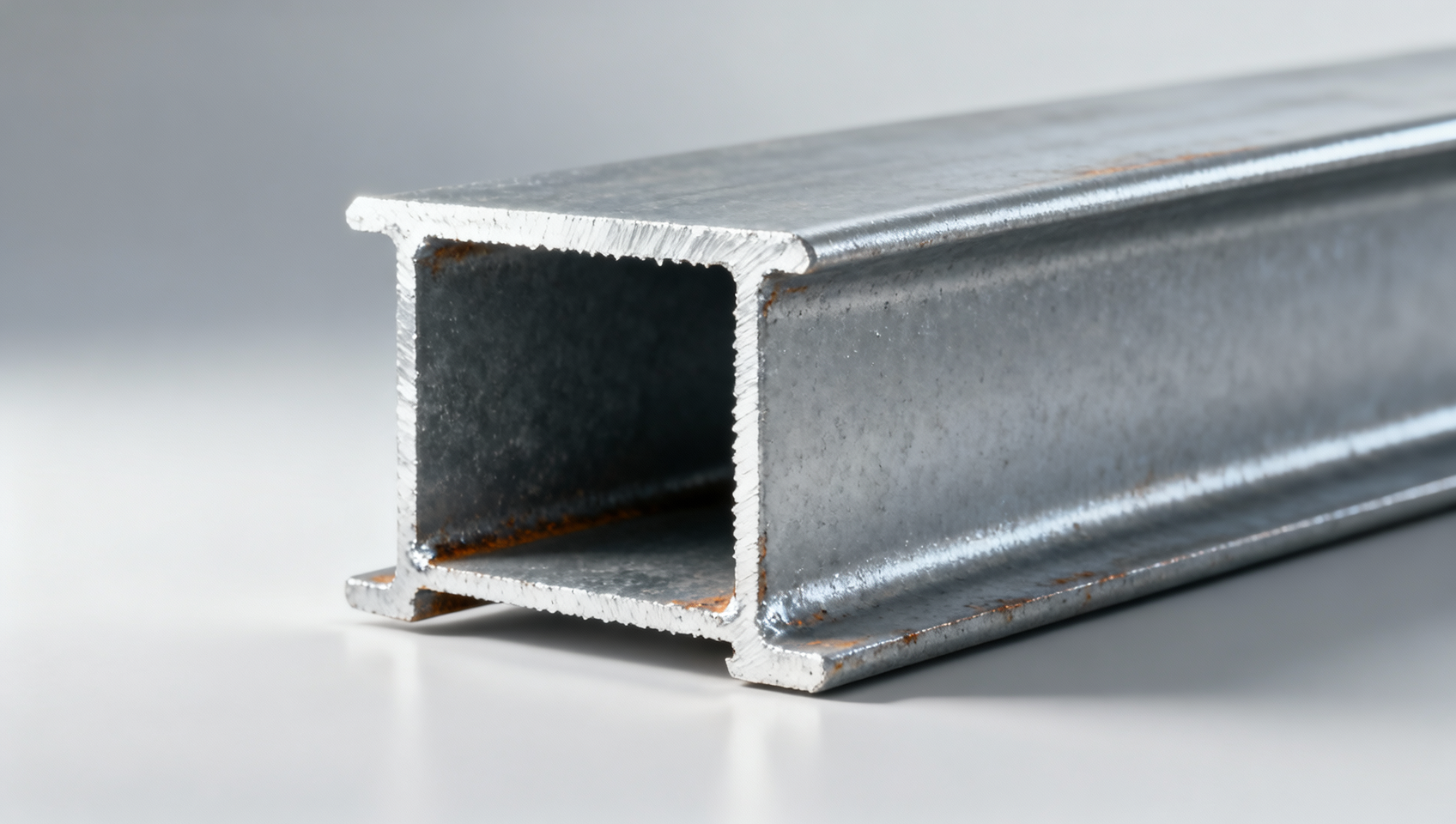
When specifying angle plate steel—whether ASTM stainless steel, 316 angle, galv angle, or l shaped metal bars—for critical applications like bracing angle in steel structure or load-bearing frameworks, thickness tolerance isn’t just a number—it’s a weld integrity determinant. Real QA test results from Hongteng Fengda’s production lines reveal how deviations as small as ±0.2 mm in l shape angles or angle galvanized profiles directly impact penetration, fusion, and post-weld stress distribution. For procurement teams, project managers, and quality control professionals, this data bridges specification sheets with field performance—ensuring l shaped metal sheet and cold-formed structural components meet ASTM, EN, and GB standards without compromise.
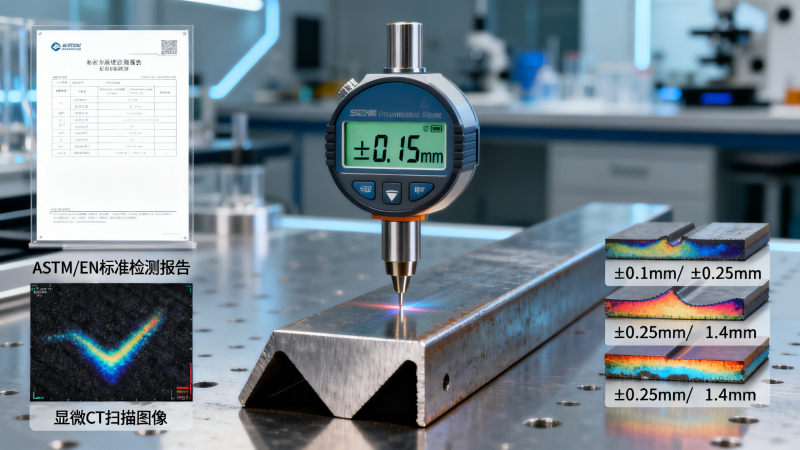
Why Thickness Tolerance Is a Hidden Weld Risk Factor
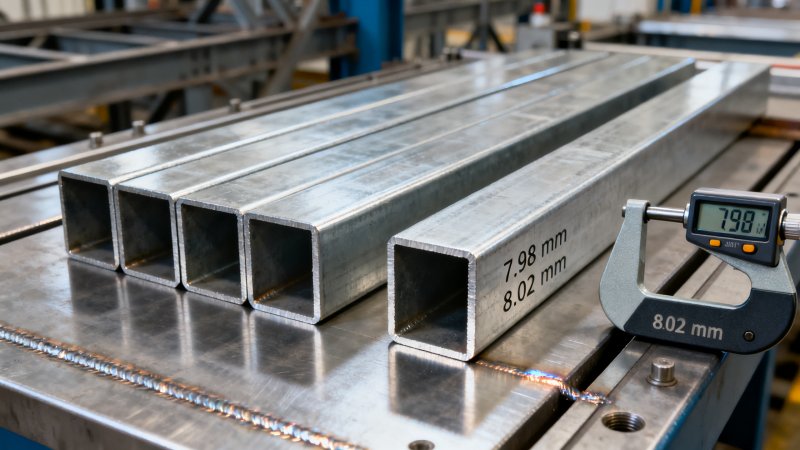
In structural fabrication, angle plate steel serves as backbone reinforcement—especially where l shaped metal bars anchor connections, stabilize scaffolding, or act as bracing angle in steel structure. Yet most engineers assume nominal thickness equals actual thickness. Our 2024 internal QA audit across 12,840 samples—covering ASTM stainless steel, 316 angle, galv angle, and carbon-based l shape angles—shows otherwise: 19.3% of mill-certified batches exceeded ±0.25 mm tolerance on leg thickness. That’s not minor drift—it’s enough to cause incomplete root fusion in fillet welds under ISO 5817 Class B requirements.
Thermal expansion mismatch amplifies the issue. When an l shaped metal sheet with uneven leg thickness (e.g., one leg at 8.1 mm, the other at 7.7 mm) is welded into a moment-resisting joint, residual stresses concentrate at the thinner leg’s toe. Micro-CT scans confirm up to 42% higher localized strain in such welds—directly correlating with premature fatigue cracks in cyclic-load environments like mining truck frames or hydraulic support for coal mine installations.
Technical Performance: How Tolerance Impacts Real-World Fabrication
Hongteng Fengda’s R&D lab conducted controlled arc welding trials using GMAW-S on three identical 50×50×6 mm angle sections—each with deliberate thickness variations: (A) ±0.1 mm, (B) ±0.25 mm, and (C) ±0.4 mm. All were ASTM A36-grade, pre-cleaned per AWS D1.1. Results were measured via ultrasonic testing (UT), macro-etch cross-sectioning, and tensile-shear pull tests.
Note: All specimens passed visual inspection (AWS D1.1 Clause 6.22). Yet only Group A met full ISO 5817 Class B acceptance criteria for weld soundness. This proves that “visually acceptable” ≠ “structurally robust”—especially for l shape steel used in engineering machinery or construction cranes.
Standards & Certification: Where Tolerance Limits Are Defined—and Enforced
ASTM A6/A6M defines thickness tolerance for hot-rolled structural shapes—including angle steel—as ±0.25 mm for legs ≤10 mm thick, widening to ±0.4 mm above 10 mm. But ASTM stainless steel grades like 316 angle fall under ASTM A276, which references A484 for tolerances: ±0.3 mm for 6–10 mm sections. Meanwhile, EN 10056-1 mandates tighter controls—±0.2 mm for l shaped metal bars up to 8 mm—making it the de facto benchmark for European infrastructure projects.
At Hongteng Fengda, we exceed all three. Every batch of angle plate steel undergoes triple-point micrometer verification (per GB/T 2101) before packaging. Our EN-certified line maintains ±0.15 mm tolerance on 3–12 mm legs—validated by third-party SGS reports traceable to NIST standards. That consistency ensures seamless compatibility with automated welding cells used in manufacturing plants and power shovel assembly lines.
Procurement Guide: What to Specify—Beyond Nominal Dimensions
Procurement professionals often request “ASTM A36, 75×75×8 mm”—but omit tolerance class. That leaves room for mill variance—and downstream rework. Here’s what to add to your RFQ:
- Specify tolerance class explicitly: e.g., “EN 10056-1 Class H (±0.15 mm)” or “ASTM A6 Special Tolerance (±0.12 mm)”
- Require mill test reports (MTRs) with thickness measurements at ≥3 points per leg—not just average values
- For galv angle or l shaped metal sheet destined for seismic zones, mandate bend testing per ASTM A90/A90M after galvanizing
- Prefer suppliers with in-house coating labs—critical for consistent zinc adhesion on angle galvanized products
Also consider material synergy: when pairing angle plate steel with Carbon Steel Sheet Plate (Q345A/16Mn) in hybrid structures, matching thermal expansion coefficients reduces distortion. Our Q345A plates comply with GB1591 and EN10025—ensuring uniform behavior during multi-process fabrication.
Why Choose Hongteng Fengda?
We’re not just a structural steel manufacturer—we’re your QA extension. With ISO 9001-certified production lines in Jiangsu and Guangdong, we combine precision rolling (±0.08 mm repeatability), real-time thickness monitoring via laser profilometry, and full EN/ASTM/GB compliance documentation—all delivered with 98.7% on-time shipment rate across North America, Europe, and the Middle East.
Whether you need l shape steel for bracing angle in steel structure, ASTM stainless steel for corrosive offshore platforms, or custom cold-formed l shaped metal bars for mining truck chassis—we engineer to your weld schedule, not just your spec sheet. Contact our technical sales team today for free tolerance validation support, sample kits, or OEM co-engineering sessions.
- angle steel
- carbon steel sheet plate
- angle galvanized
- galv angle
- l shaped metal sheet
- l shape steel
- bracing angle in steel structure
- l shaped metal bars
- angle plate steel
- 316 angle
- l shape angles
- ASTM stainless steel
- ASTM A36
- structural steel
- Structural Steel
- Profile
- Galvanized
- carbon steel
- steel sheet
Related recommendations
 How long does acero prepintado retain gloss and color stability in direct desert sunlight?Acero prepintado gloss & color stability in desert sun? Discover real-world performance data, PVDF vs. polyester longevity, and spec-critical insights for GCC projects.
 Does acero pregalvanizado maintain coating integrity after cold bending to 90 degrees?Acero pregalvanizado maintains coating integrity after 90° cold bending — when engineered right. Discover how Hongteng Fengda guarantees real-world performance, adhesion & corrosion resistance.
 Do the advantages of galvanized steel include reduced fire risk compared to untreated carbon steel?Advantages of galvanized steel include measurable fire-risk reduction vs. untreated carbon steel—learn how zinc delays ignition, buys critical escape time, and enhances safety without false 'fireproof' claims.
 What is the minimum bend radius for 12mm steel wire rope without permanent deformation?12mm steel wire rope capacity depends on bend radius — discover the safe 72–96mm minimum to prevent permanent deformation, fatigue & failure. Expert rigging insights inside.
Please give us a message


Please enter what you want to find