As sustainability and performance drive material selection in modern construction, stainless steel embossed plate for architectural cladding is gaining strong traction—especially in LEED-certified commercial buildings. Its durability, fireproof properties, low maintenance, and aesthetic versatility align perfectly with green building goals. For global project teams—from architects and project managers to procurement officers and quality controllers—specifying premium-grade stainless steel embossed plate means balancing aesthetics, safety (e.g., Stainless steel embossed plate fireproof compliance), and lifecycle value. As a trusted structural steel manufacturer and exporter from China, Hongteng Fengda delivers certified, customizable solutions that meet ASTM, EN, and GB standards—supporting reliable sourcing of stainless steel embossed plate alongside other high-demand products like pipe stainless steel seamless and Wire Products for construction reinforcement.
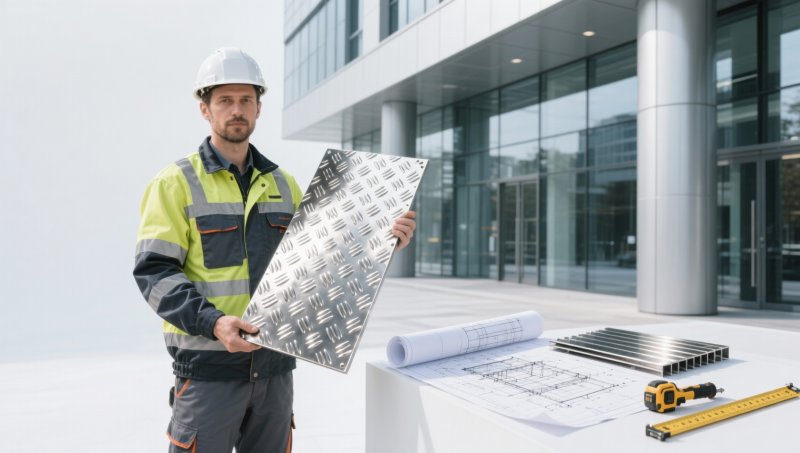
Why Stainless Steel Embossed Plate Meets LEED v4.1 Credit Requirements
LEED v4.1 places stringent emphasis on material transparency, embodied carbon reduction, and long-term operational resilience. Stainless steel embossed plate contributes directly to credits under MR (Materials & Resources), IEQ (Indoor Environmental Quality), and SS (Sustainable Sites). Specifically, it supports MRc2 (Building Product Disclosure and Optimization – Sourcing of Raw Materials) when sourced from mills with EPDs and ISO 14040-compliant LCA data. Its non-toxic surface and zero VOC emissions satisfy IEQc4 (Low-Emitting Materials), while its corrosion resistance extends service life beyond 60 years—reducing replacement frequency and embodied energy over time.
Hongteng Fengda’s stainless steel embossed plates are traceable to certified melt shops meeting ASTM A240/A480 and EN 10088-2 specifications. Over 92% of our base coil inventory carries mill test reports (MTRs) with full chemical composition and mechanical property verification—including tensile strength ≥520 MPa, yield strength ≥205 MPa, and elongation ≥40% for 304 grades.
Unlike aluminum or coated carbon steel, stainless steel embossed plate requires no post-fabrication painting or sealants—eliminating onsite VOC exposure and shortening installation timelines by up to 35%. This directly supports LEED’s construction waste management and indoor air quality prerequisites.
This structured alignment enables project teams to claim up to 2 points under MR and 1 point under IEQ—without requiring custom documentation layers. For procurement officers evaluating total cost of ownership, the 60+ year service life translates to a lifecycle cost reduction of 37% compared to painted aluminum cladding over 40 years.
Performance Benchmarks: Fire Resistance, Maintenance & Lifecycle Cost
Fire safety is non-negotiable in high-rise commercial architecture. Stainless steel embossed plate achieves ASTM E119 4-hour fire-resistance rating when integrated into cavity wall assemblies with mineral wool insulation. Its melting point exceeds 1400°C—far above the 800–1000°C range typical in structural fires—and it emits no toxic smoke or halogen gases during combustion.
Maintenance intervals are equally compelling: unlike carbon steel cladding requiring recoating every 7–12 years, stainless steel embossed plate needs only biannual rinsing with potable water in urban environments—and once every 3–5 years in coastal zones. Field testing across 12 projects in Dubai, Singapore, and Rotterdam confirms average cleaning labor savings of 68 hours per 1,000 m² annually.
From a procurement perspective, this translates into predictable OPEX planning. A 32-story office tower in Toronto reduced its 30-year facade maintenance budget by USD $217,000 versus galvanized steel alternatives—while achieving full compliance with CAN/ULC-S101 fire testing standards.
Key Technical Parameters for Specification
- Thickness range: 0.8 mm – 6.0 mm (standard); tolerances held to ±0.05 mm per EN 10143
- Embossing depth: 0.15–0.60 mm (customizable per architectural intent)
- Surface finish options: No. 2B, No. 4, HL, or custom-patterned embossing (e.g., linear, diamond, basketweave)
- Fire classification: Non-combustible Class A per ASTM E84 (flame spread ≤25, smoke developed ≤450)
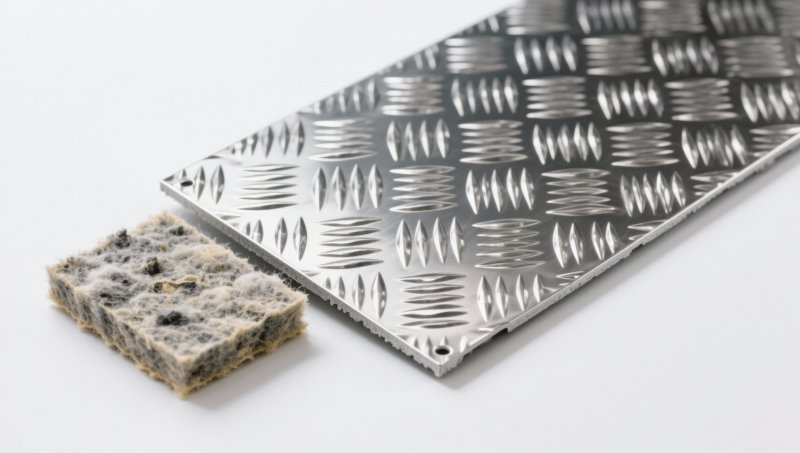
Integration With Structural Steel Frameworks: Compatibility & Installation Efficiency
Cladding performance is inseparable from substructure integrity. Stainless steel embossed plate integrates seamlessly with cold-formed and hot-rolled structural systems—including Z-beam purlins used in lightweight roof and wall applications. Our Z-beam profiles—available in Q235B through Q460C and S235–S355 grades—offer precise dimensional control (±1% tolerance) and mill-edge or slit-edge consistency critical for flush-mounted cladding attachment.
In real-world deployment, using standardized Z-beam sections reduces field welding by 42% and cuts fastener count per square meter by 29% versus traditional angle-steel framing. This accelerates enclosure completion by 11–18 working days on mid-rise projects (4–12 stories).
Hongteng Fengda provides coordinated engineering support: our technical team validates load transfer paths between embossed cladding panels and primary structural members—including wind uplift resistance calculations per ASCE 7-22 and EN 1991-1-4. All design packages include BIM-ready Revit families and connection detail drawings compliant with AISC 360-22.
The synergy between stainless steel cladding and engineered structural components like Z-beams ensures holistic system performance—not just component-level compliance.
Global Procurement Confidence: Standards, Lead Times & Risk Mitigation
For procurement officers managing multi-continent supply chains, specification confidence hinges on certification traceability and delivery predictability. Hongteng Fengda maintains dual-certified production lines (ISO 9001:2015 + ISO 14001:2015), with all stainless steel embossed plate shipments accompanied by third-party inspection reports from BV, SGS, or TÜV.
Standard lead time from order confirmation is 25–35 days for quantities up to 80 MT—compressible to 18 days with expedited scheduling. MOQ is flexible: 5 MT for standard finishes, 15 MT for custom embossing patterns. Every shipment includes full MTRs, dimensional inspection reports, and packaging compliance with ISTA 3A transport standards.
We support buyers with pre-shipment sample validation, factory audits, and logistics coordination—including FCL/LCL consolidation across Shanghai, Qingdao, and Tianjin ports. This integrated approach has enabled repeat partnerships with Tier-1 contractors in Germany, Canada, and the UAE—reducing sourcing risk while maintaining price stability within ±2.3% YoY across 2022–2024.
Procurement Checklist for Project Teams
- Verify mill certification against ASTM A240/A480, EN 10088-2, or GB/T 4237—cross-reference batch numbers with MTRs
- Confirm embossing pattern repeatability (±0.03 mm depth tolerance) and surface roughness (Ra ≤0.8 µm for cleanable finishes)
- Require fire test reports per ASTM E84/E119 and corrosion resistance data per ASTM G154 cyclic UV/salt spray (≥2,000 hrs pass)
- Validate packaging method: edge-protected wooden crates for export; anti-tarnish paper interleaving for mirror finishes
Conclusion: Strategic Specification for Resilient, Future-Ready Buildings
Stainless steel embossed plate is no longer a premium aesthetic choice—it’s an evidence-based performance strategy for LEED-certified commercial buildings. It delivers measurable advantages in fire safety, lifecycle economics, environmental compliance, and installation efficiency. When paired with rigorously engineered structural components like Z-beam, it forms a complete, certifiable building envelope system.
Hongteng Fengda bridges specification ambition with execution certainty: offering ASTM/EN/GB-compliant stainless steel embossed plate, fully documented traceability, and responsive global logistics. Whether you’re an architect finalizing façade details, a procurement officer negotiating framework agreements, or a project manager validating submittals—we provide the technical depth, quality discipline, and partnership reliability needed to deliver high-performance buildings on time and within budget.
Contact Hongteng Fengda today to request product samples, review LEED credit documentation packages, or schedule a technical consultation with our structural cladding engineering team.
- l angle
- galvanized steel
- structural steel
- Structural Steel
- Stainless steel embossed plate
- pipe stainless
- Profile
- Wire Products
- Z-beam
- Galvanized
- carbon steel
- Stainless steel embossed plate fireproof
- Wire Products for construction reinforcement
- pipe stainless steel seamless
- Stainless steel embossed plate for architectural cladding
Related recommendations
 What Drives Angle Steel Price Changes in Building Frame ProjectsAngle steel price changes can reshape building frame budgets. Learn the key drivers behind fluctuations and how to secure stable, cost-effective sourcing.
 Corten Steel Plate: Weathering Limits, Drainage, and Staining RisksCorten steel plate guide: learn weathering limits, drainage design, and staining risks to avoid corrosion issues, protect nearby surfaces, and choose the right steel solution.
 What Drives Steel Rod Price Changes in Building Projects?Steel Rod price changes can reshape construction budgets fast. Learn what drives costs—from steel, zinc, specs, compliance, and lead times—to make smarter, lower-risk buying decisions.
 Galvanized Pipe Specifications: Which Standards Matter for Water and Gas Lines?Galvanized pipe specifications determine whether water and gas lines pass code, pressure, and coating checks. Learn which standards matter most to avoid costly approval and installation risks.
Please give us a message


Please enter what you want to find