Across Asia’s fast-evolving modular construction sector, Stainless steel corrugated sheet lightweight is gaining strong traction for façade applications—offering unmatched strength-to-weight ratio, corrosion resistance, and aesthetic versatility. As project managers, procurement professionals, and architects seek durable yet agile cladding solutions, this material aligns perfectly with demands for rapid installation, long-term performance, and design flexibility. Backed by global standards—including pipe stainless steel ASTM standard and SS 304 tube price quotation transparency—Hongteng Fengda delivers certified, lightweight stainless solutions such as mirror stainless sheet for furniture and stainless steel embossed plate for elevator decoration. Whether sourcing AZ150 Galvalume Steel Coil for warehouse construction or custom mirror stainless sheet in precise sizes, our China-based Wire Products manufacturer expertise ensures reliability, compliance (ASTM/EN/JIS/GB), and seamless export support across Southeast Asia and the Middle East.
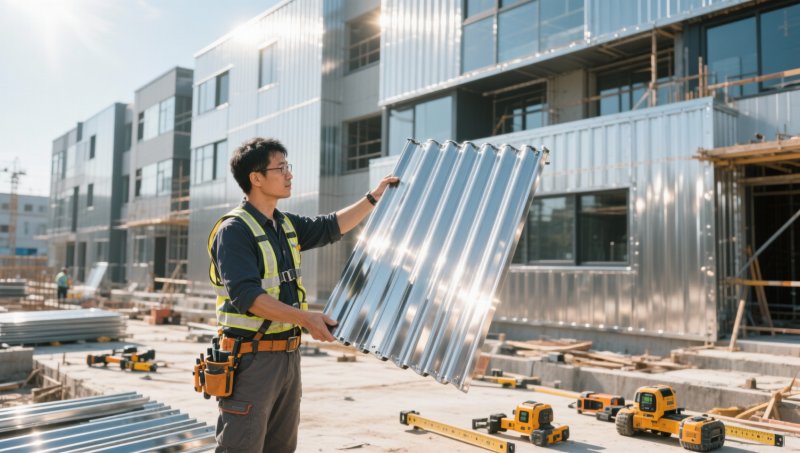
Why Lightweight Stainless Corrugated Sheets Are Reshaping Façade Design in Asia
Modular building projects across Southeast Asia, India, and the Middle East are accelerating at an average pace of 12–18% year-on-year, driven by urban densification, labor shortages, and strict environmental timelines. In this context, façade systems must deliver more than aesthetics—they must enable speed, reduce structural load, and survive high-humidity, salt-laden, and pollution-heavy environments. Lightweight stainless steel corrugated sheets meet all three criteria: typical thicknesses range from 0.5 mm to 1.2 mm, yet they achieve yield strengths of ≥205 MPa (for SS 304) and maintain form stability under thermal cycling from −20°C to +60°C.
Unlike traditional aluminum composite panels or painted galvanized steel, stainless corrugated sheets require zero post-fabrication coating and retain their finish for over 30 years without repainting—reducing lifecycle cost by up to 40% compared to coated alternatives. For developers managing multi-phase projects across Bangkok, Jakarta, or Dubai, this translates into predictable maintenance budgets and fewer warranty claims.
Hongteng Fengda supports this shift with fully traceable mill test reports (MTRs), dimensional tolerances held within ±0.15 mm across 6 m lengths, and surface finishes including 2B, BA, No.4, and HL—each certified to ASTM A480/A480M and EN 10088-2. Our production lines in Jiangsu Province operate under ISO 9001:2015-certified quality management, with real-time thickness monitoring via laser gauges.
Key Technical Advantages Over Conventional Cladding Materials
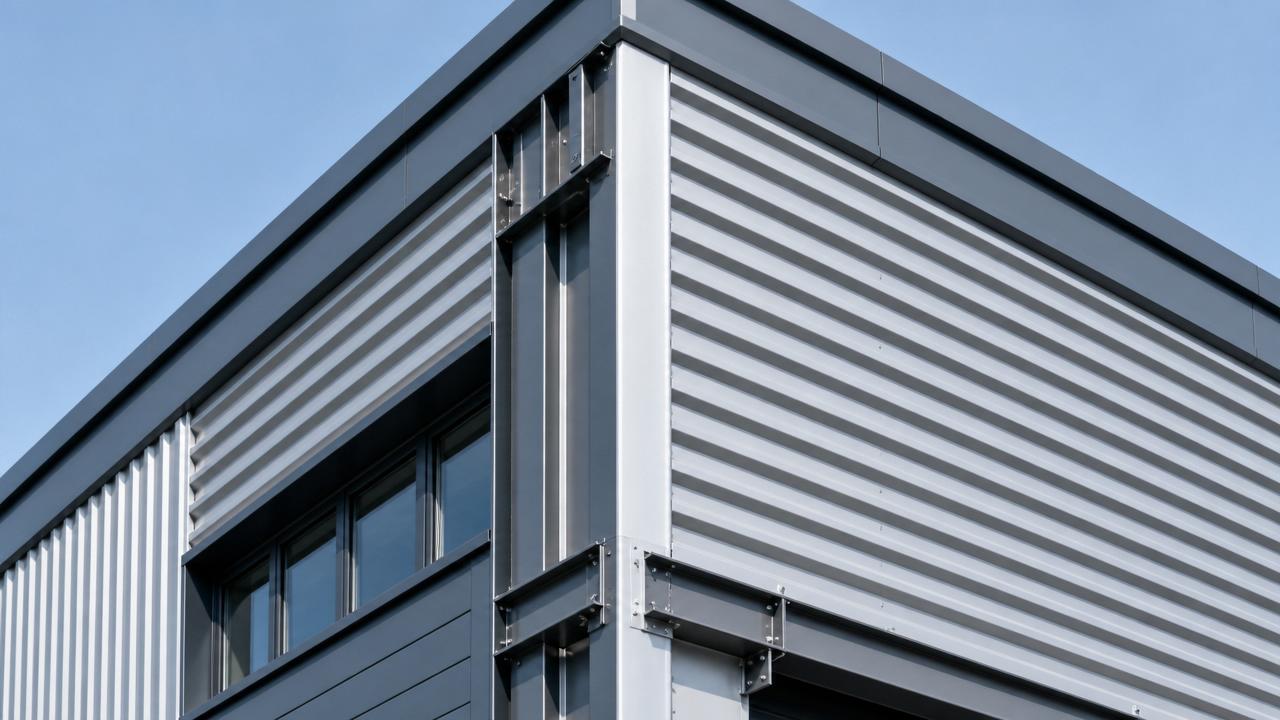
Weight reduction is only one facet of performance. The true advantage lies in system-level integration: corrugated profiles increase rigidity per unit mass by up to 3.2× versus flat sheets of equal thickness. This allows wider panel spans—typically 1.8–2.4 m between supports—cutting substructure material use by 22–28% on average. Moreover, stainless corrugated sheets resist crevice corrosion even when installed over marine-grade aluminum framing, a critical consideration for coastal cities like Ho Chi Minh City or Doha.
The table above highlights why fire safety regulators in Singapore and Malaysia now mandate non-combustible façades for buildings over 24 m. While ACPs have faced bans following high-profile façade fires, stainless corrugated sheets comply inherently—eliminating third-party fire certification delays of 3–5 weeks per project batch.
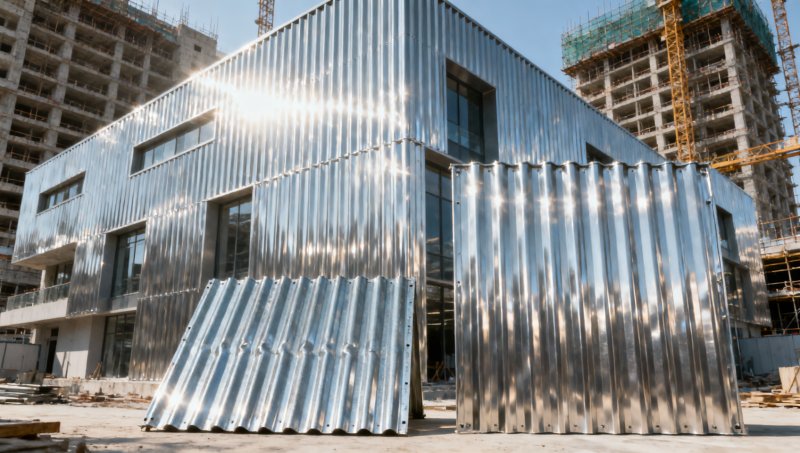
Integration With Structural Steel Frameworks: Compatibility & Best Practices
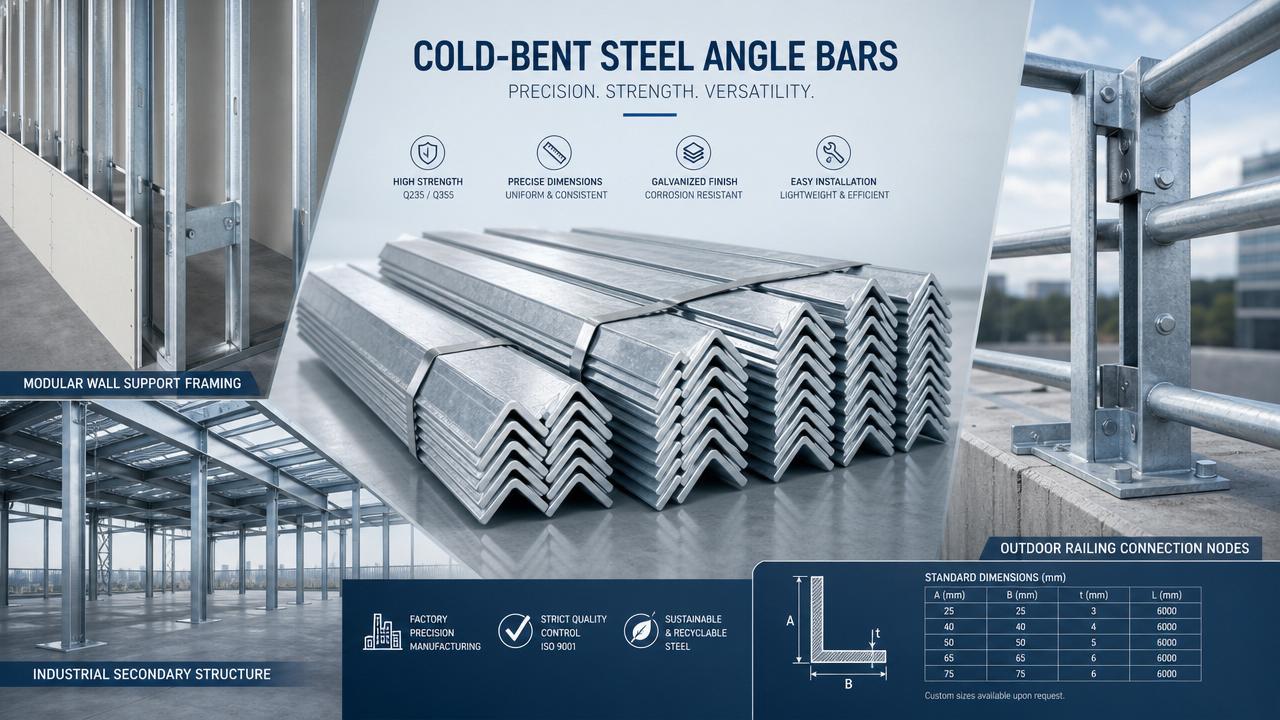
Façade performance hinges not just on cladding, but on how it interfaces with primary and secondary framing. Hongteng Fengda supplies both façade-grade stainless sheets and supporting structural components—including angle steel, channel steel, and cold-formed steel profiles—all manufactured to ASTM A653, EN 10346, and GB/T 2518 standards. This vertical integration ensures thermal expansion coefficients remain aligned: stainless steel (17.3 × 10⁻⁶/°C) and hot-rolled carbon steel (12.0 × 10⁻⁶/°C) exhibit compatible movement behavior when properly anchored using slotted brackets and elastomeric washers.
For modular façade systems requiring rapid bolt-on assembly, we recommend pairing stainless corrugated sheets with Q195 Carbon Steel Round Bar for visible handrail and balcony infill elements. Its excellent strength and wear resistance make it ideal for high-touch architectural features where durability meets code compliance. Q195 Carbon Steel Round Bar is available in diameters from 5 mm to 2500 mm and lengths up to 12 m, with surface treatments including galvanizing, phosphating, and anti-rust oil—ensuring consistent corrosion protection across integrated façade subsystems.
Our engineering team provides free joint detail reviews, including wind-load calculations (per ASCE 7-22 or GB 50009), seismic anchorage schematics, and thermal bridge analysis—reducing design rework by up to 65% during pre-construction coordination.
Procurement Considerations for Asian Modular Projects
Lead time consistency matters more than lowest unit price in fast-track modular builds. Hongteng Fengda maintains rolling stock of SS 304 corrugated sheets in common widths (1000 mm, 1219 mm, 1500 mm) and thicknesses (0.6 mm, 0.8 mm, 1.0 mm), enabling order-to-shipment cycles of 7–12 days for standard configurations. For custom embossed or perforated variants, lead time extends to 25–35 days—still 10–14 days faster than regional competitors due to in-house roll-forming capacity.
We also offer consolidated logistics: containerized shipments with mixed loads (e.g., corrugated sheets + structural angles + round bars) reduce port handling costs by ~18% and cut customs clearance time by 2–3 days through pre-validated HS codes and ASEAN-China FTA documentation support.
Conclusion: Partnering for Performance-Driven Façade Delivery
Lightweight stainless corrugated sheets are no longer niche—they are the strategic choice for façades where speed, safety, longevity, and sustainability converge. From high-rise student housing in Kuala Lumpur to logistics hubs in Ho Chi Minh City, these materials lower embodied carbon by reducing transport weight and eliminating repeat painting cycles. Hongteng Fengda bridges specification intent with execution certainty: every coil carries full traceability, every shipment includes dimensional validation reports, and every inquiry receives technical response within 4 business hours.
Whether you’re specifying façade systems for your next modular project or evaluating supply chain resilience across Southeast Asia, our engineering and procurement teams are ready to co-develop solutions tailored to your timeline, budget, and compliance requirements. Contact us today to request sample kits, obtain SS 304 tube price quotations, or schedule a virtual factory audit.
- channel steel
- l angle
- angle steel
- ASTM standard
- steel coil
- galvanized steel
- structural steel
- steel profiles
- Structural Steel
- mirror stainless sheet
- Stainless steel embossed plate
- Stainless steel corrugated sheet
- ss 304 tube price
- pipe stainless
- Profile
- Wire Products
- AZ150 Galvalume Steel Coil
- Galvanized
- carbon steel
- steel profile
- steel round bar
- Stainless steel embossed plate for elevator decoration
- pipe stainless steel ASTM standard
- Stainless steel corrugated sheet lightweight
- AZ150 Galvalume Steel Coil for warehouse construction
- ss 304 tube price quotation
- mirror stainless sheet for furniture
Related recommendations
 What Affects the Cost of Galvanized Steel in Fabrication Projects?Galvanized steel costs vary far beyond raw material price. Learn how coating, steel grade, fabrication, logistics, and hidden quote items affect project budgets before you buy.
 Steel Wire Strand Applications in Lifting and Support: Key Load and Safety ConsiderationsSteel wire strand selection for lifting and support starts with real load, fatigue, corrosion, and anchoring conditions. Learn how to improve safety, service life, and structural reliability.
 Architectural Steel Angle in Facades, Edges, and Clean LinesArchitectural steel angle improves facade edges, clean lines, and structural precision. Discover how it supports durability, faster installation, and smarter project control.
 Where Cold Formed Steel Angle Works Best in Modern BuildsCold formed steel angle works best in modular builds, secondary framing, and utility supports. Learn where it adds value, what to verify, and how to choose the right profile with confidence.
Please give us a message


Please enter what you want to find