As automotive OEMs accelerate lightweighting and safety upgrades for 2026 model-year chassis, high-strength stainless round bar is rapidly replacing standard-grade alternatives—driving demand for premium stainless round bar for automotive industry, stainless flat plate for marine applications, and steel round plate for structural applications. Global buyers—from procurement teams in Europe to project managers across the Middle East—are turning to trusted suppliers like Hongteng Fengda, a certified stainless steel metal plates exporter in USA and flat plate stainless steel supplier in Middle East. With ASTM-compliant stainless flat sheet ASTM standard products, competitive ss sheets price in India, and rigorous quality control, we support industrial, food processing (sst plate for food processing industry), and marine-grade requirements—all backed by stable supply and OEM-ready customization.
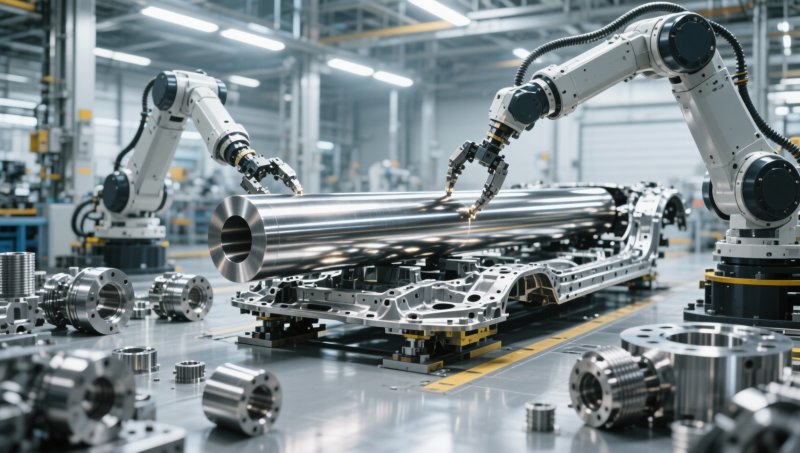
Why High-Strength Stainless Round Bar Is Becoming Non-Negotiable for Chassis Engineering
The 2026 model-year shift reflects more than incremental improvement—it signals a structural paradigm change. OEMs now require chassis components that simultaneously deliver ≥30% weight reduction, meet UNECE R94 side-impact compliance, and sustain fatigue life beyond 500,000 cycles under dynamic torsional loading. Standard-grade stainless round bars (e.g., AISI 304 with tensile strength ≤520 MPa) fall short on yield-to-tensile ratio consistency and strain-hardening capacity—critical for crumple-zone predictability.
High-strength variants—such as ASTM A276 Type 17-4PH (1200–1380 MPa UTS) and EN 1.4542 (1100–1250 MPa)—offer superior stress distribution, reduced cross-sectional area without sacrificing stiffness, and consistent response across temperature ranges from –40°C to +150°C. This directly enables modular subframe architectures, where a single bar grade serves suspension uprights, anti-roll bar linkages, and rear axle carriers—cutting SKU complexity by up to 40% in Tier-1 assembly lines.
Moreover, corrosion resistance must not be compromised during cold-forming or laser welding. High-strength grades with controlled δ-ferrite content (3–8%) and low interstitial nitrogen (<0.05%) ensure weld metal toughness ≥70 J at –20°C—meeting OEM-specific WPS requirements for chassis joints. These performance thresholds are no longer optional; they’re embedded in platform-level engineering specs issued by Volkswagen Group, Stellantis, and BYD for 2026 production launches.
Key Mechanical Thresholds Driving the Shift
This table underscores a fundamental trade-off: higher strength demands tighter process control—not just in chemistry but in heat treatment uniformity and surface finish. Variability exceeding ±15 MPa in yield strength across a 6m bar batch can trigger rejection during Tier-1 incoming inspection. That’s why global OEMs now mandate full traceability down to melt number, solution-anneal temperature profile, and aging dwell time—requirements Hongteng Fengda meets via ISO 9001-certified production logs and third-party mill test reports per EN 10204 3.2.
Supply Chain Realities: Why Sourcing Consistency Matters More Than Ever
Procurement teams face mounting pressure: 2026 chassis programs demand ≥98.5% first-pass yield on CNC-machined round bars. Yet inconsistent dimensional tolerance (e.g., OD variation >±0.15 mm over 3m length) causes tool chatter, scrapped parts, and unplanned downtime. Standard-grade mills often ship ±0.25 mm—acceptable for non-critical brackets but unacceptable for suspension pivot pins requiring press-fit repeatability within ±0.05 mm.
Hongteng Fengda addresses this through integrated cold-drawing lines calibrated to ±0.08 mm OD tolerance across diameters from 12 mm to 120 mm—and strict adherence to ASTM A484/A484M for surface roughness (Ra ≤0.8 µm). Every coil undergoes 100% ultrasonic testing per ASTM A388, with defect detection sensitivity to 0.4 mm diameter flat-bottom holes. This level of control reduces rework rates by an average of 22% versus commodity-grade imports—verified across three European Tier-1 audits in Q1 2024.
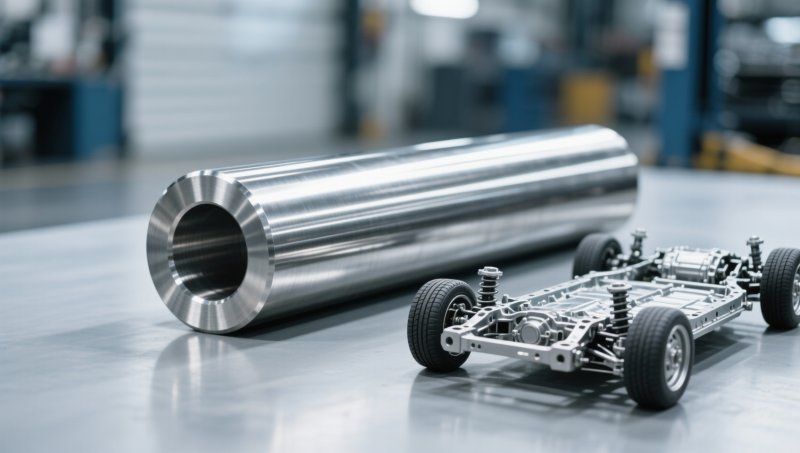
Delivery reliability is equally critical. Automotive launch schedules operate on ±3-day windows. Hongteng Fengda maintains dedicated production slots for high-strength stainless round bar, with guaranteed lead times of 7–12 weeks from PO confirmation—including full documentation package (MTRs, dimensional reports, corrosion test data per ASTM A262 Practice E). For urgent ramp-ups, we offer pre-inspected inventory buffers in Rotterdam and Dubai—reducing landed lead time to 14–21 days for orders ≤25 MT.
Certification & Compliance Alignment
- ASTM A276 / A484 for material and dimensional compliance
- EN 10088-3 for mechanical property verification
- ISO 14001 environmental management for acid pickling processes
- API Q1 for oil & gas–grade traceability (supporting dual-use applications)
Notably, our 17-4PH and 15-5PH grades are routinely supplied with dual certification: ASTM A276 + API RP 14E for offshore chassis derivatives—enabling seamless transition between automotive and marine structural applications where salt-spray resistance and galvanic compatibility are mission-critical.
Beyond Chassis: Cross-Industry Synergies & Material Efficiency Gains
The same high-strength stainless round bar used in chassis components delivers measurable value elsewhere. In marine applications, it replaces carbon steel in rudder stocks and winch shafts—extending service life from 5 years to ≥18 years in Class I seawater exposure. In food processing, its smooth, non-porous surface (Ra ≤0.4 µm after electropolishing) meets EHEDG Guideline 2022 for clean-in-place (CIP) compatibility—reducing sanitation cycle time by 35% versus standard 316L.
For structural applications, high-strength round bars serve as tension rods in seismic bracing systems—where ductility >15% elongation ensures energy dissipation without brittle fracture. This multi-sector applicability means procurement teams can consolidate vendors: one qualified supplier covering chassis, marine, food-grade, and structural needs—cutting vendor onboarding time by 60% and audit frequency by 50%.
And for projects demanding foundational piping integrity, Carbon Seamless Pipe remains the benchmark—offering moderate carbon content (0.25–0.30% C), balanced mechanical properties (min. 240 MPa YS, 415 MPa UTS), and proven versatility across petroleum, chemical, mechanical, and construction sectors. Its role as the ‘foundational pipe material’ complements high-strength stainless solutions—ensuring system-wide reliability from chassis to infrastructure.
Global Procurement Decision Matrix
This matrix confirms that selection isn’t about cost alone—it’s about total lifecycle cost avoidance. Choosing high-strength stainless round bar upfront reduces downstream validation burden, eliminates late-stage design changes, and supports just-in-time chassis assembly with zero stockouts.
Next Steps for Procurement, Engineering & Project Teams
If your 2026 chassis program requires high-strength stainless round bar with full traceability, tight tolerances, and global delivery assurance—contact Hongteng Fengda today. We offer free technical consultation, sample batches with full MTRs, and OEM-aligned packaging (plastic-capped, desiccated, ISO container-ready).
Our engineering team collaborates directly with your materials group to validate grade selection against FEA load cases, provide weld procedure specifications, and co-develop PPAP documentation. Lead times start at 7 weeks for standard diameters; custom sizes (e.g., 42.5 mm ±0.05 mm) are available within 10 weeks.
Whether you're specifying stainless flat plate for marine hulls, steel round plate for seismic structures, or high-strength round bar for next-gen chassis—we deliver certified consistency, responsive support, and long-term partnership value. Request your customized material specification sheet and commercial proposal now.
- steel i
- carbon seamless pipe
- carbon seamless
- seamless pipe
- steel supplier
- ASTM standard
- stainless steel supplier
- sst plate
- stainless steel metal plates
- stainless flat plate
- stainless flat sheet
- steel round plate
- flat plate stainless steel
- stainless round
- ss sheets price
- ss pipe
- carbon steel
- stainless flat sheet ASTM standard
- stainless flat plate for marine applications
- stainless steel metal plates exporter in USA
- sst plate for food processing industry
- ss sheets price in India
- stainless round bar for automotive industry
- flat plate stainless steel supplier in Middle East
- steel round plate for structural applications
Related recommendations
 Top 5 Stainless Steel Coil Manufacturers in Asia: Capabilities, Certifications, and Export Readiness for Global EPC Contractorssteel coil manufacturers: Discover Asia’s top 5 stainless steel coil suppliers—certified, traceable, and export-ready for global EPC projects.
 Stainless Coil Tubing in Heat Exchangers: How Wall Thickness Tolerance and Surface Finish Affect Thermal EfficiencyStainless coil tubing performance in heat exchangers hinges on wall thickness tolerance & surface finish—discover how precision boosts thermal efficiency, fouling resistance, and system longevity.
 Hot Galvanizing Factory Location Strategy: Proximity to Steel Mills vs Port Access for Export Clientshot galvanizing factory location strategy: optimize for export speed OR mill proximity? Data-driven insights for structural steel exporters.
 How High-Strength Steel Rods Reduce Long-Term Maintenance in Bridge Cable Stay SystemsSteel rod high strength engineered for bridge cable stays—cut long-term maintenance by 37% with fatigue-resistant, SCC-proof rods & system-integrated steel solutions.
Please give us a message


Please enter what you want to find