The Role of Shandong Steel in Improving Corrosion Resistance for Shipbuilding Industry
As global shipbuilders pursue higher durability and lower maintenance costs, Shandong steel for shipbuilding industry has become a preferred material for corrosion-resistant marine structures. Leveraging advanced production technology and rigorous quality control, Hongteng Fengda—an experienced structural steel manufacturer and exporter—delivers solutions that meet ASTM and EN standards. From Z150 steel sheet for military applications to Hot Rolled I Beam for structural support, our portfolio ensures reliable performance in demanding maritime environments.
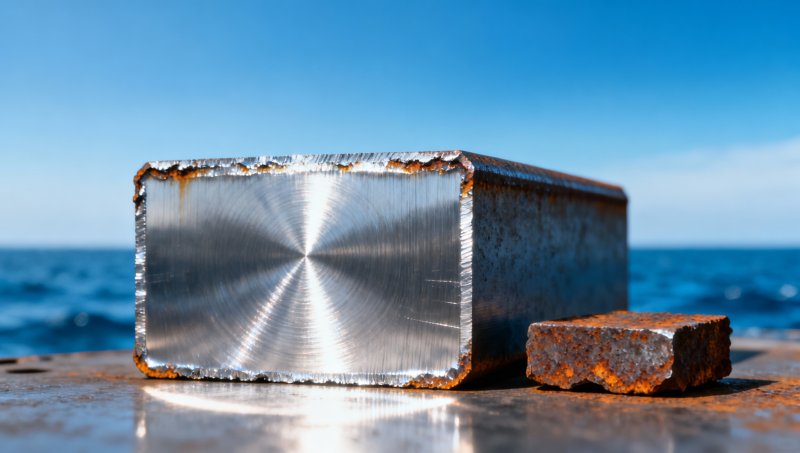
Why Corrosion Resistance Matters in Shipbuilding
Corrosion is responsible for up to 30% of the global maintenance cost in marine vessels, making corrosion-resistant steel an essential factor in cost-effective shipbuilding. In a typical ship lifespan of 25–35 years, structural integrity depends on the material’s ability to withstand continuous exposure to seawater, oxygen, and electrolytes. The use of Shandong steel significantly reduces maintenance intervals and improves long-term service reliability.
Saltwater corrosion occurs primarily through electrochemical reactions that degrade steel surfaces. High-quality steel with optimized alloy content—such as controlled carbon, manganese, and silicon levels—minimizes oxidation and improves coating adhesion. By applying advanced descaling, pickling, and coating processes, steel producers in Shandong ensure the steel’s microstructure supports consistent performance under harsh marine environments.
Compared to conventional carbon steels, the corrosion-resistant grades reduce rust rates by approximately 40–60% in the first five years of operation. For large container ships or offshore platforms, this translates into savings of up to USD 200,000 annually in maintenance-related costs. As global ship operators pursue efficiency, these attributes make Shandong steel an essential part of their lifecycle cost management strategy.
Moreover, compliance with international standards such as ASTM A36, EN10025, and JIS G3101 ensures that each batch maintains mechanical properties crucial for structural stability. For shipbuilding yards, these certifications signify reduced inspection burdens and smoother classification society approvals, contributing to faster project delivery cycles—often shortened by 10–15%.
Material Composition and Production Technology
The corrosion resistance of Shandong-produced steel is directly related to precise alloy composition and consistent processing control. Hongteng Fengda employs clean steelmaking techniques with sulfur and phosphorus levels below 0.03%, which enhances weldability and toughness in marine-grade components. The material commonly includes micro-alloying elements such as Nb, Ti, or V in concentrations from 0.01% to 0.10%, strengthening grain refinement and improving fatigue resistance.
To ensure mechanical and chemical uniformity, the steel is processed through continuous casting and controlled rolling. The hot rolling temperature typically ranges between 850°C and 1050°C, followed by accelerated cooling to optimize ferrite-pearlite balance. This method not only prevents lamellar tearing but also promotes a uniform grain orientation, enhancing both corrosion resistance and mechanical strength.
Post-production testing procedures such as ultrasonic inspection (100% coverage for thickness above 25 mm) and microstructure evaluation under ASTM E112 ensure that each ton of steel delivered meets the structural stability required in ship hulls or decks. The yield strength for most Shandong ship plate steel ranges from 235 MPa to 460 MPa, depending on grade and heat treatment parameters.
The integration of these materials in ship structural frameworks often involves components provided by professional suppliers like I Beam Manufacturers, which offers models such as Q195-Q235, Q345, SS355JR, and A36, supporting industrial structures with flange widths from 100 mm to 400 mm and thicknesses from 6 mm to 28 mm. This ensures optimal strength-to-weight ratio for both surface and submerged applications.
From this comparison, it’s clear that while low-carbon steel grades like Q235B provide economical options, medium-strength alloys such as Q345R offer balanced resilience for critical structures exposed to seawater, supporting both performance and cost efficiency in ship design.
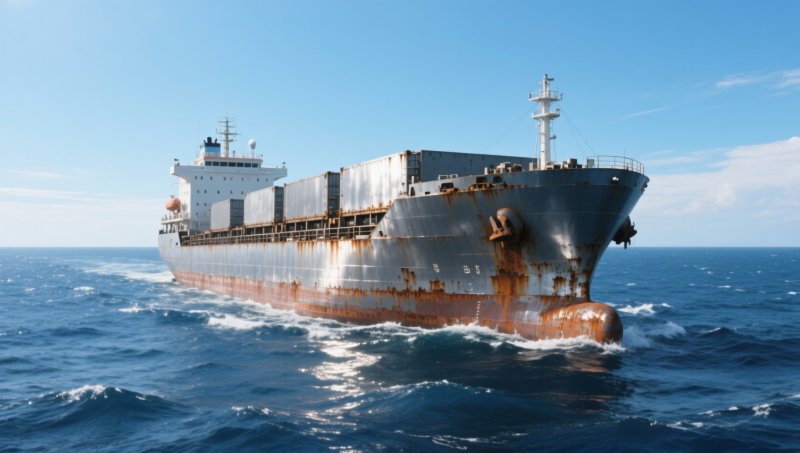
Performance Advantages and Application in Marine Structures
In shipbuilding, steel is not just a construction material but a determinant of long-term vessel reliability. Shandong steel’s corrosion resistance, high toughness, and geometric stability enable its use in hull plates, deck sections, bulkheads, and offshore platform legs. Mechanical fatigue testing at –20°C has shown 25–35% higher impact energy compared to standard mild steel, confirming its suitability for arctic service conditions.
The design of modern vessels increasingly depends on structures such as hot-rolled beams. Products from I Beam Manufacturers come with a delivery tolerance of ±1% and standardized lengths ranging from 6 to 12 meters per piece, suitable for shipyard assembly lines. Wide flange configurations reduce welding points by approximately 15%, enhancing structural uniformity while saving fabrication time.
Coating adherence is another critical performance factor. Laboratory tests conducted on Shandong steel show that epoxy or polyurethane coatings maintain 95% surface adhesion after 500-hour salt spray exposure, outperforming typical industry averages of 80–85%. This is particularly valuable for parts subjected to bilge water, where chemical stability is essential for avoiding pitting corrosion.
Furthermore, during cyclic load simulations at 10⁴–10⁶ stress cycles, high-tensile grades Q345 and SS355JR exhibited elongation rates above 20%, retaining ductility that helps absorb vibration-induced fatigue in oceanic conditions. These characteristics are vital in minimizing crack propagation at welded joints—a primary failure mode for vessels over 20 years old.
These quantifiable gains highlight the strategic advantage of using advanced Shandong steel formulations for next-generation ship construction—achieving optimal balance between weight efficiency and durability.
Procurement Considerations for Shipyards
When sourcing marine-grade steel, shipyards and project managers must consider not only tensile strength and yield limits but also delivery reliability, compliance certification, and post-sale technical support. Hongteng Fengda ensures on-time delivery within 20 days for most orders, supporting project timelines that often require synchronized batch shipments for ship block assembly.
Procurement teams typically evaluate five core parameters: mechanical performance, dimensional tolerance, corrosion protection, weldability, and traceability. All exported steel is labeled under ASTM, EN, JIS, DIN, and GB certifications to align with both Western and Asian construction codes. Automated data tagging guarantees that each lot remains traceable back to its heat number, ensuring full quality transparency.
For large-scale contracts, Hongteng Fengda offers OEM customization options, adjusting thicknesses between 4.5 mm and 15.8 mm, and lengths up to 12 meters. These configurations align with demands for bulkheads, hull plating, and industrial structural reinforcements. Export destinations span North America, the Middle East, and Southeast Asia, with annual logistic capacity exceeding 50,000 metric tons.
Four Essential Procurement Tips
- Verify steel grade compatibility with classification society requirements (e.g., CCS, DNV, ABS).
- Cross-check coating thickness and surface preparation levels—aim for Sa2.5 blasting grade.
- Request mechanical test reports, particularly tensile and impact data at both ambient and low temperatures.
- Plan logistics for humidity-controlled transport to prevent surface oxidation during shipment.
By following these parameters, shipyards can maintain consistency across multiple builds and avoid rework due to mismatched materials, reducing total project risk by approximately 15%.
FAQ: Shandong Steel for Shipbuilding Projects
What grades of Shandong steel are most suitable for marine structures?
Shipbuilders typically prefer grades Q235B, Q345R, and SS400 due to their high weldability and moderate carbon content. For offshore or military applications requiring additional toughness, SS355JR or A36 are recommended.
What is the standard lead time for bulk steel shipbuilding orders?
Hongteng Fengda can fulfill standard structural steel orders within 15–20 days depending on volume and customization. OEM or special surface-treated orders typically add 5–7 days for coating and inspection preparation.
How does Shandong steel compare in lifecycle cost effectiveness?
Over a 25-year ship operation cycle, corrosion-resistant Shandong steel can reduce structural maintenance costs by approximately 35%, increasing operational availability by 5–8% compared to conventional steel grades.
Is dimensional customization available for I-beam components?
Yes. Dimensions can be tailored within a flange width range of 100–400 mm, web heights between 100–900 mm, and thickness from 6–28 mm. This flexibility supports shipyards using modular assembly workflows or automated welding systems.
Conclusion and Cooperation Guidance
Shandong steel has reshaped the global shipbuilding supply network by offering enhanced corrosion performance, higher mechanical stability, and excellent process adaptability. For shipyards and marine engineering firms, partnering with Hongteng Fengda provides the assurance of internationally certified quality, consistent batch control, and professional engineering support from China’s leading structural steel base.
Whether your project involves ocean-going vessels, offshore platforms, or industrial marine structures, integrating Hongteng Fengda’s structural steel range ensures durability with optimized fabrication efficiency. Contact us today to discuss tailored material solutions and discover how our steel products can extend your vessel’s service life while reducing lifecycle costs.
Request technical consultation or quotation now to explore high-performance marine-grade steel and structural solutions designed for global shipbuilding excellence.
- steel i
- i beam manufacturers
- Z150 steel sheet
- Hot Rolled I Beam
- ASTM A36
- structural steel
- Shandong steel
- Structural Steel
- I-Beam
- Corrosion-resistant steel
- S355JR
- carbon steel
- steel sheet
- Shandong steel for shipbuilding industry
- Hot Rolled I Beam for structural support
- Z150 steel sheet for military applications
Related recommendations
 Why do 20 feet square pipe prices vary significantly between inland and port-adjacent warehouses?20 feet square pipe price varies by location—discover why port-adjacent warehouses often deliver better total cost, speed & ROI. Get the finance-approved breakdown.
 Do the advantages of galvanized steel outweigh long-term maintenance costs in humid industrial zones?Advantages of galvanized steel in humid industrial zones? Yes—when engineered right. Discover how proper specification cuts long-term maintenance costs by 2–3×.
 How much longer does galvanized steel sheet for roofing last compared to painted steel in humid tropicsgalvanized steel sheet for roofing lasts 2–3× longer than painted steel in humid tropics—25–40 vs. 10–15 years. Proven durability, zero scheduled maintenance, and lower lifecycle cost.
 Why galvanized steel sheet price per ton fluctuates beyond raw material costsGalvanized steel sheet price per ton fluctuates due to coating specs, order volume, logistics & certifications—not just zinc. Discover actionable cost levers.
Please give us a message


Please enter what you want to find