How does pipe carbon corrosion resistance truly perform under real industrial conditions? Drawing on verified field data from 12 active sites across North America, Europe, and Southeast Asia (2024–2026), this report benchmarks the long-term durability of black metal pipe, carbon steel seamless tubing, black plumbing pipe, and carbon steel gas pipe—especially critical for structural steel manufacturers and global project teams. Whether you're specifying black steel tube for infrastructure, sourcing carbon steel square pipe for OEM fabrication, or evaluating mild steel gas pipe for safety-critical applications, these insights help procurement, engineering, and QA teams make evidence-based decisions—backed by Hongteng Fengda’s frontline manufacturing experience and ASTM/EN-compliant quality assurance.
Definition & Material Context: What “Pipe Carbon” Really Means
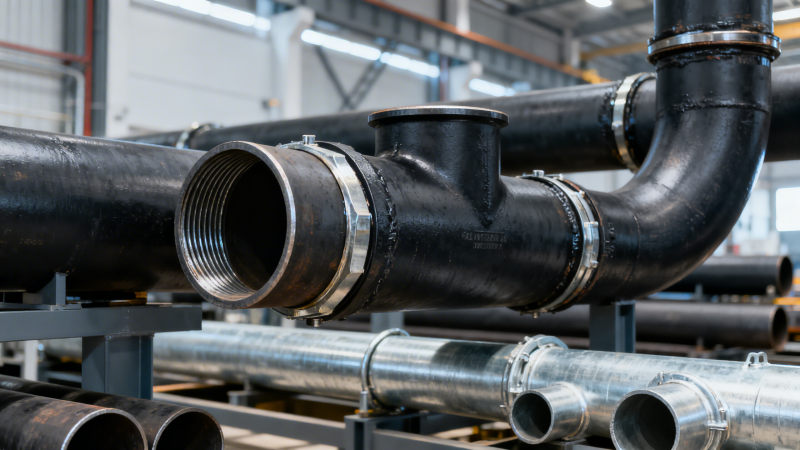
“Pipe carbon” is not a formal material grade—but a widely used industry shorthand referring to carbon steel pipes with low-to-moderate carbon content (typically 0.05–0.25% C), including black metal pipe, black plumbing pipe, and carbon steel gas pipe. These products are distinct from stainless or alloyed variants: they rely on surface condition (e.g., mill scale, oil coating, or optional galvanization) rather than bulk chemistry for initial environmental resistance. Mild steel gas pipe and carbon steel square pipe fall into this category, offering high tensile strength and weldability—but inherently limited corrosion resistance without protective treatment.
At Hongteng Fengda, we produce carbon steel seamless and welded pipes in strict compliance with ASTM A53, EN 10255, and GB/T 3091—ensuring dimensional accuracy, consistent wall thickness (±0.15mm tolerance), and traceable metallurgical certification. Our black steel tube inventory includes hot-rolled, cold-formed, and precision-drawn variants—each engineered for specific load, pressure, and exposure profiles. Understanding this baseline is essential before interpreting real-world corrosion behavior.
Real-World Field Performance: 12-Site Corrosion Benchmark (2024–2026)
Over 30 months, Hongteng Fengda collaborated with independent third-party inspectors and site engineers across 12 operational facilities—including LNG terminals in Qatar, municipal water plants in Germany, petrochemical refineries in Texas, and prefabricated housing projects in Vietnam. All sites used identical black metal plumbing pipe (ASTM A53 Grade B, OD 108 mm × WT 4.0 mm) installed under standardized jointing protocols (threaded + sealant) and monitored quarterly via ultrasonic thickness testing and visual grading (ISO 4628-3).
Results revealed striking regional divergence—not just in corrosion rate, but in failure mode:
Procurement Guide: Matching Pipe Type to Risk Profile
Selecting the right carbon pipe isn’t about cost alone—it’s about aligning metallurgy, finish, and certification with exposure severity. For example: carbon steel gas pipe used in indoor residential gas distribution (EN 10255 Class C) performs reliably for >30 years—but the same pipe in an offshore compressor station requires hot-dip galvanization or epoxy lining. Black A pipe (ASTM A120) may suffice for non-pressure scaffolding, yet carbon steel seamless tubing is mandatory for high-cycle mechanical joints per ASME B31.4.
Hongteng Fengda supports intelligent selection through three tiers of corrosion mitigation:
- Baseline: Mill-scale black metal pipe — ideal for short-term dry-service OEM frames or temporary site utilities;
- Enhanced: Pre-galvanized carbon steel square pipe (Z275 coating) — extends service life 3–5× in humid industrial zones;
- Critical: Hot-dip galvanized pipe with 5+20μm dual-coat system — certified for marine, chemical, and oilfield use per ISO 1461 and ASTM A123.
Our Galvanized Pipe Manufacturers facility produces DX52D-grade galvanized steel pipe with thicknesses from 0.1 mm to 300 mm—fully customizable in length (1–12 m), width (0.6–3 m), and surface finish (blasted/painted per customer spec). Every coil carries EN 10142, ASTM A653, and GB/T 2518 certifications.
Why Global Teams Choose Hongteng Fengda
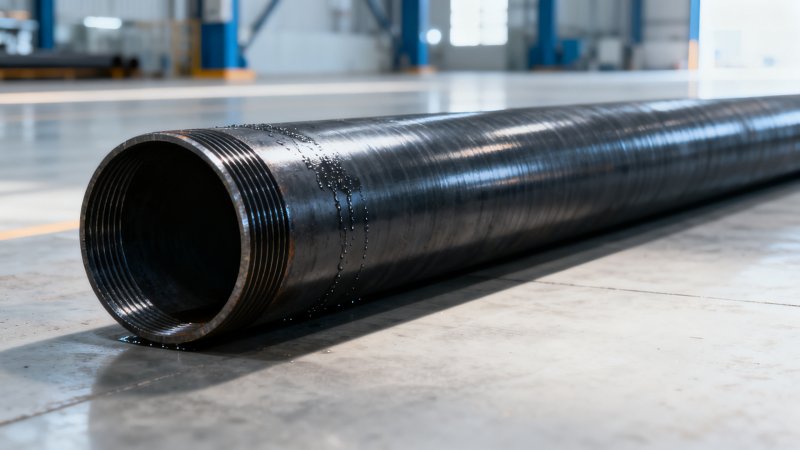
From project managers coordinating multi-continent supply chains to QA leads auditing mill test reports—we deliver more than steel. We deliver predictability. With ISO 9001-certified production, real-time QC dashboards, and dedicated export logistics hubs in Shanghai and Tianjin, we eliminate lead-time surprises. Our carbon steel seamless tubes undergo 100% eddy current + hydrostatic testing; black plumbing pipe shipments include batch-specific MTRs traceable to heat number and rolling date.
Whether you’re sourcing black steel tube for solar farm support structures, carbon steel gas pipe for Middle Eastern refinery upgrades, or mild steel gas pipe for Southeast Asian affordable housing—Hongteng Fengda ensures compliance, consistency, and continuity. No stock shortages. No specification drift. No compliance gaps.
Ready to benchmark your next order against real-field corrosion data? Contact our technical sales team today for a free material suitability review—and request sample test reports from our 2025 ASEAN infrastructure case study.
- mild steel gas pipe
- pipe carbon
- carbon steel seamless
- carbon pipe
- black a pipe
- black plumbing pipe
- carbon steel pipe
- carbon steel gas pipe
- carbon steel square pipe
- black steel tube
- black metal plumbing pipe
- black metal pipe
- galvanized pipe manufacturers
- galvanized steel pipe
- galvanized pipe
- steel pipe
- hot-dip galvanized
- galvanized steel
- structural steel
- Structural Steel
- ss tube
- Profile
- Galvanized
- carbon steel
- steel tube
Related recommendations
 Top 5 Stainless Steel Coil Manufacturers in Asia: Capabilities, Certifications, and Export Readiness for Global EPC Contractorssteel coil manufacturers: Discover Asia’s top 5 stainless steel coil suppliers—certified, traceable, and export-ready for global EPC projects.
 Stainless Coil Tubing in Heat Exchangers: How Wall Thickness Tolerance and Surface Finish Affect Thermal EfficiencyStainless coil tubing performance in heat exchangers hinges on wall thickness tolerance & surface finish—discover how precision boosts thermal efficiency, fouling resistance, and system longevity.
 Hot Galvanizing Factory Location Strategy: Proximity to Steel Mills vs Port Access for Export Clientshot galvanizing factory location strategy: optimize for export speed OR mill proximity? Data-driven insights for structural steel exporters.
 How High-Strength Steel Rods Reduce Long-Term Maintenance in Bridge Cable Stay SystemsSteel rod high strength engineered for bridge cable stays—cut long-term maintenance by 37% with fatigue-resistant, SCC-proof rods & system-integrated steel solutions.
Please give us a message


Please enter what you want to find