In construction projects—especially industrial warehouses, bridges, and large-scale facilities—even a ±5% variance in I beam weight can significantly impact structural integrity, logistics costs, and budget allocation. Whether you're using an I beam weight calculator for construction engineers, consulting a beams weight chart for steel manufacturers, or sourcing the weight of I beam supplier in Europe or in the USA, precision matters. This analysis explores how minor weight deviations influence cost, safety, and compliance—critical for project managers, quality controllers, and procurement teams. Learn how to measure a steel beam for industrial warehouse or bridge projects accurately, understand I beam weight specifications for warehouse construction, and leverage reliable beams weight calculation for structural steel.
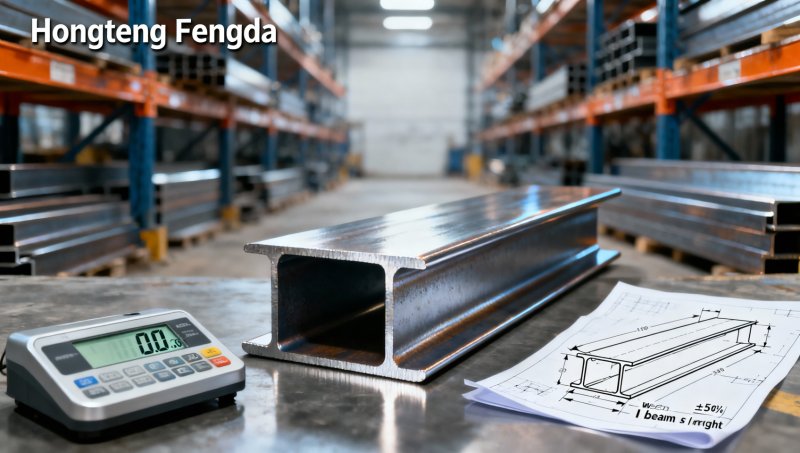
Why ±5% Weight Variance Is Not Just a Tolerance—it’s a Risk Multiplier
A seemingly small ±5% deviation in nominal I beam weight may appear negligible on paper—but its cascading effects are anything but trivial. For example, in a 50,000-ton structural steel framework, this variance translates to ±2,500 tons of unaccounted mass. That impacts crane load planning, foundation design margins, transportation axle weight limits, and even fireproofing material estimation. Structural engineers rely on exact weights for load path modeling; procurement teams use them to benchmark freight quotes; and safety officers verify compliance with EN 1993-1-1 (Eurocode 3) or AISC 360 standards—where weight-derived section properties directly affect buckling resistance and deflection limits.
Moreover, inconsistent weight across batches signals potential nonconformance in rolling temperature, chemical composition control, or dimensional tolerances—red flags for quality assurance professionals. At Hongteng Fengda, every I beam undergoes dual verification: theoretical weight calculation (based on certified dimensions and density of 7,850 kg/m³) and physical weighing per ASTM A6/A6M Annex A4. This ensures repeatability across orders—vital for distributors managing multi-site warehouse rollouts in North America or Southeast Asia.
Technical Performance: How Weight Deviation Affects Real-World Behavior
Weight is not an isolated metric—it correlates tightly with cross-sectional area, moment of inertia, and yield strength consistency. A beam that weighs 5% less than specified often indicates thinner flanges or reduced web thickness, lowering its plastic section modulus (Zx) by up to 7–9%. Conversely, excess weight may suggest over-rolling or carbon segregation, increasing brittleness risk under cyclic loading—especially critical for bridge girders subjected to fatigue per AASHTO LRFD.
Below is a comparative analysis of two common I beam sizes under ±5% weight variation, illustrating downstream implications:
Procurement Guide: From Measurement to Specification Enforcement
How to measure a steel beam for industrial warehouse or bridge projects? Start with traceable dimensional checks—not just weight. Use calibrated ultrasonic thickness gauges on flange and web at three points per meter. Cross-check against certified mill test reports (MTRs) showing actual chemical composition (e.g., C ≤ 0.25% for ASTM A992) and tensile properties. Never accept weight-only verification—especially when sourcing the weight of I beam in USA or supplier in Europe, where regional tolerance bands differ (EN 10034 allows ±6%, while ASTM A6 permits ±7.5%).
For OEM and custom structural steel components—including cold formed profiles or hybrid assemblies—specify weight tolerance explicitly in purchase orders: “±3% max, verified per ASTM A6 Annex A4.” At Hongteng Fengda, we embed this requirement into our QA workflow, offering third-party SGS or Bureau Veritas inspection reports upon request. Our High Carbon Steel Plate —used in high-stress connection plates and bearing stiffeners—undergoes identical weight-and-dimension validation, ensuring seamless integration with primary I beam systems.
Standards & Certification: Where Global Compliance Meets Local Accountability
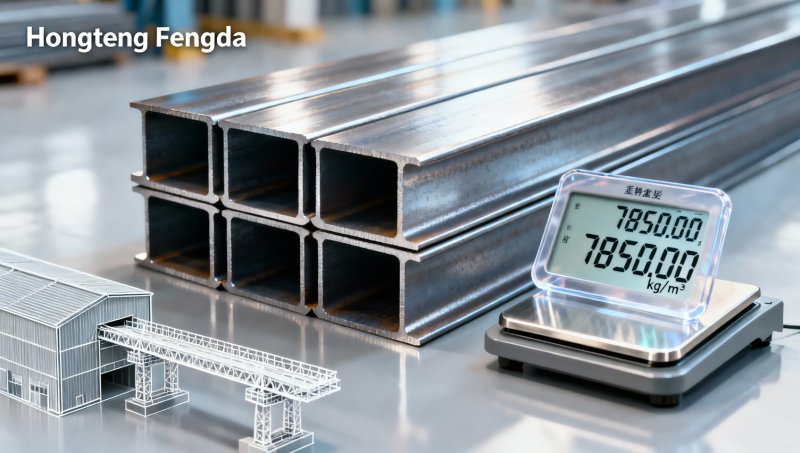
Compliance isn’t about stamping a certificate—it’s about verifiable process control. Our I beams comply with ASTM A6/A6M (USA), EN 10025-2 (EU), JIS G3101 (Japan), and GB/T 706 (China), all requiring documented weight verification methods. For instance, EN 10034 mandates that weight be calculated from measured dimensions—not assumed from nominal tables—making accurate I beam weight calculator for construction engineers tools essential during tendering and shop drawing review.
We also support clients navigating dual-standard projects—such as Middle Eastern refineries requiring both ASME BPVC Section II and ISO 10474 certification. Every batch includes MTRs with heat number traceability, mechanical test results, and dimensional survey data—enabling full audit readiness for end-users, insurers, and regulatory bodies alike.
Why Choose Hongteng Fengda for Precision-Critical Structural Steel?
As a structural steel manufacturer and exporter from China with 18+ years of global delivery experience, Hongteng Fengda bridges engineering rigor with supply chain resilience. We don’t just ship steel—we co-engineer certainty. Our modern rolling mills feature real-time dimensional monitoring; our QC lab performs weekly inter-lab comparisons with NIST-traceable standards; and our logistics team pre-validates container loading plans to prevent overweight surprises at EU ports or US CBP checkpoints.
Whether you’re performing beams weight calculation for structural steel for a new logistics hub in Poland or verifying how to measure a steel beam for industrial use across 12 Asian distribution centers, we provide standardized reporting templates, bilingual technical support, and flexible MOQs—from single-test batches to turnkey project deliveries. Contact us today for your customized I beam weight specifications for warehouse construction, OEM drawings, or urgent lead-time consultation.
- high carbon steel plate
- carbon steel plate
- structural steel
- Structural Steel
- steel plate
- Profile
- Steel Beam
- carbon steel
- weight of i beam
- i beam weight
- how to measure a steel beam
- beams weight
- How to measure a steel beam for industrial use
- Weight of I beam in USA
- Beams weight calculation for structural steel
- I beam weight specifications for warehouse construction
- Weight of I beam supplier in Europe
- Beams weight chart for steel manufacturers
- I beam weight calculator for construction engineers
- How to measure a steel beam for industrial warehouse
Related recommendations
 Sustainability Trends in the Global Steel Tubing MarketsExplore sustainability trends in the global steel tubing market. Discover insights on carbon accounting, metallurgical limits, and lifecycle optimization to enhance procurement and reduce emissions.
 Lifecycle Cost Analysis of Steel Roofing vs. Traditional TilesDiscover how Steel Roofing outperforms traditional tiles in lifecycle cost analysis. Learn about CapEx savings, lower maintenance, and higher ROI for your commercial project.
 Why do 20 feet square pipe prices vary significantly between inland and port-adjacent warehouses?20 feet square pipe price varies by location—discover why port-adjacent warehouses often deliver better total cost, speed & ROI. Get the finance-approved breakdown.
 Do the advantages of galvanized steel outweigh long-term maintenance costs in humid industrial zones?Advantages of galvanized steel in humid industrial zones? Yes—when engineered right. Discover how proper specification cuts long-term maintenance costs by 2–3×.

Please give us a message


Please enter what you want to find