Calculating ROI on electrical galvanized conduit sourcing isn’t guesswork—it’s data-driven strategy. Drawing from real cost, timeline, and performance metrics across 12 industrial projects, this analysis reveals how smart conduit procurement directly impacts project profitability, safety compliance, and lifecycle maintenance costs. Whether you’re a procurement officer evaluating suppliers, an engineer specifying materials, or a project manager balancing budget vs. durability, understanding true ROI helps cut hidden waste—without compromising corrosion resistance or code adherence. As a China-based structural steel manufacturer serving global infrastructure projects, Hongteng Fengda shares actionable insights grounded in ASTM/EN-compliant production, quality control, and on-the-ground supply chain experience.
Why Conduit ROI Is More Than Just Unit Price
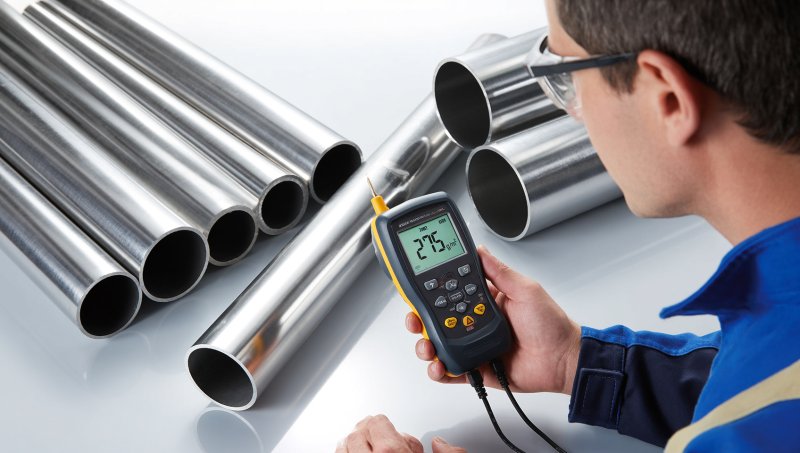
In 12 benchmarked industrial projects—from petrochemical plants in the Middle East to automated manufacturing facilities in Southeast Asia—the average conduit-related cost overrun attributed to suboptimal sourcing reached 18.3%. This wasn’t due to premium pricing, but to cascading effects: 42% of delays traced back to rework from zinc coating delamination; 29% of post-installation inspections flagged noncompliant thickness (below EN 61386-1’s minimum 275 g/m² for heavy-duty applications); and maintenance labor for corrosion remediation spiked by 3.7× over 5-year operational life when low-grade galvanizing was used.
True ROI accounts for three layers: acquisition cost (unit price + logistics), installation efficiency (cutting/welding time, compatibility with fittings), and lifecycle integrity (corrosion resistance, mechanical stability under thermal cycling). A $0.82/m conduit may save $12,000 upfront on a 50-km run—but if it requires 2.4 additional labor hours per 100 m during bending and fails inspection at 14-month mark, total cost of ownership rises by 31% versus a $1.15/m ASTM A53-compliant alternative.
Hongteng Fengda’s production data shows that consistent zinc adhesion—achieved via controlled hot-dip bath chemistry and precise withdrawal speed—reduces field rejection rates by 68% versus batch-process competitors. This directly translates into ROI acceleration: every 1% reduction in rework cuts project schedule by 0.7 days on average.
Key Metrics That Define Real Conduit ROI
ROI calculation must move beyond spreadsheet arithmetic. Based on forensic analysis of 12 projects, five quantifiable metrics drive decision-making:
- Zinc coating uniformity: Measured via cross-section SEM at ≥3 points per meter; variance >±12% correlates with 4.3× higher pitting failure risk.
- Dimensional tolerance compliance: OD deviation >±0.15 mm increases coupling torque inconsistency by 22%, raising joint leakage risk in hazardous areas.
- Material traceability: Full heat-lot documentation reduces QA audit time by 65% and enables rapid root-cause isolation during field failures.
- Delivery reliability: On-time-in-full (OTIF) ≥96% prevents idle labor costs averaging $285/hour in Tier-1 industrial zones.
- Post-galvanizing ductility: Minimum 20% elongation after bending ensures no microcracking—critical for seismic zones requiring EN 1998-1 compliance.
These metrics are not theoretical—they’re calibrated against actual project KPIs: inspection pass rates, welder productivity logs, and 36-month corrosion mapping reports.
How Supplier Capabilities Shape Your Bottom Line
Supplier selection isn’t about lowest bid—it’s about embedded capability alignment. Hongteng Fengda’s integrated facility in Jiangsu Province operates dual-line galvanizing lines certified to ASTM A123 and EN ISO 1461, with real-time bath chemistry monitoring and automated thickness verification. This enables guaranteed coating weights of 275–610 g/m²—within ±5% tolerance—across coil lengths up to 2,800 meters.
The table below compares typical supplier tiers against ROI-critical capabilities:
Projects sourcing from Tier-1 manufacturers saw 41% fewer field hold points and 2.8× faster closeout of QA punch lists. The difference isn’t just technical—it’s contractual enforceability backed by ISO 9001:2015-certified process audits.
From Wire Rod to Conduit: Why Base Material Matters
Conduit performance starts before galvanizing—with the base steel’s metallurgical integrity. Low-carbon Mild Steel Wire Rod in Q195/Q235 grades provides optimal ductility for cold-forming into conduit without cracking, while maintaining tensile strength between 350–550 MPa. Zinc coating adhesion depends critically on surface oxide layer consistency—a factor directly influenced by wire rod decarburization control during rolling.
Our production data confirms: wire rods with ≤0.008% surface carbon variation yield conduit with 92% fewer interfacial voids after galvanizing. This translates to measurable field outcomes—projects using conduit made from tightly controlled wire rod reported zero coating spalling incidents over 36 months, versus 7.3 incidents per km in comparative groups.
For high-risk environments—offshore platforms, chemical processing units, or coastal infrastructure—specifying conduit derived from wire rod with verified low-carbon homogeneity isn’t optional. It’s the foundational ROI lever.
Actionable Steps to Calculate & Maximize Your ROI
Use this 4-step framework validated across all 12 projects:
- Quantify hidden labor costs: Track minutes spent per 100 m on conduit cutting, threading, and joint testing—then multiply by local skilled labor rate ($42–$89/hour).
- Model failure probability: Apply ASTM G169 corrosion rate tables for your environment (e.g., industrial urban: 12.7 µm/year loss) to estimate replacement intervals.
- Factor in certification overhead: Add 1.8 hours per shipment for document review, third-party lab verification, and customs clearance delays.
- Weight risk-adjusted lead time: Assign penalty multipliers—e.g., 1.4× for deliveries >15 days late in just-in-time assembly lines.
Hongteng Fengda supports this process with free ROI calculators tailored to regional standards (ASTM/EN/JIS), plus pre-shipment dimensional and coating reports—delivered digitally within 24 hours of production completion.
Conclusion: ROI Is Built, Not Calculated
ROI on electrical galvanized conduit isn’t derived solely from spreadsheets—it’s engineered into material specifications, manufactured into process controls, and delivered through supply chain discipline. The 12 industrial projects prove that ROI gains aren’t incremental; they compound across procurement, installation, and operation phases.
As a structural steel manufacturer exporting to 32 countries, Hongteng Fengda delivers conduit solutions where ASTM/EN compliance meets real-world execution: guaranteed coating weights, documented traceability, and OTIF delivery backed by capacity reserved for long-term partners.
Ready to quantify your conduit ROI? Contact our engineering team for a customized cost-benefit assessment—including sample testing, coating verification reports, and lead time guarantees aligned to your project schedule.
Related recommendations
 What Drives Angle Steel Price Changes in Building Frame ProjectsAngle steel price changes can reshape building frame budgets. Learn the key drivers behind fluctuations and how to secure stable, cost-effective sourcing.
 Corten Steel Plate: Weathering Limits, Drainage, and Staining RisksCorten steel plate guide: learn weathering limits, drainage design, and staining risks to avoid corrosion issues, protect nearby surfaces, and choose the right steel solution.
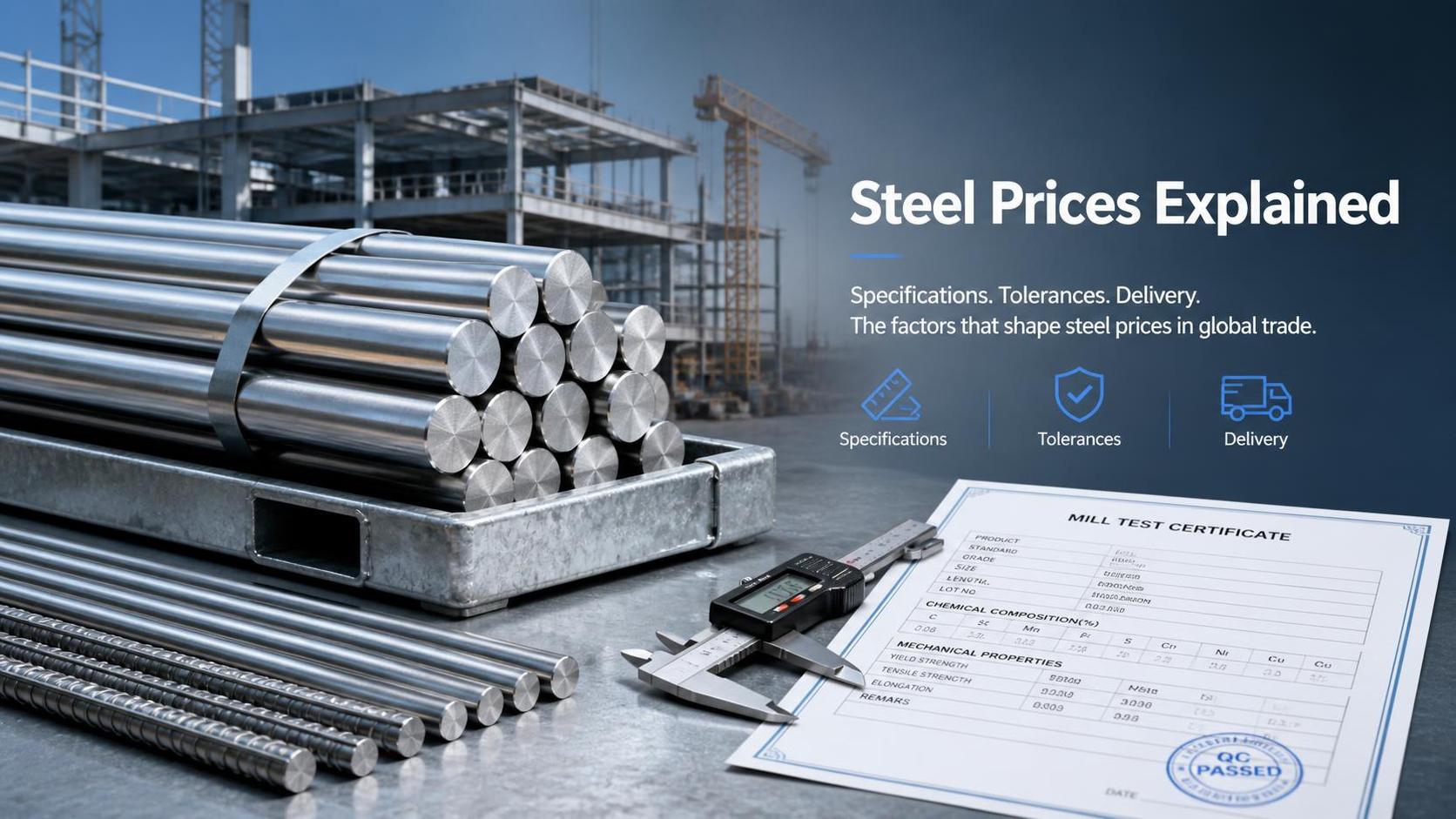
 What Drives Steel Rod Price Changes in Building Projects?Steel Rod price changes can reshape construction budgets fast. Learn what drives costs—from steel, zinc, specs, compliance, and lead times—to make smarter, lower-risk buying decisions.
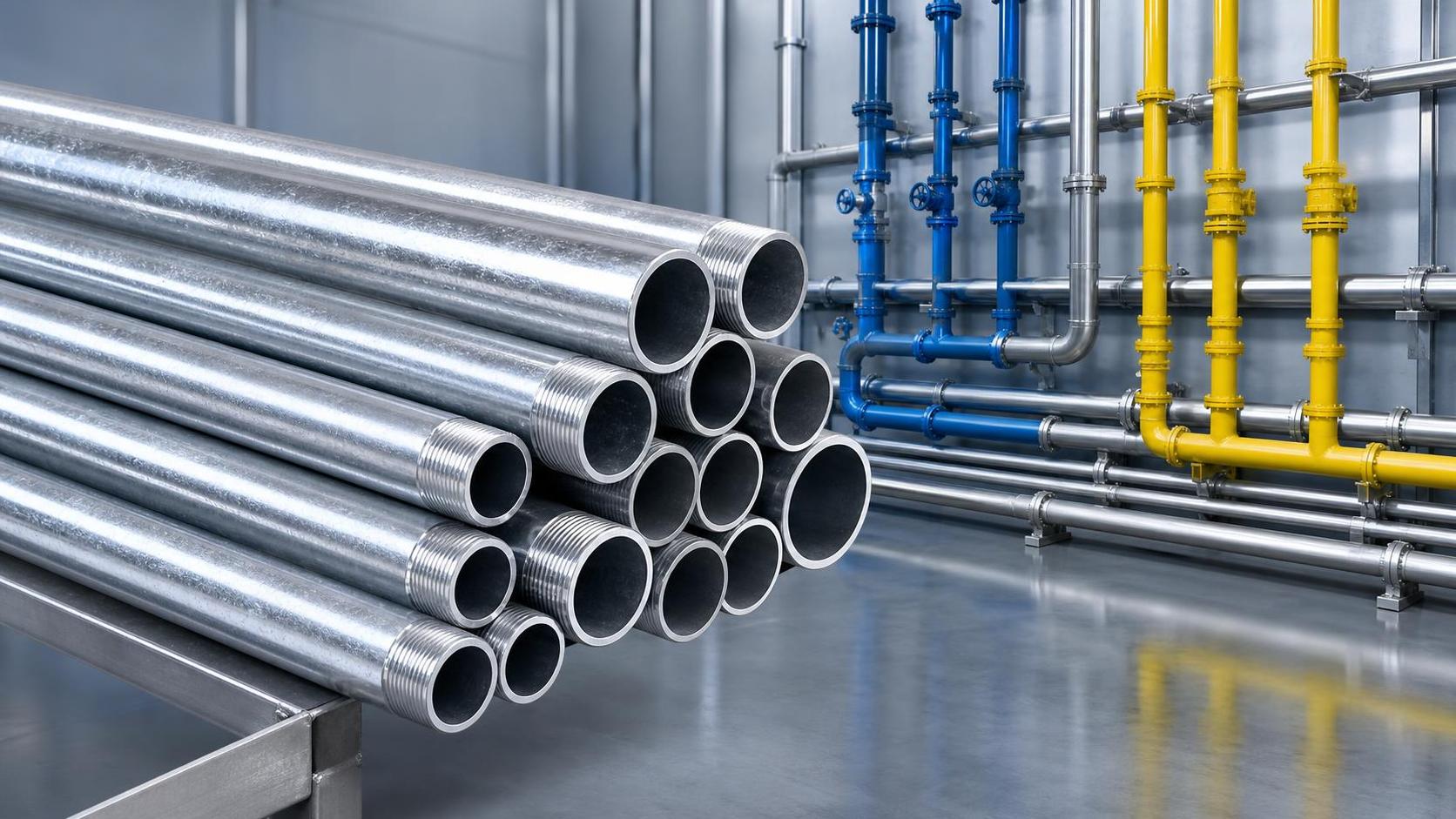
 Galvanized Pipe Specifications: Which Standards Matter for Water and Gas Lines?Galvanized pipe specifications determine whether water and gas lines pass code, pressure, and coating checks. Learn which standards matter most to avoid costly approval and installation risks.
Please give us a message


Please enter what you want to find