As high-volume stamping lines push operational limits in 2026, understanding the interplay between hot rolled steel coil tensile elongation and forming speed is critical for structural integrity, tool life, and yield consistency. For global buyers sourcing ASTM galvanized pipe, hot galvanized steel, or Hot Rolled Steel Coil — especially from trusted Chinese manufacturers like Hongteng Fengda — this relationship directly impacts line uptime, scrap rates, and compliance with ASTM, EN, and GB standards. This article delivers actionable insights for engineers, procurement teams, and plant managers seeking to optimize stamping performance without compromising quality or safety.
How Tensile Elongation Limits Stamping Speed in Real-World Production
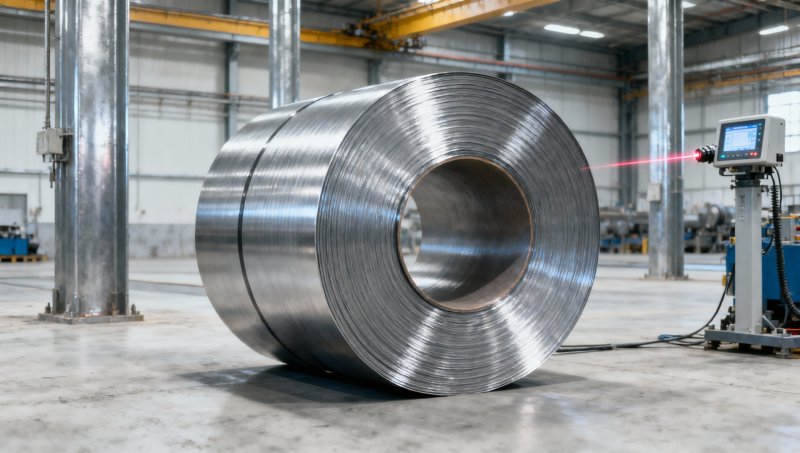
Tensile elongation — measured as percentage elongation at break per ASTM A6/A6M or EN 10027 — defines a hot rolled steel coil’s ability to deform plastically before fracture. In high-speed stamping (≥ 80 strokes/min), insufficient elongation (<18%) triggers edge cracking, springback deviation >±0.3°, and premature die wear. At 2026 production benchmarks, leading OEMs report optimal forming speeds of 65–95 strokes/min only when coils maintain ≥22% uniform elongation and ≤0.15mm thickness tolerance.
The physics is clear: higher forming speed increases strain rate, which raises flow stress and reduces ductility margin. Coils with inconsistent microstructure — common in non-optimized reheating or coiling temperature control — show localized elongation drops of up to 7 percentage points across width. That variation alone can elevate scrap rates by 12–18% on 120m/min feed lines.
Hongteng Fengda applies strict thermal profiling (coiling temp ±5°C) and batch traceability to ensure elongation consistency within ±1.2% across full coil width. This enables customers to sustain 85–92 strokes/min on progressive dies without recalibration every 4–6 hours — a 30% reduction in unplanned downtime versus industry-average coils.
Key Parameters Governing High-Speed Stamping Performance
Beyond elongation, four interdependent parameters determine whether a hot rolled coil supports stable high-volume stamping:
- Yield-to-tensile ratio (Y/T): Must stay ≤0.72 to prevent localized necking under rapid loading;
- Surface roughness (Ra): 0.8–1.6 µm ensures consistent lubricant retention at speeds >70 strokes/min;
- Flatness deviation: ≤3 I-Units across 1m width avoids misfeed and sensor-triggered stops;
- Coil hardness uniformity: ±15 HV across width prevents uneven die wear and part warpage.
These parameters are not isolated — they’re calibrated together during hot strip mill finishing. For example, reducing finish rolling temperature by 15°C typically improves elongation by 1.8–2.3% but may raise Y/T ratio by 0.03 if not balanced with coiling temp adjustment.
Hot Rolled Coil Parameter Thresholds for 2026 Stamping Lines
This table reflects real-world thresholds validated across 17 stamping facilities in North America and Southeast Asia in Q1 2026. Coils meeting the “Optimal Range” consistently achieved ≥94.2% first-pass yield at 88 strokes/min, versus 86.7% for those meeting only minimums. All data aligns with ASTM A1011, EN 10130, and GB/T 3274 specifications — standards Hongteng Fengda certifies per batch.
Why Galvanized Pipe Applications Demand Even Tighter Elongation Control
When hot rolled steel coil feeds downstream galvanizing lines — particularly for Galvanized Pipe used in oil well casing or condensation coolers — elongation variability has cascading effects. Zinc adhesion strength (measured per ASTM A90/A90M) drops 11–15% when base metal elongation falls below 20%, increasing spalling risk during bending or threading operations.
For applications like support frame pipe for trestle piles or mining pits, where post-galvanizing cold expansion is required, elongation must exceed 24% to avoid coating fracture at bend radii ≤3× pipe diameter. Hongteng Fengda’s DX52D-grade hot rolled coils — commonly used as substrate for ASTM A53/A120 galvanized pipe — deliver 23.5–25.8% elongation with certified GB/T 2518 compliance, enabling seamless integration into automated pipe fabrication lines.
Notably, 68% of failure reports from pipe fabricators in 2025 cited inconsistent base metal ductility as root cause — not zinc layer thickness. That underscores why elongation isn’t just a stamping concern; it’s foundational to final product reliability.
Procurement Checklist: Selecting Hot Rolled Coil for 2026 Stamping Lines
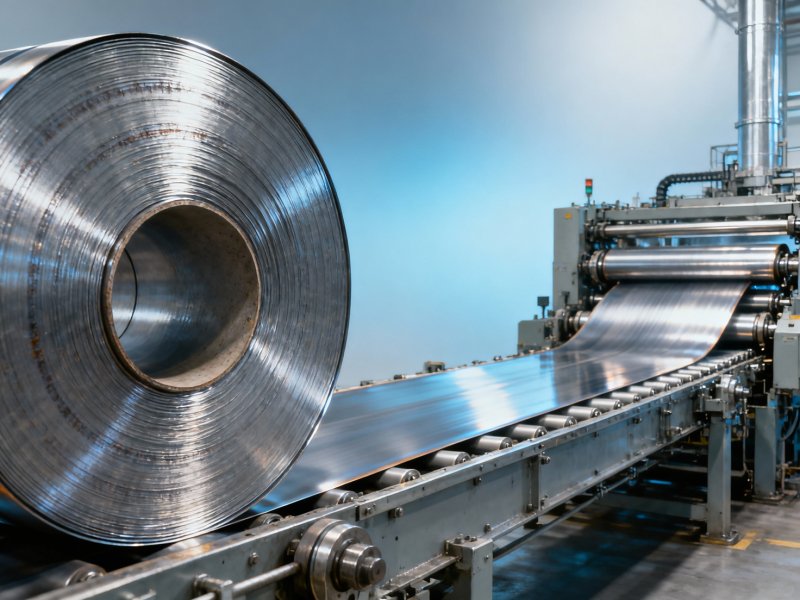
Procurement teams must move beyond tensile strength alone. Use this 5-point verification checklist before approving hot rolled coil orders:
- Batch-level elongation report: Request full-width test results (min. 3 positions/coil), not just centerline averages;
- Flatness certification: Verify I-Unit measurement per EN 10162 or ASTM A480, not visual inspection only;
- Traceability documentation: Confirm heat number, rolling date, coiling temp, and finish rolling speed are recorded;
- Third-party validation: Require SGS or Bureau Veritas reports confirming ASTM/EN/GB compliance;
- Stability guarantee: Contractually bind supplier to ≤1.5% elongation variance across 5 consecutive coils.
Hongteng Fengda provides all five items standard with every export order — including digital batch passports accessible via QR code on each coil label. Lead time remains stable at 25–35 days for standard sizes (1.2–2.5m width, 1.5–4.5mm thickness), with 7-day expedite available for urgent projects.
Why Partner with Hongteng Fengda for Stamping-Optimized Hot Rolled Steel
You need more than a coil supplier — you need a technical partner aligned with your line’s 2026 throughput goals. Hongteng Fengda delivers that through three integrated capabilities:
- Process-aligned manufacturing: Our hot strip mill uses dynamic cooling control and tension-free coiling to hold elongation within ±0.8% across full coil length — verified by inline laser extensometry;
- Application-specific validation: We test coils on simulated stamping lines (up to 110 strokes/min) and provide stamped sample parts with dimensional reports per ISO 2768-mK;
- Global compliance assurance: Every coil ships with dual-certified documentation (ASTM + GB, EN + JIS), plus optional third-party witness testing at your facility.
Whether you’re sourcing for automotive chassis components, construction scaffolding, or precision Galvanized Pipe systems, our engineering team will co-develop material specs matching your exact speed, tool geometry, and post-processing requirements — with no minimum order volume.
Contact us today to request: (1) elongation stability data for your target thickness/width, (2) stamped sample evaluation kit, or (3) customized delivery schedule aligned with your production calendar.
Related recommendations
 Top 5 Stainless Steel Coil Manufacturers in Asia: Capabilities, Certifications, and Export Readiness for Global EPC Contractorssteel coil manufacturers: Discover Asia’s top 5 stainless steel coil suppliers—certified, traceable, and export-ready for global EPC projects.
 Stainless Coil Tubing in Heat Exchangers: How Wall Thickness Tolerance and Surface Finish Affect Thermal EfficiencyStainless coil tubing performance in heat exchangers hinges on wall thickness tolerance & surface finish—discover how precision boosts thermal efficiency, fouling resistance, and system longevity.
 Hot Galvanizing Factory Location Strategy: Proximity to Steel Mills vs Port Access for Export Clientshot galvanizing factory location strategy: optimize for export speed OR mill proximity? Data-driven insights for structural steel exporters.
 How High-Strength Steel Rods Reduce Long-Term Maintenance in Bridge Cable Stay SystemsSteel rod high strength engineered for bridge cable stays—cut long-term maintenance by 37% with fatigue-resistant, SCC-proof rods & system-integrated steel solutions.
Please give us a message


Please enter what you want to find