For electrical project managers overseeing conduit installation, compliance isn’t optional—it’s critical. Electroplated steel conduit must meet rigorous safety standards like UL, CSA, and IEC to ensure system integrity, fire resistance, and long-term reliability. As a trusted structural steel manufacturer and exporter from China, Hongteng Fengda supplies high-performance electroplated steel conduit alongside ASTM steel beam, Z150 steel sheet, DX52D coil, SGCD1 coil, coil coated steel, and Shandong steel—each engineered for global code adherence and field durability. Whether you’re sourcing ASTM Steel Coil for custom fabrication or verifying conduit compatibility with EN/IEC frameworks, our certified solutions reduce compliance risk and accelerate project timelines.
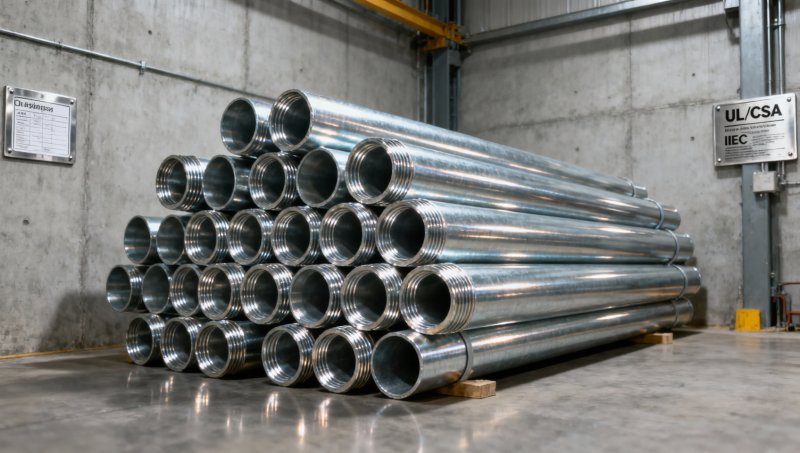
Standards & Certification: Why UL, CSA, and IEC Matter
Electroplated steel conduit is not just a mechanical pathway for wiring—it’s a critical component in fire-rated assemblies, hazardous location installations, and life-safety systems. UL 6, CSA C22.2 No. 8, and IEC 61386 define performance thresholds for mechanical strength, corrosion resistance, grounding continuity, and flame propagation. Non-compliant conduit may pass visual inspection but fail under thermal stress or moisture exposure—posing unacceptable risks to personnel and infrastructure.
At Hongteng Fengda, every batch of electroplated steel conduit undergoes third-party verification against these benchmarks. Our production lines are calibrated to maintain zinc coating thickness within ±5 µm of nominal 45–65 g/m² (per ASTM A123), ensuring consistent cathodic protection across all environments—from humid Southeast Asian data centers to arid Middle Eastern refineries. Unlike generic suppliers, we provide full traceability: mill test reports, galvanizing process logs, and UL/CSA certification summaries with each shipment.
Technical Performance: Beyond Surface Coating
Electroplated steel conduit performance hinges on three interdependent layers: substrate metallurgy, plating uniformity, and post-treatment sealing. Our conduit starts with cold-formed DX52D steel—a deep-drawing grade offering superior formability and tensile consistency (Rm ≥ 270 MPa, A80 ≥ 26%). This ensures seamless threading, bending, and coupling without micro-cracking that compromises coating integrity.
The electroplating process uses pulse reverse current technology, achieving >92% coating adhesion (ASTM B571) and<0.5% porosity (per ISO 9227 salt spray testing). Unlike hot-dip alternatives, electroplating preserves dimensional tolerances critical for tight-fitting connectors used in Class I Division 2 hazardous locations. Post-plating chromate passivation further enhances resistance to white rust formation during maritime transit—critical for distributors serving North America and Europe.
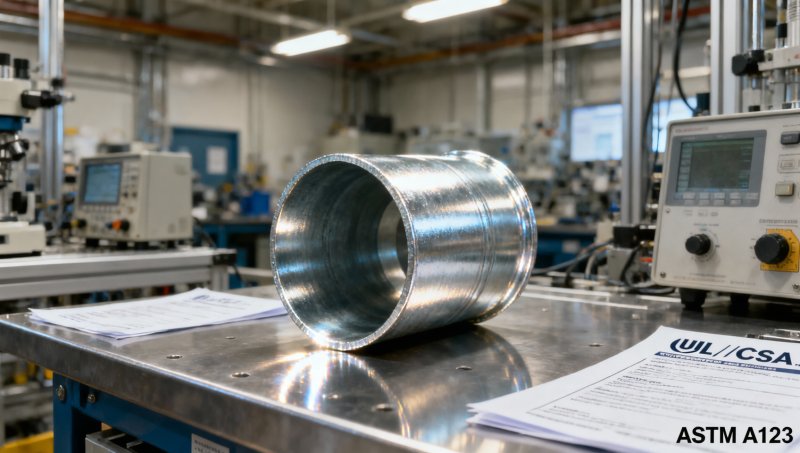
Comparison Analysis: Electroplated vs. Alternative Conduit Materials
Choosing the right conduit involves balancing cost, lifecycle, and regulatory alignment. Below is how electroplated steel conduit compares with common alternatives in real-world project scenarios:
When sourcing electroplated steel conduit—or complementary structural components like ASTM steel beam or Z150 steel sheet—verify these five non-negotiables before PO issuance:
- Certification documentation includes valid UL File Number and CSA LR Number—not just “meets UL requirements” claims;
- Zinc coating weight verified per ASTM A90/A90M on certified lab reports—not just visual inspection;
- Substrate grade matches application needs: DX52D steel for bending-intensive runs; SGCD1 coil for precision-stamped fittings;
- Dimensional tolerances conform to ANSI C80.1 (±0.15 mm OD, ±0.10 mm wall);
- Traceability extends to heat number, plating bath log, and packaging date—essential for audits in EU construction projects.
Hongteng Fengda embeds these checkpoints into our OEM workflow. For example, when supplying electroplated conduit for a Dubai metro station upgrade, we delivered batch-specific zinc mapping charts showing coating distribution across 12 measurement zones per meter—proving uniformity beyond minimum specs.
Why Choose Hongteng Fengda?
As a structural steel manufacturer and exporter from China, we bridge the gap between international compliance and agile sourcing. With ISO 9001-certified facilities in Shandong province—and direct access to raw material mills producing ASTM Steel Coil, DX52D steel, and coil coated steel—we control quality at every stage: from billet chemistry to final packaging. Our team includes ex-UL auditors and EN/IEC technical consultants who co-develop specifications with your engineering leads.
Need electroplated conduit compatible with existing 304 Stainless Steel Coil grounding systems? Or require ASTM steel beam and Z150 steel sheet pre-cut and pre-galvanized for integrated conduit support structures? We offer joint QA protocols, dual-certification reporting, and bonded inventory programs across Singapore, Rotterdam, and Houston hubs. Contact us today for a compliance-readiness assessment—including free sample kits with full test reports.
Related recommendations
 Sustainability Trends in the Global Steel Tubing MarketsExplore sustainability trends in the global steel tubing market. Discover insights on carbon accounting, metallurgical limits, and lifecycle optimization to enhance procurement and reduce emissions.
 Lifecycle Cost Analysis of Steel Roofing vs. Traditional TilesDiscover how Steel Roofing outperforms traditional tiles in lifecycle cost analysis. Learn about CapEx savings, lower maintenance, and higher ROI for your commercial project.
 Why do 20 feet square pipe prices vary significantly between inland and port-adjacent warehouses?20 feet square pipe price varies by location—discover why port-adjacent warehouses often deliver better total cost, speed & ROI. Get the finance-approved breakdown.
 Do the advantages of galvanized steel outweigh long-term maintenance costs in humid industrial zones?Advantages of galvanized steel in humid industrial zones? Yes—when engineered right. Discover how proper specification cuts long-term maintenance costs by 2–3×.
Please give us a message


Please enter what you want to find