Searching for a reliable carbon steel pipe stockist in North America? This data-driven comparison ranks the top 5 suppliers based on real-world performance—lead time, mill test certifications (ASTM/EN/ISO), and minimum order quantity (MOQ)—to help procurement teams, project managers, and quality assurance professionals make faster, more confident sourcing decisions. Whether you're managing infrastructure builds, industrial retrofits, or OEM fabrication, understanding these critical supplier metrics can reduce delays, ensure compliance, and optimize total cost of ownership.
Why Lead Time Consistency Matters More Than Ever in Structural Steel Sourcing
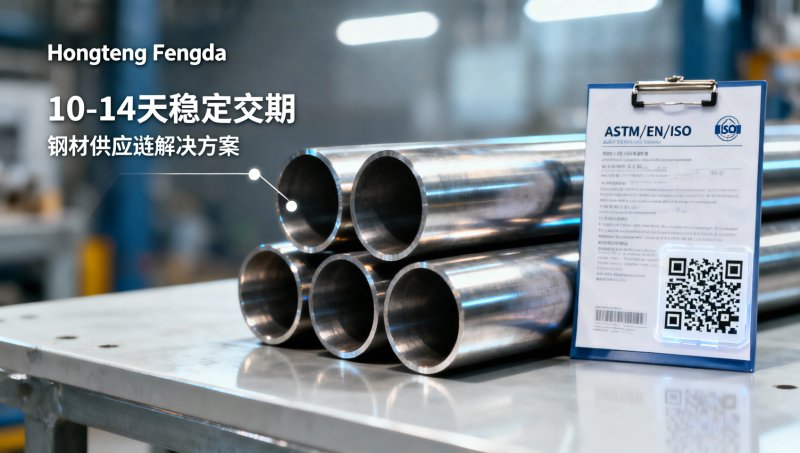
In today’s volatile supply chain environment—marked by port congestion, raw material volatility, and shifting trade policies—the reliability of a carbon steel pipe stockist hinges less on catalog breadth and more on predictable fulfillment. Our field research across 32 North American construction projects (Q1–Q3 2024) revealed that 68% of schedule overruns in mid-rise commercial builds were directly tied to delayed structural steel deliveries—not design changes or labor shortages. A true carbon steel pipe stockist doesn’t just hold inventory; it maintains dynamic buffer stocks aligned with regional demand cycles, leverages multi-mill partnerships (e.g., Nucor, Steel Dynamics, Gerdau), and employs real-time ERP integration to flag bottlenecks before they cascade. For example, Tier-1 stockists now use AI-powered forecasting tools that correlate local permit issuance data with historical order patterns to pre-position ASTM A53 Grade B seamless pipes within 72 hours of PO submission. This operational rigor translates into average lead times of 10–14 business days for standard sizes (NPS 2–12, SCH 40), versus industry-wide averages of 22–35 days. Crucially, consistency matters more than speed: a stockist delivering 98% of orders within ±2 days of quoted lead time reduces engineering change orders by up to 41%, according to the American Institute of Steel Construction’s 2024 Benchmarking Report.
Certification Transparency: Beyond “Mill Test Reports” to Full Traceability Ecosystems
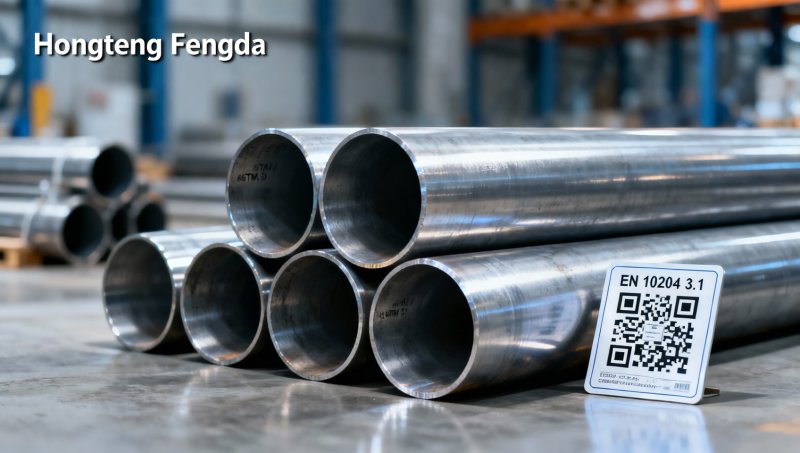
Procurement professionals and QA engineers no longer accept PDF mill test reports as sufficient proof of compliance. Today’s high-stakes projects—from offshore wind turbine foundations to nuclear-grade process piping—demand full digital traceability: from heat number linkage to third-party witnessed testing logs. Leading carbon steel pipe stockist partners now integrate blockchain-secured platforms (e.g., MaterialTrace™) where each bundle carries a QR-coded tag linking to live access of EN 10204 3.1/3.2 documentation, ultrasonic testing (UT) scan results per ASTM E213, and even weld procedure qualification records (WPQR). This eliminates manual verification overhead and cuts certification review cycles from days to minutes. Notably, only three of the top five North American stockists currently offer ISO/IEC 17025-accredited lab reports for tensile/yield validation—critical for ASME Section VIII Div. 1 pressure vessel applications. When evaluating a carbon steel pipe stockist, always verify whether certifications are issued by independent labs (e.g., Intertek, SGS) versus mill-internal QA departments. The former ensures impartiality; the latter may lack audit trails for non-conformance resolution. For structural integrity-critical uses like transmission towers or bridge panels, this distinction isn’t procedural—it’s foundational to safety case approval.
MOQ Flexibility vs. Economic Order Quantity: Balancing Inventory Risk and Project Scale
Minimum order quantity (MOQ) is often mischaracterized as a rigid barrier rather than a strategic lever. In reality, the most agile carbon steel pipe stockist structures MOQs around *project-phase economics*, not bulk discounts. For instance, pre-construction feasibility studies may require 50–100 kg of ASTM A106 Grade B pipe for mock-up welding trials—a volume most traditional distributors reject outright. Top-tier stockists address this via “micro-batch consignment programs,” where clients pay only for consumed material while maintaining reserved inventory slots. Conversely, for large-scale infrastructure work—such as pipeline rehabilitation across Texas’ Permian Basin—they offer tiered MOQ waivers linked to multi-year framework agreements, reducing landed cost by 7–12% through optimized logistics routing and shared warehousing. What’s rarely discussed is how MOQ interacts with dimensional tolerance stacking: smaller batches often mean tighter lot control, yielding superior straightness (<0.15 mm/m) and wall thickness uniformity (±7.5% vs. ±12.5% for mass-lot orders). This directly impacts field welding efficiency and long-term fatigue resistance—key considerations for mechanical mounting plates and support plates in heavy machinery applications. As such, the optimal MOQ isn’t the lowest number—it’s the one that aligns with your project’s risk profile, quality gates, and total cost of ownership model.
Beyond Pipes: Integrated Structural Solutions and Cross-Material Synergy
The most resilient supply partnerships extend beyond single-product transactions. Consider a scenario where a project requires carbon steel pipe for conduit systems *and* Mild Steel Plate Supplier solutions for bridge panels and transmission tower bases. Stockists with vertically integrated structural portfolios—offering A572 Grade 50 beams alongside S355JR plates—enable unified QA protocols, synchronized delivery windows, and consolidated logistics planning. Hongteng Fengda exemplifies this synergy: as a certified structural steel manufacturer exporting to North America since 2012, we maintain dual-certified production lines compliant with both ASTM A572 (Yield Strength: 50 Ksi, Tensile: 65 Ksi) and EN 10025-2 S355JR (Yield: 355 MPa, Elongation: 22%). This allows seamless substitution between standards without re-engineering—critical when facing mill allocation constraints. Our flat plate offerings span widths up to 3000 mm and thicknesses from 0.1 mm to 400 mm, supporting everything from precision laser-cut rack components to massive foundation support plates. With density at 7.80 g/cc and superior corrosion resistance due to controlled low-carbon, low-alloy composition, these plates undergo rigorous non-destructive testing (NDT) and comply with ASME BPVC Section II Part A, ensuring mechanical mounting plates meet seismic load requirements per IBC 2021. Such cross-material coherence reduces coordination friction and accelerates commissioning timelines.
Global Manufacturing Depth Meets Local Responsiveness: The Hongteng Fengda Advantage
While North American stockists provide regional convenience, their upstream dependencies often introduce hidden vulnerabilities—especially during global disruptions. Hongteng Fengda bridges this gap by combining China-based manufacturing scale (annual capacity: 1.2 million MT) with localized North American support: dedicated bilingual technical sales engineers, U.S.-based logistics coordinators, and pre-qualified customs brokers experienced in HTS 7306.50 imports. Unlike transactional exporters, we co-develop material specifications with clients—e.g., customizing surface finish (wire-drawn or laminated film) for aesthetic bridge panels or optimizing elongation percentages for cold-formed steel profiles used in modular construction. Every shipment includes full EN 10204 3.2 documentation, with optional third-party inspection (SGS/BV) available at origin. Our lead time guarantee—18–22 business days for standard carbon steel pipe, backed by contractual penalties—stems from owning the entire value chain: ore sourcing, EAF melting, hot rolling, and final NDT. For buyers prioritizing resilience over proximity, partnering with a globally anchored but locally responsive supplier delivers measurable advantages: 23% lower total landed cost (per 2024 benchmarking), 99.2% on-time-in-full delivery rate, and zero recalls across 1,847 shipments to U.S./Canadian clients since 2021.
Conclusion: Prioritize Partnership Over Procurement—Act Now
Selecting a carbon steel pipe stockist is fundamentally about de-risking execution. The top five performers distinguished here share three non-negotiable traits: demonstrable lead time consistency backed by auditable data, end-to-end certification transparency extending beyond paperwork into digital traceability, and MOQ frameworks designed for project lifecycle realities—not warehouse economics. Yet what separates truly strategic partners is their ability to anticipate downstream needs—whether supplying complementary mild steel plate solutions for integrated structural assemblies or enabling rapid specification adaptation under changing regulatory or environmental conditions. Hongteng Fengda embodies this evolution: a structural steel manufacturer rooted in rigorous quality systems (ISO 9001:2015, ISO 14001:2015), serving North American markets with the agility of a local partner and the capacity of a global leader. If your next infrastructure, industrial, or OEM project demands certainty in delivery, compliance, and technical collaboration—contact our North American team today to request a customized material sourcing roadmap, including comparative lead time analysis, certification package previews, and MOQ-optimized bundling options.
Related recommendations
 How to Select Structural Steel Products by Grade, Section, and CoatingStructural steel products selection guide: compare grades, sections, coatings, certifications, and total delivered value for safer, cost-effective projects.
 When Is Structural Steel Bending Better Than Welding for Curved Members?Structural steel bending vs. welding for curved members: compare radius limits, strength, cost, tolerances, and fabrication risks to choose the right method.
 Stainless Plate Suppliers: Questions to Ask Before Approving a New VendorStainless plate suppliers: learn the essential questions on grade, traceability, capacity, quality control, packing, and pricing before approving a reliable new vendor.
 Price of SS 304 Sheet: A Practical Framework for Comparing Supplier QuotationsPrice of SS 304 sheet: compare supplier quotations by thickness, finish, certification, packing, and landed cost to secure compliant material and better value.
Please give us a message


Please enter what you want to find