Choosing the right Steel Plate Supplier means balancing MOQ, lead time, quality, and project cost. Whether you source Q235 steel, SPCC steel, steel sheet supplier products, or related items like API 5L pipe and seamless steel tube, understanding supply capacity and delivery cycles is essential. This guide explains what buyers, engineers, and procurement teams should evaluate before placing orders with a reliable China-based steel partner.
What do MOQ and lead time really mean when sourcing steel plate?
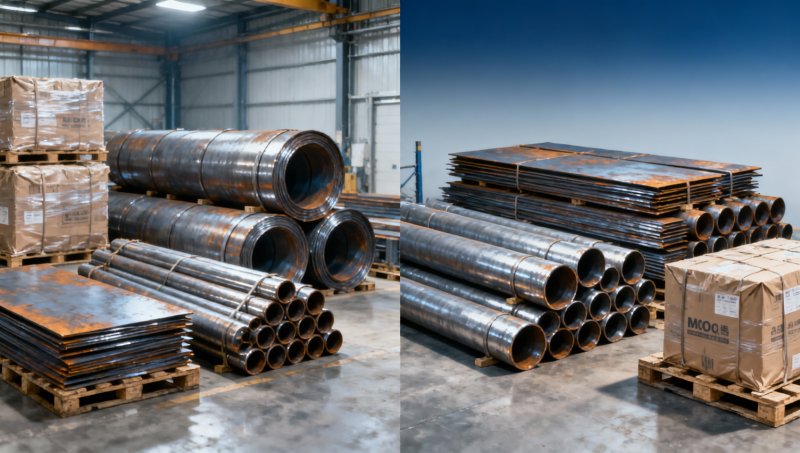
In steel procurement, MOQ refers to the minimum order quantity a Steel Plate Supplier can accept under a given production setup, while lead time refers to the period from order confirmation to shipment readiness. For project buyers, these two factors directly affect inventory pressure, installation schedules, cash flow, and the total landed cost. A low unit price may lose its advantage if the MOQ is too high or the delivery window is too long.
MOQ is not a single number for every order. It often changes based on grade, thickness, width, coating, cutting requirements, and whether the order matches mill rolling schedules. Standard structural grades may be easier to consolidate, while special dimensions or stricter tolerances can raise the minimum batch requirement. In many export cases, small trial orders, mixed specifications, and container optimization all influence the final MOQ discussion.
Lead time also varies by supply model. Stock-based supply can move faster, often within 7–15 days for common items if export packing and documentation are straightforward. Fresh production usually takes longer, commonly 3–6 weeks depending on mill slot allocation, testing, surface treatment, and port arrangements. For large infrastructure or manufacturing programs, buyers should review both production lead time and logistics lead time as two separate stages.
For procurement teams, the practical question is not simply “How fast can you deliver?” It is “How fast can you deliver this exact specification with traceable quality documents, stable thickness tolerance, and shipment consistency?” A dependable Chinese structural steel manufacturer and exporter such as Hongteng Fengda helps reduce this uncertainty by combining manufacturing coordination, quality control, and export support in one supply process.
Why different buyers see MOQ differently
An engineer may focus on grade compliance and dimensional tolerance, while a finance approver may focus on inventory turnover and payment terms. A distributor often prefers flexible mixed loading across several sizes, whereas a project contractor may prioritize a fixed delivery window tied to a 30-day or 45-day site schedule. Understanding these different priorities helps avoid internal purchasing conflict before the order is placed.
- Information researchers compare supplier responsiveness, production range, and common export destinations.
- Technical evaluators check standards such as ASTM, EN, JIS, and GB, plus test certificate availability.
- Purchasing teams compare MOQ flexibility, lead time stability, and packing suitability for ocean shipment.
- Project managers care about phased delivery, usually in 2–4 shipment nodes rather than one bulk dispatch.
Typical factors that influence MOQ and lead time
Even when buyers ask for steel plate, the final supply condition depends on several technical and commercial variables. The more customized the order, the more likely it is that the Steel Plate Supplier will need extra production preparation, inspection time, or bundling arrangements. This is especially true when a project includes both structural sections and flat products under one procurement package.
The key lesson is that MOQ and lead time should be evaluated together, not separately. A supplier that understands structural steel export can often improve both by consolidating production, optimizing container loading, and aligning documentation with destination market requirements.
How should buyers evaluate a Steel Plate Supplier before placing an order?
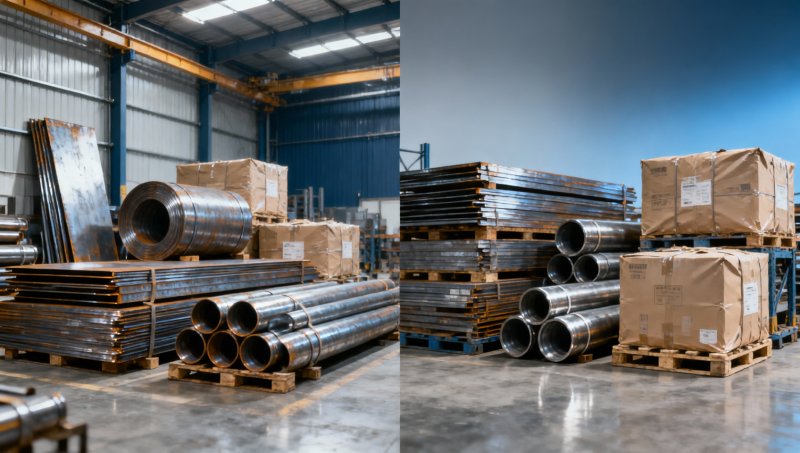
A capable Steel Plate Supplier should be assessed on more than catalog range or quotation speed. Buyers should review whether the supplier can support the full chain of technical confirmation, manufacturing execution, quality inspection, export packing, and delivery coordination. This is especially important for B2B orders linked to fabrication, construction, industrial production, or distribution channels where delays can trigger downstream losses.
Hongteng Fengda operates as a structural steel manufacturer and exporter from China, serving projects across North America, Europe, the Middle East, and Southeast Asia. For buyers, this matters because supply reliability is not only about one shipment. It is about whether the supplier can maintain consistent quality across repeat orders, communicate clearly on standards, and support both standard specifications and OEM requirements.
A practical evaluation usually includes 5 key checkpoints: material grade confirmation, dimensional tolerance, document package, packaging method, and shipment scheduling. If one of these points remains unclear, the order risk increases. For example, a buyer may receive the correct grade but unsuitable packaging for port handling, or acceptable thickness but missing test certificates required for customs or project files.
For teams handling multi-item procurement, it is also useful to ask whether the supplier can coordinate steel plate with angle steel, channel steel, steel beams, cold formed steel profiles, or customized structural steel components. This consolidated approach can reduce vendor fragmentation, improve communication, and simplify inspection planning across 2–3 material categories in the same project cycle.
Procurement checklist for technical and commercial review
Before releasing a purchase order, cross-functional teams should align on the same checklist. This saves time during approval and reduces disputes after delivery. The points below are especially useful for procurement personnel, quality inspectors, project engineers, and decision-makers reviewing supplier suitability.
- Confirm grade, standard, and intended application, such as structural use, forming use, or further processing.
- Verify dimension range, tolerance expectations, and whether slitting, cutting, or surface treatment is required.
- Clarify MOQ for each item and whether mixed specifications can be loaded in one container.
- Ask for production lead time, document preparation time, and estimated port dispatch schedule.
- Review compliance documents, such as mill test certificates and destination-specific requirements.
A mid-project example of product fit and supply planning
In some manufacturing and steel structure projects, buyers do not source only heavy plate. They also need coil-based materials for forming, cladding, shell fabrication, or component production. In this context, a supplier that can discuss related flat steel options helps purchasing teams compare availability, processing suitability, and delivery timing more efficiently.
One example is Hot Rolled Coil Hrc, which can be relevant when the project includes carbon steel coils for roofing sheet, window-shades, car ceiling parts, air-conditioner shells, water machine outer shells, or steel structure applications. Common thickness ranges can cover 0.17mm–3.5mm, with widths from 600mm–1250mm and tolerance references such as thickness ±0.03mm. Grades may include Q195, Q345B, Q345C, SS400–SS540 Series, S235JR–S355JR Series, and A36–A992 Series depending on application and standard requirements.
From a procurement perspective, this kind of insert supply matters because it offers another way to balance cost and lead time. If plate rolling schedules are tight, coil-based sourcing for secondary components may help keep project fabrication moving. Buyers should still verify ASTM, JIS, EN, ISO, or CE-related document expectations and match the material to forming, strength, and coating needs before approval.
This is where an export-oriented structural steel supplier brings value: not by pushing one material for every job, but by helping teams compare technical fit, MOQ flexibility, and timeline risk across related steel products. That reduces sourcing errors and supports more accurate budgeting.
What lead time ranges are realistic for different steel sourcing scenarios?
A realistic delivery plan starts with separating three stages: technical confirmation, production or stock preparation, and export shipment arrangement. Buyers often underestimate the first and third stages. Even when material is available, final lead time still depends on packing, labeling, inspection release, and transport to port. For that reason, “ready stock” does not always mean immediate loading within 48 hours.
For common structural steel or standard plate items, stock-based delivery may fit a 7–15 day preparation cycle. For customized specifications, rolled-to-order supply commonly falls within 3–6 weeks. If extra coating, testing, third-party inspection coordination, or multi-item container consolidation is required, the full cycle can extend further. Buyers planning around shutdown periods, public holidays, or tight site windows should build in additional buffer time.
Project managers and purchasing teams should also distinguish between promised lead time and stable lead time. A supplier may quote a short schedule for one order but struggle to repeat it over 3 consecutive shipments. For construction, equipment manufacturing, or distribution restocking, consistency is often more valuable than an aggressive first promise that later changes.
For global buyers, the best approach is to ask for milestone-based timing. Instead of one total number, request stage visibility: 2–5 days for specification confirmation, 7–30 days for production or stock preparation, and several additional days for final documentation and dispatch. This approach improves project coordination and internal reporting.
Typical sourcing scenarios and planning implications
The table below shows how typical steel sourcing situations can affect order planning. These are common industry ranges rather than fixed guarantees, but they provide a solid basis for comparing suppliers and aligning internal expectations.
The planning takeaway is simple: when buyers compare quotations, they should compare lead time assumptions line by line. A realistic 4-week schedule with dependable documentation may be safer and cheaper than a nominal 2-week promise that later causes demurrage, production gaps, or project delay penalties.
How to reduce delay risk
A strong Steel Plate Supplier should help the customer reduce delay risk before production begins. In practice, most avoidable delays come from incomplete technical confirmation, late document approval, or last-minute packaging changes. These are process issues, not only manufacturing issues.
- Lock the final specification sheet before payment and production release.
- Confirm whether MTC, packing marks, and destination labels follow project or customs requirements.
- Plan shipment by batch if the project needs materials in 2 or 3 installation stages.
- Use one communication channel for procurement, technical, and logistics updates to avoid version conflicts.
How do standards, quality control, and cost affect purchasing decisions?
In steel sourcing, price without specification clarity is risky. A lower quote may reflect a different grade, looser tolerance, different surface condition, or a missing documentation scope. For quality managers, safety officers, and technical reviewers, the real evaluation should connect standard compliance, inspection discipline, and total procurement cost rather than focusing only on price per ton.
Hongteng Fengda emphasizes modern manufacturing facilities and strict quality control, with products supplied in line with major standards such as ASTM, EN, JIS, and GB. For buyers serving multiple regions, this matters because documentation expectations can differ by project owner, local contractor, or import market. A supplier that understands these frameworks helps reduce rework and approval delays.
Cost should also be assessed in at least 4 layers: material price, processing cost, logistics cost, and risk cost. Risk cost includes delays, claims, replacement orders, and site disruption. In many B2B cases, a slightly higher unit price is commercially better if it delivers stable dimensions, traceability, and predictable shipment timing. That is especially true when the steel is part of a time-sensitive fabrication or installation sequence.
For distributors, another cost factor is stock rotation. A very high MOQ can create slow-moving inventory and higher capital occupation. For end-use manufacturers, inconsistent material quality can raise scrap rates or processing loss. For project contractors, late delivery can affect labor scheduling and equipment rental windows. These downstream effects often exceed the apparent savings of a low initial quote.
Comparison points that matter more than headline price
When commercial teams compare quotations from multiple steel suppliers, the table below helps convert technical and operational differences into a more decision-friendly structure. It is particularly useful for business evaluators, financial approvers, and project leadership reviewing final vendor selection.
This comparison shows why the cheapest offer is not always the lowest-cost option. In steel projects, decisions should reflect the full cost of supply execution over 2–3 operational stages, not only the invoice value at order placement.
Common purchasing mistakes and how to avoid them
Some buyers focus on tonnage and overlook application fit. Others confirm price first and finalize specifications later, which creates disputes on tolerance or documentation. Another frequent mistake is assuming all China suppliers manage export packing and compliance at the same level. In reality, capabilities vary widely across manufacturers, traders, and stockists.
A better method is to treat steel sourcing as a coordinated decision between engineering, procurement, quality, and logistics. Even a 1–2 day delay in technical clarification can be less costly than receiving material that cannot move directly into fabrication or installation. For repeat purchasing, supplier consistency often becomes a stronger value driver than one-time price advantage.
FAQ: what do buyers ask most often about MOQ, lead time, and supplier selection?
The questions below reflect common concerns from procurement teams, engineers, distributors, and project owners comparing steel suppliers for export orders. They are also useful for internal discussions before RFQ release.
Can a Steel Plate Supplier accept small trial orders?
In many cases, yes, but it depends on whether the requested specification matches stock, standard production, or a custom mill arrangement. Trial orders are easier for common grades and dimensions, especially when the supplier can combine items in one shipment. Buyers should clearly state whether the purpose is qualification, market testing, or a pilot project. That helps the supplier recommend a more practical MOQ strategy.
What is a reasonable lead time to expect for export steel orders?
For common items from available stock, 7–15 days is a common preparation range before shipment. For production-based orders, 3–6 weeks is often more realistic, especially if custom size, inspection, or multi-item loading is involved. Buyers should always ask whether the quoted time includes production only or also packing, documentation, and port dispatch.
Which documents should buyers confirm before ordering?
At minimum, buyers should confirm the material standard, grade description, dimension list, tolerance expectations, packing method, and mill test certificate requirements. For some markets or projects, additional marking, origin documents, or compliance-related paperwork may also matter. Confirming these points early helps avoid shipment holds and site-level disputes.
How can project teams reduce sourcing risk when multiple steel items are involved?
Use a phased procurement plan with at least 3 controls: technical approval before order release, milestone tracking during production, and final packing/document review before shipment. If the project includes plate, sections, and customized structural components, working with a supplier that can coordinate multiple product lines often reduces communication gaps and schedule conflicts.
Why choose a China-based structural steel partner for long-term supply planning?
For many global buyers, the decision is no longer just about finding a Steel Plate Supplier for one urgent order. It is about building a sourcing structure that supports repeat projects, cost control, compliance, and reliable delivery. A manufacturer-exporter with broad structural steel capability can support this more effectively than a price-only intermediary with limited production visibility.
Hongteng Fengda supports buyers with structural steel manufacturing and export experience across standard products and customized solutions. This includes angle steel, channel steel, steel beams, cold formed steel profiles, and tailored structural steel components, backed by modern facilities and strict quality control. For importers, contractors, distributors, and industrial users, this integrated approach can reduce sourcing fragmentation and improve supply predictability over 2–4 procurement cycles.
If you are comparing suppliers, the most useful next step is not a generic inquiry. It is a focused technical and commercial discussion. You can consult on grade and standard confirmation, MOQ by specification, production and shipment lead time, mixed loading feasibility, OEM processing options, sample support, document expectations, and quotation structure. That allows your team to make a faster and safer decision.
Contact us if you want to review steel plate or related structural steel requirements for your project. Share your material grade, dimensions, standards, estimated quantity, target market, and required delivery schedule. We can help you evaluate feasible MOQ, realistic lead time, suitable product selection, and export-ready supply planning based on your application and budget.
Please give us a message


Please enter what you want to find