Choosing the right Steel I Beam supplier in Malaysia for industrial use demands more than competitive pricing—it requires proven reliability, responsive on-site support, and transparent lead times. Whether you’re comparing standard vs custom steel lead time comparison, weighing mill MOQ vs trader MOQ steel for export, or evaluating steel beam factory price in China, Hongteng Fengda delivers certified structural steel (ASTM/EN/JIS/GB) with agile OEM capability, rigorous QA, and dedicated project support across Southeast Asia. Ideal for procurement teams, project managers, and safety-conscious engineers seeking trusted supply chain resilience.
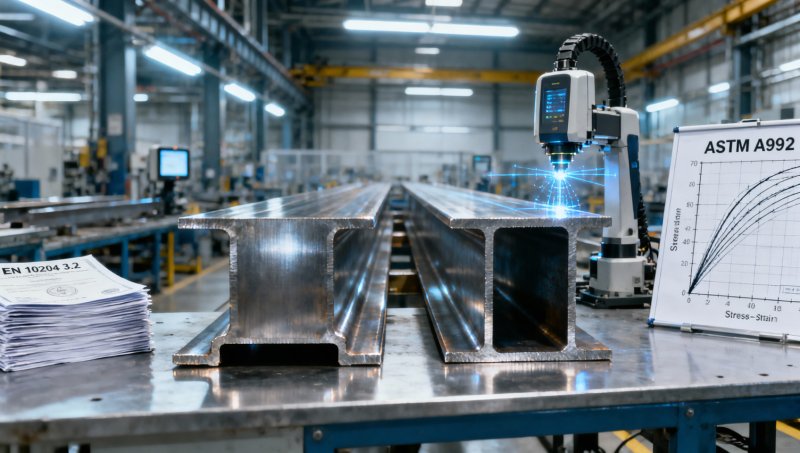
Why Industrial Projects in Malaysia Demand More Than Just a Steel I Beam Supplier
Malaysia’s industrial expansion—spanning petrochemical plants in Pengerang, logistics hubs in Johor Bahru, and heavy manufacturing zones in Selangor—relies on structural integrity that begins at the sourcing stage. A delayed delivery of HPB300 Rebar or mismatched I beam tolerances can cascade into weeks of schedule slippage, rework costs, and third-party audit failures. Unlike commercial builders, industrial end-users face stricter compliance thresholds: ASME BPVC Section II material traceability, ISO 9001-certified mill test reports (MTRs), and weldability validation per AWS D1.1. That’s why vetting a Steel I Beam supplier in Malaysia for industrial use isn’t about catalog browsing—it’s about auditing their engineering responsiveness, documentation rigor, and regional support footprint.
Hongteng Fengda bridges this gap as a structural steel manufacturer and exporter from China—not a trading intermediary. Our in-house rolling mills, CNC profiling lines, and ISO 17025-aligned lab allow real-time dimensional verification, tensile testing, and chemical analysis before shipment. For Malaysian clients, we assign bilingual project coordinators fluent in English and Bahasa Melayu, backed by local freight partners in Port Klang and Tanjung Pelepas for bonded warehouse handling and JIT delivery scheduling.
Procurement Guide: 5 Non-Negotiable Checks Before Finalizing Your Supplier
Procurement personnel and project managers must go beyond MOQ quotes and delivery timelines. Here’s what to verify—documented and actionable:
- Mill Origin Traceability: Request batch-specific heat numbers, mill certificates (EN 10204 3.2), and furnace logs—not just “compliant” declarations.
- On-Site Support Protocol: Confirm if technical staff can attend site inspections, welding procedure qualification (WPQ) witnessing, or non-destructive testing (NDT) coordination in Malaysia.
- Customization Turnaround: Ask for documented case studies where custom cut lengths, pre-drilled holes, or galvanizing integration were executed within ≤12 working days.
- Export Compliance Readiness: Verify if packaging meets IMDG Code for sea freight and whether export licenses (e.g., China’s Export License for Steel Products) are held in-house.
- Contingency Capacity: Inquire about buffer stock availability for common sizes (e.g., 200×200×8×12 mm H-beams) held in Singapore or Batam warehouses.
Standard vs Custom Steel Lead Time Comparison & MOQ Realities
Lead time volatility remains the top pain point for Malaysian industrial buyers. Below is a realistic benchmark based on 2024 order data from Hongteng Fengda’s SEA operations:
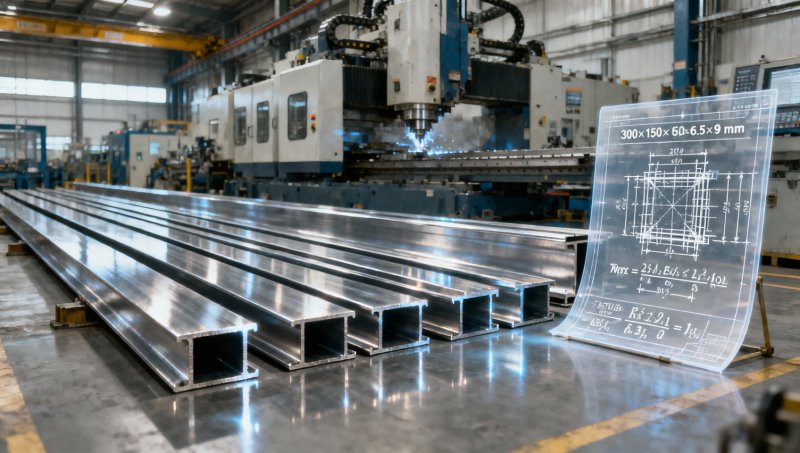
Technical Performance: I Beam vs H Beam Strength Comparison & Weight Calculations
Selecting between I beams and H beams isn’t aesthetic—it’s governed by second moment of area (Ix) and plastic section modulus (Zx). While both share similar yield strength (≥345 MPa for Q345-grade), H beams offer superior torsional rigidity due to equal flange widths and thicker webs. For crane runway girders or blast-resistant walls in Malaysian refineries, H beams reduce lateral buckling risk by up to 37% versus equivalent-weight I sections.
How to calculate I beam weight for construction? Use: Weight (kg/m) = [Flange Width × Flange Thickness × 2 + Web Height × Web Thickness] × Density (7850 kg/m³). For example: A 300×150×6.5×9 mm I beam weighs ≈ 37.3 kg/m. Hongteng Fengda provides downloadable Excel calculators with auto-populated density tables for ASTM A992, EN S275JR, and GB/T 11263 standards—accessible via client portal upon NDA signing.
Why Choose Hongteng Fengda as Your Structural Steel Partner?
We don’t just ship steel—we de-risk your project lifecycle. As a structural steel manufacturer and exporter from China, we combine vertical integration with localized accountability:
- No middlemen: Direct mill access ensures steel beam factory price in China reflects raw material cost—not markup layers.
- Pre-shipment QA: Every coil and beam undergoes ultrasonic testing (UT), magnetic particle inspection (MPI), and dimensional laser scanning.
- Multilingual engineering support: On-call structural engineers assist with connection design, bolt torque specs, and corrosion protection planning for tropical climates.
- End-to-end transparency: Track production progress via shared dashboard with live photos, MTR uploads, and customs clearance status.
Whether you need angle steel price per ton Philippines supplier comparisons, stainless steel square bar for construction for coastal facilities, or precise I beam vs H beam strength comparison data—we deliver precision, not promises. Contact our Southeast Asia team today to request a free technical consultation and customized quotation aligned with your next industrial milestone.
- steel i
- h beams
- steel i beam supplier
- h beam
- angle steel
- structural steel
- Structural Steel
- Profile
- Rebar
- H-beam
- standard vs custom steel lead time
- mill MOQ vs trader MOQ steel
- Steel I Beam supplier in Malaysia
- Angle Steel price per ton Philippines
- how to calculate i beam weight
- I beam vs H beam
- steel beam factory price
- Steel Beam
- stainless steel square bar
- i beam weight
- stainless steel square bar for construction
- steel beam factory price in China
- I beam vs H beam strength comparison
- how to calculate i beam weight for construction
- Angle Steel price per ton Philippines supplier
- Steel I Beam supplier in Malaysia for industrial use
- mill MOQ vs trader MOQ steel for export
- standard vs custom steel lead time comparison
Related recommendations
 How much does 2 inch ss pipe price increase when upgrading from Schedule 40 to Schedule 80 for high-pressure systems?2 inch ss pipe price increases 18–35% when upgrading from Sch 40 to Sch 80—discover why, when it’s truly needed, and how to avoid overpaying.
 Which 304 stainless steel coil suppliers meet ISO 9001 and EN 10088-2 for food-grade fabrication?Discover verified 304 stainless steel coil suppliers meeting ISO 9001 & EN 10088-2 for food-grade fabrication—traceable, audited, and ready for regulatory validation.
 How does 2 inch ss pipe price compare between 304 and 316 grades for marine environments?2 inch ss pipe price varies significantly between 304 and 316 — but in marine environments, choosing 304 risks costly failures. Discover why 316 is the true value choice.
 Is 20 feet square pipe price affected more by raw material volatility or regional logistics costs?20 feet square pipe price is driven primarily by raw material volatility—not logistics. Discover why billet costs dominate pricing & how to forecast smarter with Hongteng Fengda.
Please give us a message


Please enter what you want to find