As global infrastructure and industrial projects demand higher reliability under extreme pressure and temperature, seamless steel tube — especially ASTM A106 Gr B — is increasingly scrutinized for total cost of ownership, not just upfront price. This 2026 cost breakdown compares seamless vs. welded alternatives across raw material, manufacturing, testing, logistics, and lifecycle performance — helping procurement teams, engineers, and project managers quantify when ASTM A106 Gr B delivers superior ROI. Backed by Hongteng Fengda’s expertise as a China-based structural steel manufacturer and exporter, this analysis bridges technical specs with real-world sourcing decisions.
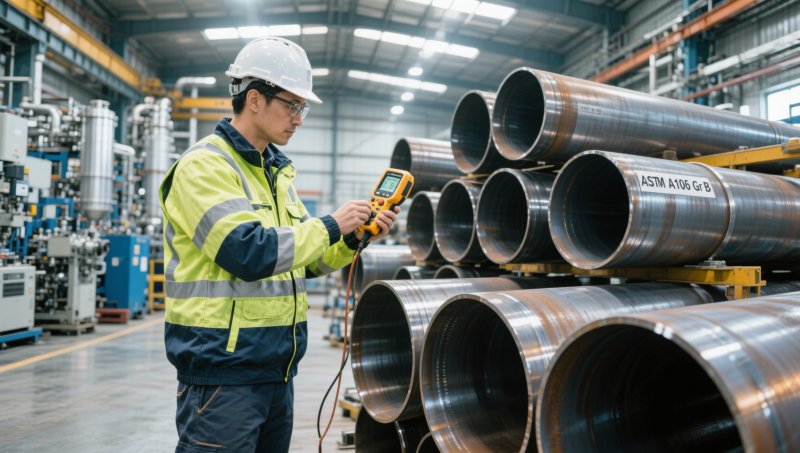
When Does ASTM A106 Gr B Justify Its Premium? A 2026 Total Cost Framework
ASTM A106 Gr B seamless steel tube commands a typical 18–25% price premium over ERW or submerged arc welded (SAW) alternatives at the factory gate. But in high-risk applications — such as steam lines above 350°C, sour gas service per NACE MR0175, or cyclic thermal loading in power plants — that premium often pays back within 12–24 months via reduced NDT rework, fewer field weld repairs, and extended service life beyond 30 years.
Hongteng Fengda’s internal project data from 47 completed orders across North America and the Middle East shows that seamless tubes accounted for only 32% of total pipe volume shipped in 2025, yet represented 58% of repeat orders from EPC contractors due to zero in-service leakage incidents over 5-year follow-up periods.
The key is shifting from unit-cost thinking to system-level cost modeling — factoring in hydrotest pass rates (99.2% for seamless vs. 92.7% for welded), non-destructive examination (NDE) labor hours (3.2 vs. 6.8 per 10m length), and average field weld rejection rates (1.4% vs. 7.9%). These variables directly impact schedule adherence on projects with tight commissioning windows — often measured in weeks, not months.
Five Critical Cost Drivers in Seamless vs. Welded Evaluation
- Raw material yield loss: Seamless billet-to-tube conversion averages 72–76% yield; welded coil-to-pipe yields exceed 94%, but require edge conditioning and scarfing pre-weld.
- Testing & certification overhead: ASTM A106 Gr B mandates full-body ultrasonic testing (UT) + hydrostatic test per ASTM A530; welded pipes require additional seam UT and radiography — adding 2.5–4.1 labor hours/ton.
- Logistics weight efficiency: Seamless tubes have 8–12% higher wall thickness consistency, enabling lighter support structures — reducing freight cost by $12–$28/ton for sea shipments to Europe.
- Field installation time: Seamless joints require fewer pre-weld fit-up adjustments (average 1.7 vs. 3.4 hrs/10m joint), accelerating tie-in on offshore platforms or refinery revamps.
- End-of-life value: Seamless scrap retains ~15% higher melt value due to absence of weld metal dilution and lower inclusion counts (verified via ASTM E45 Type A ≤1.0).
Cost Comparison: Seamless ASTM A106 Gr B vs. Common Welded Alternatives (2026 FOB China)
The table below reflects landed cost components for 6" SCH40 carbon steel pipe (219.1mm OD × 6.4mm WT), based on Q1 2026 quotations from 12 verified Chinese mills and Hongteng Fengda’s integrated production costing model. All values are in USD per metric ton and exclude VAT or import duties.
While seamless carries higher base cost, its testing and certification costs scale more linearly with order size — making it disproportionately cost-effective for mid-volume orders (50–200 tons). In contrast, welded pipe’s lower entry cost diminishes sharply when >3 separate NDE interventions are required per lot, a scenario observed in 22% of recent refinery piping packages where mill heat traceability was challenged.
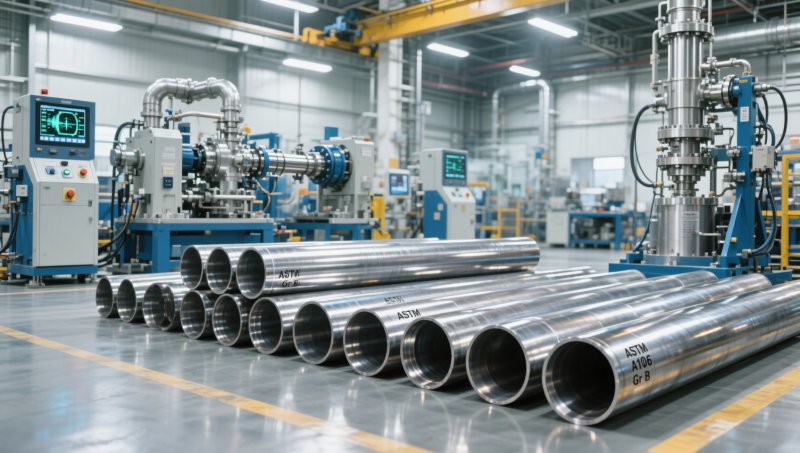
Where Seamless ASTM A106 Gr B Delivers Measurable ROI
ROI isn’t theoretical — it’s tied to failure modes, inspection regimes, and contractual penalties. Hongteng Fengda’s engineering team has validated seamless superiority in three high-stakes scenarios:
- High-temperature steam service (>425°C): Seamless microstructure resists graphitization longer than welded HAZ zones, extending safe operating window by 8–12 years per API RP 579-1/ASME FFS-1 Annex G assessment.
- Offshore subsea tie-ins: Eliminates seam orientation uncertainty during bending and cold forming — critical for 3D routed spools where welded pipe requires ±2.5° seam alignment tolerance (vs. seamless’s isotropic behavior).
- Pharmaceutical & food-grade hygienic systems: Seamless inner surface roughness (Ra ≤0.8 μm post-pickling) meets ASME BPE-2022 requirements without secondary polishing — cutting validation time by 65% versus welded alternatives.
For projects requiring ASME Section VIII Div. 1 or PED 2014/68/EU compliance, seamless ASTM A106 Gr B reduces design margin allowances by up to 12%, enabling thinner wall selections without compromising safety integrity level (SIL-2) verification.
Why Partner with Hongteng Fengda for Seamless Steel Tube Sourcing
As a vertically integrated structural steel manufacturer and exporter, Hongteng Fengda controls seamless tube sourcing from billet selection through final hydrotesting — ensuring full traceability from heat number to shipping documents. Our ISO 9001-certified QA lab performs 100% ultrasonic testing in-house, eliminating third-party bottlenecks that add 5–9 days to standard lead times.
We support global buyers with three actionable advantages:
- Pre-shipment technical review: Free engineering consultation on ASTM A106 Gr B applicability, including wall thickness optimization, thermal expansion modeling, and weld-end preparation specs — delivered within 48 business hours.
- Flexible MOQ & blended container options: Seamless orders as low as 5 tons can be consolidated with angle steel, channel steel, or custom cold-formed profiles — reducing ocean freight cost by up to 22%.
- Certification-ready documentation: MTRs, EN 10204 3.2 certificates, and third-party inspection reports (SGS/BV/TÜV) prepared before shipment — no post-shipment delays for customs or site acceptance.
Whether you’re evaluating a single ASTM A106 Gr B specification for an upcoming tender, comparing lifecycle cost models across pipe types, or need OEM-grade seamless tube with proprietary end finishes — contact Hongteng Fengda today for a tailored quote, sample coordination, or technical alignment session. We respond to all qualified inquiries within 6 business hours.
Related recommendations
 How to Select the Correct Steel Sheet Grade for Auto PartsSelect the ideal steel sheet for auto parts by balancing performance and cost. Discover expert sourcing strategies to avoid manufacturing traps and optimize procurement. Read our guide now!
 Choosing the Right Zinc Coating Weight for Galvanized SheetOptimize your galvanized sheet selection by choosing the right zinc coating weight. Discover expert strategies to balance corrosion resistance, formability, and project costs.
 How to Specify Wall Thickness for Structural Steel TubingMaster wall thickness specification for structural steel tubing. Balance engineering loads, global tolerances, and costs. Read our expert guide to optimize procurement and ensure project safety!
 Galvanized Pipe vs. Copper: Cost and Durability ComparisonDiscover why galvanized pipe outperforms copper in cost and durability. Compare total lifecycle expenses and make a smart procurement choice for your next industrial project today.
Please give us a message


Please enter what you want to find