Choosing between L shape angles and T-sections is critical for load-bearing steel framing—especially when performance, compliance, and cost intersect. As a trusted ASTM stainless steel and galv angle manufacturer, Hongteng Fengda supplies high-strength l shaped metal bars, 316 angle, angle plate steel, and bracing angle in steel structure—each engineered for precision and durability. Whether you're specifying l shape steel for seismic bracing or sourcing angle galvanized profiles for corrosion resistance, understanding their structural behavior, fabrication flexibility, and code compliance (ASTM/EN/GB) directly impacts safety and project timelines. Let’s break down the 3 key differences that matter most to engineers, procurement teams, and project managers.
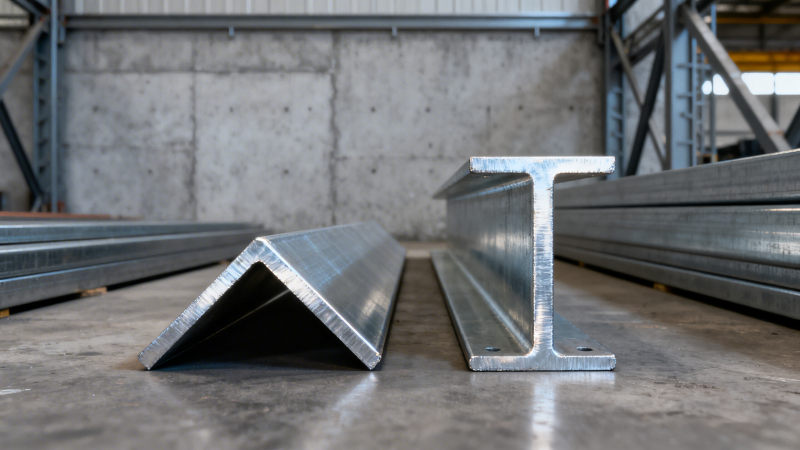
Definition & Structural Identity
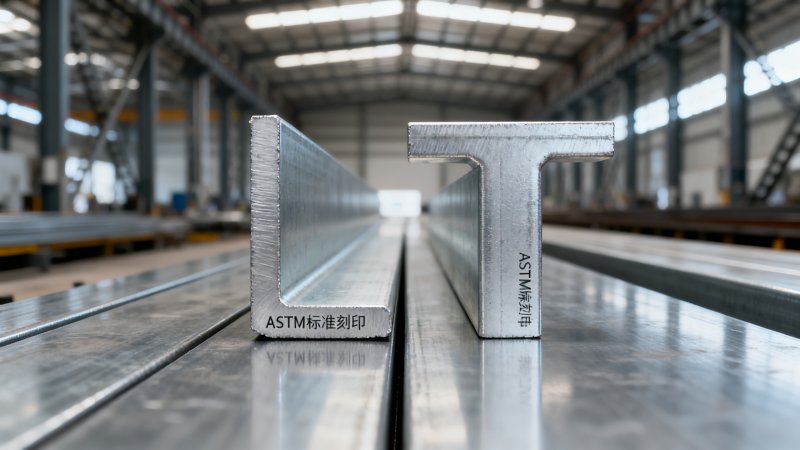
L shape angles—commonly known as angle steel or l shaped metal bars—are hot-rolled or cold-formed structural members with two perpendicular legs forming an “L” cross-section. Widely used in bracing angle in steel structure applications, they offer excellent torsional rigidity and ease of field welding or bolting. Standard specifications include ASTM A6/A6M (carbon), ASTM A276 (stainless), and EN 10025–2 for European markets. Our l shaped metal sheet and angle galvanized products undergo full immersion galvanization per ASTM A123, ensuring uniform zinc coating and long-term protection against atmospheric corrosion.
T-sections, by contrast, consist of a vertical web flanked by a horizontal flange—resembling the letter “T”. They are typically fabricated by cutting I-beams or through dedicated rolling/milling processes. While less common in general framing, T-sections excel where unidirectional bending resistance and high moment capacity are required—such as column caps, crane rails, or custom bracket supports. Unlike l shape angles, T-sections lack inherent symmetry across both axes, requiring careful orientation during installation to avoid unintended buckling modes.
Both profiles serve distinct roles in structural hierarchy: l shape steel often functions as secondary bracing, gusset connections, or edge reinforcement; whereas T-sections frequently act as primary transfer elements in specialized assemblies. Recognizing this functional divergence early avoids costly redesigns—especially on projects governed by ISO 9001-certified quality systems like those maintained at Hongteng Fengda’s ISO 14001-compliant production facilities.
Comparison Analysis: Geometry, Load Path & Fabrication
The core distinction lies not just in appearance—but in how each profile channels force, resists deformation, and interfaces with adjacent components. Below is a side-by-side technical comparison tailored for structural engineers and procurement professionals evaluating l shape angles vs. T-sections:
For global buyers managing tight deadlines across North America or the Middle East, our standardized l shaped metal bars ship within 25 days from order confirmation—backed by real-time production tracking and third-party inspection options (SGS/BV). This agility makes us a preferred supplier for fast-track infrastructure programs relying on reliable angle galvanized and bracing angle in steel structure components.
Application Scenarios & Real-World Fit
L shape angles dominate in modular construction, roof purlin support, façade anchoring, and seismic retrofitting. Their simplicity enables rapid assembly—even in remote sites lacking heavy lifting equipment. For example, our 316 angle has been deployed in coastal desalination plants across Southeast Asia, where chloride exposure demands both ASTM stainless steel integrity and weldable geometry. Similarly, angle plate steel is routinely specified for stair stringers and mezzanine decking due to predictable shear transfer and minimal fabrication waste.
T-sections find niche use in rail systems, conveyor supports, and architectural canopies—where concentrated point loads demand localized stiffness. However, improper application—like substituting T-sections for diagonal bracing—can trigger premature failure. That’s why Hongteng Fengda provides free engineering consultation during quoting: our team reviews load diagrams, connection details, and environmental classifications before recommending either l shape steel or alternative solutions such as Color Coated Galvanized Roof Sheet PPGI for lightweight cladding integration.
Project managers consistently report reduced rework rates when using pre-galvanized l shaped metal bars over field-painted alternatives. Our galv angle meets ASTM A123 Class B requirements (minimum 3.9 mils coating thickness), delivering >25 years service life in industrial atmospheres—validated via salt-spray testing per ASTM B117.
Standards & Certification: Why Compliance Can’t Be Compromised
All Hongteng Fengda structural products carry traceable mill test reports (MTRs) aligned with ASTM, EN, JIS, and GB standards. Each batch of l shape angles undergoes tensile, bend, and impact testing per ASTM A6/A370. Our 316 angle complies with ASTM A276 Grade 316, guaranteeing ≥25% elongation and ≥75 ksi tensile strength—even after cold forming. For clients requiring dual-certification (e.g., ASTM + EN 10025–2 S355), we coordinate parallel inspections with TÜV Rheinland and China Certification & Inspection Group (CCIC).
Unlike generic suppliers, we maintain full documentation transparency—not just for finished goods but also raw material origin (e.g., iron ore smelted in certified blast furnaces). This traceability matters especially for government tenders in Europe or public infrastructure bids in Canada, where non-compliance triggers automatic disqualification.
Our commitment extends beyond certification: every order includes dimensional verification reports, surface finish evaluations, and packaging compliance checks per ISO 8502-3. Whether you’re sourcing angle galvanized for wind turbine towers or l shaped metal sheet for hospital expansion projects, consistency isn’t optional—it’s engineered into every process step.
 Why Choose Hongteng Fengda?
As a vertically integrated structural steel manufacturer and exporter from China, Hongteng Fengda bridges global demand with local responsiveness. We combine modern rolling lines, automated galvanizing baths, and AI-powered QC scanning to deliver l shape angles, T-sections, channel steel, and cold-formed profiles—all under one roof. With 12+ years serving clients across 40+ countries, we understand what procurement teams truly need: predictable lead times, zero surprise surcharges, and seamless logistics coordination from factory gate to job site.
Whether you're comparing 316 angle versus carbon alternatives—or evaluating whether l shape steel suffices versus more complex T-sections—we offer no-obligation technical support, sample shipments, and multi-currency invoicing. Contact our international sales team today to request a customized quote, MTR preview, or virtual factory tour.
Related recommendations
 How much does 2 inch ss pipe price increase when upgrading from Schedule 40 to Schedule 80 for high-pressure systems?2 inch ss pipe price increases 18–35% when upgrading from Sch 40 to Sch 80—discover why, when it’s truly needed, and how to avoid overpaying.
 Which 304 stainless steel coil suppliers meet ISO 9001 and EN 10088-2 for food-grade fabrication?Discover verified 304 stainless steel coil suppliers meeting ISO 9001 & EN 10088-2 for food-grade fabrication—traceable, audited, and ready for regulatory validation.
 How does 2 inch ss pipe price compare between 304 and 316 grades for marine environments?2 inch ss pipe price varies significantly between 304 and 316 — but in marine environments, choosing 304 risks costly failures. Discover why 316 is the true value choice.
 Is 20 feet square pipe price affected more by raw material volatility or regional logistics costs?20 feet square pipe price is driven primarily by raw material volatility—not logistics. Discover why billet costs dominate pricing & how to forecast smarter with Hongteng Fengda.
Please give us a message


Please enter what you want to find