Choosing the right Steel Plate Supplier is about more than price. From product range covering Q235 steel, API 5L pipe, and SPCC steel to quality control, certifications, delivery reliability, and export experience, every factor affects project cost and performance. This guide explains how to compare suppliers effectively, reduce sourcing risks, and find a partner that can support long-term needs in construction, industrial, and manufacturing applications.
What should you compare first when evaluating a steel plate supplier?
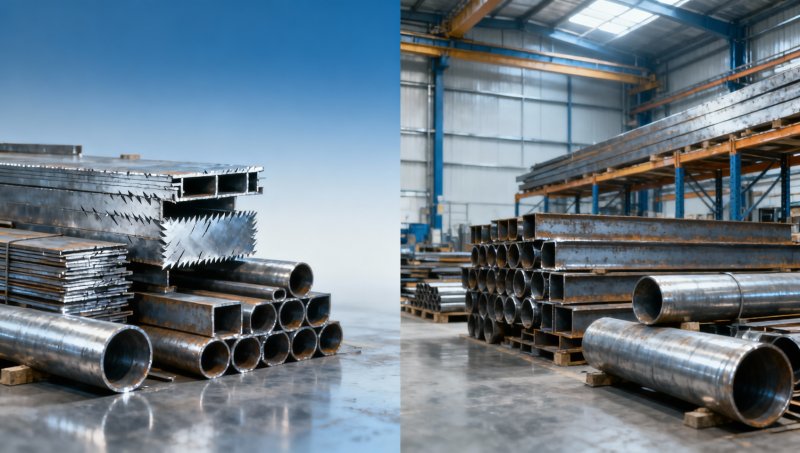
For buyers, engineers, project managers, distributors, and financial approvers, the first step is to compare a supplier on business fit rather than only on unit price. A low quote can become expensive if the material grade is inconsistent, export packing is weak, or delivery slips by 2–4 weeks. In steel sourcing, cost, compliance, and delivery risk are closely linked.
A practical comparison starts with 5 core dimensions: product scope, standards compliance, manufacturing capability, delivery reliability, and communication efficiency. These factors help information researchers narrow the market, help technical evaluators verify suitability, and help procurement teams avoid suppliers that look competitive on paper but create downstream losses during fabrication or installation.
In the steel industry, supplier capability matters because projects often require mixed items, not only steel plate. A qualified partner should understand related materials such as structural sections, cold formed profiles, and application-specific grades. This becomes more important when a project includes civil engineering, industrial equipment, or fabrication work with strict dimensional and traceability requirements.
For international buyers, export experience is another early filter. Suppliers serving North America, Europe, the Middle East, and Southeast Asia usually have stronger awareness of ASTM, EN, JIS, and GB requirements, document preparation, packing methods, and shipment coordination. That reduces errors during the 3 key stages of sourcing: specification confirmation, production control, and final dispatch.
A simple first-round checklist
- Can the supplier offer the required steel grades, thickness range, and processing options such as cutting, drilling, or coating?
- Do they work to internationally recognized standards like ASTM, EN, JIS, or GB, and can they provide mill test documentation when needed?
- Is the delivery window realistic, for example 7–15 days for stock items or 3–6 weeks for production orders, depending on quantity and processing?
- Can they support OEM or customized structural steel solutions if your project changes mid-cycle?
- Do they communicate clearly on packing, loading, tolerance, claim handling, and after-sales response time?
Companies like Hongteng Fengda stand out when buyers need more than simple supply. As a structural steel manufacturer and exporter from China, the company supports global projects with angle steel, channel steel, steel beams, cold formed steel profiles, and customized structural steel components. This broader capability is valuable when a procurement team wants to consolidate sourcing and reduce coordination across multiple vendors.
How to compare product range, technical suitability, and processing support
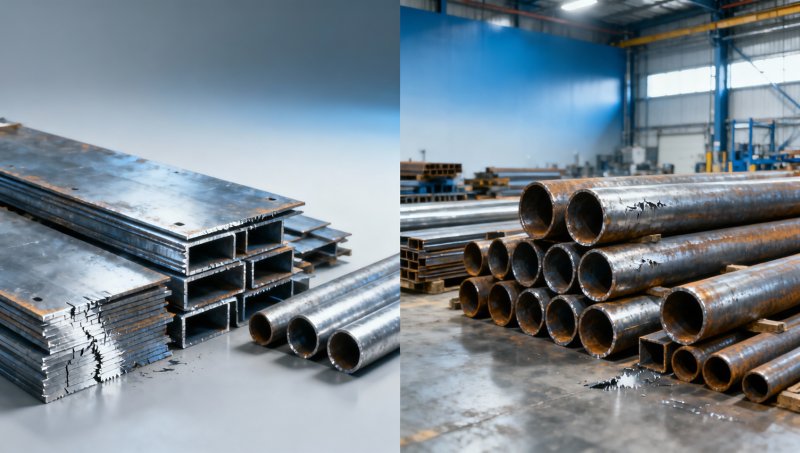
Many buyers search for a Steel Plate Supplier and focus only on plate thickness, width, and grade. In reality, technical suitability includes surface condition, tolerance control, forming performance, welding compatibility, and whether the supplier can coordinate related steel products in the same procurement cycle. For many construction and manufacturing projects, this can save 1–2 rounds of vendor qualification and shorten purchasing lead time.
A stronger supplier should be able to explain where different materials fit. Q235 steel may suit general structural use, SPCC steel may be selected for cold forming applications, and API 5L pipe serves line pipe needs rather than plate functions. The ability to discuss these distinctions shows whether the supplier is merely quoting or actually supporting engineering selection and commercial risk control.
Processing support also matters. If the supplier can offer cutting, punching, beveling, galvanizing, painting, bundling, or export packaging according to project requirements, the buyer may reduce handling losses and site preparation time. For project teams working under tight schedules, reducing even 3–5 days in rework or transfer time can make a measurable difference.
Mid-project procurement often involves more than plate products. For reinforcement in civil works and concrete structures, buyers may also need Rebar in grades such as HRB335, HRB400, or HRB500, with common sizes from 6mm to 50mm and lengths such as 5m–14m, 6m, or 12m. When one supplier group can coordinate structural steel and reinforcement products under recognized standards like BS4449-2005, JIS G3112-2004, ASTM A615-A615M-04a, ISO, SGS, or BV, sourcing becomes easier to manage.
Key technical questions before you request a quote
- What grade, thickness range, and tolerance are required for the actual load, forming method, and end-use environment?
- Will the steel need secondary processing, and can the supplier complete it in-house or through controlled subcontracting?
- Does the project involve combined sourcing of plates, beams, channels, profiles, or reinforcement products for one shipment plan?
- What documents are needed: MTC, inspection records, packing list, certificate copies, or third-party inspection coordination?
The table below helps procurement and technical teams compare supplier suitability across product and service dimensions instead of using a price-only method.
This comparison shows why a broader manufacturing and export supplier often delivers better total project value. Even if the unit price is not the lowest, fewer coordination points, better process control, and more reliable documentation can reduce the hidden cost of procurement.
Which quality, certification, and compliance points matter most?
For quality inspectors, safety managers, engineers, and decision-makers, supplier comparison must include compliance capability. A reliable Steel Plate Supplier should be able to explain applicable standards, grade equivalence limits, test document availability, and what is included in routine quality control. This is especially important when the steel will be used in load-bearing structures, public infrastructure, or fabricated assemblies.
In many export transactions, the most useful quality signals are not broad claims but clear process checkpoints. Typical checkpoints include raw material verification, dimensional inspection, surface inspection, identification marking, and pre-shipment packing review. In practical sourcing, 4–6 inspection points are often easier to audit than a long list of vague quality promises.
Standards such as ASTM, EN, JIS, and GB are common reference systems across global steel trade. However, buyers should confirm not only the standard family but the exact grade, dimensional requirement, tolerance expectation, and documentation format required by the project or local approval authority. Misalignment here can delay acceptance by 1–3 weeks if replacement documents or re-inspection becomes necessary.
Hongteng Fengda emphasizes strict quality control and supplies products aligned with major international standards. For global buyers, this matters because it supports specification matching across markets while lowering the risk of inconsistent deliveries between trial orders and repeat orders.
Compliance review points for procurement and QC teams
- Confirm the applicable standard and grade before quotation approval, not after production starts.
- Ask whether the supplier can provide routine documents such as test certificates, inspection records, and packing details.
- Check tolerance capability, especially if downstream fabrication requires tight fitting, welding accuracy, or assembly repeatability.
- Clarify whether third-party inspection is needed and at which stage: pre-production, during production, or pre-shipment.
The following table gives a structured way to compare compliance readiness across suppliers.
A supplier that performs well in these areas is usually easier to work with over the long term. Compliance is not only about passing inspection; it is about avoiding avoidable cost, delay, and dispute across repeated orders.
How do price, lead time, and total cost really compare?
Financial approvers and purchasing managers often ask the same question: which Steel Plate Supplier gives the best value? The answer rarely comes from unit price alone. Real comparison should include base material price, processing cost, freight, packing, inspection cost, claim risk, and the cost of delays. A quote that is 2% lower can become more expensive if one shipment miss causes a site stoppage or fabrication bottleneck.
Lead time should also be evaluated in layers. A supplier may promise fast production but respond slowly during drawing review or document confirmation. In many B2B steel transactions, the total cycle includes 3 stages: technical confirmation, production or stock allocation, and shipment booking. If each stage loses just 2–3 days, the final dispatch can move out by more than a week.
For recurring buyers and distributors, stable delivery is usually more valuable than occasional low pricing. Consistent lead times help inventory planning, downstream production scheduling, and project cash flow management. This is why many international buyers prioritize dependable manufacturing capacity and repeatable service performance over aggressive one-time quotations.
Hongteng Fengda supports global buyers with stable production capacity, consistent quality, and dependable lead times. That combination is important when customers want to reduce sourcing risk, control cost across multiple orders, and keep project execution moving without frequent supplier changes.
Cost comparison should include these 6 items
- Material base price by grade, thickness, and quantity tier.
- Processing charges for cutting, drilling, coating, or OEM work.
- Packing and loading cost, especially for export shipments and mixed containers.
- Inspection and documentation cost, including third-party arrangements if required.
- Delay exposure, such as idle labor, postponed installation, or late customer delivery.
- Claim handling risk if material mismatch or transit damage occurs.
The table below shows how a total-cost view can improve supplier comparison.
This type of comparison is especially useful for project owners, distributors, and finance teams. It turns supplier selection from a simple price check into a more accurate risk and cost decision.
What mistakes do buyers make, and how can they avoid them?
One common mistake is assuming that all steel with a similar name performs the same way. In reality, grade, standard, processing route, and surface condition can change suitability for welding, forming, structural use, or corrosion protection. A clear specification sheet should be prepared before quotation comparison, especially for projects involving multiple subcontractors or public infrastructure.
Another mistake is approving a supplier before reviewing delivery detail. Buyers sometimes compare quoted lead times without asking whether the timeline includes processing, document preparation, inspection, inland transport, and vessel booking. In export steel procurement, these details can add 5–10 days if not clarified early.
A third mistake is separating technical review from commercial review too late. If procurement, engineering, QC, and finance evaluate suppliers in different rounds, the process becomes slow and often inconsistent. A better practice is to use one shared supplier matrix with 4 sections: technical fit, compliance, delivery, and commercial terms.
Finally, some buyers do not test communication speed before placing an order. Yet fast and precise communication is critical when drawings change, dimensions require reconfirmation, or shipping documents need urgent correction. Response quality during inquiry often predicts service quality during execution.
FAQ for comparing steel plate suppliers
How many suppliers should I compare before making a decision?
For most B2B purchases, comparing 3 suppliers is a practical starting point. Fewer than 3 may not show market differences clearly, while more than 5 can slow internal review without adding much value. Use the same specification sheet and evaluation criteria for all candidates to keep the comparison fair.
What delivery time is normal for steel products?
It depends on whether the items are stock materials or made-to-order. Stock-based orders may move in about 7–15 days, while production orders with processing and export packing often require 3–6 weeks. Buyers should confirm whether the schedule includes document approval and shipment booking, not only mill production.
Should I prioritize a factory over a trader?
Not always, but for projects requiring customized steel components, mixed product sourcing, or strict export control, a manufacturing-oriented supplier often provides better consistency. The key is not the label alone, but whether the supplier can control production, quality, schedule, and technical communication effectively.
What documents should I ask for before order confirmation?
At minimum, request grade and standard confirmation, dimensional details, packing method, delivery term, and expected documentation such as mill test certificates or inspection records where applicable. For repeat projects, ask the supplier to keep the same document structure across batches to simplify QC and customs handling.
Why work with a structural steel manufacturer and exporter for long-term sourcing?
Long-term sourcing is not only about buying today’s order. It is about choosing a partner that can support evolving project needs across different product categories, standards, and delivery plans. For buyers in construction, industrial manufacturing, distribution, and project execution, this means fewer sourcing interruptions and better coordination over 6–12 month planning cycles.
Hongteng Fengda provides this type of support as a professional structural steel manufacturer and exporter from China. The company supplies angle steel, channel steel, steel beams, cold formed steel profiles, and customized structural steel components, alongside reliable production control and export service for global markets. This helps customers reduce sourcing risk and manage both standard and OEM requirements through one capable partner.
If you are comparing a Steel Plate Supplier for a new project or repeat purchasing program, the most useful next step is a structured inquiry. Share your grade requirements, dimensions, target standard, quantity range, delivery destination, and whether processing or mixed-product supply is needed. With that information, a professional team can advise on material selection, cost drivers, and realistic lead times.
You can contact Hongteng Fengda for parameter confirmation, product selection, delivery cycle review, customized structural steel solutions, certification requirement discussion, sample support, and quotation communication. This is especially valuable when your project involves multiple steel categories, export compliance expectations, or tight schedule control.
Please give us a message


Please enter what you want to find