Sourcing high strength steel angle for industrial use from China demands clarity, confidence, and the right partner—especially amid evolving MOQ requirements for structural steel orders and rising scrutiny on quality consistency. Whether you're a U.S. procurement team comparing ASTM A36 Angle Steel price per ton in Philippines or evaluating galvanized steel sheet supplier in USA options, this guide walks you through how to buy angle steel from China—step by step. We address common defects in steel beams and solutions, structural steel lifespan and maintenance, and why angle steel quality varies—backed by Hongteng Fengda’s expertise as a trusted structural steel manufacturer & exporter.
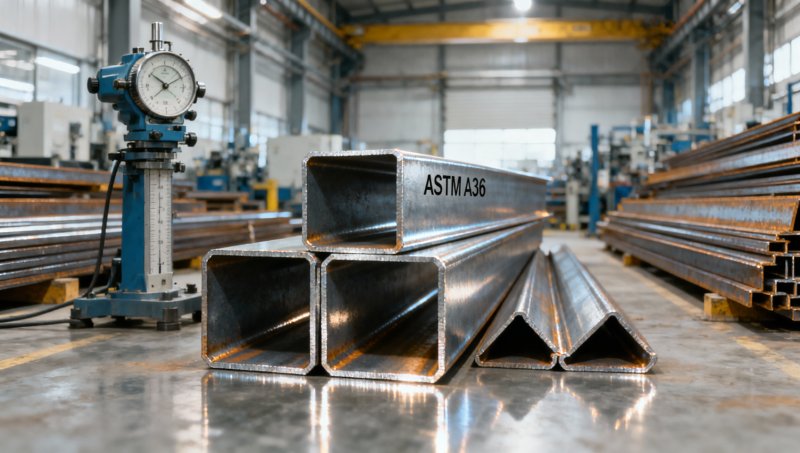
Step 1: Define Your Technical & Commercial Requirements
Before reaching out to any Chinese supplier, U.S. procurement teams must align internal engineering, safety, and budget stakeholders around precise specifications. This includes grade (e.g., ASTM A36, A572-50, or GB/T 700 Q235B), dimensional tolerances (per ASTM A6 or EN 10056), surface finish (hot-dip galvanized, pre-galvanized, or bare), and packaging preferences (bundled, loose, or coil form). For industrial applications requiring high strength steel angle for industrial use, tensile strength ≥400 MPa and yield strength ≥250 MPa are often non-negotiable—especially in heavy machinery frames or seismic-resistant infrastructure.
Equally critical is clarifying commercial parameters: target delivery timeline, Incoterms (FOB Shanghai vs. CIF Los Angeles), payment terms (T/T, LC at sight), and most importantly—the MOQ requirements for structural steel orders. At Hongteng Fengda, standard MOQ for hot-rolled angle steel starts at 25 metric tons per SKU, but flexible arrangements apply for long-term partners or mixed-product shipments. Unlike generic steel round bar supplier in USA offerings, Chinese manufacturers offer deeper customization—including cut-to-length, punching, or welding prep—without markup penalties.
Step 2: Vet Suppliers Using Multi-Layer Due Diligence
Not all exporters meet international compliance standards. A robust vetting process includes verifying ISO 9001 certification, third-party audit reports (SGS/BV/Intertek), factory visit records (virtual or onsite), and production capacity data—not just marketing claims. Ask for mill test reports (MTRs) tied to real batch numbers, not generic templates. Pay close attention to traceability: Can the supplier map each coil or beam back to its heat number, rolling date, and galvanizing bath log?
For example, when evaluating a galvanized steel sheet supplier in USA versus a direct China source, consider zinc layer uniformity. Hot-dip galvanizing at 275 g/m² offers superior corrosion resistance over electro-galvanized alternatives—but only if coating adhesion meets ASTM A123 and bend tests show no flaking. Hongteng Fengda’s Gi Sheet Coil achieves consistent 60–275 g/m² zinc coverage across DX52D and SGCD1 grades, verified via cross-section microscopy and salt-spray testing (ASTM B117, 96+ hours red rust free).
Step 3: Understand Realistic Lead Times & Logistics Planning
Lead time isn’t just “production + shipping.” It includes raw material procurement (scrap or billet sourcing), rolling schedule alignment, quality hold points, customs documentation prep, and port congestion buffers. For structural steel, average lead time from order confirmation to FOB loading is 35–45 days—shorter for stock sizes, longer for custom profiles like steel square rod for construction projects. Seasonal factors matter: Q4 sees higher demand due to U.S. infrastructure spending cycles, while Chinese New Year (Jan/Feb) may add 7–10 days unless pre-booked.
Logistics planning must also factor in U.S. import regulations: CBP entry filing, ISF (10+2), and HTS code classification (e.g., 7216.50.00 for angle steel). Working with a U.S.-based customs broker familiar with steel classifications reduces clearance delays. And remember: ASTM A36 Angle Steel price per ton in Philippines reflects regional freight surcharges and VAT—don’t assume it’s directly comparable to U.S. landed cost.
Step 4: Quality Assurance Beyond Paper Certifications
Why angle steel quality varies stems from differences in raw material purity, rolling temperature control, cooling rate consistency, and post-processing handling. Common defects in steel beams and solutions include:
Structural steel lifespan and maintenance depend heavily on initial quality. Properly manufactured ASTM A36 angles with ≤0.03% sulfur content and verified Charpy impact values exceed 27 J at –20°C—ensuring ductility under cyclic loading. Hongteng Fengda subjects every shipment to ultrasonic testing (UT) for internal laminations and magnetic particle inspection (MPI) for surface cracks—going beyond basic visual checks.
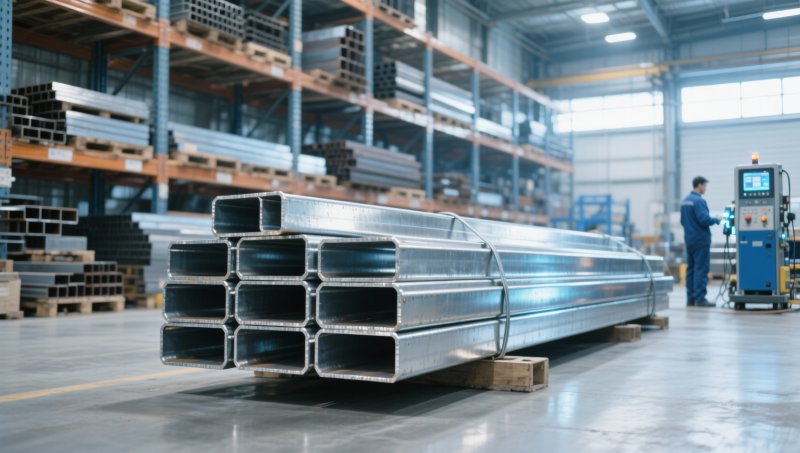
Step 5: Build Long-Term Value, Not Just Short-Term Savings
Procurement teams increasingly prioritize total cost of ownership (TCO) over unit price. That means factoring in scrap rates (poorly straightened angles increase cutting waste), rework costs (non-compliant galvanizing requires stripping and recoating), and project delay penalties. A reliable steel round bar supplier in USA may offer faster delivery—but limited grade flexibility and higher base pricing than a Tier-1 Chinese manufacturer with global certifications.
Hongteng Fengda supports U.S. buyers with technical collaboration—from CAD-based profile optimization to weld procedure specification (WPS) development—and offers extended warranties on galvanized products (up to 25 years in rural atmospheres per ISO 14713). Our clients report 12–18% lower TCO compared to fragmented sourcing across multiple regional vendors—validated through third-party LCA analysis.
Conclusion: Confidence Starts with Clarity—and the Right Partner
How to buy angle steel from China successfully hinges on preparation, precision, and partnership—not just procurement. From defining exact MOQ requirements for structural steel orders to diagnosing common defects in steel beams and solutions, every decision impacts structural steel lifespan and maintenance, project timelines, and final build integrity. Whether you’re specifying high strength steel angle for industrial use or comparing ASTM A36 Angle Steel price per ton in Philippines against U.S. domestic alternatives, partnering with an experienced, certified, and responsive exporter makes the difference between risk mitigation and reactive firefighting.
Hongteng Fengda delivers more than steel—it delivers predictability. With modern facilities, full traceability, multi-standard compliance (ASTM, EN, JIS, GB), and dedicated U.S. support teams, we help procurement professionals reduce sourcing complexity while elevating quality assurance. Ready to streamline your next structural steel order? Get a customized quote and technical consultation today.
- l angle
- angle steel
- galvanized steel sheet
- galvanized steel sheet supplier
- gi sheet coil
- a36 angle
- steel sheet supplier
- hot-dip galvanized
- galvanized steel
- ASTM A36
- structural steel
- steel beams
- Structural Steel
- Steel Beams
- Profile
- why angle steel quality varies
- structural steel lifespan and maintenance
- common defects in steel beams and solutions
- how to buy angle steel from China
- MOQ requirements for structural steel orders
- ASTM A36 Angle Steel price per ton in Philippines
- Galvanized
- Steel Beam
- galvanized steel sheet supplier in USA
- steel sheet
- steel angle
- steel round bar
- steel square rod
- steel square rod for construction projects
- steel round bar supplier in USA
- high strength steel angle for industrial use
Related recommendations
 How much does 2 inch ss pipe price increase when upgrading from Schedule 40 to Schedule 80 for high-pressure systems?2 inch ss pipe price increases 18–35% when upgrading from Sch 40 to Sch 80—discover why, when it’s truly needed, and how to avoid overpaying.
 Which 304 stainless steel coil suppliers meet ISO 9001 and EN 10088-2 for food-grade fabrication?Discover verified 304 stainless steel coil suppliers meeting ISO 9001 & EN 10088-2 for food-grade fabrication—traceable, audited, and ready for regulatory validation.
 How does 2 inch ss pipe price compare between 304 and 316 grades for marine environments?2 inch ss pipe price varies significantly between 304 and 316 — but in marine environments, choosing 304 risks costly failures. Discover why 316 is the true value choice.
 Is 20 feet square pipe price affected more by raw material volatility or regional logistics costs?20 feet square pipe price is driven primarily by raw material volatility—not logistics. Discover why billet costs dominate pricing & how to forecast smarter with Hongteng Fengda.
Please give us a message


Please enter what you want to find