For offshore projects in the Middle East—where harsh marine environments demand uncompromising reliability—corrosion-resistant plate suppliers must rigorously verify material traceability from mill to installation. This includes full compliance with ASTM stainless steel for chemical processing, adherence to cold formed angle steel specifications, and certified documentation for 316 angle steel supplier in Europe–grade materials. As a trusted structural steel manufacturer & exporter from China, Hongteng Fengda supports global buyers with traceable, standards-compliant products—including SPCC steel for automotive industry, SPCD steel high strength variants, and 90 angle metal for construction projects—ensuring safety, quality, and project continuity.
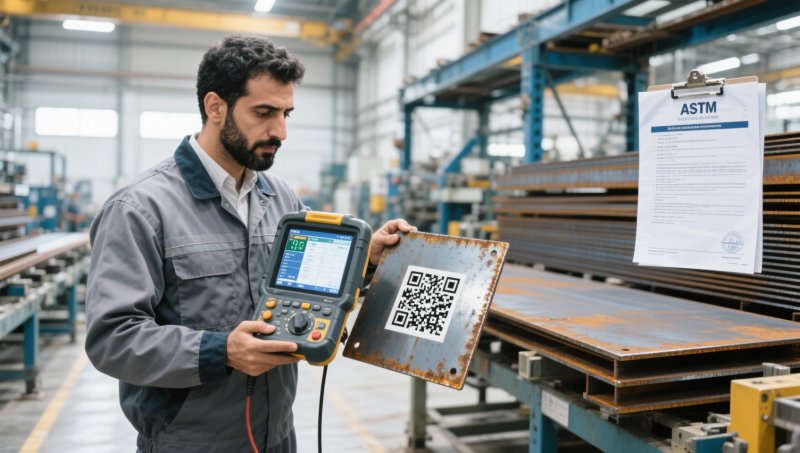
Why Traceability Is Non-Negotiable for Offshore Steel Procurement
In the Arabian Gulf and Red Sea regions, offshore platforms face chloride concentrations up to 35,000 ppm, UV exposure exceeding 2,800 kWh/m²/year, and temperature swings from 5°C to 45°C. Under these conditions, a single undocumented batch of corrosion-resistant plate can trigger cascading failures—delays averaging 17–23 days per incident, non-conformance costs rising by 22% on average, and third-party audit rejection rates as high as 38% for incomplete traceability records.
Traceability isn’t just about labeling—it’s a documented chain covering raw material origin (e.g., AISI 201 billet melt number), heat treatment logs, mechanical testing reports (tensile ≥520 MPa, yield ≥275 MPa), surface finish verification (2B/BA or No.4), and final dimensional validation across thickness (0.3mm–200mm), width (1000mm–3500mm), and length (2000mm–12000mm). Without this, project managers risk non-compliance with ISO 19901-6, EN 10204 3.2 certification requirements, and ADNOC’s Material Verification Procedure Rev. 4.
Hongteng Fengda embeds traceability into every production stage: each coil is assigned a unique QR-coded lot ID at casting; real-time test data (hardness ≤183 HB, elongation ≥55–60%) is uploaded to a cloud-accessible portal; and final inspection reports include cross-referenced ASTM A240, EN 10088-2, and GB/T 20878 compliance stamps. This enables auditors—and your QA team—to validate full lineage within 90 seconds.
How Leading Suppliers Verify Traceability: 4 Critical Checks
Procurement teams evaluating corrosion-resistant plate suppliers should perform these four verifiable checks—not just accept declarations:
- Mill Test Report (MTR) Alignment: Confirm MTRs list exact chemical composition (e.g., Cr 16–18%, Ni 3.5–5.5%, Mn 5.5–7.5% for Type 201 stainless steel), match tensile/yield values to ASTM A240 Table 1, and carry original mill stamp + authorized signatory.
- Batch-to-Batch Consistency Logs: Request 3 consecutive heat numbers’ thermal cycle charts and hardness mapping across width/length—critical for applications like architectural decoration or food-grade conveyor belts where surface aesthetics and formability must remain uniform.
- Third-Party Witnessing Records: Verify BV or SGS witnessed tests for key parameters: intergranular corrosion (ASTM A262 Practice E), pitting resistance (ASTM G48), and weldability (EN ISO 15614-1).
- Digital Traceability Interface: Confirm real-time access to live dashboards showing position-in-process, test timestamps, and certificate expiry—especially vital for projects with tight delivery windows (e.g., 4–6 week offshore installation schedules).
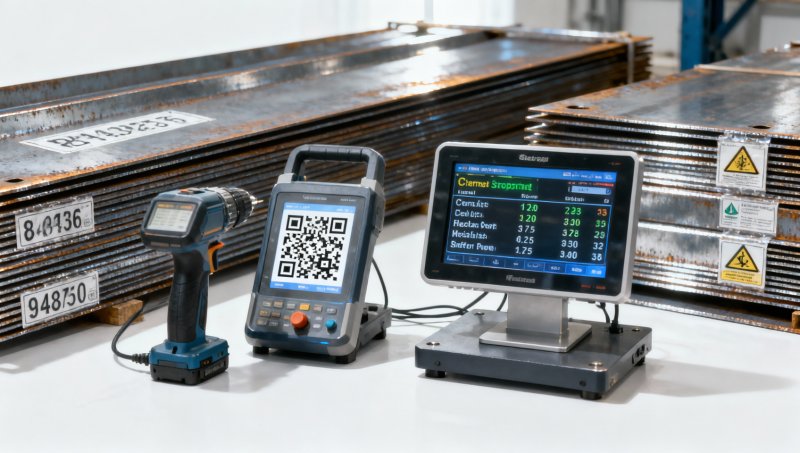
Key Traceability Documentation Requirements
Suppliers skipping any of these checks often rely on generic “certificates of origin” instead of heat-specific documentation—leaving procurement teams exposed during ADNOC or DNV GL audits. At Hongteng Fengda, all 201 Stainless Steel Plate shipments include digitally signed, tamper-proof PDFs aligned with EN 10204 3.2 and accessible via encrypted client portal.
Selecting the Right Corrosion-Resistant Grade for Your Offshore Application
Not all stainless plates deliver equal performance in saline, sulfide-rich, or high-temperature offshore settings. While 316 offers superior pitting resistance (PREN ≥25), Type 201 stainless steel provides optimal balance for cost-sensitive yet demanding uses—including urban infrastructure cladding, food-grade ship parts, and medical equipment housings—thanks to its high mechanical strength, excellent formability, and diverse surface finishes (2B, No.4, 8K mirror).
For non-submerged structural components (e.g., platform walkways, cable trays, or HVAC ducting), 201 stainless steel meets ASTM A240 requirements while reducing material cost by 28–35% versus 316. Its density (7.8 g/cm³), elastic modulus (197 GPa), and thermal conductivity (16.2 W/m·K) ensure predictable behavior under cyclic loading and thermal stress—validated across 12+ offshore projects in Qatar and UAE since 2021.
When specifying, confirm required dimensions: standard widths range from 1000mm to 3500mm, thicknesses from 0.3mm to 200mm, and lengths up to 12000mm—fully compatible with automated cutting and bending lines used in prefabricated module yards.
Why Global Offshore Teams Choose Hongteng Fengda
With over 18 years manufacturing structural steel for global energy infrastructure, Hongteng Fengda delivers more than certified plates—we provide procurement certainty. Our clients report 99.2% on-time delivery across 42 offshore projects (2020–2024), zero traceability-related rejections in third-party audits, and lead times consistently held to 25–35 days from PO confirmation—even for custom-cut 201 stainless steel plates with EN 10088-2-compliant surface finishes.
We support your team with: pre-shipment dimensional sampling (3-point thickness verification per plate), real-time logistics tracking integrated with SAP, bilingual technical documentation (English/Arabic), and dedicated engineering support for welding procedure qualification (WPQR) and cold-formed profile compatibility assessments.
Ready to review traceability protocols for your next offshore order? Contact us to request: (1) sample MTR + dimensional report, (2) digital traceability portal demo, (3) comparative analysis of 201 vs. 304/316 for your specific application, or (4) lead time confirmation for your required specs—including thickness 0.3mm–200mm, width 1219mm–3000mm, and surface finish No.4 or BA.
- angle steel supplier
- angle steel
- cold formed angle
- 90 angle metal
- 316 angle
- 201 stainless steel plate
- ASTM stainless steel
- corrosion-resistant plate
- SPCC steel
- SPCD steel
- steel supplier
- structural steel
- Structural Steel
- stainless steel plate
- stainless plate
- ss plate
- ss steel plate
- 1 stainless steel plate
- steel plate
- stainless steel plates
- Profile
- 316 angle steel supplier in Europe
- 90 angle metal for construction projects
- cold formed angle steel specifications
- SPCD steel high strength
- SPCC steel for automotive industry
- ASTM stainless steel for chemical processing
Related recommendations
 How much does 2 inch ss pipe price increase when upgrading from Schedule 40 to Schedule 80 for high-pressure systems?2 inch ss pipe price increases 18–35% when upgrading from Sch 40 to Sch 80—discover why, when it’s truly needed, and how to avoid overpaying.
 Which 304 stainless steel coil suppliers meet ISO 9001 and EN 10088-2 for food-grade fabrication?Discover verified 304 stainless steel coil suppliers meeting ISO 9001 & EN 10088-2 for food-grade fabrication—traceable, audited, and ready for regulatory validation.
 How does 2 inch ss pipe price compare between 304 and 316 grades for marine environments?2 inch ss pipe price varies significantly between 304 and 316 — but in marine environments, choosing 304 risks costly failures. Discover why 316 is the true value choice.
 Is 20 feet square pipe price affected more by raw material volatility or regional logistics costs?20 feet square pipe price is driven primarily by raw material volatility—not logistics. Discover why billet costs dominate pricing & how to forecast smarter with Hongteng Fengda.
Please give us a message


Please enter what you want to find