In 2024, choosing between corrosion resistant steel rebar and standard steel rebar has become a key factor for cost-conscious builders and project managers. As global demand for durable infrastructure grows, understanding the real value behind corrosion resistant steel rebar—especially for bridge construction and industrial applications—can greatly impact long-term project efficiency and budget. Hongteng Fengda, a high strength steel rebar manufacturer and exporter to Europe and the USA, provides ASTM certified solutions tailored to diverse construction projects. Their experience as a structural steel manufacturer and exporter from China allows global buyers to obtain stable production capacity, consistent quality, and dependable lead times. With increased competition and sustainability requirements, decision-makers are rethinking how material selection influences both lifecycle cost and environmental impact. The conversation isn't only about price per ton but also performance over decades, safety margins, and ultimately the total cost of ownership. While standard steel rebar remains widely used in low-exposure environments, more projects in coastal regions and harsh industrial zones now favor corrosion resistant steel rebar to lower maintenance expenses and improve durability. As infrastructure upgrades accelerate, a closer comparison between these two materials has become essential to manage future investment risk.
Definition and Material Overview
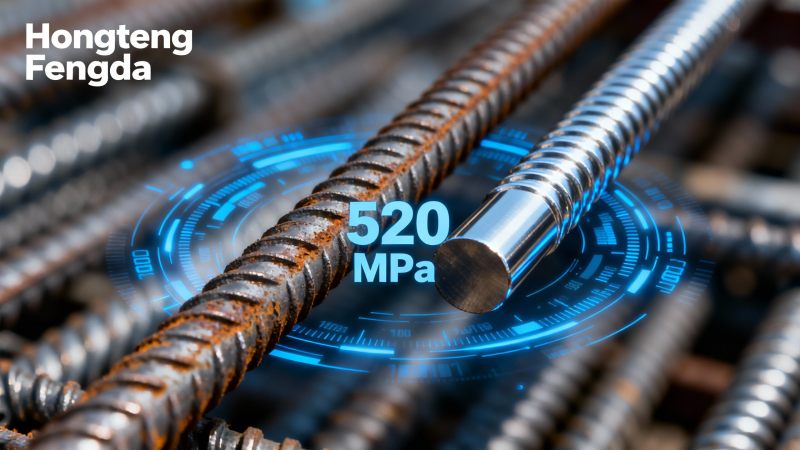
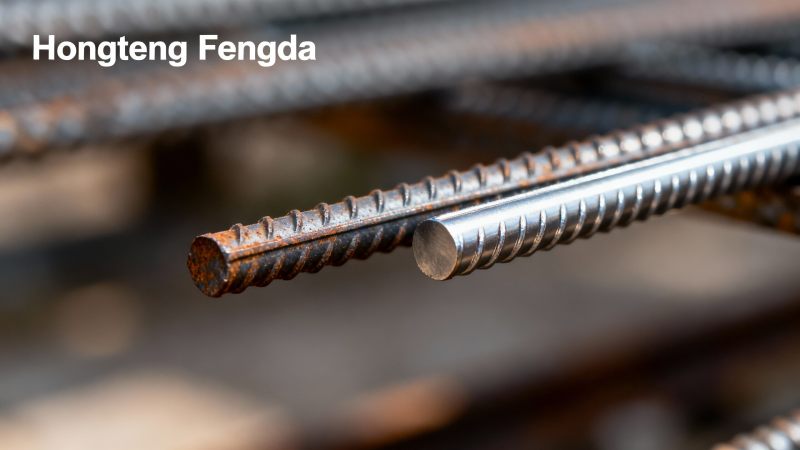
Steel rebar, or reinforcing bar, is a critical component in concrete reinforcement used across bridge decks, tunnels, buildings, and industrial facilities. The difference between standard and corrosion resistant varieties lies primarily in their composition and protective capabilities. Standard steel rebar is typically composed of carbon steel with minimal alloying elements, making it strong yet vulnerable to rust over time when exposed to moisture and salts. Corrosion resistant steel rebar, on the other hand, includes alloying elements such as chromium, nickel, or copper, forming a more durable surface layer that resists oxidation. Some corrosion resistant varieties are stainless steel-based, offering superior longevity, particularly in bridge construction and marine facilities. These materials comply with international standards like ASTM A955 and EN 10088, ensuring consistent mechanical performance. Manufacturers including Hongteng Fengda produce ASTM certified steel rebar tailored to stringent requirements of infrastructure projects that demand reliability. In parallel with rebar, structural products like the 304 Stainless Square steel rod are also preferred for structural and decorative applications because of their high strength, formability, and aesthetic surface finish. Both products exemplify advances in steel materials providing the flexibility needed in construction and manufacturing environments.
Market Overview and Industry Dynamics
From 2020 to 2024, the global steel market has undergone notable shifts, driven by urbanization, smart infrastructure investments, and sustainability goals. Corrosion resistant steel rebar is gaining traction not only in North America and Europe but also in emerging markets seeking longer lifecycle assets. According to recent research from Global Construction Outlook, infrastructure projects in coastal cities require materials that can withstand humid and saline conditions, making corrosion resistant rebar a preferred choice. The price gap between corrosion resistant and standard rebar has narrowed due to improvements in alloy production efficiency. Steel rebar for bridge construction particularly benefits from these innovations because bridge decks and supports often face continuous exposure to deicing salts and temperature fluctuations. Meanwhile, project managers and procurement specialists prioritize long-term durability to avoid expensive repairs within 10–20 years of operation. As a steel rebar exporter to Europe and a custom steel rebar supplier with large-scale production lines, Hongteng Fengda offers integrated manufacturing solutions backed by EN and GB standard certifications. This trend indicates that price alone no longer determines material selection; total lifecycle performance and reliability now define cost-effectiveness. Buyers therefore consider strength, maintainability, and certified quality as primary purchasing factors, aligning with updated regulatory frameworks on sustainable construction.
Technical Performance and Comparative Analysis
The performance difference between corrosion resistant and standard rebar becomes clear when examining their mechanical and chemical properties. Corrosion resistant steel rebar typically demonstrates a tensile strength exceeding 520 MPa and yield strength above 275 MPa, matching or surpassing standard carbon steel rebar. Its protective layer significantly slows down oxidation, reducing rust expansion that often cracks concrete. When tested in chloride-rich environments, corrosion resistant alloys last multiple cycles longer before pitting corrosion initiates. Standard rebar may appear cost-efficient initially, but maintenance and repair due to concrete spalling increase lifecycle costs. In bridge and industrial plant construction, where humidity and chemical exposure are inevitable, the use of corrosion resistant rebar ensures structural integrity for decades. This same principle applies to 304 stainless steel components. For instance, the 304 Stainless Square steel rod offers a tensile strength of ≥520 MPa, yield strength of ≥275 MPa, and elongation of 55–60%, making it suitable for manufacturing kitchenware, outdoor decoration engineering, medical instruments, and automotive parts. These technical parameters also mirror the mechanical resilience demanded in reinforced structures, highlighting a cross-industry synergy between rebar technology and stainless steel development. Advanced metallurgical processes enable tighter composition control, resulting in improved uniformity and predictable stress resistance—benefits critical to contractors, quality inspectors, and project managers.
Application Scenarios and Project Insights
Corrosion resistant steel rebar has increasingly become the material of choice in bridge decks, tunnels, high-humidity industrial zones, and coastal defense structures. For bridge construction across Europe and North America, the push toward longer service life and lower maintenance drives the adoption of high strength, corrosion-resistant rebar. Steel rebar for industrial applications also plays a key role in chemical plants and wastewater treatment facilities where standard rebar could corrode within a few years. For new smart city development projects in Southeast Asia, where environmental sustainability is emphasized, procurement teams often prefer corrosion resistant materials to reduce carbon footprint through extended asset lifespan. Companies like Hongteng Fengda not only deliver these materials but also offer design assistance to ensure optimum rebar selection for each exposure category. By aligning engineering design with ASTM, JIS, and EN standards, contractors gain assurance of quality and consistency. Moreover, corrosion resistant rebar contributes to project efficiency by reducing construction delays associated with rework or inspection failures. Quality control managers value this predictable performance. The inclusion of high-performance alloys has proven especially cost-effective for government-owned infrastructure projects, as lifecycle cost models consistently favor materials that lower maintenance expenditure over time. Case studies from bridge retrofits demonstrate that using corrosion resistant rebar achieves cost recovery in about one-third of typical asset lifespan, hinting at both economic and environmental advantages.
Cost and Lifecycle Evaluation
When evaluating cost-effectiveness, initial purchase price should never be the sole metric. While the steel rebar price per ton of corrosion resistant types may be 30–50% higher than standard rebar, the extended service life significantly reduces total cost of ownership. In large-scale infrastructure with a lifespan exceeding 50 years, maintenance activities such as concrete patching and rebar replacement often multiply costs when standard materials are used. Conversely, corrosion resistant materials help achieve long intervals between maintenance events. Project directors typically conduct net present value (NPV) analysis comparing material costs, repair scheduling, and downtime losses. Results often favor corrosion resistant rebar in bridge, tunnel, and industrial furnace construction. In the United States, government transportation agencies have reported up to 30% lower lifecycle costs by switching to corrosion-resistant alloys. For building contractors and developers, the decision increasingly aligns with sustainability targets and local building codes promoting durable materials. The assessment extends beyond financial aspects to include quality assurance and safety compliance. Hongteng Fengda supports these evaluations by providing ASTM certified steel rebar and customized mechanical test reports under strict ISO management, offering transparency for procurement professionals and enterprise decision-makers who need to balance price and reliability. Thus, even though standard rebar remains suitable for non-exposure indoor contexts, corrosion resistant options dominate applications with elevated moisture, ensuring resilience and low long-term maintenance bills.
Procurement and Selection Guide
Procurement teams evaluating steel rebar suppliers should consider multiple aspects: raw material quality, manufacturing certification, technical support, and after-sales service. Certified steel rebar supplier in the USA or exporter to Europe must demonstrate compliance with ASTM and EN specifications along with consistent metallurgical properties. Buyers often request mill test certificates, corrosion resistance data, and delivery time assurances. For projects involving both concrete reinforcement and metal fittings, working with a supplier capable of providing a wide range of steel products—from rebar to beams, and even customized profiles—simplifies logistics. Hongteng Fengda, as a custom steel rebar supplier, fulfills bulk and OEM orders under ASTM, JIS, GB, and DIN standards. Their product portfolio includes angle steel, channel steel, steel beams, and cold formed profiles, tailored for industrial and infrastructure applications. Procurement personnel value long-term suppliers who provide technical consultation regarding coating compatibility, welding methods, and storage guidelines. Quality inspectors rely on suppliers’ documented traceability to verify conformance to safety management systems. By developing such partnerships, companies mitigate sourcing risk and ensure material reliability throughout project execution. In global markets emphasizing performance and accountability, transparent supplier collaboration becomes as important as the product’s mechanical strength itself, reinforcing the link between cost-efficiency and supplier credibility.
Standards, Certification, and Compliance
Adhering to global standards ensures steel rebar performance and safety consistency across projects. ASTM A615 and A706 govern carbon steel rebar properties, while ASTM A955 specifies requirements for stainless and corrosion resistant varieties. Equivalent European standards include EN 10080 and BS 6744, defining mechanical, chemical, and corrosion test protocols. Hongteng Fengda’s production system follows these standards, integrating advanced testing equipment for tensile, bend, and impact tests. Compliance with JIS G3112 and GB/T standards also allows international compatibility. Certification goes beyond mere formality—it guarantees design engineers and quality managers that each batch meets load-bearing and durability expectations. Many importers in the Middle East and Southeast Asia prioritize suppliers with third-party inspection credentials from SGS or BV. For manufacturing applications outside rebar, similar adherence applies to products like 201 stainless steel bars, which maintain strength and ductility under cold forming. The consistent observance of DIN and AISI certification criteria further demonstrates reliability for structural and mechanical uses. This commitment to compliance ultimately supports safer and longer-lasting construction results, aligning industry standards with project objectives. For procurement professionals, such certifications provide evidence-based assurance that materials will perform according to specification, reducing costly risks associated with substandard steel sourcing.
Trends and Future Insights
Looking forward, the future of steel rebar manufacturing focuses on sustainability, technological integration, and smart quality control. Digital platforms now track rebar compositions from furnace to construction site, improving transparency for project managers. The rise of green construction and carbon neutrality pledges drives the demand for materials with higher recyclability and corrosion endurance. Corrosion resistant rebar will remain central to this transformation, complemented by new coatings, micro-alloying techniques, and nanostructured surfaces. 3D-printed concrete frameworks incorporating high strength rebar are under evaluation, indicating future changes in how structural elements are designed and fabricated. Governments are expected to tighten building standards, particularly in bridge and tunnel construction, encouraging the transition toward alloys that reduce lifecycle emissions. For high-end projects, pairing advanced reinforcement with precision-manufactured stainless products ensures greater structural performance and environmental compliance. As a structural steel exporter from China, Hongteng Fengda continues investing in technology upgrades to meet these future demands. Their R&D teams explore new alloy combinations to improve tensile performance while reducing carbon intensity across production. As a result, construction companies gain access to materials that not only minimize maintenance but also support sustainable operations within the new global supply chain landscape.
Why Choose Hongteng Fengda
Selecting the right steel rebar manufacturer influences project success from procurement to final inspection. Hongteng Fengda stands out as a professional structural steel manufacturer and exporter from China offering a full suite of high-quality steel products. Specializing in steel rebar for construction projects, high strength steel rebar manufacturing, and tailored OEM services, the company ensures compliance with ASTM, EN, JIS, and GB certifications. Their modern facilities and strict quality control result in consistent batch integrity, while global logistics support ensures stable delivery to customers across North America, Europe, and Asia. Engineers, project managers, and distributors appreciate their ability to deliver ASTM certified steel rebar suited for bridge construction, industrial infrastructure, and architectural projects. Beyond product supply, Hongteng Fengda provides material selection consultations, performance data analysis, and cost optimization recommendations to help clients manage budgets effectively. Whether the demand is for corrosion resistant steel rebar or supporting stainless components, their commitment to reliability and professional service ensures every customer receives durable and competitively priced materials. For more information or customized solutions, clients can directly reach out to Hongteng Fengda’s technical team to discuss specific requirements, request quotations, and explore tailored production possibilities that address structural and economic objectives simultaneously.
- channel steel
- angle steel
- structural steel
- steel beams
- Structural Steel
- Steel Beams
- Corrosion Resistant Steel
- Steel Rod
- Profile
- Rebar
- Rebar for construction
- Steel Beam
- stainless steel bar
- carbon steel
- steel rebar
- steel bar
- steel rebar for construction projects
- high strength steel rebar manufacturer
- ASTM certified steel rebar
- steel rebar price per ton
- steel rebar for industrial applications
- custom steel rebar supplier
- steel rebar exporter to Europe
- corrosion resistant steel rebar
- steel rebar for bridge construction
Related recommendations
 How much does 2 inch ss pipe price increase when upgrading from Schedule 40 to Schedule 80 for high-pressure systems?2 inch ss pipe price increases 18–35% when upgrading from Sch 40 to Sch 80—discover why, when it’s truly needed, and how to avoid overpaying.
 Which 304 stainless steel coil suppliers meet ISO 9001 and EN 10088-2 for food-grade fabrication?Discover verified 304 stainless steel coil suppliers meeting ISO 9001 & EN 10088-2 for food-grade fabrication—traceable, audited, and ready for regulatory validation.
 How does 2 inch ss pipe price compare between 304 and 316 grades for marine environments?2 inch ss pipe price varies significantly between 304 and 316 — but in marine environments, choosing 304 risks costly failures. Discover why 316 is the true value choice.
 Is 20 feet square pipe price affected more by raw material volatility or regional logistics costs?20 feet square pipe price is driven primarily by raw material volatility—not logistics. Discover why billet costs dominate pricing & how to forecast smarter with Hongteng Fengda.
Please give us a message


Please enter what you want to find