In corrosive service, stainless coil pipe often fails early not because stainless steel is “bad,” but because the grade, fabrication, installation, or operating chemistry is mismatched to the real environment.
For after-sales maintenance teams, that matters more than theory. The practical job is to identify why failure happened, stop repeat damage, and decide whether repair, replacement, or material upgrade is justified.
When users search for stainless coil pipe failure in corrosive service, they usually want a root-cause explanation tied to field symptoms such as pitting, cracking, leakage, rust staining, or sudden thinning.
They also want a checklist: what to inspect first, which operating conditions accelerate attack, and how to tell whether the problem came from material choice, fabrication defects, or service conditions.
For maintenance personnel, the biggest concerns are downtime, warranty disputes, recurring leaks, spare-part decisions, and avoiding the same failure after replacement. That is where this article focuses.
The most useful content is not a broad metallurgy lecture. It is field-oriented guidance on common failure modes, warning signs, inspection priorities, and corrective actions that reduce repeat service calls.
The main body therefore emphasizes real causes of early corrosion-related failure, practical diagnosis steps, and selection lessons. General background on stainless steel benefits is kept brief because it does not solve urgent maintenance problems.
Why stainless coil pipe can fail much earlier than expected
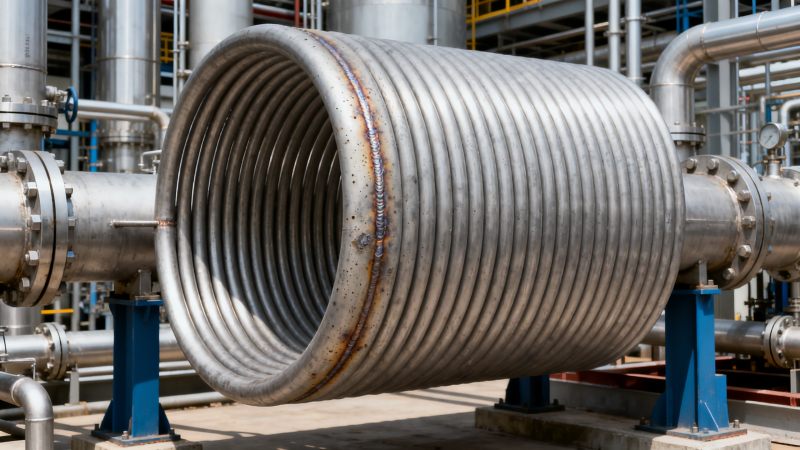
Many people assume stainless coil pipe should automatically resist corrosion for years. In reality, stainless steel performs well only when its alloy grade and surface condition match the actual chemical and thermal exposure.
Early failure usually means one of four things happened. The grade was unsuitable, fabrication damaged corrosion resistance, process conditions became more aggressive than expected, or maintenance practices introduced contamination.
In after-sales cases, more than one factor is often involved. A pipe may start with poor pickling quality, then operate in chloride-rich liquid, then sit stagnant during shutdown, accelerating localized attack.
This is why a failed tube coil should never be judged by appearance alone. A small pit, heat tint band, or leak at a bend can point to a larger mismatch between design assumptions and service reality.
Which corrosion mechanisms cause the most early failures
The most common mechanism is pitting corrosion. It creates small, deep holes that can penetrate wall thickness quickly, especially in chloride-bearing water, cleaning solutions, coastal air, or condensate deposits.
Pitting is dangerous because the pipe may look mostly intact from the outside. A small leak can develop suddenly after a local area breaks through, making the failure seem unexpected.
Crevice corrosion is another frequent cause. It forms in tight gaps under clamps, deposits, gaskets, supports, or poorly drained connections where oxygen access is limited and aggressive chemistry concentrates.
Stress corrosion cracking is especially important when stainless coil pipe operates under tensile stress at elevated temperature in chloride environments. The result can be fine cracks, brittle leakage, and fast catastrophic failure.
Intergranular corrosion can occur if welding or heat exposure sensitized the material and the grade was not stabilized or low-carbon enough for the application. Weld-adjacent zones then become weak points.
Uniform corrosion is less dramatic but still relevant in acidic service or mixed industrial media. If wall loss appears widespread rather than localized, maintenance teams should review the full process chemistry, not just chloride content.
What material selection mistakes are most common in corrosive service
The most common mistake is using a stainless grade based on price or availability rather than the actual medium. Not all stainless steels offer the same resistance to chlorides, acids, or temperature-driven attack.
For example, a grade suitable for clean indoor water service may fail quickly in brine, chemical washdown, or marine-related condensate. “Stainless” is not a single performance category.
Another mistake is overlooking temperature. Corrosion resistance can change sharply as temperature rises, especially in chloride service. A pipe that survives at ambient conditions may crack or pit at process temperature.
Maintenance teams should also verify whether the supplied pipe matches the specification. Wrong-grade substitution, mixed inventory, or missing material traceability can turn a normal service case into repeat leakage.
Wall thickness matters too, but not as much as many buyers think. A thicker pipe may delay perforation, yet it does not eliminate pitting or cracking if the alloy is fundamentally unsuitable.
How fabrication and surface condition shorten service life
Even the correct grade can fail early if fabrication quality is poor. Stainless steel depends heavily on a clean, stable passive surface. Damage during manufacturing or installation weakens that protective layer.
Heat tint near welds is a major warning sign. If oxide discoloration is not properly removed by pickling or other suitable treatment, the affected area may have lower corrosion resistance than the parent metal.
Embedded iron contamination is another common issue. Contact with carbon steel tools, racks, grinding dust, or handling equipment can leave iron particles that rust first and trigger local corrosion sites.
Rough internal surfaces also matter. In coil pipe service, scale, deposits, and stagnant chemistry accumulate more easily at scratches, laps, weld irregularities, or poorly finished bends.
Bending operations can introduce residual stress and wall thinning. In aggressive environments, these stressed regions become preferred locations for stress corrosion cracking or accelerated pitting.
After-sales teams investigating failures should therefore examine weld zones, bends, support contacts, and discoloration patterns before concluding that the operating medium alone caused the problem.
Which operating conditions maintenance teams should check first
Start with chloride level, pH, temperature, and flow pattern. These four variables explain a large share of premature stainless coil pipe failures in cooling, cleaning, processing, and utility systems.
Next, ask whether the service is continuous or intermittent. Stagnation during shutdown often allows deposits to concentrate, oxygen conditions to shift, and crevice or pitting corrosion to intensify.
Check whether cleaning chemicals changed recently. A system that ran well for years can fail after a new sanitizer, descaler, or disinfectant introduces stronger chlorides, lower pH, or longer exposure time.
Flow velocity also matters in two directions. Low flow encourages deposit buildup and crevice attack, while excessive velocity or entrained solids can damage passive films and increase erosion-corrosion risk.
Do not ignore external exposure. Stainless coil pipe installed near coastal air, splash zones, chemical vapors, or insulation traps may corrode from the outside even when the internal medium looks acceptable.
How to recognize field symptoms before total leakage happens
Small rust stains on a stainless surface are often dismissed as cosmetic. In practice, they may signal contamination, a damaged passive film, or active local corrosion under deposits.
Pinhole leaks usually point toward pitting or crevice corrosion rather than general wear. If leaks repeat in isolated spots, the maintenance response should focus on chemistry, dead zones, and surface condition.
Leaks concentrated at welds suggest heat tint removal issues, weld metallurgy problems, or sensitization risk. Leaks at bends suggest thinning, residual stress, or deposit concentration in low-flow regions.
Cracking without much wall loss is a red flag for stress corrosion cracking. This deserves urgent attention because nearby sections may fail soon even if they still appear visually acceptable.
Brown deposits under clamps, insulation, or supports often indicate hidden external corrosion. These areas should be opened and inspected rather than cleaned and repainted without root-cause analysis.
A practical inspection checklist for after-sales maintenance teams
First, document the exact leak location and failure pattern. Record whether damage is at the weld, bend, straight section, support point, threaded connection, or under a deposit or clamp.
Second, compare the failed part with the approved material specification. Confirm grade, heat number, wall thickness, surface treatment, and whether any substitute material entered the supply chain.
Third, review operating records. Look for temperature spikes, chemistry excursions, disinfectant changes, shutdown periods, cleaning cycles, and abnormal pressure or flow events before failure.
Fourth, inspect for contamination sources. Check nearby carbon steel fabrication, grinding operations, mixed-storage practices, rusty supports, and installation tools that may have transferred iron onto stainless surfaces.
Fifth, request laboratory analysis when the cause is unclear. Metallography, hardness testing, PMI, deposit analysis, and corrosion product analysis can prevent expensive but wrong replacement decisions.
Finally, determine whether the issue is isolated or systemic. One damaged section may justify local replacement, but repeated failures across similar locations usually require design or material changes.
How replacement decisions should balance corrosion risk and total cost
Maintenance teams are often pressured to restore operation fast with the same part. That may solve today’s leak but create the same callback if the original failure mechanism remains unchanged.
A better decision process compares the cost of repeat downtime, labor, fluid loss, and customer disruption against the cost of upgrading material grade, improving surface treatment, or changing installation details.
In some systems, redesign is more effective than alloy upgrade. Better drainage, fewer crevices, lower chloride concentration, or improved shutdown flushing may extend life without major material cost increase.
Where supporting structures or adjacent fabricated parts are involved, maintenance planners may also review other steel components used in the system. For example, structural or auxiliary parts may require durable, standardized supply options such as Q235 Carbon Steel Round Bar.
That product is available in multiple grades and sizes, including Diameter 5–2500 mm and common lengths such as 2 m, 5 m, 6 m, and 12 m, with export-oriented packaging and broad standards compliance.
While carbon steel is not a substitute for stainless in corrosive piping service, matching each component material to its mechanical role, environment, and coating system helps control total project cost more effectively.
What preventive actions reduce repeat stainless coil pipe failures
The first preventive action is to verify service chemistry before ordering replacements. Actual chloride level, temperature, cleaning regime, and shutdown conditions should drive grade selection, not assumptions.
Second, insist on proper fabrication quality. Weld cleaning, passivation, contamination control, bend quality, and traceability are not optional details when the service environment is corrosive.
Third, reduce stagnant zones where possible. Improve draining, flushing, support design, and routing so deposits and concentrated corrosive media are less likely to remain trapped in low-flow areas.
Fourth, separate stainless from carbon steel handling tools and storage areas. Many avoidable service claims begin with contamination introduced before the pipe ever enters operation.
Fifth, build inspection intervals around actual risk. Systems with chlorides, thermal cycling, or intermittent shutdown should receive targeted checks at welds, bends, supports, and hidden external surfaces.
Finally, keep failure records. A simple history of leak location, timing, chemistry, and replacement material can reveal patterns that save time and prevent repeated incorrect corrective actions.
Conclusion: the real reason stainless coil pipe fails early
Early failure in corrosive service is usually not a mystery and rarely has a single cause. It is most often the result of a mismatch between alloy capability, fabrication quality, and real operating conditions.
For after-sales maintenance teams, the fastest path to better outcomes is structured diagnosis: identify the corrosion form, check grade and surface condition, review chemistry and temperature, and inspect stress-prone locations.
If you treat every leak as a simple replacement job, the same problem can return quickly. If you treat it as a root-cause case, you can reduce downtime, improve service credibility, and prevent repeat failure.
In short, stainless coil pipe performs well when the environment, material, and fabrication are aligned. When they are not, corrosion finds the weakest point early—and maintenance teams are the first to see it.
Please give us a message


Please enter what you want to find