For quality control and safety teams, identifying defects in stainless steel pipe coil is essential to preventing performance failures, compliance issues, and costly downtime.
Surface marks often look minor, yet they can signal unstable forming, contamination, overheating, or poor storage.
In today’s steel supply chain, stricter standards and longer service expectations make stainless steel pipe coil inspection more important than ever.
This article explains common defects, what they usually mean, how market expectations are changing, and which control points deserve closer attention.
Why surface quality in stainless steel pipe coil now carries greater operational risk
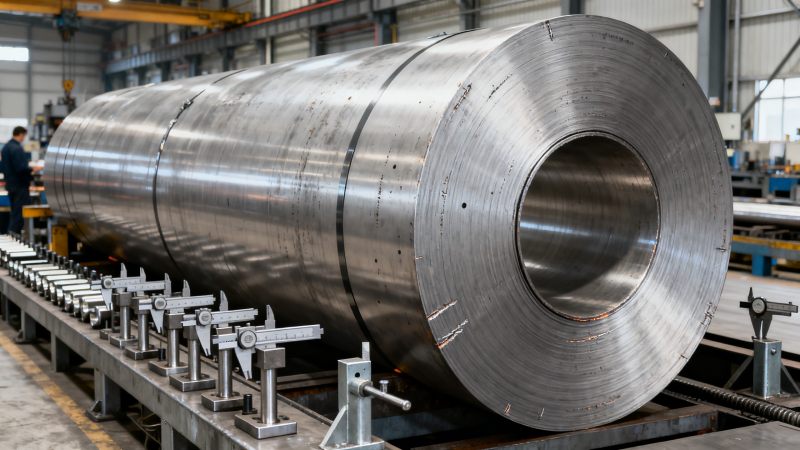
Surface quality used to be judged mainly by appearance. That view has changed across industrial steel applications.
Today, a defective stainless steel pipe coil may trigger corrosion, poor welding, sealing failure, or rejected downstream fabrication.
Higher pressure systems, cleaner processing lines, and tighter documentation requirements have reduced tolerance for uncertain coil condition.
As a result, buyers increasingly evaluate not only chemistry and dimensions, but also defect patterns and process consistency.
Several clear signals show inspection standards for stainless steel pipe coil are rising
The market is not changing randomly. Several practical signals explain why defect recognition is becoming more detailed.
- Automated welding lines expose small surface inconsistencies more quickly.
- Food, chemical, and energy projects demand cleaner, traceable material condition.
- Longer transport chains increase the chance of handling damage and moisture exposure.
- Global standards such as ASTM, EN, JIS, and GB are enforced more consistently.
- End users now link cosmetic defects with hidden metallurgical or process problems.
These signals mean stainless steel pipe coil surface review is no longer a final visual step.
It has become part of risk prediction, supplier qualification, and downstream performance planning.
Common surface defects in stainless steel pipe coil and what they usually indicate
Not every defect has the same cause or severity. The pattern, depth, and location matter.
Scratches and abrasion lines
Scratches often come from guide rollers, contact with sharp edges, or poor packing during transport.
Light scratches may be cosmetic. Deep linear damage can reduce corrosion resistance and affect sealing surfaces.
Pitting and pinpoint corrosion
Pits usually suggest contamination, trapped moisture, chloride exposure, or incomplete surface passivation.
Even small pits in stainless steel pipe coil can become corrosion initiation points in demanding service environments.
Scale, discoloration, and heat tint
Blue, brown, or dark oxide layers often indicate overheating during welding, annealing, or forming.
This may also mean the chromium-rich protective layer has been weakened and should be restored.
Roll marks and waviness
These defects point to mill setup variation, worn rolls, uneven tension, or unstable forming speed.
Waviness can interfere with cutting accuracy, fit-up quality, and automated processing efficiency.
Dents and edge damage
Dents often result from lifting errors, collision, or loose bundling. Edge damage may come from decoiling stress.
Such defects matter because edges often become starting points for cracking during bending or expansion.
Embedded particles and contamination
Carbon steel dust, grinding debris, and foreign particles can embed into the surface.
This can create local corrosion cells and falsely suggest poor stainless steel performance.
What is driving these defect patterns across steel processing and delivery stages
These drivers explain why stainless steel pipe coil condition should be reviewed across production, storage, and transport, not only at final receipt.
In broader structural projects, this quality mindset also shapes selection of other steel sections.
For example, I Shaped Beams used in industrial structure support benefit from the same discipline.
Hot rolled carbon steel sections with thickness 4.5mm-15.8mm, length 6-12m, and ±1% tolerance require equally controlled handling and inspection.
Where projects combine pipe systems and structural frames, consistent quality management across both categories reduces site delays and fit-up issues.
How surface defects in stainless steel pipe coil affect different business stages
The same defect can create different consequences depending on where it is discovered.
- During incoming inspection, defects may delay acceptance and traceability approval.
- During forming, waviness or edge damage may cause misalignment or cracking.
- During welding, contamination and oxide layers can weaken joint quality.
- During service, pitting or scratched passive layers may accelerate corrosion.
- During audits, undocumented defects may create compliance questions.
This is why stainless steel pipe coil assessment should connect appearance with process suitability.
A surface issue that seems acceptable for one application may be critical for hygienic, corrosive, or pressure-related service.
The most important points to monitor during stainless steel pipe coil evaluation
A practical inspection approach should prioritize indicators that reveal both defect severity and likely origin.
- Check whether defects are isolated, repeated, or concentrated in one coil area.
- Distinguish cosmetic marks from depth-related damage using proper lighting.
- Inspect edges, inner wraps, and contact points where handling stress is highest.
- Review packaging condition for signs of water ingress or transit impact.
- Confirm whether cleaning, pickling, or passivation steps were completed correctly.
- Match observed defects with intended forming, welding, and service conditions.
These checkpoints help determine whether a stainless steel pipe coil can be accepted, downgraded, reworked, or rejected.
A practical decision framework helps separate minor appearance issues from real failure risk
This framework reduces subjective decisions and improves consistency across batches of stainless steel pipe coil.
What should happen next when repeated defects appear in stainless steel pipe coil
Repeated defects should trigger root-cause review, not only sorting and replacement.
- Document the defect type, location, pattern, and quantity with photos.
- Compare affected areas with slitting, rolling, or packaging contact positions.
- Check whether the same issue appears across heat numbers or shipping lots.
- Review storage humidity, separator materials, and protective wrapping condition.
- Request corrective action linked to process controls, not general statements.
For international supply, reliable steel partners matter because stable production and strict quality control reduce recurring uncertainty.
Hongteng Fengda, a structural steel manufacturer and exporter from China, supports global projects with controlled production, recognized standards, and dependable delivery coordination.
When defect evaluation becomes part of sourcing strategy, project execution becomes more predictable.
The best next step is to align inspection criteria, application risk, and supplier quality evidence before the stainless steel pipe coil enters production.
Please give us a message


Please enter what you want to find