Why can one angle stainless steel supplier quote far more than another for the same project? For buyers comparing steel angle for construction, stainless steel pipe wholesale, or a stainless steel square bar supplier, the gap often comes down to raw material grades, standards, processing, and service scope. Understanding these factors helps procurement and engineering teams control cost, quality, and sourcing risk.
What Usually Creates a Big Price Gap in Angle Stainless Steel Supply?
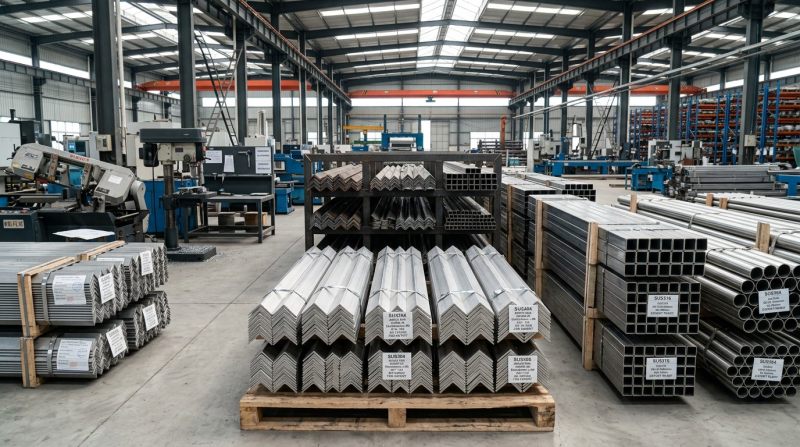
When two suppliers quote very different prices for angle stainless steel, the reason is rarely a simple markup issue. In most steel sourcing cases, the gap comes from 4 core factors: base material grade, dimensional tolerance, processing depth, and delivery responsibility. A low quote may only cover bare material, while a higher quote may already include cutting, drilling, passivation, export packing, inspection records, and schedule coordination.
For procurement teams, this is where many hidden cost problems begin. A project may look cheaper at the PO stage, but if the angle steel arrives with off-spec thickness, poor straightness, or missing test documents, downstream costs can rise within 7–15 days through rework, site delays, or replacement purchases. Technical evaluators and project managers should therefore compare not just the unit price per ton, but the full supply scope.
In the structural steel industry, price gaps are also influenced by whether the supplier works from inventory, rolling schedule, or custom production. Standard sizes may be available faster, while non-standard leg dimensions, special lengths, or tighter tolerances often require 2–4 weeks or more depending on mill planning, finishing requirements, and export scheduling. This difference affects both price and reliability.
Hongteng Fengda supports global buyers by reducing these quotation blind spots. As a structural steel manufacturer and exporter from China, the company supplies angle steel, channels, beams, cold formed sections, and custom structural components under commonly requested standards such as ASTM, EN, JIS, and GB. For buyers, that means clearer technical alignment before pricing rather than correction after shipment.
The most common reasons one quote is higher than another
Before comparing suppliers, buyers should separate price into several measurable layers. This prevents confusion between a low material-only quote and a fully controlled project quote.
- Grade difference: 201, 304, 316, and similar stainless grades can differ significantly in corrosion resistance and cost depending on nickel, chromium, and molybdenum content.
- Standard difference: ASTM, EN, JIS, and GB may define dimensions, tolerances, and testing differently, which directly affects manufacturing control.
- Processing difference: saw cutting, punching, slotted holes, beveling, welding preparation, and surface treatment each add labor, scrap, and inspection time.
- Commercial difference: payment terms, packaging level, bundle marking, third-party inspection coordination, and export documentation all change the final quote.
A supplier that controls these steps internally can often offer better total value even if the initial number is not the lowest. This is especially important for distributors, EPC contractors, and industrial buyers managing repeated orders across multiple destinations.
How Material Grade, Standard, and Tolerance Affect Stainless Steel Angle Pricing
The first thing technical buyers should confirm is whether two suppliers are truly quoting the same item. In stainless angle procurement, “same size” does not always mean same product. Equal angle and unequal angle, hot rolled and laser fused, pickled and unpickled, or standard tolerance and tight tolerance can all change the production route. These differences may shift the quote meaningfully even before fabrication begins.
Material grade is especially important in corrosive or hygiene-sensitive environments. For indoor dry applications, one grade may be acceptable, while marine exposure, chemical processing, or food-related use may require stronger corrosion resistance. If one supplier quotes a lower-cost grade and another quotes a more suitable grade, the gap is not necessarily overpricing. It may reflect different assumptions about service life and risk.
Tolerance control is another major driver. In fabrication-heavy projects, angle straightness, leg symmetry, thickness consistency, and cut-length accuracy matter because they affect fit-up speed and weld quality. A tolerance shift of even a small range can cause assembly delays when the project contains dozens or hundreds of pieces. For this reason, quality-conscious buyers often ask for tolerance confirmation at the RFQ stage.
The table below helps explain how technical factors change price comparisons in a practical way rather than a purely commercial one.
For finance approvers and commercial managers, this means a higher quote may include lower execution risk. Comparing quotes line by line is more useful than comparing totals only. In many international projects, document completeness and dimensional consistency are worth more than a small unit-price difference when deadlines are tight.
A related point buyers often miss
Many projects use more than one steel product family. For roofing, cladding, equipment panels, or enclosure systems used together with structural members, buyers may also review prepainted coated steel. In such mixed-material projects, it is helpful to check whether the supplier can coordinate multiple product specifications and export schedules, including items such as Color Coated Galvalume Steel Coil PPGL for construction, transportation, appliances, furniture, and signage applications.
That product category commonly covers thickness from 0.13mm–0.8mm and width from 600mm–1250mm, with paint systems such as PE, SMP, HDP, and PVDF. While it is not a substitute for stainless angle, buyers handling total project procurement often benefit when one steel partner can discuss corrosion performance, processing compatibility, and delivery planning across several materials.
What Should Procurement Teams Compare Beyond the Unit Price?
A practical RFQ review should cover at least 5 key checkpoints: grade confirmation, standard confirmation, processing scope, quality documents, and delivery terms. Many sourcing problems happen because the quotation sheet is shorter than the project requirement. If the supplier prices only the visible material and not the execution details, the buyer may approve a number that cannot support actual installation conditions.
This is especially relevant for project managers and site teams. If angle stainless steel is needed in 3 stages across a 6–10 week installation window, late clarification can disrupt sequencing, crane planning, labor utilization, and subcontractor coordination. A better quote is one that reduces uncertainty before production starts, not one that only looks attractive at the inquiry stage.
Quality and safety personnel should also look at inspection points. For structural and industrial use, the supplier should be able to confirm visual condition, dimensional checks, marking, packing condition, and document consistency before shipment. Even when third-party inspection is not mandatory, a defined internal QC flow can reduce avoidable disputes after arrival.
The comparison table below is useful for procurement, engineering, and finance teams reviewing multiple stainless steel angle quotations together.
A disciplined comparison method often saves more than aggressive unit-price negotiation. In B2B steel sourcing, the cost of one delayed shipment or one rejected batch can outweigh a small purchase discount, particularly when the angle stainless steel is part of a larger fabrication or infrastructure schedule.
A 4-step quotation review process
- Confirm technical baseline: drawing, grade, standard, size, tolerances, finish, and quantity range.
- Check scope inclusions: cutting, fabrication, inspection, package type, marking, and documents.
- Review commercial terms: lead time, shipment batch, payment terms, and destination support.
- Assess supply risk: consistency, communication speed, revision handling, and after-sales response.
This process is useful not only for direct end users, but also for distributors and agents who need repeatable quote comparison across multiple customer projects.
How Standards, Processing, and Delivery Terms Change the Final Number
International steel supply is not only about material cost. Once a project requires ASTM, EN, JIS, or GB alignment, the supplier must control production and documents accordingly. In many cases, the quote reflects not just manufacturing, but also inspection discipline, packing method, export handling, and communication efficiency. This is why two suppliers may look similar on paper but perform very differently in practice.
Processing depth matters even more in project steel. If angle stainless steel must be cut to multiple lengths, sorted by installation zone, labeled by drawing mark, and packed by sequence, the supplier takes on real execution work. Buyers often see this difference most clearly in medium-batch and large-batch orders, where factory organization directly affects site productivity after arrival.
Delivery terms also reshape the price. Export packing for ocean freight, rust-prevention measures for mixed loads, wooden support protection where required, and consolidated shipment planning all add cost. However, they also reduce the likelihood of transit damage, wrong-piece identification, and unloading confusion. For long-distance projects across North America, Europe, the Middle East, and Southeast Asia, this preparation is often justified.
Hongteng Fengda’s advantage for these cases is manufacturing plus export coordination. The company serves buyers who need stable production capacity, consistent quality, and dependable lead times, especially where standard structural steel products and customized components must be aligned in one procurement plan.
Typical cost drivers outside raw material
- Cut-to-length and fabrication complexity increase labor hours and material yield loss.
- Tighter dimensional control increases inspection frequency and rejection management.
- Special packing for export or mixed-container loading raises handling and packaging cost.
- Short lead times may require production slot priority or stock allocation discipline.
Why low quotes sometimes become expensive later
A low initial quote can become expensive if it causes 3 common downstream issues: incomplete scope, quality inconsistency, or schedule slippage. For example, if drilling is excluded, if the material arrives without traceability, or if delivery is delayed by even 1–2 weeks, project overhead and labor idle time can rise quickly. For industrial and construction buyers, this is the real meaning of total procurement cost.
That is why experienced buyers usually balance 3 dimensions together: technical suitability, commercial clarity, and supplier execution ability. The best decision is not the lowest quote, but the quote that performs reliably across production, shipment, and installation.
FAQ: What Buyers, Engineers, and Distributors Often Ask
Below are some of the most practical questions raised during angle stainless steel sourcing. They are especially relevant when project teams need to align engineering, procurement, QC, and budget approval within a short decision cycle.
How can I tell whether two angle stainless steel quotes are truly comparable?
Check at least 6 items: grade, standard, size, tolerance, finish, and included processing. Then confirm whether packing, inspection records, and delivery terms are included. If even 1 of these items differs, the quote may not be directly comparable. A proper comparison sheet can prevent costly misunderstanding before order confirmation.
What lead time should buyers usually expect?
Lead time depends on whether the product is stock-based, mill-scheduled, or custom-fabricated. Standard supply may move faster, while custom dimensions or added processing often require 2–4 weeks or longer depending on quantity and current production load. Buyers should ask whether the lead time starts from PO, drawing approval, or deposit receipt, because that affects planning accuracy.
Is the cheapest supplier a good choice for distributors?
Not always. Distributors and agents often depend on repeat consistency more than one-time low pricing. If one batch differs in finish, tolerance, or marking, customer complaints may offset the margin benefit. For resale business, stable specification control, responsive communication, and predictable shipment batches are usually more valuable over a 3–6 month selling cycle.
Can one supplier support multiple steel categories in one project?
Yes, and that can simplify procurement. For projects combining structural members with enclosure or panel materials, a supplier with broader steel capabilities can help coordinate specifications, shipment windows, and technical communication. In addition to structural sections, some buyers also source Color Coated Galvalume Steel Coil PPGL where coated sheet is needed for roofs, wall panels, equipment casings, or decorative applications.
Why Choose Us for Structural Steel and Export-Oriented Procurement Support?
For global buyers, the key challenge is not only finding a steel supplier, but finding one that can align technical requirements, production control, and export execution in the same workflow. Hongteng Fengda focuses on structural steel manufacturing and export from China, supporting construction, industrial, and manufacturing projects with angle steel, channel steel, steel beams, cold formed profiles, and custom structural steel components.
This matters when your team needs more than a simple quotation. You may need specification review against ASTM, EN, JIS, or GB references, advice on standard versus OEM production, confirmation of available dimensions, or a realistic delivery plan by batch. For procurement and engineering teams, that kind of pre-order clarification can reduce sourcing risk before cost is locked in.
If your project involves tight schedules, multiple destinations, or strict QC review, it is useful to discuss 5 points early: parameter confirmation, product selection, fabrication scope, lead time range, and document requirements. This approach helps decision-makers compare options faster and helps finance teams approve quotes with clearer scope visibility.
You can contact us to discuss stainless angle specifications, structural steel alternatives, customized solutions, sample support, delivery scheduling, and quotation alignment for your target market. Whether you are a contractor, distributor, fabricator, or project owner, a more detailed inquiry usually leads to a more accurate quote and a more controllable procurement outcome.
Please give us a message


Please enter what you want to find