When comparing ASTM A106 Gr.B specification with actual project requirements, buyers must look beyond basic compliance to factors like ASTM A106 Gr B chemical composition, pressure performance, delivery condition, and application fit. Whether sourcing ASTM A106 Gr B pipe for industrial systems or evaluating ASTM A106 Gr.B equivalent materials for cost and availability, understanding these differences helps engineers, purchasers, and project teams make safer, more efficient decisions.
Why ASTM A106 Gr.B Compliance Alone Is Not Enough
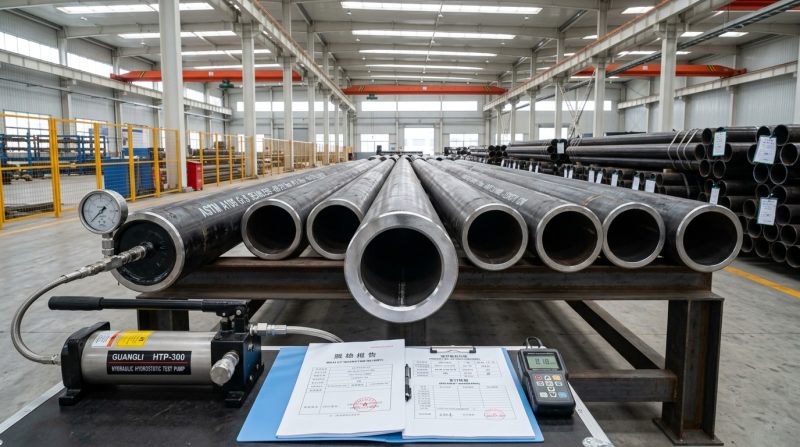
In steel procurement, ASTM A106 Gr.B is often treated as a quick shorthand for seamless carbon steel pipe suitable for high-temperature service. In reality, the ASTM A106 Gr.B specification only defines a baseline. It does not automatically confirm that a pipe will match every pressure class, corrosion allowance, welding procedure, or installation condition in a live project.
This gap matters to multiple decision makers. Technical evaluators focus on temperature range, NPS size, wall thickness, and testing requirements. Procurement teams care about delivery schedules, cost stability, and substitute options. Quality control personnel must verify markings, mill documentation, and dimensional tolerances before acceptance. One standard, by itself, rarely answers all 3 layers of decision making.
For many industrial projects, specification review happens in 4 practical stages: document matching, technical clarification, production verification, and final inspection. Problems usually appear when the project specification adds extra requirements such as impact testing, stricter chemistry limits, end finish conditions, or traceability rules beyond standard ASTM A106 Gr.B language.
That is why experienced buyers compare standard compliance with actual service conditions instead of relying on the material grade name alone. This approach reduces the risk of wrong substitution, delayed approval, and field rework. It is also the reason global buyers often work with manufacturers who can support both standard production and specification-based review.
What the standard usually covers, and what the project may still require
ASTM A106 Gr.B generally addresses seamless pipe for high-temperature service, including chemistry, mechanical properties, hydrostatic or NDT options, dimensions by referenced standards, and marking. However, project documents may add 5 key checks: actual design pressure, operating temperature band, corrosion environment, inspection hold points, and approved origin or manufacturing route.
- Design conditions may require matching wall thickness to pressure calculations rather than using a standard schedule by habit.
- End users may require normalized or specific delivery conditions for fabrication consistency.
- Inspection scope may expand from standard testing to third-party witness, PMI, or additional NDT.
- Commercial approval may depend on lead time, packaging, and document completeness, not only material grade.
ASTM A106 Gr.B Specification vs Project Requirements: Side-by-Side Comparison
A direct comparison helps clarify where ASTM A106 Gr.B meets expectations and where extra review is needed. The table below focuses on 6 practical evaluation points used by engineers, buyers, and project managers during supplier qualification and technical approval.
The table shows a common pattern: ASTM A106 Gr.B is the starting point, while project requirements define the real acceptance threshold. A supplier who understands both levels can reduce approval cycles, especially when engineering, procurement, and QA teams are located in different regions or review documents in multiple rounds.
Where mismatches usually occur
Most mismatches come from 4 areas. First, buyers assume all ASTM A106 Gr.B pipe has the same delivery condition. Second, project teams overlook extra inspection clauses in the purchase specification. Third, equivalent materials are proposed without confirming process suitability. Fourth, commercial teams compare price per ton without comparing testing scope and documentation workload.
These issues are especially common in cross-border sourcing. A lower quoted price can become more expensive if re-testing, document revision, or replacement adds 1–3 extra weeks to the schedule. For project managers, that delay can affect fabrication windows, installation sequencing, and contractor coordination.
A practical review method for approval teams
- Check the service condition: temperature, pressure, media, and whether the line is continuous, intermittent, or cyclic.
- Confirm the technical basis: ASTM A106 Gr.B, referenced dimensional standard, schedule, end finish, and test method.
- Review the commercial basis: quantity range, delivery lot split, document package, and inspection timing.
- Approve substitutions only after mechanical, chemical, and fabrication implications are clearly documented.
Which Technical Factors Should Buyers Review First?
When comparing ASTM A106 Gr.B specification with project requirements, buyers should first review the technical factors that directly affect performance and acceptance. In most cases, 5 factors matter most: ASTM A106 Gr B chemical composition, tensile properties, heat treatment or delivery condition, dimensional tolerances, and inspection method. These affect not only use safety but also fabrication efficiency.
Chemical composition is not just a certificate item. It influences weldability, high-temperature behavior, and compatibility with downstream processing. For example, a project may accept ASTM A106 Gr.B but still request tighter sulfur or phosphorus control to support cleaner welding and lower defect risk during shop fabrication or field installation.
Mechanical properties also need context. Minimum tensile and yield values in the standard are useful, but project engineers often care more about whether the pipe will perform consistently through forming, welding, and service exposure. In critical systems, consistency across multiple heats can be as important as passing a single test report.
Dimensional control matters as well. If a project includes automated welding, spool fabrication, or tight fit-up requirements, the acceptance focus may shift toward wall thickness uniformity, end squareness, and cut length tolerance. A difference of a few millimeters in a large batch can increase alignment time across dozens of joints.
Technical review checklist for ASTM A106 Gr.B pipe orders
Before placing an order, procurement and QA teams can use the following matrix to align supplier offers with actual project needs. It is especially useful when comparing 2–3 quotations from different sources.
This checklist helps separate superficial compliance from real project suitability. It is also a useful internal tool for finance and management teams because it turns technical risk into visible procurement criteria rather than hidden downstream cost.
Related steel selection in broader project packages
Many buyers sourcing ASTM A106 Gr.B pipe are also purchasing structural or coated steel for adjacent systems such as supports, enclosures, cable trays, or light-gauge framing. In those cases, corrosion resistance and service life become part of the same budget discussion. For non-pipe applications that need zinc-coated material, Gi Coil may be considered for fabricated components where moderate protection and moisture isolation are needed.
Typical galvanized coil ranges include thickness from 0.12mm to 3.5mm and width from 600mm to 1500mm, with hot galvanizing coating weights commonly in the 60–275g/m² range. These values are relevant when project teams are bundling multiple steel categories under one sourcing plan and want consistency in standards, documentation, and export coordination.
How to Evaluate Cost, Alternatives, and Delivery Risk
Cost evaluation for ASTM A106 Gr.B pipe should not stop at unit price. In B2B purchasing, the true comparison includes 4 cost layers: material price, testing cost, documentation and inspection cost, and schedule risk cost. A cheaper offer may become less competitive if it cannot meet the project inspection plan or causes a 2–4 week delay in shipment approval.
Alternative materials are sometimes considered when ASTM A106 Gr.B availability is tight or when buyers are evaluating ASTM A106 Gr.B equivalent options. That can work, but only after confirming equivalent service capability, fabrication impact, and code acceptance. Equivalent does not always mean interchangeable in pressure systems, especially when client specifications or end-user approval lists are involved.
Delivery planning is another decision factor. For common sizes and standard testing scope, supply lead time may fit a normal 2–6 week production window depending on quantity and market load. For mixed sizes, third-party witness, or project-specific documentation, the timeline may extend. Buyers should ask whether delivery will be one lot, split shipment, or staged release over 2–3 milestones.
This is where a manufacturer with export experience adds value. Hongteng Fengda supports international buyers with stable production coordination, quality control discipline, and communication across technical and commercial teams. For projects combining standard materials with custom steel components, that coordination helps reduce sourcing complexity and internal follow-up time.
A practical procurement decision model
- If the project is schedule-driven, prioritize suppliers who can confirm production slots, testing sequence, and document submission timing before PO release.
- If the project is approval-driven, prioritize traceability, third-party inspection readiness, and response speed to technical clarification.
- If the project is budget-driven, compare full landed cost and rework risk instead of ex-works price only.
- If the project includes multiple steel items, use one sourcing framework for pipe, structural sections, and coated materials to simplify control.
Common mistakes when evaluating ASTM A106 Gr.B equivalent materials
The first mistake is assuming similar chemistry means equal service suitability. The second is ignoring client approval requirements. The third is failing to check whether the substitute changes welding procedures or inspection scope. The fourth is overlooking documentation language, which can delay approval even when the physical product is acceptable.
A disciplined substitution review usually takes 3 steps: compare standard basis, compare project-specific restrictions, and obtain engineering acceptance before commercial commitment. This is safer than buying on price first and resolving technical issues later.
FAQ: What Do Buyers and Engineers Ask Most Often?
Below are common questions from research users, operators, technical evaluators, procurement teams, and project decision makers. These questions often appear during supplier comparison, budget approval, and final technical review for ASTM A106 Gr.B pipe.
How should I choose between standard ASTM A106 Gr.B and a project-specific requirement?
Start with the service condition, not the grade name. Review 5 checkpoints: operating temperature, design pressure, fluid type, required testing, and documentation scope. If the project specification is stricter than the base standard in even 1 of these areas, the project requirement should control the purchasing decision.
What are the most important documents to request before order confirmation?
Request the material specification confirmation, preliminary mill test format, dimensional range, inspection plan, and delivery schedule. For export orders, also confirm marking method, packing format, and whether third-party inspection will happen before shipment. These 6 items prevent many avoidable disputes.
Are ASTM A106 Gr.B equivalent materials always acceptable for cost saving?
No. Equivalent materials may reduce sourcing pressure, but they must be reviewed against service suitability, project approval rules, and fabrication impact. If a substitute changes qualification, inspection, or welding procedures, the apparent savings may disappear through added review time or rework cost.
What delivery lead time is typical for steel procurement in this category?
For standard quantities and common sizes, a typical production and preparation window may fall within 2–6 weeks, depending on market load and testing requirements. Additional inspection, mixed specifications, or staged shipment can extend the schedule. Buyers should confirm whether the quoted timing includes testing, document approval, and export packing.
Why Work With a Steel Export Partner That Understands Both Standards and Projects?
For global buyers, the challenge is rarely just finding a steel product with a familiar standard name. The real challenge is matching that product to application needs, approval procedures, budget control, and delivery timing. That is why supplier capability should be judged across 4 dimensions: manufacturing coordination, quality control discipline, standards familiarity, and responsiveness to customized requirements.
Hongteng Fengda serves international customers in construction, industrial, and manufacturing sectors with structural steel products and customized solutions. Our experience with ASTM, EN, JIS, and GB-based requirements helps buyers align standard materials with practical project expectations, whether the order involves standard sections, cold formed profiles, or related steel components for export projects.
If your team is comparing ASTM A106 Gr.B specification against project requirements, we can support parameter confirmation, drawing or specification review, multi-item sourcing coordination, and delivery planning. We can also discuss coating-related materials such as galvanized products when your procurement scope extends beyond pipe to supporting fabricated steel systems.
Contact us to discuss 6 practical topics before you buy: exact specification matching, acceptable equivalent options, required certificates, inspection arrangement, lead time by quantity, and packaging or export details. This helps your engineering, procurement, QA, and commercial teams move faster with clearer risk control and better cost visibility.
Please give us a message


Please enter what you want to find