For buyers, engineers, and project teams, the surface finish of A36 Carbon Steel Round Bar directly affects corrosion resistance, machinability, welding results, and overall cost performance. Whether you are comparing A36 Carbon Steel Round Bar with H-beam, Z-beam, Rebar, or other Profile and Wire Products, understanding surface quality helps you reduce sourcing risks and choose reliable steel from China with greater confidence.
Why does surface finish change the real performance of A36 carbon steel round bar?
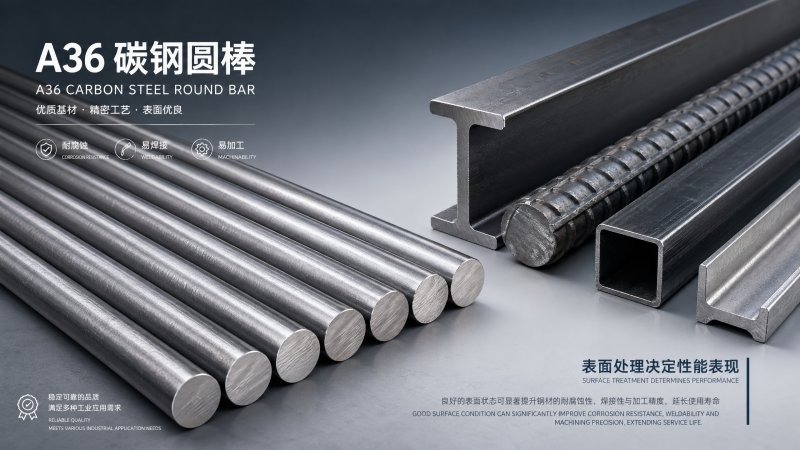
Many buyers focus first on diameter, length, and price, but the surface finish of A36 carbon steel round bar often decides how the material behaves after delivery. A rough, scaled, oily, rusted, or uneven surface can affect 4 critical areas: corrosion resistance, cutting efficiency, welding quality, and coating adhesion. In practical steel procurement, these issues may not appear on the quotation sheet, yet they often shape the final project cost.
A36 is widely used because it offers balanced strength, weldability, and availability for structural and fabrication work. However, its carbon steel nature means the surface is highly responsive to storage conditions, processing steps, and finishing methods. In the time span between mill production and on-site fabrication, even 2–4 weeks of poor packing or humid transit can create flash rust, staining, or scale buildup that later increases cleaning time.
For operators and workshop teams, surface finish influences how easily the bar enters machining, turning, drilling, threading, or bending operations. For quality control and safety managers, it affects whether the bar can pass incoming inspection without rework. For project leaders and finance approvers, it determines whether the procurement decision truly supports low total cost rather than only a low unit price.
This is especially important when sourcing from global supply chains. A structural steel manufacturer and exporter with stable process control, documented inspection steps, and experience with ASTM, EN, JIS, and GB requirements can reduce uncertainty in appearance consistency, packing quality, and shipment condition. That is where supplier capability becomes directly linked to the usable surface quality of A36 carbon steel round bar.
What does “surface finish” usually include?
In steel purchasing, surface finish is not limited to visual smoothness. It usually includes mill scale condition, rust level, straightness-related marks, residual oil, scratches, edge damage, coating readiness, and overall uniformity across the batch. A bar may meet mechanical requirements but still create downstream processing problems if the surface condition is unstable from piece to piece.
- Hot rolled black surface: common and economical, but may carry mill scale and require later cleaning before painting or precision machining.
- Pickled or cleaned surface: better for coating and fabrication where scale removal is needed before use.
- Lightly oiled surface: may help short-term storage, but oil residue should be checked if welding or painting follows.
- Rust-affected surface: acceptable level depends on project requirements, but visible pitting or layered rust usually means higher preparation cost.
Which surface conditions matter most in fabrication, storage, and field use?
Not every project needs the same finish level. A36 carbon steel round bar used for general structural connectors may accept a standard hot rolled surface, while bars intended for exposed applications, machining, or coating systems may need better cleanliness and tighter appearance control. The right decision depends on 3 basic factors: end use, processing route, and exposure environment.
In indoor fabrication environments, surface scale mainly affects cutting tools, weld starts, and coating prep. In outdoor or marine-adjacent storage, the concern shifts toward early oxidation and moisture retention. In long international transport cycles of 20–45 days, packaging and anti-moisture measures become part of surface finish management, not just logistics details.
The table below helps buyers, QC teams, and project managers identify which surface issue creates which operational risk. This is useful when comparing multiple steel suppliers or aligning technical and commercial expectations before order confirmation.
A practical lesson here is that acceptable surface condition should be linked to use, not judged only by visual preference. A procurement team buying for machining, welding, galvanizing, or coating should list the next 1–3 downstream processes in the purchase inquiry. That short step often prevents disputes after arrival and helps suppliers recommend a more suitable finish level.
How different users view the same surface issue
A purchasing officer may see light rust as acceptable if the price is lower. A machine operator may see the same batch as a risk because oxide and roughness shorten tool life. A painting contractor may reject it because blast cleaning adds labor. This is why cross-functional evaluation matters in B2B steel sourcing.
A simple 5-point internal check can help
- Will the bar be welded within 7 days of arrival, or stored longer?
- Will the bar be machined to tight dimensions or used as-cut?
- Will there be primer, paint, galvanizing, or another coating step?
- Is the final part visible to end users or hidden inside a structure?
- What level of surface variation can your QC team realistically accept?
How should buyers compare surface finish, processing cost, and alternatives?
The lowest ex-works price does not always create the best landed value. If a lower-cost A36 carbon steel round bar arrives with heavier scale, inconsistent rust, or poor bundling, the buyer may spend more on re-cleaning, sorting, blasting, repainting, or delivery delays. In steel projects, total cost usually includes at least 4 layers: material, logistics, preparation, and installation efficiency.
This logic becomes clearer when buyers compare A36 bar with other steel forms or adjacent products. For example, some applications need round bar for shafts, pins, anchors, or fabricated parts, while others also involve wire, rope, or profile systems. In lifting, marine, or industrial support environments, corrosion control often makes surface treatment a first-level decision rather than a finishing detail.
For projects that also require rope-based components, it is useful to compare base steel finish thinking with corrosion-protected accessories such as Galvanized Steel Wire Rope. This product is widely used in mining, loading, forestry and marine industries, elevators, cranes, drilling, agriculture, railways, photovoltaic applications, road fences, zipline systems, and cableways. Common constructions include 6X7+FC, 6X19+IWR, and 8x19S+FC, with diameter ranges from 1.0 mm to 22 mm and normal tensile strength from 1470 MPa to 1960 MPa.
That comparison is valuable because surface protection in steel is always application-driven. For example, electro galvanized and hot dipped galvanized rope options respond to different corrosion levels, while A36 round bar may require primer-ready cleaning, temporary oiling, or better storage packing depending on whether exposure is mild, medium, or severe. Standards such as GB/T 20116-2008, DIN, EIPS, ISO 9001, and ABS in related steel product categories also remind buyers to align finish expectations with actual working conditions.
Cost comparison: cheap bar vs manageable bar
The table below is not a price list. It is a decision tool that shows how surface finish changes total project economics. This is especially relevant for distributors, importers, and fabrication shops handling medium and large batch orders.
For many B2B buyers, the right choice depends on batch size and urgency. Small trial orders may tolerate more manual preparation. Repeated monthly orders, urgent project lots, or items entering automated processing lines usually benefit from a more stable and clearly specified surface condition.
What should procurement and QC teams check before placing an order?
A good purchase order for A36 carbon steel round bar should define more than size and quantity. To reduce disputes, buyers should confirm at least 6 items: standard requirement, diameter tolerance, length range, surface condition, packing method, and intended downstream use. If the steel will be exported onward or used in regulated construction work, document consistency is equally important.
Experienced structural steel exporters can support this process by matching technical details with production capability and shipping reality. Hongteng Fengda, as a China-based structural steel manufacturer and exporter, supports global buyers with stable production capacity, OEM-oriented communication, and quality control aligned with ASTM, EN, JIS, and GB references. This matters when a project team needs both commercial responsiveness and practical factory execution.
For imported carbon steel, incoming inspection should also be realistic. It is better to define acceptable commercial surface criteria in advance than to apply a later visual judgment with no agreed baseline. A shipment moving across North America, Europe, the Middle East, or Southeast Asia may face different humidity cycles, handling conditions, and customs dwell times, often across 2–3 transfer points.
Recommended procurement checklist for A36 round bar
- State whether a standard hot rolled finish is acceptable or whether cleaned, pickled, or lightly oiled condition is preferred.
- Confirm whether the bar will be welded, machined, painted, galvanized, or stored outdoors for more than 30 days.
- Ask for packing details such as bundles, straps, tags, moisture protection, and container loading method.
- Request inspection records covering heat number traceability, visual check, dimension check, and quantity verification.
- If the order is for repeat supply, align sample approval with future batch consistency expectations.
A practical supplier evaluation table
This table can help technical evaluators, commercial teams, and decision-makers score suppliers using criteria that reflect real project execution instead of price alone.
When buyers use this type of checklist early, they improve coordination between purchasing, fabrication, QC, and finance teams. That usually shortens approval cycles and reduces the risk of selecting a supplier whose steel is acceptable on paper but inefficient in use.
Common questions and mistakes about A36 round bar surface finish
Search behavior shows that many users ask the same practical questions: Is light rust acceptable? Does smooth surface mean better steel? Can hot rolled bar be painted directly? These questions matter because misunderstandings at the inquiry stage often become quality disputes after the goods arrive.
The most common mistake is assuming that all A36 carbon steel round bar with the same chemistry and strength will create the same fabrication result. In reality, the difference between a usable commercial surface and a poorly managed one can add several process steps, especially when blasting, degreasing, or rust removal must be completed before production can continue.
Another mistake is treating surface finish as only a visual issue. For procurement professionals, it is a cost issue. For operators, it is a productivity issue. For safety and quality personnel, it is a process control issue. For distributors, it is a customer complaint prevention issue.
Is light rust always a reason to reject A36 carbon steel round bar?
Not always. Light atmospheric rust can occur during storage or transit and may be acceptable for some structural or non-visible applications. The key question is whether the rust is superficial or whether there is scaling, pitting, or layered corrosion. If the material will be painted, welded, or machined soon after arrival, surface prep requirements should guide the decision rather than appearance alone.
Does a smoother surface automatically mean better quality steel?
No. Mechanical properties, chemical composition, dimensional control, and compliance with the required standard still come first. A smoother surface may improve handling and downstream processing, but it does not replace grade verification. Buyers should evaluate both material compliance and finish suitability together.
Can hot rolled A36 bar be used directly for painting?
In many cases, direct painting over mill scale is risky because adhesion can be inconsistent. For longer service life, cleaning or blast preparation is usually recommended before primer application. The exact preparation level depends on exposure class, coating system, and expected service environment. For indoor dry use, the requirements may be simpler than for outdoor industrial or marine-adjacent conditions.
What is a reasonable lead-time discussion point with a Chinese steel supplier?
For standard specifications, buyers often discuss production and dispatch windows in the range of 2–4 weeks, while customized or mixed orders may require longer depending on mill schedule, quantity, and packing needs. It is wise to confirm not only production time but also inspection timing, document preparation, and booking readiness before finalizing the order.
Why work with a structural steel exporter that understands finish, risk, and project delivery?
When sourcing A36 carbon steel round bar from China, material quality is only one part of the buying decision. Buyers also need stable production, practical communication, reliable documentation, and surface condition control that matches the real application. Hongteng Fengda supports global construction, industrial, and manufacturing projects with structural steel products, customized solutions, and an export-oriented service approach shaped by actual project requirements.
This matters for teams that must balance 5 competing targets at the same time: quality, budget, lead time, compliance, and ease of use. Whether you are a fabricator comparing suppliers, a distributor building repeat inventory, or a project manager handling a deadline-sensitive order, early discussion of surface finish can prevent unnecessary cleaning cost, rework, and delivery friction.
If you are evaluating A36 carbon steel round bar or related structural steel products, you can contact Hongteng Fengda for specification confirmation, surface condition discussion, packing method review, lead-time planning, OEM customization, standards matching, sample support, and quotation comparison. Sharing your diameter range, quantity, destination market, and next processing step will help the team recommend a more suitable supply solution.
A better steel buying decision starts with a more precise question. Instead of asking only for price per ton, ask what surface condition is best for your welding, machining, coating, storage, and delivery schedule. That is often the difference between a nominally cheap order and a truly efficient one.
Please give us a message


Please enter what you want to find