Errors in how to calculate I beam weight can lead to cost overruns, design issues, and procurement delays. Whether you are comparing I beam vs H beam, checking steel beam factory price, or sourcing from a Steel I Beam supplier in Malaysia, accurate data matters. This guide explains practical ways to avoid common mistakes in Steel Beam weight calculation and improve decisions for structural steel projects.
For engineers, operators, buyers, quality teams, distributors, and project managers, beam weight is not just a theoretical number. It affects transport planning, crane selection, quotation comparison, welding workload, and even cash-flow approval. A small deviation of 2% to 5% across a bulk order can turn into tons of mismatch, especially when a project needs 50 to 300 pieces.
In structural steel sourcing, reliable weight calculation supports better technical review and better commercial judgment. Companies such as Hongteng Fengda, a structural steel manufacturer and exporter from China, serve global construction and industrial projects where ASTM, EN, JIS, and GB dimensions must be checked carefully before production, packing, and shipment.
Why Accurate I Beam Weight Calculation Matters in Real Projects
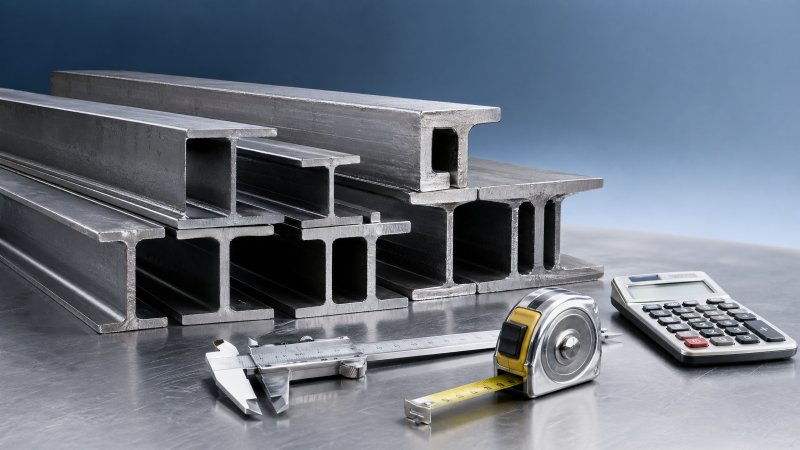
An I beam weight calculation influences at least 4 core project areas: structural verification, procurement budgeting, logistics arrangement, and installation scheduling. If the theoretical unit weight is wrong, the first impact often appears in the purchasing stage, where buyers compare supplier offers by tonnage, piece count, or length. A mismatch between calculated weight and actual delivered weight can distort the true steel beam factory price.
On site, even a difference of 8 kg to 20 kg per meter can affect lifting equipment choice when beams are long, such as 9 m, 12 m, or 15 m sections. For example, if 40 beams are planned based on incorrect unit mass, the crane capacity margin, truck loading plan, and unloading sequence may all need revision. This creates avoidable delays for project managers and installation teams.
For technical evaluators, the main issue is not only total mass but also dimensional consistency. I beam dimensions such as flange width, web thickness, flange thickness, and fillet radius all influence theoretical weight. When teams rely on informal spreadsheets or mixed standards, they often calculate a profile that is close in appearance but not equal in section size.
For financial approvers and commercial reviewers, weight accuracy directly affects cost review. Bulk structural steel orders are usually priced per metric ton, while some fabricated orders are managed by piece count. If the unit weight is overstated by only 3%, a 120-ton order may show a pricing error of 3.6 tons. That is enough to trigger budget deviations or supplier disputes.
Typical project consequences of weight errors
- Incorrect procurement quantity, especially when converting between tons and pieces.
- Freight underestimation for sea shipment, land transport, or container loading.
- Fabrication planning errors in cutting, blasting, painting, and handling time.
- Site installation issues due to lifting limits, stacking limits, or support design assumptions.
The table below shows how different departments are affected when I beam weight calculation is inaccurate.
The key takeaway is simple: accurate beam weight is operational data, not just design data. It should be reviewed by cross-functional teams before purchase orders and production release.
The Most Common Sources of I Beam Weight Calculation Errors
Most errors come from 5 repeated causes: using the wrong section standard, confusing nominal size with actual size, ignoring tolerances, mixing I beam with H beam data, and applying the wrong steel density. These mistakes are common when teams work with catalogs from multiple countries or compare ASTM, EN, JIS, and GB profiles in one procurement package.
The first mistake is dimensional substitution. An I beam that looks similar to an H beam may have a different flange thickness or web geometry. In purchasing communication, people often say “beam 200” or “200 section,” but that shorthand is not enough. Two profiles with the same nominal depth can differ by several kilograms per meter.
The second mistake is formula misuse. Some users calculate weight from outer dimensions only and forget root radii or actual sectional shape. Others use a handbook value but apply it to a cut length that excludes end trimming or fabrication allowances. In batches above 100 lengths, even a 0.5 kg/m deviation becomes significant.
The third mistake is data inconsistency between drawing revision, supplier quotation, and shop list. A technical department may review one standard, while purchasing receives a quote based on another equivalent-looking profile. This issue becomes more serious in export projects where section naming varies by region.
Main error categories to check first
- Section designation mismatch, such as mixing universal beams, IPE, HEA, HEB, or JIS series.
- Unit conversion problems between mm, cm, m, kg/m, and total tonnage.
- Wrong steel density input, where 7.85 g/cm³ is standard for carbon steel but not always used correctly.
- Failure to separate theoretical weight from actual weighbridge weight.
- Ignoring coating, weld build-up, holes, cut-outs, or fabrication attachments when relevant.
I beam vs H beam confusion
One of the most frequent practical problems is confusion between I beam vs H beam. Although both are structural steel beams, their flange proportions and section area differ. An H beam generally has wider flanges and may carry more weight per meter at similar depth, depending on the series. Buyers comparing offers must verify not only depth but also full section code and standard.
The following comparison helps prevent specification confusion during technical and commercial review.
This comparison shows that visual similarity is not enough. Section code, standard, and unit mass must all match before approval.
A Practical Method to Calculate I Beam Weight Correctly
The safest method is to follow a 4-step sequence: identify the exact section standard, verify sectional dimensions, confirm theoretical unit weight, and then multiply by cut length and quantity. This process is more reliable than estimating from appearance or relying on informal supplier descriptions.
For custom or nonstandard beams, calculate sectional area first, then multiply by density and length. For ordinary carbon structural steel, a common density value is 7,850 kg/m³. If the cross-sectional area is known in mm², convert carefully before calculating kg/m. Unit conversion mistakes are among the easiest errors to avoid and among the most costly when missed.
In real procurement, it is useful to maintain two numbers: theoretical weight for pricing and planning, and expected shipping weight for logistics. Fabrication, coating, base plates, stiffeners, and holes can shift actual delivered mass. For long export routes to North America, Europe, the Middle East, or Southeast Asia, this distinction helps control freight planning and customs packing lists.
Hongteng Fengda and similar experienced structural steel exporters usually support this process by checking drawings, confirming standards, and aligning production data with order lists. This is particularly important when the order includes beam sections together with angle steel, channels, cold formed profiles, and custom steel components in one combined shipment.
Recommended checking workflow
- Confirm the beam type and standard, such as ASTM, EN, JIS, or GB.
- Verify 4 key dimensions: depth, flange width, web thickness, and flange thickness.
- Use a standard section table or approved engineering source to confirm kg/m.
- Multiply by actual cut length in meters and by total quantity.
- Review whether galvanizing, painting, welding, or attachments materially change final weight.
Mid-project material coordination and related products
Many structural projects that use I beams also require roof and wall systems, secondary framing, and decorative cladding. During procurement planning, buyers often coordinate primary steel with coated sheet products to reduce lead time and supplier fragmentation. One common option is PPGI Steel Sheet for roofing, wall panels, door frames, appliance housings, agricultural buildings, residential buildings, commercial projects, and public buildings.
This coated steel product is commonly available in thicknesses from 0.2 mm to 1.2 mm, widths from 600 mm to 1250 mm, and lengths from 750 mm to 1100 mm, with PE, SMP, HDP, or PVDF paint systems. For project teams, coordinating beam quantities with lightweight panel materials can improve transport efficiency, because coated sheets are much lighter than primary hot-rolled sections while still offering corrosion resistance and a service life that may exceed 25 years under normal roof conditions.
When primary and secondary materials are reviewed together, project managers can schedule production and shipment more accurately. This reduces the chance that beam weight errors disrupt packaging plans, truck loading sequence, or container space allocation.
How Buyers and Quality Teams Can Verify Supplier Weight Data
For procurement teams, the best control method is not to trust a single document. Compare at least 3 records: the approved section list, the supplier quotation, and the final packing list. If possible, also compare against mill section tables or recognized design manuals. This simple review can detect most weight-related discrepancies before production starts.
Quality teams should separate theoretical compliance from physical inspection. Theoretical weight comes from geometry and density, while actual shipment weight may be checked by weighing bundles, pieces, or truck loads. Both values are useful, but they answer different questions. Theoretical weight checks specification accuracy; actual weight supports delivery control and logistics validation.
Distributors and trading companies should be especially careful when sourcing from multiple mills. A supplier may offer an equivalent alternative that is commercially acceptable but not identical in kg/m. If that change is not approved, the buyer may face problems in fabrication fit-up or contract settlement. This is why formal dimension sheets and marked standard references matter.
For international projects, a stable manufacturer with modern production facilities and documented quality control can reduce sourcing risk. Export-oriented structural steel suppliers that work regularly with global standards are often better prepared to align drawings, specifications, OEM requirements, and shipment documents with project expectations.
Supplier verification checklist
- Ask for the exact section designation, not just nominal beam depth.
- Request unit weight in kg/m and total calculated weight by item.
- Confirm the reference standard and whether the section is rolled or customized.
- Check dimensional tolerance ranges and whether substitutions are proposed.
- Verify packing list totals against purchase order quantities before shipment.
The table below provides a practical review framework for commercial and quality approval.
A structured verification routine saves time later. It is easier to review 10 line items before production than to solve one shipment dispute after goods are on the road or at port.
FAQ and Best Practices for Reducing Calculation Risk
Below are practical answers to common questions raised by technical reviewers, procurement teams, and project owners. These points also help distributors and agents communicate more clearly with end users and steel beam suppliers.
How often should beam weight be rechecked during a project?
A good practice is to review it at 3 points: before RFQ release, before purchase order confirmation, and before shipment. For custom fabricated beams, one more review after shop drawing approval is advisable. This 3-step or 4-step control is especially useful when section substitutions or quantity revisions occur.
Should buyers use theoretical weight or actual weight for commercial settlement?
That depends on the contract. Standard hot-rolled structural steel is often traded by theoretical weight, while some fabricated or packed shipments may also reference actual scale weight. The contract should state the basis clearly. If there is no clear rule, settlement disputes become more likely, especially for orders above 20 tons or mixed-section shipments.
What is a reasonable tolerance awareness for project teams?
Project teams should distinguish between dimensional tolerance and calculation error. Standard manufacturing tolerances may exist, but the calculation itself should still be based on the correct section data. If the team sees a 1% difference, that may be explainable. If the deviation is 4% to 6%, it usually deserves immediate review of the section designation, unit mass, and length records.
What are the best preventive actions before placing an order?
Use a standardized beam schedule, specify the standard code, ask for kg/m per line item, and make one responsible person own the final quantity summary. For projects involving export from China, it is also wise to confirm lead time, packing method, and shipping weight early so that production and logistics stay aligned.
Best practice summary
- Never compare beam prices without matching the same section code and kg/m value.
- Keep design, purchasing, and quality teams aligned on one approved standard source.
- Recalculate total tons whenever length, quantity, or profile series changes.
- Document whether theoretical or actual weight is used for quotation and settlement.
- Work with suppliers that can support international standards, OEM needs, and stable delivery schedules.
Avoiding errors in I beam weight calculation requires more than a formula. It requires disciplined specification control, unit consistency, supplier verification, and cross-department review. For construction firms, manufacturers, distributors, and project owners, these practices reduce procurement risk, improve cost accuracy, and support smoother installation and delivery.
If you are sourcing structural steel beams, angle steel, channel steel, cold formed profiles, or custom steel components for international projects, working with an experienced manufacturer can make the review process far more efficient. Contact Hongteng Fengda to discuss your section requirements, verify technical details, and get a tailored structural steel solution for your project.
Please give us a message


Please enter what you want to find