Is cheap steel from China reliable for structural use? For buyers comparing H-beam, Z-beam, Rebar, Profile, and even related materials like DX53D Galvalume Steel Coil, AZ150 Galvalume Steel Coil, A36 Carbon Steel Round Bar, Stainless Steel Welded Mesh, and Wire Products, the answer depends on standards, traceability, and supplier control. This guide explains how to evaluate Chinese structural steel for safety, consistency, and long-term project value.
What really determines whether low-cost Chinese structural steel is reliable?
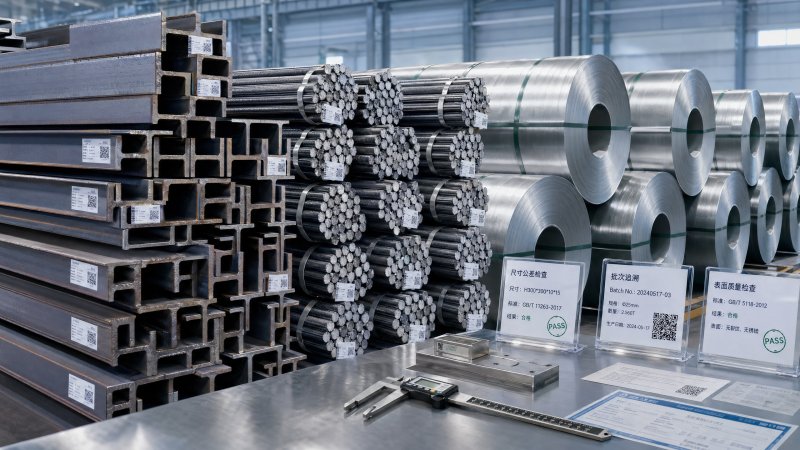
Price alone does not define reliability in structural steel. A low quotation can come from scale efficiency, better raw material sourcing, stable rolling schedules, or reduced overhead. It can also come from looser tolerances, incomplete testing, mixed grades, or weak document control. For engineers, buyers, and project managers, the key question is not whether the steel is cheap, but whether it is produced and delivered under controlled conditions.
In structural applications, 3 core factors matter most: mechanical performance, dimensional consistency, and traceability. If a supplier can consistently match ASTM, EN, JIS, or GB requirements, provide mill test documentation, and maintain tolerance control such as ±1% where applicable, the risk profile becomes very different from steel sold only on price. This is especially important for beams, channels, angle steel, cold formed profiles, and custom fabricated structural parts.
Reliable Chinese steel suppliers usually support buyers through a 4-step control process: specification confirmation, production inspection, final verification, and shipment document matching. That process matters because structural projects often run on 2–8 week procurement cycles, and one wrong grade or one out-of-tolerance batch can delay fabrication, site erection, and payment approval.
Hongteng Fengda serves global buyers in North America, Europe, the Middle East, and Southeast Asia with structural steel products and OEM solutions. For many B2B customers, the practical value is not just manufacturing capacity. It is the ability to align product specifications, standards, lead time, and inspection requirements before production starts, which reduces sourcing uncertainty and helps protect project schedules.
Cheap steel vs reliable steel: the difference buyers should check
Many procurement teams assume low-cost steel automatically means lower quality. That assumption is incomplete. In the steel industry, there is a major difference between competitively priced steel and undercontrolled steel. A serious supplier may offer cost advantages because of production volume, established export operations, and efficient processing services such as cutting, punching, bending, welding, or decoiling.
By contrast, high-risk supply often shows warning signs in 5 areas: unclear grade mapping, vague coating description, inconsistent length options, missing heat numbers, and incomplete testing records. These issues matter more than price itself. If the material enters load-bearing use without proper confirmation, the downstream cost can exceed the original steel saving many times over.
- Check whether the quotation identifies grade, standard, size range, and tolerance, not just a product name.
- Confirm whether the supplier supports third-party inspection or customer-defined quality checkpoints.
- Ask how mill test certificates, packing marks, and shipment documents are matched batch by batch.
- Review whether the supplier can deliver both standard products and customized structural components under the same control logic.
Which standards, tests, and documents matter most for structural use?
For structural use, reliability starts with standards compliance. A supplier should clearly state whether the steel is produced to ASTM, EN, JIS, GB, or another agreed standard, and whether the delivered grade is directly equivalent or only commercially similar. Technical evaluators should never accept grade substitution without written confirmation of chemistry, strength class, and application suitability.
In practical procurement, buyers usually review 6 document areas: standard reference, grade identification, size and tolerance, mechanical properties, surface condition, and traceability records. For structural steel sections and related products, these documents often determine whether the material can move quickly into fabrication or whether extra reinspection is required after arrival.
Mechanical values and dimensional checks should be read together. A beam or profile can meet nominal strength requirements yet still create field problems if straightness, thickness, section geometry, or cut length drift outside the agreed range. For many projects, acceptable tolerance windows are just as important as yield strength, especially when steel must fit prefabricated assemblies, base plates, or connection details.
The table below summarizes common evaluation points that buyers, QC personnel, and safety managers can use when screening structural steel from China for construction, industrial fabrication, and infrastructure projects.
If a supplier cannot provide consistent answers across these 5 areas, the steel may still be usable for some non-critical applications, but it should not be treated as a low-risk structural supply source. By contrast, when production, inspection, and documentation align, competitively priced Chinese steel can support demanding projects more effectively than buyers expect.
How quality control reduces project risk
Quality control is not a single final inspection. It should run from raw material selection to loading. In export steel supply, this often includes 3 checkpoints before shipment: in-process dimensional review, final quantity and marking inspection, and document verification against the purchase order. This is especially useful for mixed shipments containing profiles, beams, channels, and customized fabricated items.
Hongteng Fengda emphasizes modern manufacturing and strict quality control across structural steel categories. For project owners and distributors, that matters because a supplier with stable process discipline is more likely to deliver consistent repeat orders, not just one acceptable batch. Consistency over multiple shipments is a major factor in total sourcing reliability.
How should buyers compare price, performance, and sourcing risk?
A good procurement decision balances 4 things: unit price, compliance risk, processing suitability, and delivery certainty. Buyers often focus heavily on the first item and underestimate the last three. In structural steel projects, even a 3%–8% apparent purchase saving can disappear if the material requires rework, additional inspection, delayed installation, or replacement because of nonconformity.
This is where commercial evaluation and technical evaluation must work together. Finance teams want lower landed cost. Engineers want reliable performance. Site teams want predictable fit-up. Procurement managers want documentation that supports customs clearance and project approval. A dependable Chinese steel exporter should address all four needs in one sourcing process instead of leaving each department to solve problems later.
The comparison below helps decision-makers distinguish between low-cost supply that creates downstream risk and cost-efficient supply that supports structural performance and project control.
For most structural steel buyers, the right target is not the lowest price per ton. It is the lowest total risk-adjusted cost across ordering, inspection, fabrication, transport, and installation. That approach is especially useful for enterprise decision-makers, project leaders, and distributors managing recurring purchases over 6–12 month periods.
A practical checklist before placing an order
Before confirming a structural steel order from China, ask the supplier to clarify at least 5 points in writing. This simple step can eliminate many common disputes before production starts and helps both technical and commercial teams evaluate the offer on equal terms.
- Confirm the exact product standard, grade, and equivalent specification if multiple systems are referenced.
- Define dimensions, lengths, tolerances, and any required processing service such as cutting or punching.
- Agree on surface treatment, packing method, and shipment marking format.
- Set inspection requirements, including whether third-party review is needed before loading.
- Align payment structure, such as 30% TT advance plus 70% balance or LC at sight, according to project policy.
This kind of front-end discipline is often what separates a successful procurement cycle from a difficult one. It is also why experienced exporters can support buyers beyond basic price quoting.
What product details should be reviewed in related steel categories?
Structural projects rarely buy only one steel category. Many orders include sections, reinforcement materials, coils, bars, mesh, or wire products in the same sourcing discussion. That makes cross-category evaluation important. A supplier capable of handling both standard structural shapes and related project materials can often simplify communication, reduce vendor fragmentation, and improve shipment coordination over 1–3 procurement rounds.
For example, in foundation work, slabs, walls, beams, and columns, buyers may need reinforcement products with clear size ranges, surface treatment options, and internationally recognized standards. One relevant example is Wire rod, which is widely used in civil engineering construction, houses, bridges, roads, highways, railways, culverts, tunnels, flood control, dams, and rebars processing.
When reviewing such products, buyers should look at more than just diameter. Common specification ranges may include 6mm to 50mm, length options such as 5m–14m, 5.8m, 6m, 9m/12m, or 10m–12m, and grades such as HRB335, HRB400, and HRB500. Material references may include Q195, Q235, Q345, ASTM A53 GrA, GrB, ST37, ST52, STKM11, or 16Mn, depending on the intended application and standard framework.
Other practical details also matter in procurement: spiral section shape where applicable, hot rolled or cold rolled technique, galvanized or black surface condition, transparent oil or anti-rust oil options, ±1% tolerance expectations, and processing services such as bending, welding, decoiling, cutting, or punching. Standards often referenced in this category include BS4449-2005, GB1449.2-2007, JIS G3112-2004, ASTM A615/A615M, ISO, SGS, BV CE, AISI, ASTM, BS, DIN, GB, and JIS.
Why this matters even when your main order is structural steel
A supplier that understands related steel categories usually performs better in mixed-project sourcing. That means fewer coordination gaps between reinforcement materials, profiles, and fabricated components. For project managers, this can improve planning accuracy across 2–4 delivery stages, especially when different materials must arrive in a sequence rather than all at once.
It also gives commercial buyers more room to optimize total procurement cost. Instead of managing multiple vendors with different document standards and packing practices, they can align specifications under one export workflow. That does not remove the need for technical review, but it often makes approval and order execution more efficient.
Common application-based review points
- For bridges, highways, and railways, prioritize standard compliance, mechanical consistency, and traceable batch documents.
- For buildings, foundations, beams, columns, and slabs, confirm size availability, processing service, and delivery sequence.
- For flood control, dams, culverts, and tunnels, review surface treatment and storage protection if site conditions are demanding.
What are the most common mistakes buyers make?
One common mistake is assuming all Chinese steel suppliers operate at the same quality level. In reality, supplier capability can vary significantly in process control, export experience, standard familiarity, and customization support. Treating all offers as interchangeable because they come from the same country can lead to weak decisions.
Another mistake is comparing quotations without normalizing the scope. One offer may include stricter tolerance control, additional surface protection, clearer packing, or more complete document support. Another may not. Unless the buyer aligns 5–7 comparison variables before price analysis, the cheaper offer may not be genuinely comparable.
A third mistake is waiting too long to involve the technical team. Structural steel sourcing works best when design, procurement, QA, and project management review the specification together at the pre-order stage. That coordination can save 1–2 weeks of later clarification and reduce the risk of nonconforming material reaching site or workshop.
Finally, some buyers overlook service reliability. Stable production capacity and dependable lead times are not secondary issues. In structural projects, delivery timing affects labor planning, equipment booking, and cash flow release. A supplier that can support specification clarity and schedule discipline often creates more business value than a supplier offering only a lower initial number.
FAQ for engineers, buyers, and project teams
How can I tell if low-cost steel from China is suitable for structural use?
Start with 4 checks: standard and grade confirmation, mechanical property documentation, dimensional tolerance review, and traceability records. If those items are complete and consistent with your specification, low-cost steel may still be suitable. If one or more are unclear, treat the supply as higher risk until verified.
What lead time is typical for structural steel export orders?
Lead time depends on product type, tonnage, processing level, and shipping route. In many routine export scenarios, buyers plan in 2–6 week production windows plus transport time. Customized structural components or mixed orders may require longer. The important point is to confirm the schedule before payment and production release.
Is third-party inspection necessary?
Not for every order, but it is often useful for first cooperation, specification-sensitive projects, or higher-value batches. Many buyers use third-party inspection at 1 of 3 stages: pre-shipment, during production, or final packing verification. The choice depends on risk level, contract requirements, and internal QA resources.
Can one supplier support both standard and custom structural steel items?
Yes, if the supplier has suitable manufacturing and processing capability. Hongteng Fengda focuses on angle steel, channel steel, steel beams, cold formed steel profiles, and customized structural steel components, which is useful for buyers seeking fewer vendors and more unified control over quality, documentation, and delivery.
Why work with a structured Chinese exporter instead of buying only on price?
For structural use, the best sourcing result usually comes from a supplier that combines cost control with process discipline. Hongteng Fengda supports global construction, industrial, and manufacturing projects with structural steel products, OEM solutions, modern manufacturing facilities, and strict quality control aligned with major standards such as ASTM, EN, JIS, and GB.
That matters for different stakeholders in different ways. Engineers need standard-compliant products. Buyers need stable quotations and clear specifications. Finance teams need controlled procurement risk. QC and safety managers need traceability. Project leaders need dependable lead times. Distributors need repeatable supply quality across multiple orders and markets.
If you are evaluating structural steel from China, a useful next step is to compare your project requirements against 6 practical items: product type, grade and standard, dimensions and tolerances, processing needs, certification expectations, and delivery timeline. Once these points are clear, supplier comparison becomes faster and more accurate.
You can contact Hongteng Fengda for parameter confirmation, product selection, standard matching, coating and surface treatment options, customized structural steel solutions, sample support, expected delivery cycles, and quotation discussion. This is especially valuable when your project involves mixed steel categories, strict compliance requirements, or a tight installation schedule.
Please give us a message


Please enter what you want to find