Unexpected certification delays can turn a routine stainless steel pipe order into a costly supply chain problem for distributors and agents. From mill test reports and third-party inspections to ASTM or EN compliance checks, every missing document can slow customs clearance and project delivery. Understanding why these delays happen helps buyers reduce sourcing risks, improve planning, and secure more reliable shipments from qualified steel suppliers.
Why do stainless steel pipe certifications delay delivery in real projects?
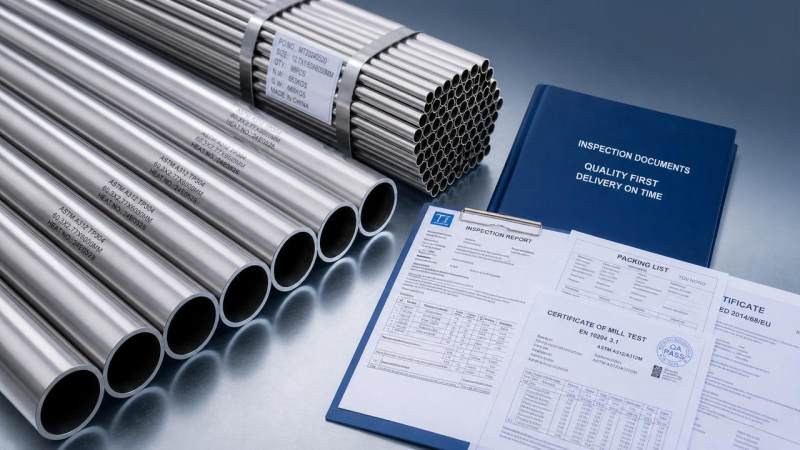
For distributors, agents, and regional stockists, a stainless steel pipe shipment is not delayed only by production. In many cases, the real bottleneck appears after rolling, testing, packing, or before export release. Certification is often the hidden critical path.
A stainless steel pipe order may be physically ready, yet still unable to move because one certificate is incomplete, one heat number does not match, or one inspection clause was not confirmed when the order was placed. These issues are common in global steel trade.
This is especially important when buyers serve construction, industrial fabrication, or manufacturing customers who require strict traceability. If the paperwork does not match the material, the cargo may be held at port, rejected by a contractor, or delayed in final site acceptance.
- The mill test certificate may be issued late because chemical and mechanical test data are still under review.
- Third-party inspection may wait for scheduling, sampling, witnessing, or document endorsement.
- Export paperwork may require consistency between packing list, invoice, heat number, standard, grade, and destination-specific compliance records.
- Some buyers request ASTM, EN, or project-specific wording only after production, which creates rechecking and document reissue work.
In short, certification delay is usually a process-control problem rather than a simple factory delay. The more complex the specification, the greater the risk if order details are not aligned early.
Which certification documents usually affect stainless steel pipe lead time?
Not every order needs the same document package. However, most stainless steel pipe export transactions involve a core set of quality and compliance records. Buyers who understand these documents can identify delay points before shipment is booked.
The table below shows the most common certification items and how they affect delivery planning for stainless steel pipe sourcing.
For many importers, the document itself is not difficult. The problem is timing. If the document package is treated as a final step instead of a parallel process, lead time becomes unpredictable.
What are the most common causes behind stainless steel pipe certification delays?
1. Specification gaps at order confirmation
Many stainless steel pipe delays start when the purchase order lists only size and quantity, while key compliance details remain vague. A buyer may assume ASTM documentation is standard, but the supplier may need exact clauses, edition references, or inspection scope.
If end users later request additional records such as PMI support, third-party witness inspection, or special marking rules, the supplier must reopen the quality file. That can affect release timing even if the goods are already packed.
2. Lab testing and report issuance backlog
Chemical analysis, tensile testing, hardness checks, and other verification steps depend on internal labs or approved testing resources. During busy export seasons, report issuance can lag behind production completion.
This is one reason experienced exporters build documentation time into the production plan instead of promising shipment immediately after rolling or finishing.
3. Traceability errors between material and paperwork
A stainless steel pipe order can be delayed if bundle marks, heat numbers, or piece counts do not match the certificate. Even a small inconsistency may force reinspection, remarking, or repacking before the cargo can be released.
Distributors handling mixed-size or mixed-grade orders face this risk more often because more line items increase the chance of data mismatch.
4. Third-party inspection arranged too late
If an external inspector is required, booking should happen early. Waiting until cargo is ready often causes avoidable delay. The inspector may not be available, or the requested witness points may have already passed.
- Sampling may need to happen before final packing.
- Dimensional checks may require open access to bundles.
- Marking review may need photos and physical verification before container loading.
How should distributors evaluate delivery risk before placing a stainless steel pipe order?
Price matters, but for agents and distributors, delivery reliability often matters more. A slightly lower unit price can become expensive if the stainless steel pipe shipment misses a contractor deadline or customs release window.
Use a practical pre-order checklist to assess whether a supplier can control both material quality and certification timing.
The table below helps buyers compare stainless steel pipe sourcing risk in a structured way.
A strong supplier should be able to answer these points before the order enters production. If answers remain vague, the buyer should assume higher schedule risk.
How can a broader steel sourcing strategy reduce certification-related delays?
Although this article focuses on stainless steel pipe, many distributors source multiple steel categories from the same export partner. Working with a supplier that understands international documentation across structural and industrial steel products can simplify quality coordination.
For example, buyers managing industrial structure supply may combine pipe procurement with beams, channels, or custom sections. In such cases, a supplier with organized quality control across standards such as ASTM, EN, JIS, and GB can reduce administrative friction.
Hongteng Fengda supplies structural steel products for global construction and industrial projects, including angle steel, channel steel, beams, cold formed profiles, and customized steel components. For buyers balancing document control and delivery planning, products such as Structural Steel I Beam can support industrial structure applications where standard compliance and dimensional consistency matter.
This product range covers common grades such as Q195-Q235, Q345, SS355JR, SS400, A36, ST37-2, S235J0, S235J2, and St52, with hot rolled molding, non-alloy material options, and tolerance control around ±1%. Typical dimensions include flange widths from 100mm to 400mm, web widths from 100mm to 900mm, thickness ranges from 4.5mm to 15.8mm or more by request, and delivery commonly within 20 days depending on specification.
For agents and distributors, the value is not only product coverage. It is the ability to align standards, paperwork, production slots, and shipment timing across different steel items under one communication channel.
What practical steps can buyers take to avoid stainless steel pipe document delays?
Build certification into the order, not after the order
At quotation stage, specify the required standard, grade, inspection type, and certificate format. If the final customer needs certain statements on the mill test report, mention them before order confirmation.
Request draft documents before shipment
A draft certificate review helps distributors catch errors in grade naming, heat number format, consignee details, or standard references. Correcting these issues before loading is much faster than after the container has departed.
Align inspection timing with production milestones
If third-party inspection is required, confirm when material will be available for sampling, dimensional check, and final packing review. Do not assume the inspector can come on short notice.
Use a document checklist for every stainless steel pipe shipment
- Purchase order with standard, grade, size, quantity, and special document clauses
- Mill test certificate draft for pre-shipment verification
- Inspection report if external verification is required
- Packing list with bundle marks and traceability linkage
- Commercial invoice and shipping documents aligned with quality records
FAQ about stainless steel pipe certification and delayed shipments
Can a stainless steel pipe order be finished in production but still not be ready to ship?
Yes. Physical completion does not always mean document completion. If testing records are pending, the third-party report is unsigned, or traceability does not match the packing list, shipment release may be delayed even when the goods are already in the warehouse.
Which buyers are most affected by certification delay?
Distributors, agents, and stockists serving project-based customers are usually the most exposed. Their downstream buyers often need clear compliance evidence for customs, fabrication approval, or site acceptance. A late stainless steel pipe certificate can affect several commercial commitments at once.
Is third-party inspection always necessary for stainless steel pipe?
Not always. It depends on the contract, destination market, and end-user requirement. Some orders can proceed with mill documentation only. Others, especially project or government-related supply, may require independent witnessing or verification before shipment.
How early should certification requirements be confirmed?
Ideally before price confirmation or at least before production starts. Late changes are one of the main causes of stainless steel pipe delivery disruption because they force extra testing, document revision, or additional inspection scheduling.
Why choose a supplier with structured quality control and export experience?
For steel distributors and agents, the right supplier does more than manufacture. A capable export partner helps control specification accuracy, document readiness, standard compliance, and shipment coordination. This is where experienced Chinese structural steel exporters can create practical value.
Hongteng Fengda supports global buyers with stable production capacity, strict quality control, and experience serving North America, Europe, the Middle East, and Southeast Asia. Our product scope includes standard structural steel and customized OEM solutions, with familiarity across ASTM, EN, JIS, and GB requirements.
If you need support with stainless steel pipe sourcing risk, or if you want to consolidate broader steel procurement under a supplier that understands international compliance, contact us for practical assistance. You can discuss specification confirmation, product selection, delivery schedule review, custom processing, certification requirements, sample support, and quotation planning based on your target market and project timeline.
Please give us a message


Please enter what you want to find