Choosing the right duplex steel pipe becomes critical when chloride exposure can trigger pitting, stress corrosion, and costly safety failures. For quality control and safety managers, understanding material grade, processing quality, and service conditions is essential to reduce inspection risks and protect long-term performance in demanding industrial and structural applications.
Why does duplex steel pipe selection become risky in chloride service?
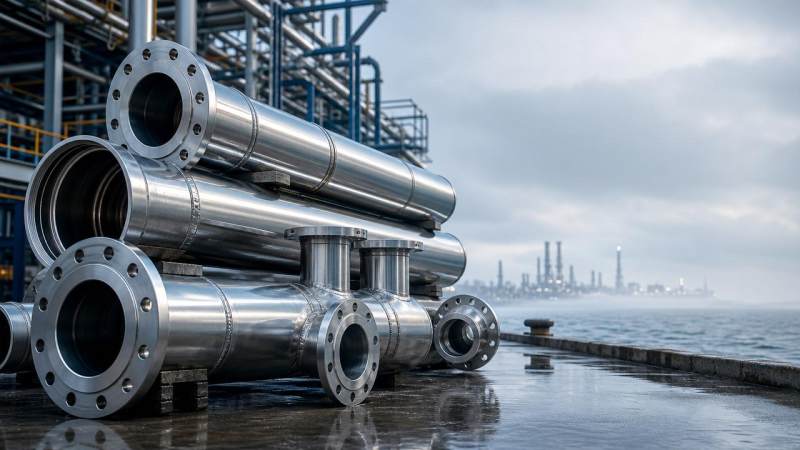
In chloride-bearing environments, a duplex steel pipe is never selected by grade name alone. Seawater mist, brine splash, wet insulation, cleaning chemicals, and stagnant process fluids can all accelerate localized corrosion.
For quality control teams, the real risk is not only visible corrosion. It is the hidden mismatch between chloride level, temperature, weld condition, surface finish, and actual pipe metallurgy.
Safety managers face a second problem. Once pitting starts, inspection intervals may shorten, leakage risk rises, and shutdown planning becomes harder. A wrong material decision can therefore become an operational hazard, not just a procurement issue.
- Chlorides can break down the passive film and initiate pitting at weak microstructural points or damaged surfaces.
- Residual stress from forming or welding may increase susceptibility to stress corrosion cracking under severe conditions.
- Poor fabrication control may reduce corrosion resistance even when the specified duplex steel pipe grade looks correct on paper.
What makes chloride exposure difficult to judge?
Many projects underestimate the effect of concentration and temperature cycling. A moderate chloride level at ambient temperature may be manageable, while the same level combined with heat, crevices, deposits, or oxygen variation can produce rapid attack.
That is why material review should include service chemistry, cleaning regime, idle periods, insulation details, and weld repair history. A duplex steel pipe must be evaluated as part of the whole system.
Which failure modes should QC and safety managers watch first?
Before approving a material, it helps to map the likely failure modes. The table below summarizes the most relevant chloride-related risks for duplex steel pipe service and the inspection focus each one demands.
This table shows why inspection cannot focus on wall thickness alone. Surface condition, weld zone quality, fabrication history, and crevice details often determine whether a duplex steel pipe performs as intended.
Hidden risks often start in fabrication
A common mistake is assuming that mill certification automatically guarantees field performance. In reality, overpickling, iron contamination, rough grinding, and uncontrolled weld repairs may lower the corrosion margin.
QC personnel should therefore treat incoming inspection, welding review, and post-fabrication surface verification as linked controls. Safety performance begins long before installation.
How should you compare duplex steel pipe grades for chloride exposure?
Grade comparison is one of the most important procurement decisions. The right duplex steel pipe depends on chloride concentration, operating temperature, design life, fabrication complexity, and inspection accessibility.
The following comparison is a practical screening tool rather than a substitute for full engineering review. It helps buyers and inspectors ask the right questions before final approval.
For safety-led projects, the cheapest base material is rarely the lowest-risk option. A better duplex steel pipe grade may reduce inspection burden, maintenance frequency, and exposure to unplanned repair work.
When is a higher grade justified?
- When chloride levels fluctuate and upset conditions are likely.
- When the system includes welded joints, dead legs, or crevice-prone fittings.
- When the line is difficult to isolate, inspect, or repair during operation.
- When leakage consequences include safety, environmental, or production losses.
What should procurement and inspection teams verify before approval?
A duplex steel pipe purchase should be reviewed through both material and process controls. This is especially important when global buyers need stable supply, consistent quality, and compliance with ASTM, EN, JIS, or GB expectations.
At Hongteng Fengda, the practical focus is reducing sourcing risk through stable manufacturing, specification support, and quality control aligned with international standards used in structural and industrial projects.
Key checks before you release the PO
- Confirm the actual service envelope, including chloride content, operating temperature, pressure, cleaning chemistry, and idle conditions.
- Review the requested duplex steel pipe grade together with weld procedure compatibility and post-fabrication surface treatment.
- Check dimensional tolerances, traceability, heat records, and documentation needed by the project owner or third-party inspector.
- Verify whether additional PMI, corrosion testing, NDT, or impact testing is required by contract or site risk level.
- Assess delivery timing, packing method, and transport protection to avoid contamination or surface damage before installation.
These controls matter beyond pipe systems alone. On platforms, plants, equipment floors, and access areas, surrounding steel products also influence maintenance safety. In some projects, anti-slip plates are needed near chloride-prone equipment zones, and S335JR Patterned steel plate may be considered for applications such as transportation, construction, machinery areas, shipbuilding, and floors around equipment where anti-skid performance is valuable.
That product is available in common materials such as S335JR, Q235B, A36, 235JR, S235, SS400, and SM400B, with thickness from 2-8mm, width from 600mm-1800mm, and length from 2m-12m. For mixed steel procurement, coordinating pipe and plate specifications with one responsive export partner can simplify documentation and delivery planning.
How do standards, certifications, and documentation reduce chloride-related disputes?
For QC and safety managers, documentation is not paperwork for its own sake. It is the evidence chain that links material selection, inspection, fabrication control, and field acceptance.
The table below outlines what buyers often review when a duplex steel pipe is supplied into international projects with compliance expectations.
Good documentation also prevents blame shifting later. If chloride attack appears early, records help determine whether the issue came from wrong grade selection, fabrication deviation, installation damage, or process conditions outside design assumptions.
What are the most common mistakes when specifying duplex steel pipe?
Most failures are not caused by one dramatic error. They result from several small assumptions that pass unchecked between engineering, purchasing, fabrication, and field installation teams.
Frequent specification and site mistakes
- Selecting a duplex steel pipe based only on nominal corrosion resistance without reviewing actual chloride temperature and concentration.
- Ignoring crevice design at supports, clamps, flanges, or insulation interfaces.
- Approving welding procedures that do not adequately control heat input or post-weld surface condition.
- Assuming all stainless-looking surfaces have equal chloride durability.
- Treating imported material documentation as a formality rather than a risk-control checkpoint.
For buyers managing international sourcing, supplier communication is part of prevention. Clear technical review, stable production capability, and prompt clarification of standards can reduce rework and project delay.
FAQ: practical decisions for duplex steel pipe in chloride conditions
How should I choose a duplex steel pipe for marine or coastal projects?
Start with the real exposure pattern, not the project label. Splash zones, salt-laden air, trapped moisture, and maintenance washdown can create different chloride loads within one facility. Review whether the pipe is continuously wet, intermittently dry, insulated, welded on site, or hard to inspect after commissioning.
Is a higher-cost grade always necessary?
Not always. If the environment is moderate and inspection access is good, a standard duplex steel pipe may be sufficient. But where chloride severity, temperature, or failure consequence is high, paying more upfront can lower total ownership cost through fewer repairs and less shutdown exposure.
What should QC teams inspect on arrival?
Check identification marks, certificates, dimensions, surface cleanliness, end protection, and any signs of contamination or transport damage. If the service is critical, confirm whether additional PMI or third-party review is required before release to fabrication or installation.
Can fabrication quality outweigh the grade itself?
In some cases, yes. A correctly chosen duplex steel pipe can still underperform if welding, grinding, cleaning, or handling is poor. For chloride service, fabrication discipline is often the difference between expected life and early localized attack.
Why choose us for steel sourcing and project support?
For global buyers, the challenge is rarely limited to one line item. You may need duplex steel pipe assessment, structural steel coordination, OEM processing support, and reliable export execution within one project schedule.
Hongteng Fengda supports international construction, industrial, and manufacturing projects with structural steel manufacturing and export experience, stable production planning, and quality control aligned with major standards such as ASTM, EN, JIS, and GB.
If you are reviewing chloride-related material risk, you can contact us to discuss grade confirmation, dimensional requirements, matching structural steel products, delivery lead time, OEM customization, documentation expectations, sample support, and quotation planning. This helps your team make a safer and more efficient purchasing decision before the order is finalized.
Please give us a message


Please enter what you want to find