Before visiting a stainless steel coil factory, business evaluators need more than a basic supplier profile. They need proof of capacity, quality control, export reliability, and customization strength.
A factory visit turns claims into visible facts. It helps confirm whether a stainless steel coil factory can support stable sourcing, meet project standards, and reduce operational risk.
Why visit a stainless steel coil factory before placing orders?
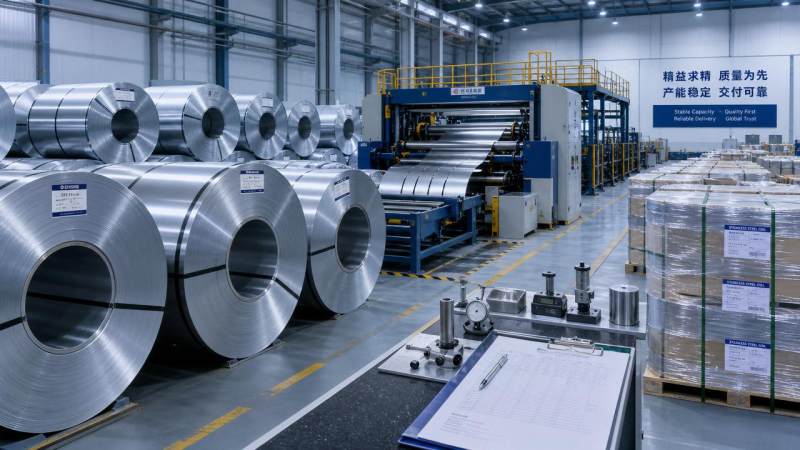
An online catalog cannot reveal everything. A site visit shows how a stainless steel coil factory manages raw materials, production flow, inspection discipline, and shipment preparation.
This is especially important in the steel industry, where small quality differences can affect corrosion resistance, flatness, thickness accuracy, and downstream fabrication performance.
A visit also helps compare stated capacity with actual equipment. Some suppliers trade products, while others operate a real stainless steel coil factory with in-house processing lines.
For long-term sourcing, visual verification matters. It supports clearer communication, stronger trust, and better judgment on future cooperation stability.
What production capabilities should you check first?
Start with the manufacturing layout. A qualified stainless steel coil factory should have organized material storage, slitting or cutting capability, handling systems, and clean inspection areas.
Check whether production lines match your order type. Ask about coil grades, width range, thickness range, surface finishes, and monthly output.
Useful questions include:
- How many production or processing lines are active?
- What is the average monthly and peak capacity?
- Are annealing, leveling, slitting, and recoiling done internally?
- How are urgent orders scheduled?
- What is the normal lead time during high-demand periods?
Watch the shop floor carefully. Frequent stoppages, poor material labeling, or disorganized movement may suggest weak planning or unstable throughput.
A reliable stainless steel coil factory should explain bottlenecks honestly. Good factories discuss realistic output instead of promising unlimited supply.
How can you verify quality systems instead of trusting brochures?
Quality is one of the main reasons to visit a stainless steel coil factory. Certificates are useful, but actual control methods reveal much more.
Ask to see incoming material checks, in-process inspection points, and final release records. Review how thickness, width, surface finish, and edge condition are measured.
A strong quality system usually includes:
- Heat number and batch traceability
- Mechanical and chemical test reports
- Surface defect classification standards
- Calibration records for measuring tools
- Nonconforming product handling procedures
Look beyond paperwork. Observe whether operators follow clear inspection routines or rely on inconsistent visual judgment.
It also helps to ask for recent customer specifications. A capable stainless steel coil factory should understand ASTM, EN, JIS, and GB requirements without confusion.
If the supplier serves wider steel projects, it may also handle structural products. For example, some exporters provide Rail solutions for railway and handrail applications.
Such products may use carbon steel or medium manganese steel, with lengths from 12m to 30m, thickness from 3mm to 24mm, and tolerance around ±1%.
This broader export experience can indicate stronger documentation control, packaging discipline, and familiarity with international project standards.
What should you ask about export experience and delivery reliability?
A stainless steel coil factory may produce well but still struggle with global delivery. Export ability is separate from basic manufacturing ability.
Ask which markets the factory serves regularly. Consistent shipments to North America, Europe, the Middle East, or Southeast Asia often require stronger compliance habits.
Focus on practical topics:
- What export documents are prepared in-house?
- How are coils packed for ocean transport?
- How are rust, edge damage, and moisture risks controlled?
- What is the on-time delivery rate?
- How are claims handled after shipment?
Inspect finished goods storage. Coils should be protected from moisture, contamination, and mishandling. Good packaging areas often reflect disciplined outbound management.
A dependable stainless steel coil factory should also explain booking coordination, container loading rules, and lead-time buffers during raw material fluctuations.
How do you judge customization ability and technical communication?
Many projects need more than standard coils. They may require special slit widths, protective films, surface finish selection, or tailored packaging labels.
Ask the stainless steel coil factory how non-standard orders are reviewed. A mature team usually confirms drawings, tolerances, testing needs, and shipment marks before production starts.
Warning signs include vague answers, missing sample approval steps, and limited technical feedback. These often lead to costly misunderstandings later.
Good technical communication should cover:
- Material grade confirmation
- Tolerance control feasibility
- Surface protection requirements
- Testing and inspection witness options
- Packaging and marking details
If the factory serves mixed steel applications, it may also demonstrate flexible production thinking. For instance, related lines may support products with painted, black, oiled, or galvanized finishes.
That kind of flexibility often helps when projects need coordinated sourcing across stainless and structural steel categories.
What common risks or red flags appear during a factory visit?
Some issues are easy to miss if the visit is rushed. A stainless steel coil factory may look busy but still hide planning, quality, or compliance weaknesses.
Pay attention to these red flags:
- Equipment shown but not running
- No clear traceability labels on materials
- Testing records that do not match actual orders
- Poor housekeeping in storage or packing zones
- Overpromising on lead time and price
- Limited answers about complaint resolution
Also compare what you hear from sales, production, and quality staff. Major differences between their answers may reveal internal coordination problems.
A trustworthy stainless steel coil factory does not need perfect presentation. It needs transparent systems, realistic commitments, and evidence of continuous control.
What checklist helps you evaluate a stainless steel coil factory efficiently?
Use a short comparison table during the visit. It keeps observations practical and helps with supplier benchmarking later.
This approach helps turn a factory tour into a structured decision process, not just a courtesy meeting.
How should you prepare for the next step after the visit?
After visiting a stainless steel coil factory, summarize findings quickly. Compare observed facts with original quotations, technical promises, and delivery expectations.
Request any missing documents immediately. These may include test reports, process flow charts, packaging photos, or sample approval records.
Then decide whether to proceed with a trial order, third-party inspection, or long-term supply discussion. The best path depends on risk level and project urgency.
A well-executed visit helps identify whether a stainless steel coil factory is only price-competitive or truly reliable across quality, delivery, and service.
For steel sourcing success, the smartest next step is simple: verify, compare, document, and move forward only with evidence-backed confidence.
Please give us a message


Please enter what you want to find