Quotation mistakes often begin with misunderstood ss pipe specifications, where small differences in grade, size, wall thickness, or standards can change cost, lead time, and project compliance. For buyers comparing carbon steel price, steel plate for construction, or steel rebar cost, clear specifications are essential to avoid sourcing risks, budget overruns, and supply delays.
Why do ss pipe specifications create so many quotation problems?
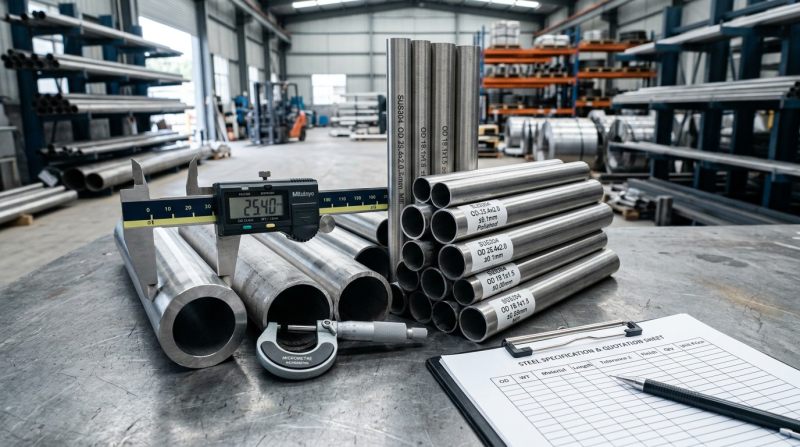
In steel procurement, quotation errors rarely come from arithmetic alone. They usually start with incomplete technical communication. When a buyer requests “SS pipe” without defining grade, outer diameter, wall thickness, surface condition, standard, and end use, suppliers may quote different products for the same inquiry. That is why two offers can look similar on paper but differ sharply in cost, compliance, and delivery risk.
This issue affects more than stainless pipe buyers. The same pattern appears when comparing structural steel, steel plate for construction, channel steel, or steel beams. A change from one standard to another, such as ASTM versus EN or JIS, can alter chemistry limits, tolerance ranges, inspection methods, and acceptance rules. In many projects, even a wall thickness difference of 0.5 mm to 1.0 mm can shift both material cost and installation suitability.
For procurement teams, quotation accuracy matters because budgets are often locked early. For technical evaluators, correct specifications determine whether the product can pass fabrication, welding, corrosion resistance, or pressure requirements. For project managers, mistakes can mean 2–4 weeks of delay if replacement material must be sourced after delivery. Small wording gaps create large downstream losses.
Hongteng Fengda works with global buyers across North America, Europe, the Middle East, and Southeast Asia, where specification clarity is often the difference between a smooth shipment and a costly claim. As a structural steel manufacturer and exporter from China, we support standard and OEM requirements by aligning drawings, standards, tolerances, and production details before quotation, not after the purchase order.
The 5 most common causes of quotation mismatch
- Material grade is unclear, such as using “SS” without stating 201, 304, 316, or another grade.
- Size data is incomplete, especially outer diameter, wall thickness, and length tolerance.
- The standard is omitted, which can change testing, dimensional tolerance, and inspection scope.
- Surface and end finish are not defined, such as pickled, polished, beveled, threaded, or plain end.
- The application scenario is not stated, so suppliers cannot judge whether corrosion, load, or fabrication risks apply.
When these five items are clarified at the RFQ stage, buyers usually reduce the number of revision rounds from 3–5 to 1–2. That shortens the sourcing cycle and improves price comparability across suppliers.
Which specification details have the biggest impact on price and compliance?
Not every line in a specification sheet affects quotation equally. In practice, a few variables drive most price changes. Grade influences alloy content and corrosion resistance. Diameter and wall thickness determine theoretical weight per meter. Manufacturing route, such as welded versus seamless, changes production cost and acceptable applications. Required standards and inspection documents also add cost where traceability is strict.
For technical teams, it helps to separate commercial information from engineering-critical information. A supplier can revise packing marks quickly, but cannot easily revise chemistry, tensile properties, or dimensional tolerance after production begins. That is why early confirmation of the key specification block is more important than pushing for a fast first price.
The table below shows how common specification items affect quotation accuracy in steel purchasing. Although the examples refer to ss pipe specifications, the same logic applies to many steel categories, including structural sections, plates, and custom fabricated components.
A clear takeaway is that buyers should never compare quotations line by line without first checking whether the technical basis is the same. A lower price can simply mean a thinner wall, different standard, or reduced document scope. In B2B steel procurement, comparable quotations require comparable specifications.
Three data points buyers should verify first
Before reviewing unit price, confirm three items: material grade, dimensional range, and governing standard. In many RFQs, these 3 items explain most price gaps. Then verify quantity, delivery term, and required documents such as MTC or third-party inspection. This simple order of review can reduce approval disputes between procurement, QC, and engineering teams.
How should buyers compare specifications across suppliers?
A structured comparison method is essential when multiple suppliers respond to the same inquiry. Procurement should not rely only on the lowest price or shortest lead time. Instead, compare offers across technical scope, commercial terms, production feasibility, and documentation. This is especially important for projects with mixed demand, such as structural steel plus accessories, lifting components, and site hardware.
In many industrial and construction projects, steel procurement is not isolated. A buyer may source beams, channels, angles, plates, and related wire rope or lifting products in parallel. If specification control is weak in one category, the same risk often spreads to the others. For example, corrosion environment, load condition, and standard matching should also be reviewed for products such as Hot dipped Galvanized Steel Wire Rope used in mining, cranes, marine industries, elevators, cableways, or drilling support systems.
That product category shows why detail matters. Buyers need to review rope construction such as 6X7+FC, 6X19+IWR, or 8x19S+FC, diameter range from 1.0 mm to 22 mm, and normal tensile strength from 1470 MPa to 1960 MPa. They also need to match coating condition to service environment, whether plain, electro galvanized, or hot dipped galvanized, and check standards such as GB/T 20116-2008, DIN, ISO 9001, EIPS, or ABS where applicable.
The same buyer discipline applies to ss pipe specifications. If the environment is mildly corrosive, medium corrosive, or severely corrosive, the material and coating decision changes. In rope products, zinc layer groups may be selected in different ranges such as 15–135 g/m2, 60–200 g/m2, or 75–260 g/m2 based on working conditions. In pipe procurement, this translates into equivalent attention to grade, finish, and service environment rather than buying only by name.
A practical comparison sheet for RFQ review
The table below can be used by procurement teams, technical evaluators, and project managers to screen quotations in 4 review steps. It works well for carbon steel, stainless pipe, and structural steel products from standard stock or OEM production.
This method helps eliminate false savings. A quote that appears 3% lower may become 8% to 12% more expensive after adding missing inspection, rework, or urgent replacement freight. That is why experienced buyers compare procurement risk, not just headline price.
Checklist for internal approval
- Confirm whether the quoted standard exactly matches the drawing or project specification.
- Check if the supplier stated positive tolerances, negative tolerances, or nominal dimensions only.
- Verify whether testing and certificates are included in price or listed as extra.
- Review the promised delivery window, especially for custom or mixed-size orders.
For many projects, this 4-point check prevents last-minute escalation between sales, engineering, and site teams.
What should procurement and technical teams include in an RFQ?
A strong RFQ reduces quotation errors before they happen. Buyers should provide not only the material name, but also application context, target standard, quantity split, and any non-standard processing. If a project has several steel categories, each line item should be technically separated rather than grouped under broad wording. This is especially important when structural steel and stainless or coated products are purchased together.
At a minimum, an RFQ for ss pipe specifications should define 6 key fields: grade, size, thickness, standard, length, and finish. For project-grade procurement, it is also wise to add intended use, testing requirements, quantity by size, and destination market. Different markets may expect ASTM, EN, JIS, or GB references, and that affects both manufacturing preparation and document packages.
Hongteng Fengda supports this process by helping buyers convert incomplete inquiries into quotation-ready technical sheets. This is valuable for distributors, contractors, OEM buyers, and project owners who need to balance cost control with compliance. Our experience in angle steel, channel steel, steel beams, cold formed profiles, and customized structural steel components makes cross-category specification review more efficient.
For routine items, quotation feedback can move quickly once the technical base is complete. For customized fabrication or mixed-standard procurement, buyers should allow extra review time for drawing confirmation, tolerance evaluation, and production routing. In practice, 24–72 hours may be enough for standard items, while customized project review can require several rounds depending on complexity.
Recommended RFQ content structure
- Basic product data: material grade, size range, wall thickness, length, and quantity by item.
- Compliance data: required standard, inspection type, certificate request, and marking rules.
- Commercial data: destination port, Incoterm, target shipment window, and packaging expectations.
- Application data: service environment, corrosion level, fabrication method, and end-use industry.
This 4-part structure improves response quality from both mills and trading suppliers, while making internal approval easier for QC, safety, and commercial teams.
Common misconceptions, FAQ, and how to reduce sourcing risk
Many quotation errors continue because buyers assume suppliers interpret shorthand the same way. In reality, “same size,” “same standard,” or “same steel quality” can mean different things unless the specification sheet is explicit. A short FAQ helps align expectations before order placement and can save one or two full approval cycles.
Another misconception is that all low quotations represent better purchasing performance. In steel sourcing, a low offer may exclude testing, substitute standards, simplify packing, or quote a different tolerance basis. Total procurement value should be assessed over the full cycle: quotation, production, inspection, shipment, arrival, and site acceptance.
For quality and safety managers, documentation matters as much as material. A technically correct product without the required traceability, test record, or standard reference can still create project risk. That is why sourcing decisions should bring together at least 3 functions: procurement, engineering, and QC. Larger projects may also involve commercial and site management review.
Below are the most common questions from global steel buyers evaluating ss pipe specifications and related industrial steel products.
How do I know whether two quotations are truly comparable?
Check whether grade, size, wall thickness, standard, finish, certificate scope, and delivery term are identical. If even 1 of these 6 points differs, the quotations are not directly comparable. Always request a revised technical summary before making a price judgment.
What is the most overlooked detail in ss pipe specifications?
Wall thickness tolerance is often overlooked. Buyers may specify nominal thickness but not acceptable tolerance, which changes actual weight, performance, and cost. Standard references and inspection document requirements are also frequently missed in early RFQs.
How long does quotation clarification usually take?
For standard steel items with complete data, clarification may take 1–3 working days. For custom steel fabrication, mixed standards, or multiple destination markets, it can take longer because drawings, tolerances, and compliance details must be confirmed before the price is reliable.
Why choose us for steel quotation support and sourcing discussion?
Hongteng Fengda helps buyers move from unclear inquiry to usable quotation with fewer revisions and better technical alignment. We manufacture and export structural steel from China, with strengths in angle steel, channel steel, steel beams, cold formed steel profiles, and customized structural steel components. Our team can support parameter confirmation, standard matching, OEM review, lead time discussion, packaging details, and document requirements for international projects.
If you are comparing suppliers or struggling with quotation gaps, contact us with your drawings, target standards, quantity list, and delivery schedule. We can help review specification completeness, identify risk points, discuss customization, confirm applicable standards such as ASTM, EN, JIS, or GB, and support quotation communication with clearer technical logic. This gives procurement, engineering, and management teams a stronger basis for decision-making.
Please give us a message


Please enter what you want to find