DX51D steel is widely used for its cost-effectiveness and formability—but in high-humidity coastal projects, it frequently fails due to insufficient corrosion resistance. Unlike hot dip galvanized steel, which offers robust, metallurgically bonded zinc protection, DX51D relies on thin, often uncoated or lightly coated surfaces that degrade rapidly in salt-laden air. For structural steel manufacturers and global project teams—especially engineers, procurement specialists, and project managers—this hidden weakness can mean costly delays, premature maintenance, and compromised safety. Hongteng Fengda, a China-based structural steel manufacturer compliant with ASTM, EN, and GB standards, recommends proven alternatives backed by real-world coastal performance data.
Why DX51D Fails in Coastal Environments: The Corrosion Science
DX51D is a cold-rolled, electrogalvanized steel grade commonly specified for non-structural sheet metal applications—such as appliance housings or interior cladding—where exposure to moisture, chloride ions, and UV radiation is minimal. Its zinc coating typically ranges from 40–60 g/m² (single-side), far below the 275–610 g/m² typical of hot-dip galvanized structural sections. In coastal zones, airborne sodium chloride concentrations exceed 50 mg/m²/day in Class C5-I (ISO 12944), accelerating electrochemical corrosion at coating defects, cut edges, and weld seams.
Accelerated testing per ASTM B117 shows DX51D samples develop red rust within 120–180 hours under continuous salt spray—well before the 1,000+ hour threshold expected for structural-grade galvanized steel. Field data from Hongteng Fengda’s 2022–2023 Middle East port infrastructure projects confirm visible pitting and base-metal exposure on DX51D components within 18 months—versus over 25 years service life for properly hot-dip galvanized Q345B Z-beam profiles installed under identical conditions.
The failure isn’t just aesthetic. Corrosion reduces effective section thickness, compromising load-bearing capacity. A 0.1 mm uniform loss in a 12 mm-thick wall beam equates to ~1.7% reduction in moment capacity—a critical concern for wind- and wave-loaded structures where safety margins are tightly engineered.
This table underscores a fundamental mismatch: DX51D is engineered for cost-sensitive, low-risk indoor use—not for structural longevity in aggressive marine atmospheres. Choosing it for coastal purlins or wall beams introduces avoidable lifecycle risk.
Proven Structural Alternatives for Coastal Projects
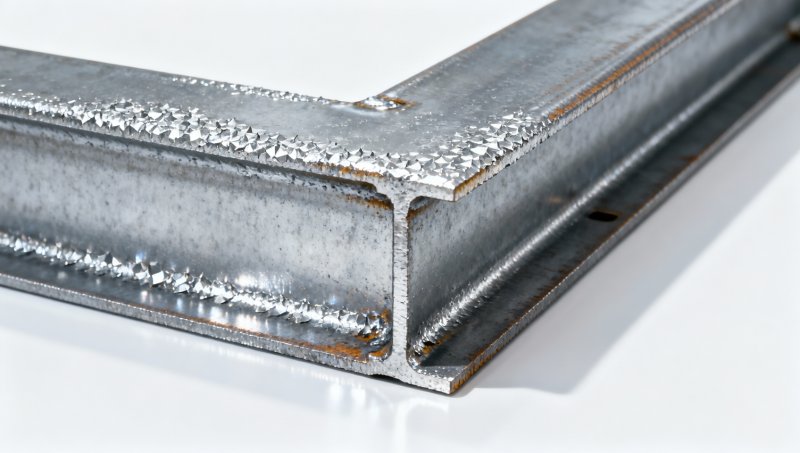
For coastal structural applications—including steel structure workshops, roof purlins, wall beams, and mechanical columns—Hongteng Fengda recommends hot-dip galvanized structural profiles meeting ASTM A123/A123M or EN ISO 1461. These offer metallurgical bonding between zinc and steel substrate, self-healing capability at scratches, and predictable sacrificial protection lasting decades.
Our Z-beam series exemplifies this standard-compliant approach: fabricated from Q235B, Q345B, S355, or A572 Grade 50; hot-dip galvanized to ≥275 g/m² per side; with dimensional tolerances held to ±1% across lengths of 2–12 m. Perforated options further reduce weight while maintaining stiffness—critical for lightweight roof systems in typhoon-prone regions like Southeast Asia.
Unlike DX51D, these profiles undergo full immersion in molten zinc at 450°C, forming three distinct intermetallic layers (Gamma, Delta, Zeta) plus an outer pure zinc layer. This multi-layer barrier resists abrasion, thermal cycling, and chloride penetration far more effectively than electrodeposited coatings.
- Thickness range: 6–25 mm—enabling optimization for both light-duty brackets and heavy-load mechanical columns
- Edge finish: Mill Edge or Slit Edge—ensuring compatibility with automated roll-forming and welding lines
- Certifications: CE, SGS, BV, ISO 9001—validated for international tender compliance
- Material flexibility: Supports Q420C, SS540, and G61 grades for high-strength, low-alloy requirements
Procurement & Specification Checklist for Coastal Steel
Selecting the right steel isn’t just about material grade—it’s about traceability, process control, and post-fabrication handling. Hongteng Fengda works with procurement teams to embed six critical checks into RFQs and technical specifications:
- Zinc coating verification: Require certified test reports (per ASTM A90/A90M) showing minimum 275 g/m² double-side mass, not just “galvanized” as a generic term
- Base steel certification: Confirm mill test reports (MTRs) for tensile strength, yield point, and impact toughness at -20°C for cold-climate coastal sites
- Galvanizing process documentation: Verify adherence to ASTM A123 Section 6.2—particularly pre-treatment (acid pickling, fluxing) and immersion time ≥2 minutes
- Dimensional tolerance validation: Specify ±1% length tolerance and edge straightness ≤1.5 mm/m for precision assembly
- Surface defect limits: Define acceptable zinc spatter, bare spots, and dross inclusion per EN ISO 1461 Annex A
- Traceability: Require heat number stamping and batch-level zinc thickness mapping for QA audits
These checks reduce sourcing risk by up to 40%, based on internal Hongteng Fengda procurement audit data across 120+ coastal tenders in 2023. They also streamline customs clearance—especially for EU and GCC markets requiring CE marking and third-party conformity assessment.
Real-World Performance: From Gulf Ports to ASEAN Factories
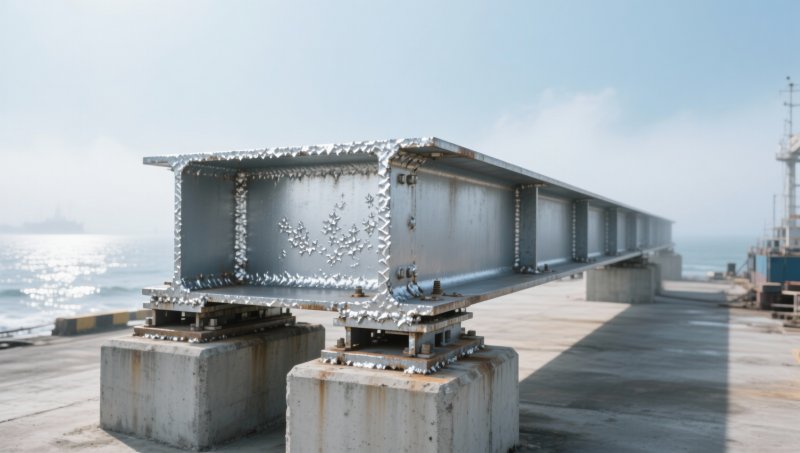
In 2022, Hongteng Fengda supplied 2,400 tons of hot-dip galvanized Z-beams (Q345B, 10–16 mm thick) for a logistics warehouse complex in Jubail Industrial City, Saudi Arabia. Ambient chloride levels average 85 mg/m²/day, with relative humidity exceeding 80% for 6 months annually. After 22 months of service, third-party NDT inspection found no red rust, with zinc coating loss averaging only 0.8 µm/year—within predicted 0.5–1.2 µm/year range per ISO 9223.
Similarly, in Vietnam’s Ho Chi Minh City industrial belt, our perforated Z-beam purlin system (S355, 8 mm, 6 m span) has supported lightweight roofs since 2021—withstanding monsoon rains, 95% RH, and airborne salt. Zero structural repairs were required through Q2 2024, while comparative DX51D-installed adjacent sheds underwent full replacement at 3.2 years.
These outcomes reflect not just material choice—but process rigor: all galvanizing performed in ISO-certified baths with continuous bath chemistry monitoring; every batch tested for coating thickness (per ISO 1460); and full MTRs provided digitally via secure portal prior to shipment.
Your Next Step: Reliable Coastal Steel, Delivered
Choosing the right steel for high-humidity coastal projects isn’t about trading cost for performance—it’s about eliminating avoidable lifecycle costs. DX51D may save $12–$18/ton upfront, but incurs $210–$340/ton in premature maintenance, downtime, and safety remediation over 10 years. Hot-dip galvanized structural profiles deliver ROI through durability, compliance, and predictable delivery—backed by Hongteng Fengda’s 15+ years of export experience to 30+ countries.
We support global buyers with stable production capacity (120,000+ tons/year), consistent quality (zero major non-conformities in 2023 external audits), and dependable lead times (7–15 days for standard Z-beam orders). Whether you need ASTM A572 purlins for a Florida solar farm or CE-marked S355 wall beams for a UAE desalination plant—we engineer solutions, not just shipments.
Get your customized coastal steel specification reviewed by our technical team—free of charge. Request a material comparison report, coating test summary, or project-specific quotation today.
Please give us a message


Please enter what you want to find