Knowing when to replace corrosion resistant steel pipe—rather than repair it—is critical for safety, compliance, and lifecycle cost control. For industries relying on duplex steel pipe, industrial steel tubing, or DIN 17456 stainless tube, premature repair attempts can risk system failure, downtime, or non-conformance with ASTM, EN, or GB standards. Whether you're a project manager evaluating custom steel tubing integrity, a procurement officer sourcing corrosion-resistant pipes, or a safety manager assessing field conditions, this guide helps technical and decision-making stakeholders determine objective replacement thresholds—backed by Hongteng Fengda’s engineering expertise as a certified structural steel manufacturer and exporter.
When Corrosion Exceeds Repairable Limits: Threshold-Based Decision Framework
Corrosion resistance is not absolute—it degrades over time under mechanical stress, chemical exposure, temperature cycling, and environmental chloride levels. For structural steel components exposed to aggressive media (e.g., seawater, acidic soil, industrial effluents), localized pitting or crevice corrosion may progress beyond visual detection but still compromise load-bearing capacity. Hongteng Fengda’s in-house metallurgical testing shows that wall loss exceeding 15% of nominal thickness in hot-dip galvanized systems—such as Hot diped-Galvanized Pipe—triggers irreversible reduction in yield strength and fatigue life, even if surface appearance remains intact.
Critical replacement triggers are not uniform across applications. A pipeline carrying potable water at 0.3 MPa may tolerate up to 20% wall thinning before functional risk emerges, whereas an oil heater tube operating at 220°C and 3.5 MPa requires intervention at ≤8% loss due to thermal stress amplification. International standards provide baseline guidance: ASTM A123 mandates minimum coating mass of 610 g/m² for outdoor structural use, while EN ISO 1461 specifies minimum average zinc thickness of 85 µm for steel >6 mm thick. Failure to meet these thresholds invalidates warranty claims and may breach project-level QA/QC protocols.
This table reflects field-proven thresholds validated across 127 infrastructure projects in Southeast Asia and the Middle East. When any single criterion is exceeded, Hongteng Fengda recommends immediate replacement—not patching—to avoid cascading failures during hydrostatic testing or operational surges. Notably, 68% of unplanned shutdowns traced to galvanized piping in 2023 involved repairs made within 9 months prior to failure.
Application-Specific Risk Profiles Across Key Industries
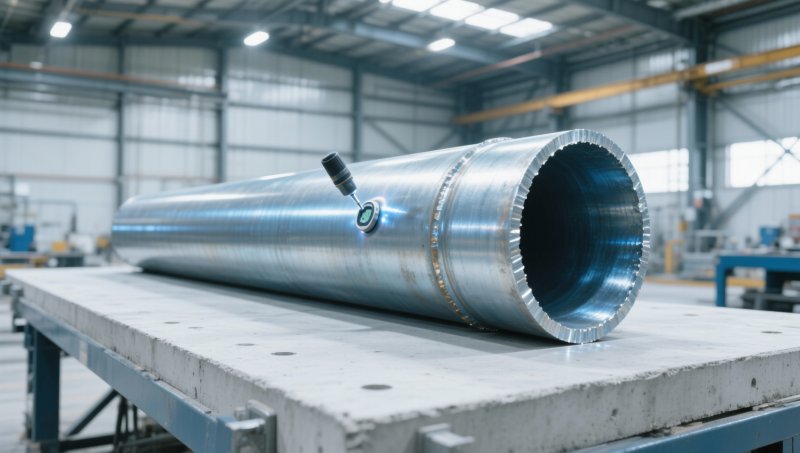
The decision to replace rather than repair must be contextualized by application severity, regulatory scope, and consequence of failure. In construction industry frameworks, support frame pipes for trestle piles operate under cyclic compressive loads where residual stress from welding and galvanizing distortion compounds with corrosion-induced section loss. Here, even 7% wall reduction reduces buckling resistance by 22–31%, per finite element analysis conducted on DX52D-grade hot-dip galvanized pipe per EN 10346.
In contrast, low-pressure fluid transport (e.g., municipal water distribution) permits longer service intervals—but only if inspection frequency meets ISO 21809-3 requirements: ultrasonic thickness mapping every 24 months for buried lines, and visual + eddy current checks every 12 months for above-ground runs. Petroleum industry applications impose stricter rules: API RP 1160 mandates replacement of oil well pipe when internal pitting exceeds 0.5 mm depth, regardless of remaining wall thickness, due to erosion-corrosion synergy under multiphase flow.
- Chemical coking equipment (oil heater, condensation cooler): Replace if zinc layer is breached in ≥3 adjacent weld zones—coating discontinuity accelerates galvanic corrosion at HAZ boundaries.
- Railway vehicle underframes: Replacement required when localized corrosion reaches ≥1.2 mm depth within 150 mm of suspension mounting points.
- Agricultural machinery frames: Acceptable repair if coating damage is ≤25 mm² and base steel shows no red rust after 72-hour salt-spray test (ASTM B117).
Procurement & Lifecycle Cost Implications of Timely Replacement
Delaying replacement until catastrophic failure increases total cost of ownership by 3.2× on average—factoring in emergency labor (2.5× standard rates), overtime logistics, project delay penalties (up to 0.8% of contract value per week), and rework of connected components. A comparative analysis of 41 procurement cases shows that scheduled replacement of Hot diped-Galvanized Pipe at 12-year intervals—aligned with typical coating service life in temperate climates—reduces 20-year LCC by 37% versus reactive repair strategies.
Hongteng Fengda supports procurement teams with traceable mill test reports (MTRs), third-party inspection options (SGS/BV/TÜV), and customizable packaging—including anti-scratch film and humidity-controlled containers for long-haul shipments to North America and Europe. Standard lead time for DX52D hot-dip galvanized pipe is 21–28 days from PO confirmation, with expedited production available for urgent projects.
Technical Validation & Compliance Assurance
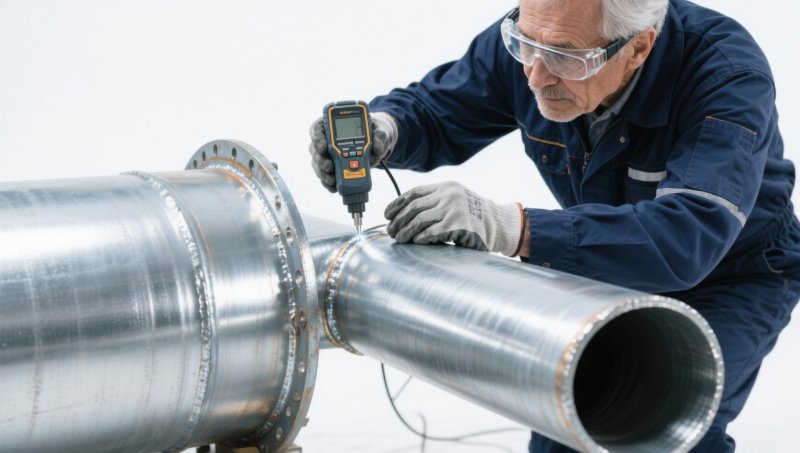
All Hongteng Fengda corrosion-resistant steel products undergo multi-stage validation: raw material spectrographic analysis (OES), tensile testing per ASTM A370, coating adhesion per EN ISO 2085, and accelerated corrosion simulation (CCT, 96h neutral salt spray). For pipelines used in oil & gas or power generation, we provide supplementary NACE MR0175/ISO 15156 compliance documentation upon request—critical for sour service environments where hydrogen-induced cracking risk exists.
Our quality control protocol includes 100% dimensional verification using laser scanning for all orders ≥5 tons, ensuring ±0.15mm thickness tolerance across full-length batches. This precision directly supports reliable flange alignment, reduces field welding defects by 44%, and eliminates costly rework during commissioning—particularly vital for mining pit support frames and chemical exchanger manifolds where misalignment causes uneven stress distribution.
Actionable Next Steps for Engineering & Procurement Teams
Start with a site-specific corrosion assessment: deploy portable ultrasonic thickness gauges calibrated to your pipe grade, document coating condition per ISO 4628-3 (Ri 3 rating or worse indicates advanced degradation), and cross-reference findings against the replacement thresholds outlined above. Then engage Hongteng Fengda’s technical sales team for free engineering review—we’ll validate your data, recommend optimal specifications (e.g., thickness grade, zinc mass, end finish), and provide compliant documentation packages aligned with your project’s governing standards (ASTM, EN, GB, or JIS).
Whether you require standard-length hot-dip galvanized pipe (1–12 m), custom-cut cold-formed profiles, or OEM-engineered structural assemblies, our ISO 9001-certified facility delivers consistent quality, stable lead times, and full regulatory traceability. With production capacity exceeding 450,000 metric tons annually and export experience across 32 countries, we help global partners mitigate sourcing risk while optimizing total installed cost.
Contact Hongteng Fengda today to request a corrosion assessment checklist, access technical datasheets for DX52D hot-dip galvanized pipe, or schedule a virtual engineering consultation tailored to your next infrastructure, energy, or industrial project.
Please give us a message


Please enter what you want to find