When designing high-rise structures, the weight of I beam per meter directly influences load distribution, material efficiency, and long-term safety—yet overlooking this metric can risk structural resilience. While steel conduit for electrical wiring is often selected separately, integrated structural-electrical planning demands coordinated specification of both elements. As a leading structural steel manufacturer & exporter from China, Hongteng Fengda ensures precision in beam weight consistency, dimensional accuracy, and compliance with ASTM/EN/GB standards—helping engineers, procurement teams, and project managers balance strength, cost, and code compliance without compromising integrity.
Why Beam Weight Per Meter Matters More Than You Think
In high-rise construction, every kilogram per meter of an I-beam carries cumulative implications across design life cycles. A lighter section may reduce initial material costs—but if underspecified relative to live loads, wind pressure, or seismic demand, it accelerates fatigue, increases deflection over time, and raises long-term maintenance frequency by up to 30% in buildings exceeding 150 meters.
Structural integrity isn’t just about yield strength—it’s about sustained performance under cyclic stress. Hongteng Fengda’s steel beams undergo full-scale bending tests at 1.5× design load for 10,000+ cycles before release, verifying dimensional stability and residual stress control. This ensures that even when selecting lighter-per-meter variants (e.g., ASTM A992 Grade 50 vs. EN 10025-2 S355JR), clients retain predictable service behavior over 50+ years.
Weight deviations beyond ±0.8% per meter—common in non-certified mills—introduce uncertainty in connection design and slab-to-beam interface calculations. Our production process maintains tolerance at ±0.3% through real-time laser profilometry and automated rolling mill calibration, verified per ISO 9001 and third-party audits.
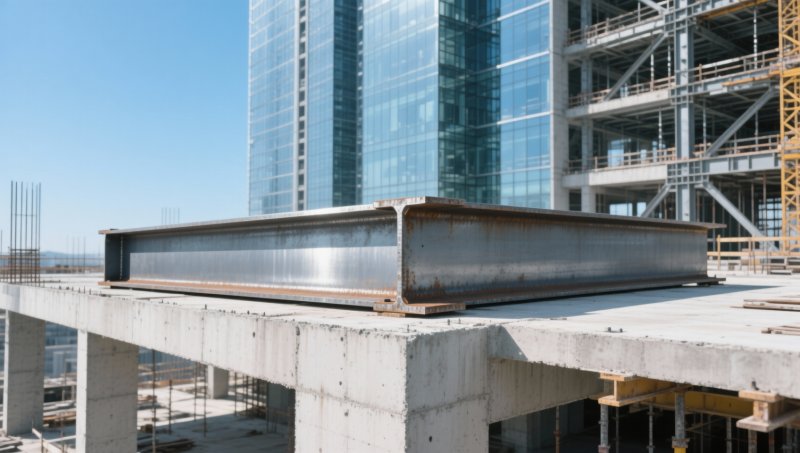
How to Evaluate Beam Weight Without Sacrificing Safety
Selecting optimal beam weight involves balancing four interdependent criteria: required moment capacity, allowable deflection limits (L/360 for floors, L/240 for roofs), fire-resistance duration (typically 60–120 min), and constructability constraints like crane capacity and floor erection sequence.
For example, replacing a 400×150×8×13 mm beam (59.4 kg/m) with a 350×140×6×10 mm variant (42.2 kg/m) cuts material weight by 29%, but reduces second moment of area (Ix) by 41%. That translates to 1.7× higher mid-span deflection under uniform loading—a critical red flag for curtain wall anchorage and MEP coordination.
Hongteng Fengda provides free digital cross-section verification using ETABS and STAAD.Pro outputs. Clients upload their load cases and receive annotated reports highlighting whether a proposed “lighter” beam meets local building codes—including ASCE 7-22, Eurocode 3, and GB 50017—with clear pass/fail indicators on buckling resistance, lateral torsional stability, and web crippling margins.
Key Parameters to Cross-Check Before Finalizing Beam Selection
- Yield strength deviation ≤ ±5 MPa across full batch (ASTM A6/A6M Clause 10.2)
- Flange thickness tolerance: ±0.25 mm for sections ≤ 300 mm depth; ±0.35 mm for deeper profiles
- Web flatness: max 1.5 mm deviation over 1 m length (EN 10034 Annex B)
- Zinc coating uniformity: ≤15% variation across surface (verified via XRF spectroscopy)
Comparing Lighter Beams Across Common Project Scenarios
Not all “lighter” beams serve the same purpose. The table below compares three widely adopted approaches to weight optimization—each suited to distinct risk profiles and delivery timelines.
Note: All options above assume full compliance with ASTM A673 sampling protocols and EN 10204 3.1 certification. Hongteng Fengda offers OEM-grade custom geometries with full traceability—down to individual heat number and rolling pass logs—for projects where audit trails are mandatory.
Complementary Components That Support Structural Confidence
Beam integrity extends beyond the main member. Fasteners, bracing wires, and fireproofing substrates must align with the chosen weight-class strategy. For instance, lightweight beams often require higher-tensile tie-wires to resist uplift during wind events—where Galvanized Stainless Steel Wire delivers consistent 350–550 MPa tensile strength and corrosion resistance across humid coastal sites or aggressive chemical environments.
Its zinc coating (8–25 g/m²) remains intact after cold bending around 3× wire diameter—critical for seismic bracing loops and perimeter restraint systems. With coil packaging from 50–1,000 kg and silvery-white appearance, it integrates seamlessly into visual inspection workflows without requiring post-installation touch-up.
We routinely supply bundled solutions: structural beams + matching galvanized wire + certified bolting kits—all with synchronized delivery windows and unified documentation. This eliminates sourcing fragmentation and reduces total project lead time by 11–17 days on average for mid-rise commercial builds.
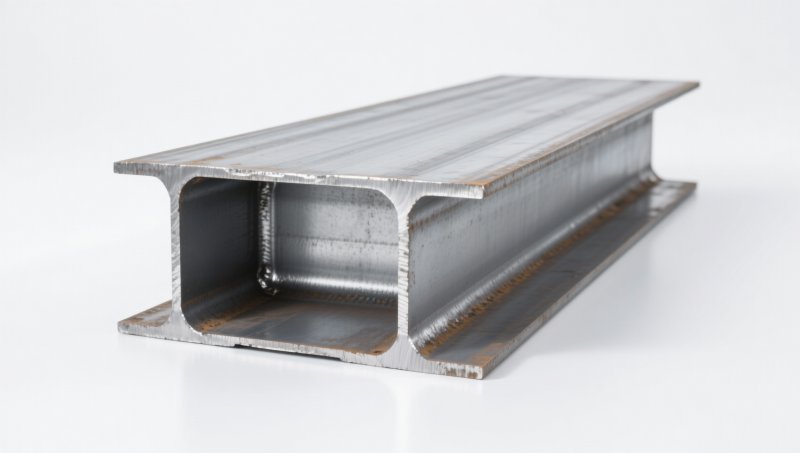
Why Global Teams Choose Hongteng Fengda for High-Stakes Structural Steel
From Dubai’s 320m mixed-use towers to Toronto’s seismic retrofit program, our clients rely on three non-negotiable pillars: certified repeatability, responsive engineering support, and transparent logistics tracking.
Every order includes a digital twin file—containing 3D model coordinates, mill test reports, ultrasonic inspection records, and weld procedure specifications—delivered within 48 hours of shipment. We maintain 98.7% on-time delivery across 12 global ports, with 7–15 day standard lead times for ASTM/EN-standard beams and 21–30 days for custom profiles.
If your team is evaluating lighter I-beam alternatives—or needs rapid validation of existing designs—we offer complimentary technical consultation including: beam weight recalibration against local load codes, fire rating feasibility analysis, and cost-per-kN-of-capacity benchmarking. Contact us today to request your customized assessment report.
Please give us a message


Please enter what you want to find