Choosing the right coil coated steel for outdoor projects comes down to one practical question: what level of corrosion resistance, weather durability, and cost control does your project really need? For most buyers and project teams, there is no single “best” option. The right choice depends on whether the steel will face rain, UV exposure, salt, industrial pollution, mechanical wear, or strict appearance requirements. If you are comparing products from a PPGI coil factory, evaluating cold rolled steel sheet in coil as a base material, or reviewing alternatives for roofing, cladding, and fabricated outdoor components, the coating system matters as much as the steel itself.
This guide explains how to select coil coated steel for outdoor use based on environment, service life, processing needs, and purchasing risk. It is designed to help engineers, purchasers, quality teams, distributors, and decision-makers make a clearer and more cost-effective choice.
How do you choose coil coated steel for outdoor projects without overpaying or under-specifying?
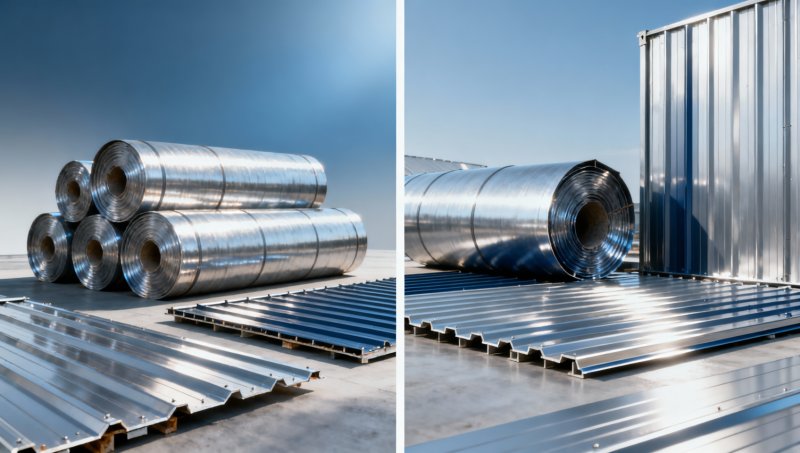
The fastest way to make a sound decision is to match the coating system to the actual outdoor exposure level instead of choosing only by price or thickness. In general:
- For mild outdoor environments, standard polyester-coated steel can be a cost-effective option for general roofing, wall panels, enclosures, and decorative applications.
- For stronger UV exposure and better color retention, SMP or PVDF-coated steel is usually more suitable.
- For humid, industrial, or coastal environments, higher-performance metallic coatings and topcoat systems are needed to improve corrosion resistance and service life.
- For projects involving fabrication, bending, or forming, coating flexibility and base steel quality are critical.
The mistake many buyers make is focusing only on the initial quotation. Outdoor performance is determined by a combination of base steel, metallic coating mass, paint system, coating thickness, fabrication quality, and installation environment. A cheaper coil may cost more later if it fades early, corrodes at cut edges, or fails in a high-humidity zone.
What matters most in outdoor performance?
When evaluating coil coated steel, most technical and commercial decisions should revolve around the following factors.
1. Corrosion resistance
This is usually the top concern for outdoor use. Rain, condensation, airborne salts, industrial pollutants, and trapped moisture all accelerate corrosion. Projects near coastlines, ports, chemical plants, and heavy industry need more robust coating systems than inland decorative applications.
2. UV and weather durability
If appearance matters, coating chalking, fading, and gloss retention are important. Roofing sheets, facade panels, outdoor signage, and visible architectural components often require coatings with stronger weather resistance, especially in areas with intense sunlight.
3. Cut-edge and scratch performance
Outdoor steel often gets cut, punched, folded, or fastened on site. If the coating or metallic layer performs poorly at edges and formed areas, corrosion can begin early. This is especially important for profiled sheets and fabricated components.
4. Formability and processing suitability
Some outdoor products require roll forming, bending, stamping, or deep processing. In these cases, the coil coating must stay intact during fabrication. Poor formability can lead to cracking, reduced protection, and appearance defects.
5. Total lifecycle cost
For procurement and management teams, the best material is often not the lowest-priced one, but the one that balances purchase cost, maintenance frequency, warranty expectation, replacement risk, and project reputation.
Which coating systems are commonly used for outdoor coil coated steel?
Different outdoor projects call for different coating structures. The common options include:
Polyester (PE)
PE is widely used because it is economical and suitable for many standard outdoor applications. It works well in relatively mild environments where extreme UV resistance and long-term color retention are not the highest priorities.
Silicone Modified Polyester (SMP)
SMP generally offers better weather resistance than standard PE. It is often chosen for projects needing improved outdoor durability without moving into the higher cost range of premium coatings.
PVDF
PVDF is one of the preferred choices for demanding architectural exteriors because of its excellent UV resistance, color stability, and weather durability. It is often selected for high-visibility buildings and long-life facade systems.
Plastisol and other specialized systems
These may be used where thicker coating build, stronger barrier protection, or specific environmental performance is required. Selection depends on local climate and end-use design.
Besides the paint system, buyers should also check the metallic coating beneath the paint, such as galvanized or galvalume-type protection, because this layer strongly affects corrosion resistance when the paint film is damaged or edges are exposed.
How should buyers match coil coated steel to the actual outdoor environment?
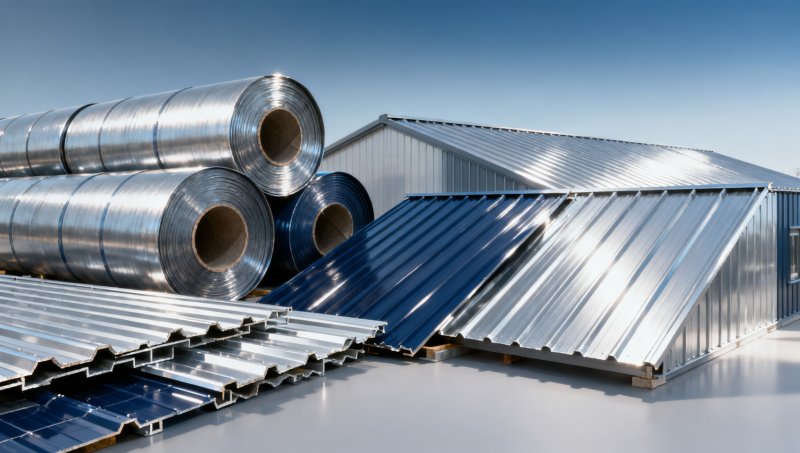
A practical way to select material is to divide projects by exposure severity:
Mild environment
Examples include inland areas with moderate rainfall and low pollution. For these projects, a standard coil coated steel solution may be sufficient if service life expectations are reasonable and design details avoid water trapping.
High UV environment
In hot, sunny regions, coating fade and chalking become major concerns. Here, stronger topcoat performance matters more than in cooler or less exposed locations.
Humid or rainy environment
Projects in high-humidity climates need reliable corrosion protection, especially on roofing, wall systems, and exposed fabricated parts. Condensation and poor ventilation can be as damaging as direct rain.
Industrial environment
Acidic or chemical pollutants can shorten the life of lower-grade coated steel. Buyers should evaluate not only coating type but also expected maintenance intervals and warranty terms.
Coastal environment
Salt spray and chloride exposure are especially aggressive. In these applications, under-specifying the coating often leads to premature failure. A better metallic coating system and high-performance paint layer are usually justified.
In other words, outdoor projects should not be specified by “general use” alone. The site environment, design details, and maintenance expectations should all be considered together.
What should engineers and procurement teams ask suppliers before placing an order?
To reduce sourcing risk, buyers should ask for clear technical and quality information rather than relying only on a product brochure.
- What is the base steel grade and thickness tolerance?
- What metallic coating type and coating mass are provided?
- What is the paint system: PE, SMP, PVDF, or another specification?
- What are the topcoat and backcoat thicknesses?
- Is the product suitable for roll forming, bending, or stamping?
- Which standards does it comply with, such as ASTM, EN, JIS, or GB?
- Are salt spray, adhesion, impact, bend, and weathering test reports available?
- What warranty terms are offered, and under what application conditions?
- How are packaging, transport protection, and moisture prevention handled?
These questions are especially important for importers, distributors, and project-based buyers who must balance technical suitability with delivery reliability and financial control.
When should you consider alternatives to conventional coil coated carbon steel?
Not every outdoor application is best served by painted carbon steel. In some cases, alternative materials are worth evaluating, especially where corrosion risk, hygiene requirements, or fabrication needs differ.
For example, some decorative, fabricated, and light-duty outdoor applications may consider stainless steel products where appearance, formability, and resistance to certain environments are important. One example is 201 Stainless Steel Coil, which is used in areas such as outdoor decoration engineering, urban decoration, kitchen-related products, automotive parts, conveyor belts, and other formed components.
This material offers tensile strength of at least 520 MPa, yield strength of at least 275 MPa, elongation of at least 55-60%, and good flexibility under pressure. It is a high-manganese, low-nickel stainless steel that can be hardened by cold working and is available in finishes such as BA, 2B, NO.1, NO.4, 4K, HL, and 8K. For buyers evaluating decorative or formed metal parts rather than large coated roofing or cladding systems, this kind of stainless option may be relevant depending on the environment, budget, and expected service conditions.
That said, material substitution should be made carefully. Stainless steel and coil coated steel solve different problems, and the right choice depends on exposure conditions, fabrication method, appearance goals, and total project cost.
What common mistakes lead to premature outdoor failure?
Many outdoor steel problems are caused not by the material alone, but by a mismatch between specification and actual use. Common mistakes include:
- Choosing by lowest price without checking environmental suitability
- Ignoring UV exposure and focusing only on corrosion resistance
- Using indoor-grade or light-duty coatings for exterior applications
- Underestimating coastal or industrial atmospheric aggressiveness
- Overlooking cut-edge protection and site fabrication impact
- Allowing poor storage before installation, causing moisture damage
- Using designs that trap water, dust, or corrosive deposits
- Not verifying compliance, testing data, or coating thickness
For project managers and quality teams, these errors can cause rework, complaints, warranty disputes, and higher maintenance costs later.
How can buyers make a more confident final decision?
A good purchasing decision usually comes from comparing three things side by side:
- Project exposure level: inland, humid, coastal, industrial, or high-UV
- Performance target: service life, appearance retention, fabrication need, maintenance level
- Commercial reality: budget, supplier consistency, lead time, quality assurance, and replacement risk
If the project is highly visible, difficult to maintain, or expensive to replace, a higher-performance coating system is often the safer long-term choice. If the application is more price-sensitive and exposure is moderate, a standard system may be enough. The important point is to specify based on use conditions, not assumptions.
For global sourcing, working with a manufacturer that can provide stable production, international standard compliance, consistent quality control, and customized structural steel or coil solutions can also reduce supply risk and improve project predictability.
In summary, the coil coated steel that fits outdoor projects best is the one that matches the real environment, required lifespan, fabrication process, and budget strategy. There is no universal answer, but there is a correct evaluation method. If you compare coating type, metallic protection, processing suitability, and supplier quality documentation together, you can avoid underperforming material, reduce lifecycle cost, and choose a solution that truly supports long-term outdoor use.
Please give us a message


Please enter what you want to find