In demanding construction and industrial environments, choosing corrosion resistant wire is not just about durability—it is about lowering maintenance costs, improving safety, and extending service life. For buyers comparing steel wire for construction, coil coated steel, or even related supply options such as Cold Rolled Steel Sheet in Coil, understanding the true value of corrosion resistance helps make smarter, more cost-effective sourcing decisions.
The short answer is this: corrosion resistant wire is worth it when exposure to moisture, chemicals, outdoor weather, or repeated handling would make ordinary wire fail early. The higher upfront cost often pays back through fewer replacements, lower labor costs, better appearance retention, and reduced risk of structural or operational problems. For procurement teams, engineers, maintenance staff, and project managers, the real question is not simply “Is it more expensive?” but “What does it save over the full service life?”
Why do buyers choose corrosion resistant wire in the first place?
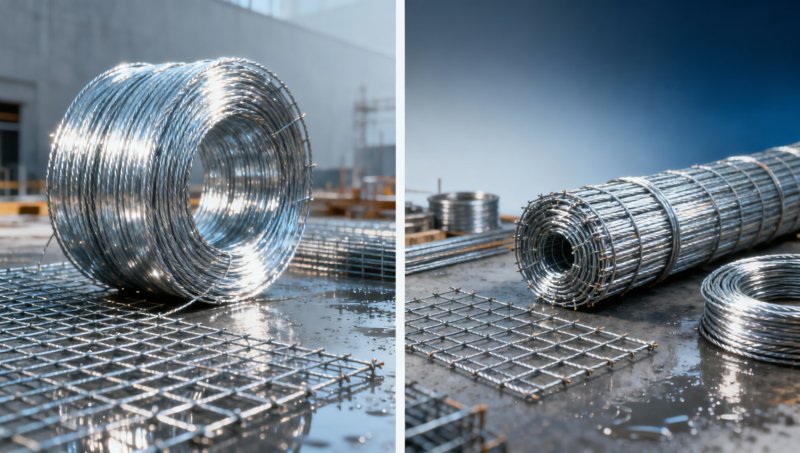
Most buyers are not searching for corrosion resistant wire because they want a premium material for its own sake. They are trying to solve a practical problem: wire installed in real environments often faces rain, humidity, salt, pollution, abrasion, chemicals, and temperature changes. In those conditions, standard untreated wire can rust quickly, lose appearance, weaken over time, and create safety or maintenance issues.
That is why corrosion resistant wire is commonly selected for construction, industrial applications, barrier systems, wire mesh, packaging, breeding facilities, decoration, and general daily-use products. In these scenarios, corrosion resistance supports:
- Longer usable life in outdoor or humid environments
- Reduced need for replacement and maintenance
- More stable mechanical performance over time
- Cleaner and more professional appearance
- Better reliability for safety-sensitive applications
For technical evaluators and quality managers, the key value is performance consistency. For procurement and finance teams, the key value is lower total ownership cost. For end users and operators, the key value is less trouble in day-to-day use.
What makes corrosion resistant wire worth the extra cost?
The value comes from lifecycle economics rather than just initial price. A lower-cost wire may look attractive during sourcing, but if it corrodes early, the actual cost rises quickly through labor, downtime, warranty issues, and repeat purchasing.
Corrosion resistant wire is usually worth the investment when one or more of the following costs matter:
- Replacement cost: Frequent replacement increases labor and material use.
- Downtime cost: In industrial or site operations, failed wire can interrupt work.
- Safety risk: Corrosion may reduce strength or reliability in critical applications.
- Quality risk: Rust can affect appearance, cleanliness, and end-product acceptance.
- Logistics cost: Reordering and resupply create planning pressure and shipping expenses.
In many projects, the wire itself is only a small part of the full installed cost. If labor, access, assembly, or maintenance is expensive, choosing a more durable wire often becomes the smarter financial decision. This is especially true in export projects, long-service construction applications, and environments with seasonal or continuous moisture exposure.
How should you judge whether a wire will perform well in real conditions?
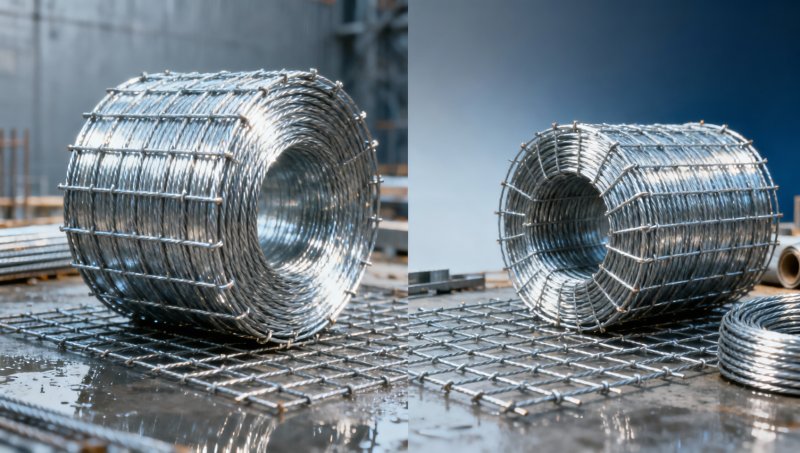
Buyers should not evaluate corrosion resistance as a vague marketing claim. They should look at the actual material, coating, processing suitability, and service environment.
Important evaluation points include:
- Base material: Low carbon steel such as Q195 or Q235 is widely used because it offers good formability and cost efficiency.
- Coating quality: A stable zinc layer helps isolate the steel from corrosive exposure.
- Coating thickness: Thicker zinc coating generally improves corrosion resistance, especially outdoors.
- Tensile strength: Mechanical performance must fit the intended use, not just the corrosion requirement.
- Formability: The wire should tolerate bending, rolling, or stamping without damaging the protective layer.
- Application environment: Indoor dry use and coastal outdoor use demand very different protection levels.
A practical example is Galvanized Stainless Steel Wire, which is suitable for construction, handicrafts, wire mesh, packaging, decoration, industry, breeding, and barrier isolation. With a wire diameter range of 0.25 mm to 5.0 mm, zinc coating thickness of 8–25 g/m2, and tensile strength of 350–550 Mpa, it is designed to combine flexibility, plasticity, and corrosion resistance. Its bright, smooth surface and strong ductility also make it useful in applications where appearance and forming performance matter.
For buyers comparing options, this kind of specification-based review is far more useful than simply choosing the cheapest offer. A wire that can be cold stamped, rolled, or bent without damaging the coating may create significant downstream value in fabrication and installation.
Which applications benefit most from corrosion resistant wire?
Not every application needs the same corrosion protection level, but many industries gain clear value from it. The strongest return usually appears where exposure, replacement difficulty, or quality requirements are high.
Common high-value applications include:
- Construction sites: For tying, support, mesh, fencing, and temporary or semi-permanent installations exposed to weather
- Industrial production: Where wire is used in handling, bundling, guarding, or fabricated components
- Agricultural and breeding environments: Where moisture, waste, and cleaning routines accelerate corrosion
- Packaging and logistics: Where reliable performance and cleaner appearance improve handling quality
- Decorative and consumer-use products: Where rust quickly damages appearance and customer satisfaction
- Barrier isolation and wire mesh: Where long-term outdoor performance matters
If the application is temporary, indoors, dry, and low-risk, a basic wire may be sufficient. But if the wire will be visible, load-bearing, frequently handled, or difficult to replace, corrosion resistance becomes much easier to justify.
What questions should procurement and project teams ask before buying?
To make a sound sourcing decision, buyers should compare more than unit price. The best suppliers help customers align the wire specification with the actual project environment and cost target.
Useful buying questions include:
- What environment will the wire operate in: dry indoor, humid, coastal, chemical, or outdoor?
- How long is the expected service life?
- What wire diameter and tensile strength are required?
- What zinc coating level is appropriate for the exposure conditions?
- Will the wire be bent, stamped, rolled, or otherwise fabricated after purchase?
- What packaging format is best for transport, storage, and use on site?
- Can the supplier provide stable quality and consistent lead times for repeat orders?
For global buyers, supplier reliability is part of product value. Consistent manufacturing, quality control, and export experience help reduce sourcing risk. That matters when purchasing for construction schedules, industrial operations, or distribution channels where delays or quality variation can be costly.
When is corrosion resistant wire not worth paying more for?
It is not automatically the right choice for every case. If the wire is used in a dry indoor setting, for very short-term tasks, or in non-critical applications where appearance and service life do not matter, a lower-cost option may be enough.
It may also be unnecessary to over-specify corrosion protection. Buying beyond actual environmental needs can reduce cost efficiency. The goal is not to buy the “highest” specification by default, but the right balance of protection, mechanical performance, and budget.
This is why application-based selection matters. A well-matched wire creates value. An under-specified wire creates failure risk. An over-specified wire creates unnecessary cost.
Conclusion: is corrosion resistant wire worth it?
In most outdoor, humid, industrial, or maintenance-sensitive applications, yes—corrosion resistant wire is worth it because it reduces long-term cost, improves reliability, and supports safer, more professional results. The true value is not only in resisting rust, but in preventing avoidable replacement, downtime, quality complaints, and operational disruption.
For buyers, engineers, and project teams, the best decision comes from evaluating service environment, fabrication needs, expected lifespan, and full lifecycle cost rather than unit price alone. When selected correctly, corrosion resistant wire becomes a practical investment, not just a material upgrade.
Please give us a message


Please enter what you want to find