Knowing when to use stainless steel pipe is essential for engineers, buyers, and project managers balancing durability, hygiene, and cost. From high strength stainless steel pipe in demanding industrial systems to ASTM standard steel pipe for regulated projects, the right choice depends on corrosion exposure, pressure requirements, and lifecycle value. This guide explains where stainless steel pipe performs best and how it compares with alternatives such as carbon steel pipe for oil and gas.
In steel-related projects, pipe selection affects far more than material cost. It influences maintenance frequency, shutdown risk, service life, installation complexity, and compliance with end-use standards. For procurement teams and technical evaluators, the practical question is not whether stainless steel is “better” in general, but whether it delivers the right value under the actual operating conditions.
For global buyers working with structural and industrial steel supply chains, material decisions often sit alongside broader sourcing goals: stable quality, international standards, traceable production, and dependable delivery. That is why stainless steel pipe should be assessed as part of a complete project solution, especially when corrosion, hygiene, pressure stability, or long replacement cycles matter.
Where Stainless Steel Pipe Performs Best
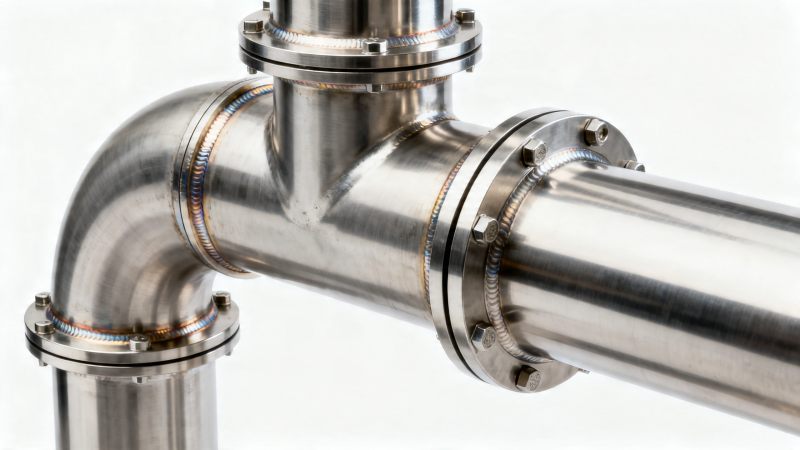
Stainless steel pipe is most suitable when the service environment can rapidly shorten the life of ordinary steel. Typical examples include coastal facilities, chemical plants, food processing lines, water treatment systems, pharmaceutical equipment, and architectural applications exposed to rain, humidity, or aggressive cleaning chemicals. In these settings, corrosion resistance is not a premium feature; it is a basic operating requirement.
In many industrial systems, the choice becomes clear when chloride exposure, moisture cycles, or sanitary cleaning are involved. If a pipeline will face repeated washdowns, temperatures above 100°C, or continuous contact with mildly corrosive media, stainless steel pipe often reduces total maintenance events over a 10–20 year service window. This is especially relevant in facilities where downtime costs are higher than the initial material premium.
Another strong use case is regulated or specification-driven procurement. Many projects call for ASTM standard steel pipe, EN-compliant material, or clearly documented chemistry and mechanical properties. Stainless steel grades such as 304 and 316 are commonly selected when traceability, surface quality, and long-term cleanliness are part of the project criteria.
Typical operating conditions that justify stainless steel
- Corrosive or humid environments where painted carbon steel would need frequent repair within 2–5 years.
- High-purity or sanitary systems requiring easy cleaning, smooth internal surfaces, and low contamination risk.
- Outdoor infrastructure in coastal or industrial zones with salt spray, airborne pollutants, or fluctuating temperatures.
- Pressure systems where stable wall integrity over a long lifecycle is more important than the lowest upfront cost.
- Projects specifying international standards such as ASTM, EN, JIS, or GB for quality control and export acceptance.
The table below shows where stainless steel pipe is usually favored over general-purpose alternatives.
The key conclusion is simple: stainless steel pipe is best used where corrosion risk, hygiene, or replacement cost will outweigh the initial price difference. In low-corrosion, short-life, or easily maintainable systems, other materials may remain the more economical option.
How to Compare Stainless Steel Pipe With Carbon Steel Alternatives
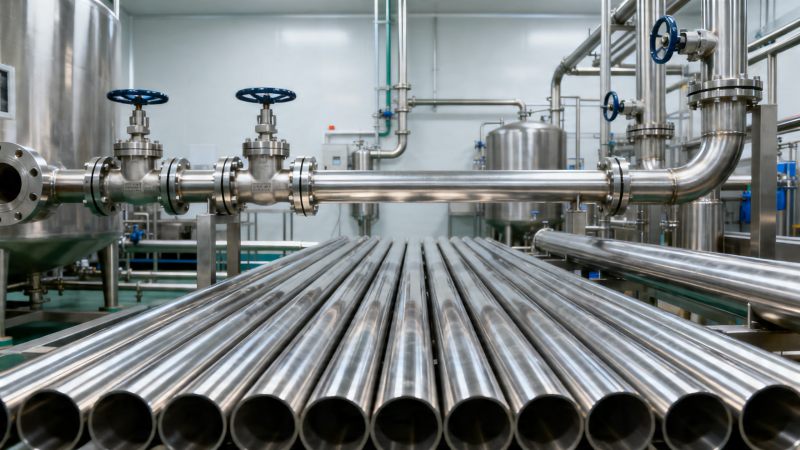
A frequent sourcing question is whether stainless steel pipe is necessary when carbon steel pipe is widely available and lower in initial cost. The answer depends on operating media, external environment, coating strategy, and maintenance access. In dry indoor installations with controlled conditions, carbon steel may perform well for years. In contrast, wet, chemically exposed, or hygienic systems often reveal the long-term advantage of stainless steel much earlier.
For example, carbon steel pipe for oil and gas remains common in transmission and structural support systems because it offers strength, availability, and cost efficiency. However, when the service environment includes corrosive condensate, marine exposure, or strict cleanliness requirements, the total system cost can rise through coating work, corrosion monitoring, and periodic replacement. Stainless steel pipe can reduce those recurring interventions.
Technical assessment should also consider lifecycle intervals. A lower-priced material that requires inspection every 6–12 months, recoating every few years, or unplanned replacement during peak production can become more expensive than a stainless option over a 15-year period. Decision-makers should therefore compare full ownership cost rather than invoice price alone.
Key comparison factors
- Corrosion exposure: internal media, humidity, chlorides, and chemical cleaning agents.
- Service life target: temporary use, 5-year use, or 20-year infrastructure planning.
- Maintenance access: easy-access utility room versus difficult offshore or buried installation.
- Regulatory and hygiene needs: whether the application requires clean surfaces or documented material compliance.
- Budget structure: whether the buyer is optimizing upfront CAPEX or long-term operating cost.
The following table gives a practical side-by-side view for buyers and project managers.
This comparison shows why stainless steel pipe is not a universal replacement, but a strategic material choice. It becomes especially attractive when failure risk, contamination, or hard-to-access maintenance would create operational loss beyond the saving on initial purchase.
Selection Criteria: Grade, Standard, Pressure, and Fabrication
Choosing the right stainless steel pipe starts with four technical checkpoints: grade, size and wall thickness, manufacturing standard, and fabrication method. For many commercial and industrial systems, 304 stainless steel is chosen for general corrosion resistance and broad availability. Where chlorides, seawater influence, or stronger chemical exposure exist, 316 is often more suitable despite a higher price point.
Buyers should also verify whether the project needs seamless pipe, welded pipe, or a specific inspection route. Pressure lines, heat transfer systems, and critical process applications may have stricter requirements on dimensional tolerance, hydrostatic testing, or non-destructive examination. A mismatch at this stage can delay approval, trigger rework, or increase site welding complexity.
Standards matter as much as chemistry. ASTM standard steel pipe is often requested in export projects because it helps align engineering documents, third-party inspection, and downstream acceptance. In multinational procurement, it is also common to cross-check EN, JIS, or GB requirements to ensure the ordered pipe fits both design and import expectations.
A practical 4-step selection approach
1. Define the service environment
Record fluid type, external humidity, chloride presence, cleaning method, and operating temperature. Even a temperature range such as 20°C to 120°C can affect material choice when cleaning cycles are frequent.
2. Confirm pressure and size requirements
Check nominal diameter, wall schedule, and joint method. A pipe that fits the corrosion profile but fails pressure or welding requirements will not reduce overall project risk.
3. Match the correct standard
Determine whether the project specification names ASTM, EN, JIS, or GB standards. This step is critical for approval packages, mill test certificates, and third-party inspection alignment.
4. Review supply and fabrication capability
Lead time can vary from 2–4 weeks for common sizes to 6–10 weeks for special dimensions or heavy-wall production. Early confirmation helps project managers avoid schedule compression later.
In broader steel procurement, pipe is not always the only corrosion-sensitive component. For roofing, cladding, or heat-reflective enclosure systems used around industrial and commercial facilities, buyers may also compare coated sheet materials. One relevant option is PPGL Steel Sheet, a pre-painted galvalume steel product made from aluminum-zinc steel with 55% aluminum, 43.4% zinc, and 1.6% silicon. With thicknesses from 0.2mm to 1.2mm, widths from 600mm to 1250mm, and a service life of more than 25 years under suitable conditions, it is often selected for roofing, wall cladding, warehouses, factories, schools, and hospitals where corrosion resistance, thermal reflectivity, and installation efficiency are all important.
This kind of inserted comparison is useful because many projects combine stainless steel piping with structural steel frames, coated sheets, and fabricated sections. A supplier with experience in angle steel, channels, beams, cold formed profiles, and customized steel components can help coordinate standards, lead times, and documentation across multiple material categories, reducing sourcing fragmentation for international buyers.
Procurement Risks, Quality Checks, and Delivery Planning
For purchasers and quality teams, the biggest stainless steel pipe risks usually come from grade substitution, incomplete test documents, inconsistent dimensions, and unclear surface conditions. A pipe may look acceptable on arrival but still fail chemical composition review, welding performance, or corrosion expectations if the supply chain controls are weak. That is why procurement should combine technical review with manufacturing verification.
A reliable sourcing process typically includes 5 checkpoints: confirming the exact grade, checking the applicable standard, reviewing dimensional tolerance, verifying mill test certificates, and defining inspection scope before shipment. For larger projects, especially export orders or OEM production, third-party inspection before dispatch can reduce disputes over size, marking, or document completeness.
Delivery planning also matters. Common stainless steel pipe items may move on shorter production cycles, but customized lengths, special polishing, heavy-wall sections, or mixed-container orders can extend lead times. Procurement teams should allow time not only for production but also for packaging, port handling, customs review, and inland delivery. In many cross-border shipments, a realistic schedule is 3–8 weeks depending on specification complexity and destination region.
Quality control checklist before purchase approval
- Verify grade and standard on quotation, contract, and mill certificate are identical.
- Check outer diameter, wall thickness, and length tolerance against the engineering drawing.
- Confirm whether the pipe is seamless or welded and whether that matches the design intent.
- Review required testing such as hydro test, PMI, or dimensional inspection records.
- Define packaging method to prevent surface damage during sea freight or storage.
The table below summarizes practical procurement control points for stainless steel pipe orders.
Strong quality control does more than protect compliance. It helps finance, project management, and operations teams avoid hidden costs such as delayed installation crews, material rejection, and urgent replacement purchases. For B2B buyers, that risk reduction is often as important as the pipe price itself.
Common Mistakes and Practical Buying Advice
One common mistake is choosing stainless steel pipe simply by reputation rather than by service conditions. Not every application needs a premium grade, and not every stainless grade suits chloride-rich or high-temperature systems. Over-specifying can waste budget; under-specifying can lead to corrosion, contamination, or early failure. The right answer comes from matching material properties to actual operating demands.
Another mistake is ignoring the complete steel package around the pipe. In many projects, stainless pipe interfaces with supports, brackets, channels, beams, or cold formed components. If these related steel products are sourced separately without coordinated standards and delivery planning, site teams may face compatibility issues, document gaps, or delayed installation. Integrated sourcing often improves control over schedule and technical consistency.
For importers, distributors, and engineering procurement teams, supplier capability should be reviewed in terms of production stability, quality documentation, export experience, and responsiveness to customized requirements. A manufacturer serving North America, Europe, the Middle East, and Southeast Asia should be able to work with ASTM, EN, JIS, and GB references, while also supporting OEM or project-based fabrication needs within realistic lead-time windows.
FAQ
How do I know if stainless steel pipe is necessary for my project?
If the system involves moisture, chemical exposure, frequent cleaning, hygiene control, or a design life above 10 years, stainless steel pipe should be evaluated early. The more expensive the downtime or the harder the maintenance access, the more likely stainless steel will offer better lifecycle value.
Is stainless steel pipe always better than carbon steel pipe for oil and gas?
No. Carbon steel pipe remains practical in many oil and gas applications because of strength and cost efficiency. Stainless steel becomes more attractive when corrosion exposure, fluid chemistry, marine conditions, or maintenance constraints increase the long-term operating risk.
What should buyers check first in a quotation?
Start with 4 items: grade, standard, size, and testing scope. If any of these are unclear, pricing comparisons become unreliable because two quotations may not be offering the same technical product.
What is a reasonable delivery expectation?
For standard items, production may take 2–4 weeks. Customized sizes, special finishes, mixed specifications, or export inspection can extend the schedule to 6–8 weeks or more. Always confirm the full timeline, including packaging and shipping.
When to use stainless steel pipe comes down to operating reality: corrosion level, cleanliness needs, pressure conditions, maintenance access, and lifecycle cost. It is the right choice in many industrial, architectural, and regulated applications, but it delivers the best value only when selected with clear technical and procurement discipline.
For buyers seeking a dependable steel partner, Hongteng Fengda supports global projects with structural steel manufacturing, export experience, customized solutions, and quality control aligned with major international standards. Whether you need stainless-related selection support alongside angle steel, channel steel, steel beams, or cold formed steel profiles, the focus should be on fit-for-purpose supply, stable delivery, and reduced sourcing risk.
If you are comparing materials for a current project, contact us to discuss specifications, sourcing strategy, or customized steel solutions. You can also consult us for product details, standard matching, and integrated procurement support for construction, industrial, and manufacturing applications.
Please give us a message


Please enter what you want to find