What is angle steel used for in modern construction and industry? From frames, supports, and machinery bases to OEM custom steel profiles, angle steel plays a vital role in strength and stability. This guide explains what is angle steel, where hot dip galvanized angle steel performs best, and how structural steel cutting and drilling help meet project, quality, and procurement requirements.
What does angle steel do in real projects?
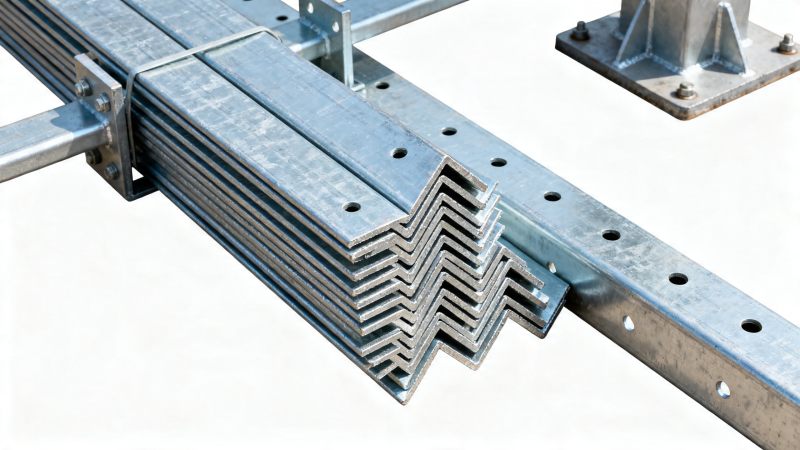
Angle steel is an L-shaped structural section designed to provide support, load transfer, edge reinforcement, and connection strength in steel structures. In practical use, it is valued not because it is complex, but because it solves many common engineering problems with a simple profile. Builders, fabricators, and buyers often choose angle steel when they need a balance between strength, processing convenience, and cost control.
In construction, angle steel is widely used for brackets, roof trusses, platform frames, tower components, stair supports, shelving systems, and equipment foundations. In industrial manufacturing, it appears in machine guards, support legs, conveyors, transmission frames, and welded assemblies. For many projects, the section can be supplied in standard lengths such as 6 m or 12 m, then cut, drilled, or punched to fit actual installation points.
For technical evaluators, the main question is not only what angle steel is used for, but whether equal angle or unequal angle is more suitable, whether hot rolled or cold formed supply is preferred, and whether galvanizing is necessary for outdoor exposure. For procurement teams, the decision usually also includes standard compliance, coating condition, quantity range, and lead time, often within a 2–4 week purchasing window for routine orders.
Hongteng Fengda focuses on structural steel manufacturing and export from China, supporting global buyers who need standard sections and OEM customization. This matters when a project requires structural steel cutting and drilling, consistent dimensional tolerance, and documentation aligned with ASTM, EN, JIS, or GB. Reliable supply is especially important for project managers trying to avoid rework, delays, or mismatch between shop drawings and delivered steel.
Why angle steel remains a practical structural choice
- It offers efficient edge and corner strength for frames, supports, and connection points.
- It is easier to cut, drill, weld, and bolt than many heavier sections in small-to-medium structural assemblies.
- It works well in indoor and outdoor environments when the correct finish, such as black steel or hot dip galvanized angle steel, is selected.
- It supports both low-volume custom fabrication and repeat orders for distributors, contractors, and OEM users.
Which tasks does it solve best?
Angle steel performs best where a project needs localized stiffness, mounting convenience, or a compact member shape. It is especially common in secondary structural systems rather than major long-span primary beams. In other words, it is often the practical answer for support details that are critical to stability but do not require the larger section depth of I-beams or channels.
That is why angle steel is frequently specified in plant maintenance, warehouse fit-out, agricultural structures, transportation frames, and modular steel fabrication. For users and installers, this profile is familiar, versatile, and easy to adapt on site when managed within approved fabrication tolerances and design requirements.
Which angle steel applications are most common across industries?
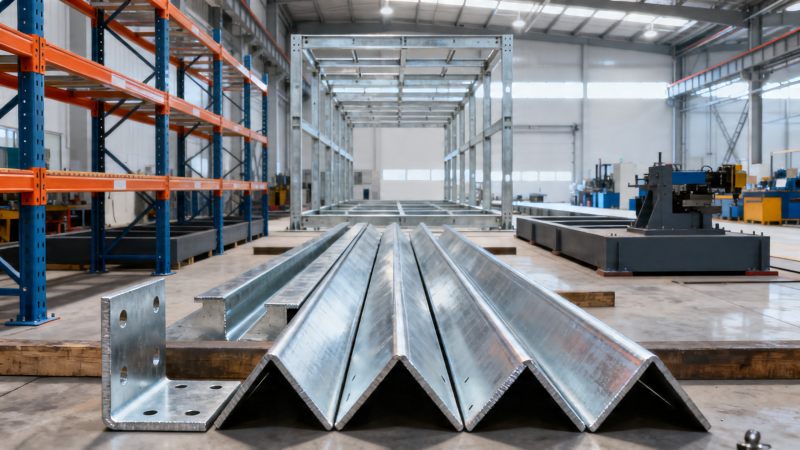
The use of angle steel changes by environment, load pattern, corrosion exposure, and fabrication method. A warehouse rack brace does not require the same surface treatment as a coastal platform support. A machine base frame may prioritize drilling accuracy and weldability, while a transmission accessory support may require corrosion protection for 10–20 years of service exposure depending on maintenance conditions.
For users researching what angle steel is used for, the most important distinction is between structural support use and fabricated component use. Structural support use includes bracing, framing, and reinforcement. Fabricated component use includes custom brackets, base plates with welded angle sections, transport supports, and modular assemblies produced from pre-cut lengths. This is where OEM capability becomes commercially valuable.
A related point for buyers is that many projects involve mixed-material procurement. For example, a fabrication shop may source carbon steel angle sections for frames while also purchasing corrosion-resistant stainless products for food equipment or electrical applications. In that context, a product such as 430 Stainless Steel Plate may be inserted into the procurement mix for trim, covers, formed components, conveyor-related parts, or equipment panels where ferritic stainless properties are suitable.
The same mixed sourcing logic matters in export projects. One package may include angle steel, channels, beams, and stainless plate products with different specification ranges. For example, 430 grade stainless plate can be supplied in thicknesses from 0.3 mm to 200 mm, with common finishes such as BA, 2B, NO.1, NO.4, HL, and 8K, and is often chosen for applications including kitchen supplies, automotive trim, electrical components, and some chemical or food-related equipment where its formability and nitric acid resistance are relevant.
Typical angle steel use by scenario
The table below helps buyers and engineers compare common angle steel applications, the usual processing needs, and the main selection focus. This is useful when a project team must review 3 key issues at once: structural suitability, corrosion protection, and procurement efficiency.
This comparison shows why angle steel remains common across both permanent structures and fabricated accessories. It also explains why processing services matter. A standard section becomes much more valuable when it arrives ready for fit-up, with hole spacing, length tolerance, and coating condition aligned to the actual installation sequence.
How hot dip galvanized angle steel changes the use case
When galvanizing is worth the extra step
Hot dip galvanized angle steel is commonly selected for outdoor, humid, or mildly corrosive service where painted black steel would require more maintenance. Typical examples include fence structures, rooftop support frames, agricultural sheds, cable trays, utility brackets, and light infrastructure components. For long-cycle projects, the coating can reduce maintenance frequency and improve life-cycle predictability, even if the initial purchase cost is higher.
For quality teams, inspection usually focuses on visible coating continuity, surface defects, dimensional distortion after dipping, and compatibility with subsequent drilling or welding operations. This is especially important when fabricated components must match predesigned connection holes or when the delivered steel must be installed within a short site schedule such as 7–15 days after arrival.
How should buyers compare angle steel, channel steel, and other options?
Many sourcing mistakes happen because teams ask only for a price per ton and not for a fit-for-purpose section. Angle steel is excellent for many tasks, but it is not always the best option. Channel steel may perform better for some directional load paths. Steel beams are more suitable for heavier primary load-bearing spans. Cold formed profiles may be preferred for lighter assemblies or high-volume shaped parts. Good procurement starts with function, then moves to material, processing, and delivery.
For business evaluators and financial approvers, the right question is: which section minimizes total project cost, not simply unit material cost? A lower-priced section may create extra welding, more support points, or longer installation time. A more suitable section may reduce fabrication hours, lower assembly risk, and improve site efficiency. Over a 3-stage project cycle of procurement, fabrication, and installation, these differences are often more important than the base steel price alone.
Hongteng Fengda supports buyers with structural steel categories that can be compared and supplied together, including angle steel, channel steel, steel beams, cold formed profiles, and custom components. This helps distributors, contractors, and OEM manufacturers consolidate sourcing and reduce coordination gaps across drawing review, production planning, and shipment scheduling.
The table below gives a practical comparison for users who need to decide whether angle steel is the right section or whether another profile should be considered. It is especially useful when a project includes 5 common decision factors: load path, assembly method, corrosion exposure, fabrication complexity, and cost control.
This table highlights an important principle: angle steel is often the most practical section for supports and fabricated details, but not automatically the best section for every structural demand. A professional supplier should be able to review drawings, suggest alternatives when necessary, and align the final recommendation with technical, commercial, and schedule objectives.
A simple selection checklist
- Confirm whether the angle steel is for primary load transfer, secondary support, or fabricated accessories.
- Check whether black steel, painted steel, or hot dip galvanized angle steel is required for the service environment.
- Review whether equal angle or unequal angle provides better connection geometry and load distribution.
- Decide whether supply should be mill length only or include structural steel cutting and drilling.
- Match the order plan to project volume: trial batch, medium batch, or ongoing scheduled supply.
What should procurement, QC, and project teams check before ordering?
When buyers ask what angle steel is used for, they often begin with application. But before placing an order, the more important issue is whether the supplied steel will pass design review, fabrication, site installation, and quality inspection without delay. Procurement teams should confirm at least 6 checkpoints: grade or standard, section dimensions, length, processing details, surface condition, and required documents.
For technical reviewers, dimensional matching is critical. A minor mismatch in hole position or cut length can create assembly problems on site, especially in bolted systems or prefabricated modules. For project managers, the practical question is whether the supplier can control output consistency across repeated batches. For distributors, the concern is whether the product range and specification coverage support multiple customer needs without constant re-sourcing.
Hongteng Fengda supports these decision points through standard supply and customization, helping buyers coordinate product selection, processing scope, and export delivery. Because the company serves markets across North America, Europe, the Middle East, and Southeast Asia, the focus is on stable production capacity, consistent quality control, and dependable lead times rather than one-off transactional supply.
The following table summarizes a practical procurement review method. It is useful for information researchers, purchasers, QC personnel, and finance approvers who need a shared basis for comparing offers within a normal sourcing cycle of 7 days for quotation review and 2–4 weeks for routine production, depending on specification and processing requirements.
Using a structured review like this reduces hidden costs. It helps prevent re-fabrication, delayed installation, urgent local replacement, and dispute over what was originally specified. In B2B steel sourcing, those secondary losses can be more expensive than the raw material difference between two quotations.
Common procurement mistakes to avoid
Mistakes that affect budget and schedule
- Ordering by section name only without confirming standard, size range, and tolerance expectations.
- Assuming all outdoor angle steel can use the same coating approach regardless of humidity, rainfall, or industrial exposure.
- Ignoring fabrication services, then paying extra for local cutting and drilling under time pressure.
- Comparing price without accounting for packaging, export handling, batch consistency, and lead time reliability.
FAQ: what do buyers and users usually ask about angle steel?
FAQ content helps connect research intent with action. The questions below reflect what users, engineers, project teams, and sourcing managers often ask before confirming an angle steel order or evaluating whether a different structural profile would be better.
Is angle steel strong enough for structural use?
Yes, angle steel is widely used in structural applications, especially for secondary members, bracing, supports, and reinforcement details. However, “strong enough” depends on section size, steel grade, connection design, and load condition. It should always be selected against the actual structural requirement rather than by appearance or habit. For heavier primary spans, channel steel or beams may be more appropriate.
When should I choose hot dip galvanized angle steel?
Choose hot dip galvanized angle steel when the steel will be used outdoors, in humid conditions, or where maintenance access is limited. Common examples include utility frames, external platforms, agricultural structures, and support brackets. If the environment is indoor and dry, black steel or painted steel may be sufficient, depending on project life and maintenance expectations.
Can angle steel be supplied with cutting and drilling?
Yes. Structural steel cutting and drilling are common value-added services, especially for OEM fabrication, modular construction, and project-based assemblies. These services reduce site work, improve hole alignment, and support faster installation. For many buyers, pre-processing is a practical way to lower total labor cost and reduce the risk of installation errors during the final 1–2 weeks before commissioning.
What documents should I request from a supplier?
At minimum, request the applicable specification confirmation, dimensional details, packing list, and inspection-related records relevant to the order. If the project has compliance requirements, confirm in advance whether the supply must align with ASTM, EN, JIS, or GB. For export projects, clear communication on marking, bundling, and shipment schedule is also important to receiving teams and distributors.
Can one supplier support mixed steel product sourcing?
In many cases, yes. This is often the most efficient approach for contractors, fabricators, and distributors managing combined demand for angle steel, channels, beams, cold formed profiles, and stainless materials. It can simplify communication, reduce sourcing fragmentation, and improve schedule coordination across multiple product lines, including items such as 430 Stainless Steel Plate when the project includes stainless applications alongside carbon structural steel.
Why choose a structural steel partner that can support specification, processing, and delivery?
If your team is evaluating what angle steel is used for, the next step is usually more specific: which size, which finish, which processing method, and which supplier can deliver with fewer risks. That is where a capable manufacturing and export partner becomes more valuable than a simple trading source. You need support not only on supply, but also on how the material fits drawings, standards, lead time, and site execution.
Hongteng Fengda provides structural steel products and custom solutions for global construction, industrial, and manufacturing projects. The product range includes angle steel, channel steel, steel beams, cold formed steel profiles, and custom structural components. With modern manufacturing facilities and strict quality control, the company supports buyers looking for stable production, specification consistency, and dependable export coordination across different markets and order volumes.
For procurement teams, this means clearer communication on section selection, processing scope, and delivery planning. For engineers and QC staff, it means better alignment on standards, dimensions, and inspection points. For project managers, it means fewer handoff gaps between drawing review, fabrication, packing, and shipment. These are practical benefits that help reduce sourcing risk and keep projects moving within planned cost and time targets.
If you are comparing angle steel options now, you can contact us to discuss section size confirmation, equal or unequal angle selection, hot dip galvanized angle steel requirements, structural steel cutting and drilling, standard compliance, sample support, quotation details, and realistic delivery schedules. This is the fastest way to turn general research into a workable sourcing plan for your project or distribution business.
Please give us a message


Please enter what you want to find