Choosing the right rebar for beam is critical to structural safety, yet many site failures still come from avoidable selection mistakes. From confusing beam reinforcement with column reinforcement to overlooking load paths, beam size, span, and support conditions, these errors can reduce strength, increase cost, and create compliance risks. For contractors, engineers, buyers, and project managers, the key point is simple: beam rebar should never be selected by habit, visual similarity, or past project experience alone. It must match the actual structural demand, detailing requirement, and code standard of the job.
Why do rebar for beam selection mistakes still happen on site?
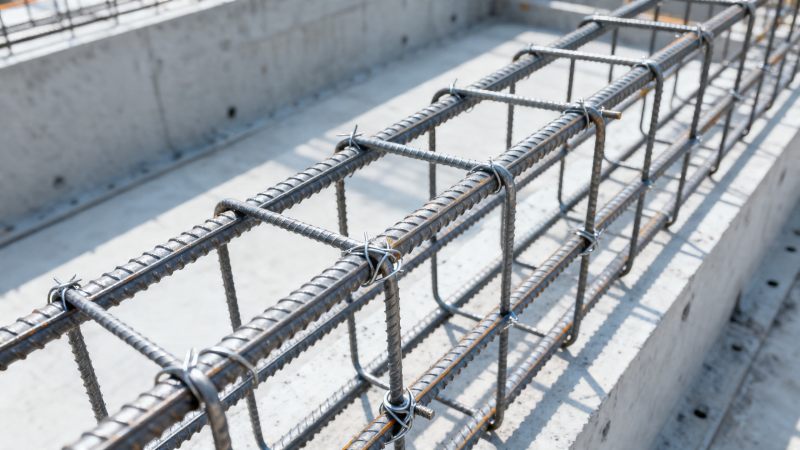
Most site mistakes are not caused by a total lack of knowledge. They usually happen because decisions are made too quickly under schedule pressure, material substitutions are not fully reviewed, or the team assumes “similar size means similar performance.” In practice, beam reinforcement is highly sensitive to span, load type, bending moment, shear demand, support condition, concrete section, and connection details.
Another common issue is that different teams focus on different priorities. Site crews may care about ease of installation, procurement teams may focus on lead time and price, while engineers focus on design intent and compliance. If these priorities are not aligned, the wrong rebar grade, diameter, spacing, or detailing arrangement may be approved or installed.
For business decision-makers, these mistakes matter because they can lead to rework, inspection failure, project delay, material waste, and long-term liability. For technical teams, the real concern is whether the selected reinforcement actually matches the beam’s function in the structure rather than simply fitting inside the formwork.
What are the most common rebar for beam selection mistakes seen on site?
The most frequent problems include the following:
- Using column logic for beam reinforcement: Rebar for column and rebar for beam do not serve the same stress pattern. Columns mainly resist axial load and bending interaction, while beams primarily resist flexure and shear. Treating them as interchangeable is a serious error.
- Choosing bar size based only on availability: Site teams sometimes use whatever diameter is in stock to avoid procurement delay. This can affect anchorage, spacing, cover, crack control, and placement quality.
- Ignoring support conditions: A simply supported beam, continuous beam, cantilever beam, and restrained beam require different reinforcement logic, especially at top and bottom zones.
- Overlooking shear reinforcement requirements: Some teams focus heavily on main longitudinal bars and underestimate stirrup spacing, hook details, or high-shear zones near supports.
- Insufficient attention to lap splice and development length: Even when the bar diameter and grade are correct, poor splicing or inadequate anchorage can undermine the design.
- Confusing grade equivalency across standards: On international projects, ASTM, EN, JIS, and GB materials may be compared incorrectly. Similar labels do not always mean identical mechanical properties.
- Not checking congestion inside the beam: Too many large bars can make concrete placement difficult, causing voids, honeycombing, and poor bond performance.
These mistakes are especially common on fast-track projects, mixed-standard procurement environments, and sites where shop drawings, design calculations, and purchasing specifications are not reviewed together.
How can engineers, contractors, and buyers judge beam reinforcement more reliably?
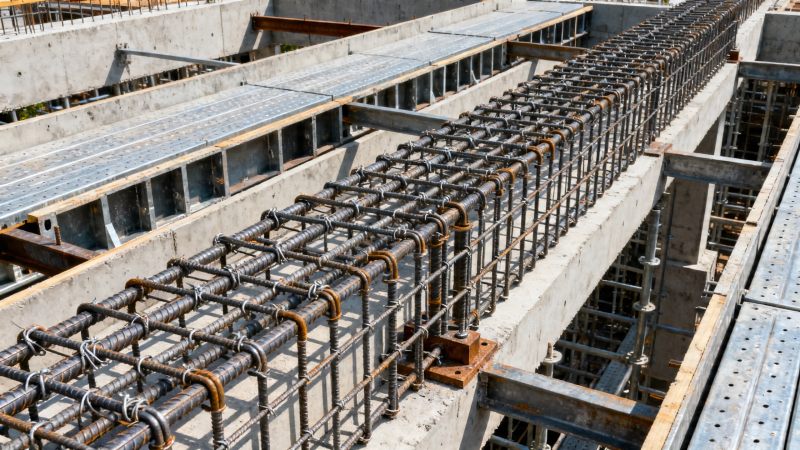
A practical review process is often more valuable than broad theoretical discussion. Before approving any rebar for beam selection, teams should verify these points:
- Confirm the beam function: Is it a primary beam, secondary beam, transfer beam, ring beam, or cantilever beam? The role of the member changes the reinforcement demand.
- Check actual loading conditions: Dead load, live load, equipment load, wall load, dynamic load, and temporary construction load should all be reviewed.
- Review span and support details: The same beam section may require different top and bottom reinforcement depending on continuity and restraint.
- Verify rebar grade and code compatibility: Do not rely on naming similarity alone. Mechanical properties, ductility, weldability, and code acceptance must match project requirements.
- Assess spacing and constructability: Reinforcement should be installable without causing excessive congestion or poor concrete compaction.
- Check detailing zones carefully: Midspan, support region, lap zones, openings, beam-column joints, and hanger bar locations often control performance.
- Document substitutions formally: Any material change should be approved by the responsible engineer, not decided informally at site level.
For procurement and commercial teams, reliable reinforcement selection is not just a technical issue. It affects cost predictability, installation efficiency, inspection success rate, and supplier accountability. A lower-priced substitute is not economical if it increases cutting waste, rework, or compliance risk.
On many industrial and construction sites, safe access platforms, equipment floors, and work areas also require durable steel products beyond reinforcement itself. In these cases, products such as A36 Patterned steel plate may be used for anti-skid flooring, machinery platforms, transportation, and structural support areas. With thickness options from 2-8mm, widths from 600mm-1800mm, and compliance with standards such as ASTM, JIS, DIN, and ISO, this type of patterned plate can support practical site safety and fabrication needs when selected according to the application.
What warning signs suggest the selected beam rebar may be wrong?
Even before structural failure, there are signs that beam reinforcement selection may be unsuitable:
- Bars are difficult to place within the beam width or around stirrups
- Concrete cannot flow properly around congested reinforcement
- Frequent field bending or cutting is needed to “make it fit”
- Top reinforcement at supports appears inconsistent with the structural system
- Stirrup spacing is widened on site without formal approval
- Rebar markings or mill certificates do not clearly match specification
- Shop drawings and delivered materials use different grades or diameters
- Inspection teams repeatedly question anchorage, cover, or splice length
When these signs appear, the right response is not to continue and hope for acceptance. The team should stop, compare design documents with actual material and placement conditions, and involve engineering review immediately.
How can companies reduce rebar selection risk across future projects?
The most effective approach is to improve coordination between design, purchasing, quality control, and site execution. Companies that consistently avoid beam reinforcement mistakes usually follow several habits:
- They standardize material review procedures before ordering
- They require clear equivalency verification for cross-standard steel sourcing
- They involve technical staff in substitution decisions
- They check constructability before mass fabrication or shipment
- They maintain traceable quality documents, test reports, and mill certificates
- They work with suppliers that understand export standards and project-specific requirements
For international buyers and project teams, supplier capability also matters. A professional structural steel manufacturer with stable production, quality control, and experience across ASTM, EN, JIS, and GB standards can help reduce sourcing errors before materials reach the jobsite. This is particularly important when projects involve customized structural components, mixed specification environments, or strict approval processes.
In short, beam reinforcement should be selected as part of a complete structural and procurement decision, not as an isolated material choice. When technical review, compliance verification, and supply reliability are aligned, projects are more likely to stay safe, efficient, and on budget.
Rebar for beam selection mistakes seen on site are usually preventable. The biggest causes are assumption-based substitution, poor coordination, misunderstanding of beam behavior, and weak review of code and detailing requirements. For engineers, contractors, buyers, and managers, the best path is to verify beam function, load path, support condition, grade compatibility, and constructability before installation begins. That approach reduces structural risk, avoids costly rework, and leads to more dependable project outcomes.
Please give us a message


Please enter what you want to find