Choosing the right steel product starts with understanding the application. A seamless steel tube is often preferred when strength, pressure resistance, and reliability matter more than standard welded options like welded stainless tubing or carbon pipe. From fluid pipe systems to industrial API pipe projects, knowing when seamless construction delivers better performance can help buyers, engineers, and project managers make smarter, safer, and more cost-effective decisions.
What makes a seamless steel tube the better choice?
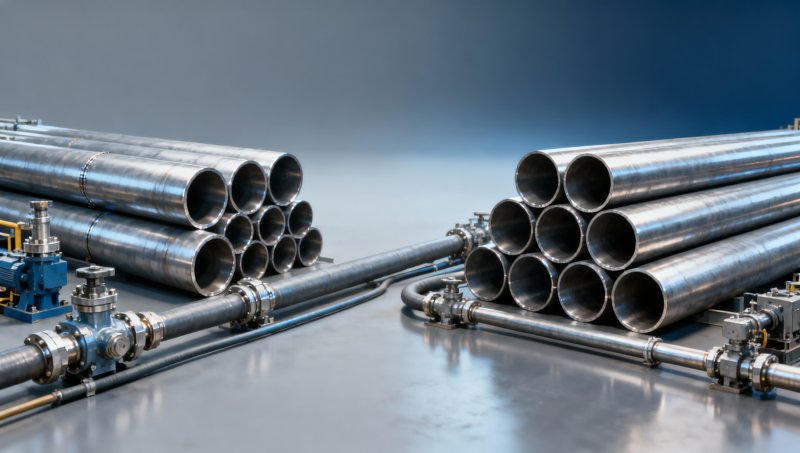
A seamless steel tube is manufactured without a longitudinal weld seam, which gives it a more uniform structure around the full circumference. In practical terms, this matters when the tube must carry pressure, tolerate cyclic loading, or work in environments where a welded joint could become the first weak point. For steel buyers and technical reviewers, the choice is rarely about theory alone; it is about failure risk, service life, and inspection confidence.
In the steel industry, seamless tubes are often selected for 3 broad reasons: higher pressure integrity, more stable mechanical performance, and better suitability for demanding fabrication or service conditions. This does not mean welded pipe is unsuitable in general. It means the application should decide the product. If the project includes high-pressure fluid transport, boiler systems, hydraulic lines, oil and gas service, or mechanical components under stress, seamless steel tube usually deserves priority evaluation.
For procurement teams, this decision also affects total project cost over 2 stages: initial purchase and life-cycle operation. A lower unit price can lose value quickly if the wrong tube creates rework, downtime, stricter maintenance intervals, or quality claims. That is why project managers, QC personnel, and financial approvers often review both specification compliance and usage risk before approving a final steel tube grade and manufacturing method.
As a structural steel manufacturer and exporter from China, Hongteng Fengda works with global buyers who need not only compliant steel products, but also dependable communication, stable production capacity, and realistic delivery planning. In many projects, tube selection is part of a larger sourcing package that may also include structural sections, fabricated steel components, or custom steel solutions aligned with ASTM, EN, JIS, and GB requirements.
How seamless construction changes real-world performance
When a tube has no weld seam, stress distribution is generally more consistent, especially under internal pressure. This is valuable in applications with pressure cycles, temperature changes, or vibration. In systems that run continuously for 8–24 hours per day, localized weakness becomes a practical maintenance concern, not just a design detail. That is one reason seamless tube is widely used in pressure piping, heat exchange systems, mechanical processing, and energy-related projects.
Another advantage appears during secondary processing. Bending, threading, machining, and forming can become more predictable when the wall structure is uniform. For operators and fabricators, this can reduce inconsistency during cutting or joining. For distributors and resellers, it can also simplify recommendation logic: if the customer expects demanding service conditions, seamless steel tube is often the safer baseline option.
Quick signs that seamless tube should be considered first
- The working pressure is high or fluctuates frequently during operation.
- The system includes critical safety points, inspection requirements, or shutdown sensitivity.
- The tube will face mechanical loading, repeated vibration, or elevated temperatures.
- The buyer wants to reduce the probability of seam-related defects in long-term service.
Which applications usually justify seamless steel tube?
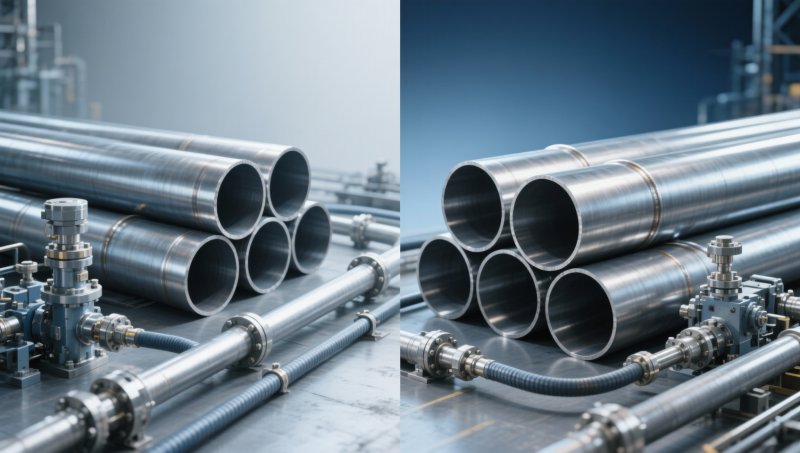
Not every project needs seamless steel tube, but several application categories consistently justify it. Pressure-bearing systems are the first group. These include fluid pipe networks, steam lines, gas transmission sections, hydraulic cylinders, and industrial process piping. In these situations, engineers often compare seamless tube with welded stainless tubing or standard carbon pipe and select the product that best balances pressure rating, corrosion environment, temperature range, and inspection expectations.
Mechanical and structural precision uses form the second group. Machinery sleeves, bearing spacers, automotive components, and heavy equipment parts often require dependable wall thickness behavior and machining reliability. Here, a seamless steel tube may reduce downstream uncertainty during turning, drilling, or precision cutting. Even if the tube is not used as pressure pipe, its manufacturing route can still improve consistency where dimensional tolerance and mechanical behavior are critical.
The third group is harsh-service industrial use. Oil and gas service, API pipe-related projects, chemical plants, boilers, and high-temperature processing lines often involve combinations of pressure, heat, corrosion allowance, and safety control. These conditions raise the cost of failure. In such environments, a lower-cost welded option may still be technically acceptable in some cases, but the decision should be confirmed through service conditions, code requirements, and inspection level rather than price alone.
Project teams also need to think beyond the tube itself. A plant expansion, industrial building line, or manufacturing project may combine pressure piping with structural framing, support members, channels, beams, and custom steel components. Working with a supplier that understands both tube applications and broader steel sourcing can shorten communication loops by 1–2 procurement cycles and reduce mismatch between installation design and material delivery.
Typical scenarios where buyers move from welded to seamless
The table below helps procurement and engineering teams identify when seamless steel tube becomes a stronger candidate than welded alternatives. The goal is not to eliminate welded products, but to match the manufacturing method to the operating requirement.
The key takeaway is simple: seamless steel tube earns its value when operating conditions increase the cost of failure. For low-pressure, low-risk, or non-critical routing, welded products may remain economical. For critical process sections, the margin of safety often matters more than the initial difference in material cost.
A mid-project material note for stainless applications
Some buyers reviewing tube applications are also sourcing stainless flat products for related fabrication work, such as covers, panels, housings, kitchen systems, or transport components. In those mixed-material projects, it can be practical to align sourcing across product categories. One relevant option is 430 Stainless Steel Coil, which is used in tabletops, countertops, kitchenware, outdoor decoration engineering, automotive parts, medical instruments, and conveyor-related components.
For teams comparing stainless material choices, this coil is available in common finishes such as BA, 2B, NO.1, NO.4, 4K, HL, and 8K, with thickness from 2.5mm–10.0mm and width from 610mm–2000mm. Typical reference properties include tensile strength of at least 520MPa, yield strength of at least 275MPa, and elongation around 55–60%. That makes it relevant where formability, appearance, and moderate strength need to be balanced alongside the tube and structural steel package.
This kind of insert matters in procurement because many industrial buyers do not source one steel product in isolation. A reliable exporter that supports structural sections, customized components, and adjacent stainless materials can simplify vendor management, document review, and shipment coordination across 2–4 product lines within the same project cycle.
How should buyers compare seamless tube with welded pipe?
A good comparison starts with application severity, not with assumptions. Welded pipe can be cost-effective, available in larger quantities, and fully suitable for many commercial and industrial uses. Seamless steel tube, however, tends to be favored when the project puts greater emphasis on pressure resistance, fatigue behavior, or mechanical reliability. For purchasing managers and business evaluators, the question is not “Which is always better?” but “Which option reduces total project risk under the intended service conditions?”
There are usually 5 practical comparison points: operating pressure, dimensional requirement, code compliance, fabrication route, and life-cycle consequence of failure. Financial approvers should pay particular attention to the fifth point. If replacement, shutdown, or repair would interrupt output, delay installation, or create a safety event, then paying more upfront for the right tube can be a rational commercial decision.
Lead time can also influence the final decision. Depending on size range, grade, and order quantity, buyers may see typical production and export cycles of 2–6 weeks for standard items, while custom or less common specifications may require longer planning. Experienced exporters help customers avoid specification ambiguity early, which is one of the most common sources of delay in international steel procurement.
The comparison table below is designed for engineering, purchasing, and QC teams reviewing seamless steel tube for industrial use. It can also support distributors who need a clearer explanation for end users choosing between material routes.
Comparison table for purchasing and technical review
This comparison shows why seamless steel tube is often chosen by project leaders responsible for safety, uptime, and technical acceptance. If the use case is routine and low-risk, a welded solution may be sufficient. If the use case is critical, the structural advantage of seamless construction becomes easier to justify to both engineers and budget holders.
A 4-point review before final approval
- Confirm actual working pressure, temperature range, and media type.
- Check which standard applies, such as ASTM, EN, JIS, GB, or API-related requirements.
- Review whether downstream processing includes bending, threading, machining, or heat exposure.
- Estimate the cost impact if the tube underperforms after installation.
What should procurement, QC, and project teams check before ordering?
Ordering a seamless steel tube is not only about size and price. A sound procurement process normally includes 6 key checks: specification, grade, dimensions, testing requirements, certification, and delivery condition. Missing any one of these can create confusion between supplier, inspector, and end user. In export business, that confusion often appears late, during documentation review or pre-shipment inspection, when correction is slower and more expensive.
For quality control teams, dimensional tolerance and traceability are especially important. Buyers should define outer diameter, wall thickness, length range, and acceptable tolerance in advance. They should also confirm whether the order needs mill test documentation, third-party inspection, marking requirements, or specific packaging for sea freight. These details matter just as much as the material itself because damaged identification or unclear traceability can delay site acceptance.
For project managers, timing should be broken into at least 3 stages: technical confirmation, production, and logistics. Even when standard sizes are available, cross-border shipment can add scheduling pressure through booking windows, customs documentation, and destination clearance. Early alignment on lead time can reduce handover risk during the final 7–15 days before planned installation.
For distributors and commercial evaluators, supplier capability also matters. Hongteng Fengda supports global customers with structural steel products, OEM-oriented solutions, and compliance awareness across common international standards. That broader capability is useful when a buyer needs one supplier to coordinate angle steel, channel steel, steel beams, cold formed profiles, custom components, and related steel materials under one procurement framework.
Practical procurement checklist
The table below can be used as a simple pre-order reference for seamless steel tube sourcing, especially for teams managing multi-party approval or export procurement.
Using a checklist like this can save time across technical, commercial, and logistics teams. It also helps financial reviewers understand why a quotation should not be judged only on unit price. The right seamless steel tube order is one that fits the actual service condition, project timeline, and inspection expectation at the same time.
Common mistakes that increase sourcing risk
- Treating all tubes with the same outer size as interchangeable, without checking standard and wall schedule.
- Approving material based only on quotation speed, without confirming testing or export packing details.
- Ignoring downstream operations such as machining or bending, which may change the preferred tube type.
- Leaving compliance review until after production, which can lead to delay or replacement costs.
FAQ and next steps for steel buyers
Many buyers search for seamless steel tube when they are still comparing options, preparing a quotation package, or validating engineering assumptions. The questions below address common concerns from research users, operators, technical evaluators, and commercial teams involved in steel purchasing decisions.
These answers are intended to support early-stage decision making. Final specification should still be based on actual design conditions, required standards, and project documentation. In critical service, even a small difference in wall thickness, grade, or inspection scope can change the correct purchasing choice.
For companies sourcing from overseas, the most efficient route is usually to define 4 items first: application, standard, dimensions, and quantity. Once those are clear, a qualified supplier can help refine the remaining details, including delivery condition, testing scope, packaging, and shipping schedule.
Is seamless steel tube always better than welded pipe?
No. Seamless steel tube is usually better for high-pressure, critical mechanical, or higher-risk service conditions. Welded pipe can be fully appropriate for many lower-pressure and cost-sensitive applications. The correct choice depends on operating load, compliance requirements, fabrication method, and the consequence of failure. A technical and commercial review together usually gives the most reliable answer.
What are the most important selection factors?
Start with 5 factors: service pressure, temperature, transported media, standard requirement, and downstream processing. Then review delivery timing and inspection scope. If the tube will be used in a system with strict QC, long operating hours, or difficult maintenance access, seamless construction often becomes more attractive from a life-cycle perspective.
How long does sourcing usually take?
For standard specifications, buyers often plan around 2–6 weeks for production and export preparation, depending on quantity, grade, and current mill schedule. Non-standard sizes, custom processing, or combined shipments with structural steel products may require additional coordination time. Early confirmation of specification and documents is the best way to protect the project schedule.
Why work with a supplier that also handles structural steel?
Because many industrial and construction projects involve more than one steel category. If your project includes structural sections, cold formed profiles, customized steel components, and tube-related materials, sourcing through an experienced manufacturer-exporter can reduce communication gaps, consolidate documentation, and improve shipment planning. This is especially valuable for overseas buyers managing multiple packages under one deadline.
Why choose us for your steel sourcing discussion?
Hongteng Fengda supports global buyers with structural steel manufacturing, export coordination, and customized solutions for construction, industrial, and manufacturing projects. Our experience with angle steel, channel steel, steel beams, cold formed steel profiles, and customized structural steel components helps customers solve sourcing issues across multiple material categories instead of treating each item in isolation.
If you are evaluating when to use seamless steel tube, you can contact us to discuss specification confirmation, suitable product type, common standards such as ASTM, EN, JIS, and GB, expected lead time, packaging method, OEM or custom steel support, sample feasibility, and quotation planning. This makes the conversation more useful for engineers, purchasers, QC teams, project managers, and decision makers who need practical answers before placing an order.
Share your application, size range, grade requirement, estimated quantity, and delivery destination, and we can help you review whether seamless steel tube is the right choice, whether an alternative is acceptable, and how to align the order with your broader steel procurement plan.
Please give us a message


Please enter what you want to find