Corrosion-resistant pipes are essential when your project faces moisture, chemicals, salt exposure, or high-temperature conditions that can quickly damage standard materials. For buyers, engineers, and project managers comparing options like buy stainless steel pipe, 316 stainless steel plate, or high strength steel tubing, understanding the right application helps reduce maintenance costs, improve safety, and ensure long-term performance.
In the steel industry, pipe selection is rarely just about initial price. A pipeline used in a coastal warehouse, a chemical transfer line, or a low-pressure water system can fail much earlier if the steel grade, coating, wall thickness, and service environment are not matched correctly. For procurement teams and technical evaluators, the real question is not simply whether corrosion-resistant pipes cost more, but when that extra protection delivers measurable value over 5, 10, or even 20 years of service.
For global buyers sourcing from China, corrosion resistance also affects logistics, installation frequency, maintenance shutdowns, and replacement planning. Hongteng Fengda, as a structural steel manufacturer and exporter serving construction, industrial, and manufacturing projects, supports customers who need practical selection guidance tied to standards such as ASTM, EN, JIS, and GB. The sections below explain when corrosion-resistant pipes are necessary, how to compare material options, and what purchasing teams should check before placing an order.
Why Corrosion-Resistant Pipes Matter in Steel Projects
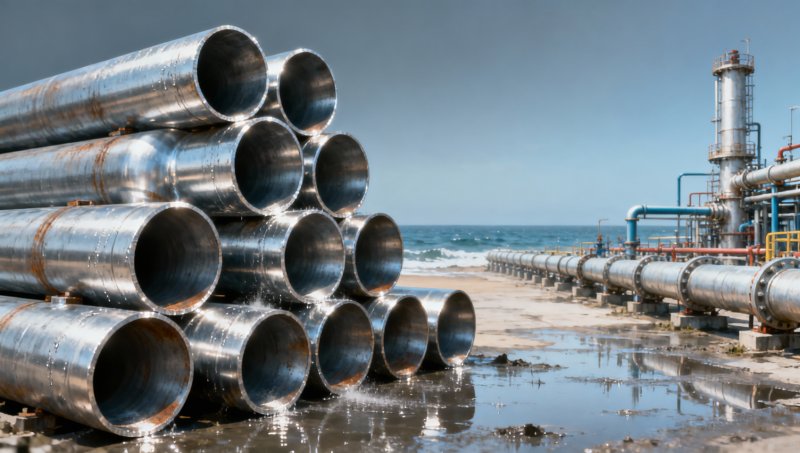
Corrosion is not only a surface issue. In steel piping systems, it can reduce wall thickness, weaken joints, contaminate transported media, and increase the risk of leakage or structural failure. In many projects, corrosion begins within the first 6 to 18 months when pipes are exposed to humidity above 60%, chlorides, acidic cleaning agents, or repeated heating and cooling cycles. This is why corrosion-resistant pipes are widely specified in industrial and infrastructure applications.
The need becomes more urgent in environments where standard carbon steel pipes face continuous wet-dry cycles. Examples include marine facilities, outdoor utility lines, agricultural operations, chemical workshops, and equipment rooms with condensation. Even a thin protective layer can delay rust formation, but severe service conditions often require galvanized, coated, or stainless steel solutions rather than untreated steel.
From a project management perspective, corrosion-resistant pipes help control total lifecycle cost. While the upfront material price may be 10% to 40% higher depending on grade and finish, maintenance intervals can often be extended from annual inspection-and-repair cycles to every 2 to 5 years for moderate environments. That difference matters in facilities where shutdowns affect labor planning, production continuity, and safety compliance.
For quality control and HSE teams, corrosion resistance is closely linked to safety performance. A low-pressure water or gas line may appear non-critical, but if corrosion develops at bends, threads, or welded sections, localized failure can still create operational hazards. In corrosive or outdoor service, the right pipe choice is part of preventive risk management, not just a material preference.
Typical Conditions That Accelerate Pipe Corrosion
- Salt-rich air in coastal regions, ports, offshore support zones, and marine logistics yards.
- Chemical contact from acids, alkalis, solvents, cleaning fluids, and process condensates.
- Outdoor installation with repeated rain, UV exposure, and temperature swings from -10°C to 45°C.
- Internal fluid exposure in water, gas, oil, or condensate pipelines where flow quality varies.
- High-humidity enclosed areas such as utility tunnels, basements, boiler rooms, and cold storage facilities.
A useful rule is to evaluate corrosion risk from both the outside and inside of the pipe. Some buyers focus only on weather exposure and overlook internal fluid chemistry. Others specify high-grade material for the pipe body but use connectors, flanges, or support components with lower corrosion resistance, creating weak points in the system. Balanced system design is usually more effective than upgrading only one component.
When to Use Corrosion-Resistant Pipes by Application Scenario
Not every project requires stainless steel or premium alloy pipe. The right choice depends on service life targets, environment severity, maintenance access, and fluid type. In many practical steel applications, galvanized or coated pipe is the most economical corrosion-resistant option, especially for general low-pressure transport and outdoor support structures. In harsher media, stainless steel or specialized alloys become more appropriate.
For construction and infrastructure, corrosion-resistant pipes are commonly used where exposure is continuous rather than occasional. Roof drainage systems, outdoor handrails, scaffold-related tubular elements, bridge utility conduits, and support frame pipes in wet foundations all benefit from protective coatings or galvanizing. If the design service life is 10 to 15 years and replacement is difficult after installation, corrosion resistance should be considered early in the design phase.
In industrial plants, selection becomes more process-specific. Water pipelines, gas lines, oil transfer lines, cooling sections, and exchanger-related piping face different risks. A general low-pressure water line in a dry indoor facility may use coated carbon steel, while a condensation cooler or chemical coking exchanger pipe may require stronger corrosion resistance because temperature cycling and chemical residues can attack the pipe surface more aggressively.
Agriculture, fishery, and food-related storage systems also deserve attention. Equipment for meat or aquatic product handling, wash-down areas, and damp storage zones often operate in environments where moisture is constant. In such cases, using corrosion-resistant pipes can extend service life, reduce contamination risk, and lower repainting or replacement frequency over multiple seasonal cycles.
Application-Based Selection Guide
The table below shows when corrosion-resistant pipes are typically recommended and what type of steel solution is commonly considered in steel-intensive projects.
The key takeaway is that material selection should reflect actual exposure severity. Over-specifying expensive material for low-risk applications may hurt budget efficiency, while under-specifying pipe in coastal or chemical environments usually creates higher lifecycle cost later.
Three Practical Triggers for Upgrading Pipe Protection
- If the pipe will be difficult to replace after installation, prioritize longer service life over lowest initial cost.
- If the project site has frequent moisture, salt spray, or chemical cleaning, standard untreated carbon steel is usually not sufficient.
- If shutdown losses are high, even a 15% to 25% material premium can be justified by reduced maintenance and lower failure risk.
How to Compare Material Options and Select the Right Pipe
Buyers often compare stainless steel, galvanized steel, and coated carbon steel as if they were interchangeable, but each option solves a different problem. Stainless steel offers strong resistance in many chemical and wet environments, but it is not always the most cost-effective choice for structural or low-pressure utility use. Galvanized steel is widely selected because it improves corrosion resistance while keeping fabrication and sourcing practical for large-volume projects.
A relevant inserted option in this category is Galv Steel Tube. This product is used across construction, light industry, automobile applications, agriculture, packaging tools, low-pressure water, gas and oil pipelines, and support frame pipes for trestle piles and mining pits. It is available in DX52D and can be supplied with dimensions such as length 1–12 m, width 0.6–3 m, and thickness 0.1–300 mm according to project requirements, with a thickness tolerance of ±0.15 mm.
For procurement teams, this type of galvanized tube is attractive when the project needs broad application flexibility, transport suitability, and longer service life without moving immediately to stainless steel pricing. It also fits projects that require compliance alignment with common standards including AISI, ASTM, DIN, JIS, GB, SUS, and EN. In practice, galvanized tubes are often chosen for general low-pressure fluids, industrial support structures, and outdoor installations where anti-corrosion performance must be balanced with cost control.
The final decision should consider at least 4 factors: environment severity, transported medium, expected service life, and fabrication method. Welding, threading, and bending can affect protective layers differently. A well-selected pipe should support both the corrosion requirement and the manufacturing route used in the project workshop or at site.
Material Comparison for Common Industrial Buying Decisions
The following comparison helps technical and commercial teams evaluate trade-offs more clearly before RFQ confirmation.
This comparison shows why galvanized steel remains a strong mid-range option. It supports a wide range of sectors, from highway and bridge construction to containers, sports facilities, agricultural machinery, petroleum machinery, and general utility pipelines, while keeping sourcing and fabrication more manageable than many premium alloys.
Technical Details Buyers Should Verify
- Wall thickness range and tolerance, especially if structural loading or pressure conditions apply.
- Coating system, such as primer plus color coat, and whether touch-up is required after fabrication.
- Applicable standards, for example ASTM, EN, JIS, or GB, based on destination market requirements.
- Required length range, such as 1–12 m, to reduce waste and simplify installation planning.
- Whether the pipe will be used for water, gas, oil, support frames, or equipment-related applications.
Procurement, Quality Control, and Delivery Planning
In B2B steel purchasing, corrosion resistance should be reviewed together with manufacturability, packing, transport, and inspection. A pipe that performs well in the lab can still be damaged by poor bundling, rough loading, or delayed storage in humid port conditions. For importers and distributors, this means the purchase specification should cover both product properties and supply chain handling requirements.
A practical procurement workflow usually includes 5 steps: define service conditions, confirm standard and size, review coating or material type, inspect tolerances and appearance, and align delivery documents. Many project teams overlook step 1 and start from price comparison. That often leads to re-quotation, delayed approval, or field replacement after the first corrosion issue appears. Early technical clarification can save 1 to 3 weeks in project communication.
For quality teams, inspection should cover more than visual finish. Surface continuity, coating consistency, thickness tolerance, end protection, and packaging condition all matter. If the specification allows ±0.15 mm tolerance, incoming inspection should verify that actual measurements remain within the permitted range, especially for applications with support loads or fit-up requirements. Documentation review should also confirm the requested standard and material designation before shipment release.
Lead time planning is another decision factor. Standard sizes may ship faster, while custom lengths, OEM fabrication, or mixed-specification orders typically require more production coordination. For many export steel orders, buyers should allow enough time for manufacturing, inspection, packing, and sea transport, rather than focusing only on the factory completion date.
Procurement Checklist for Corrosion-Resistant Pipe Orders
- Define the exact environment: indoor, outdoor, coastal, chemical, high humidity, or temperature cycling.
- State the application clearly: low-pressure fluid pipeline, oil line, support frame, exchanger pipe, or structural use.
- Confirm standards and acceptance criteria before quotation comparison.
- Review dimension range, tolerance, coating, and fabrication needs in one technical sheet.
- Ask how the pipes will be packed to minimize coating damage during loading and transport.
- Align inspection timing, such as pre-shipment check, third-party review, or arrival inspection.
Common Buying Mistakes
One common mistake is using a single material for every area of a project. In reality, a facility may need galvanized pipe for outdoor supports, coated carbon steel for indoor utility lines, and stainless steel only in selected chemical or hygiene-sensitive zones. Another mistake is ignoring repair strategy after cutting or welding. If the protective layer is damaged during fabrication and no touch-up plan exists, corrosion can begin at those points much sooner than expected.
A more effective approach is to segment the system into 3 categories: normal exposure, moderate corrosion exposure, and severe corrosion exposure. This creates better budget allocation while keeping technical reliability high. It also helps purchasing teams compare supplier quotations on an equivalent basis rather than mixing unlike materials in one price review.
Maintenance, Service Life, and Frequently Asked Questions
Even corrosion-resistant pipes need maintenance. The goal is not to eliminate inspection, but to reduce failure probability and extend useful life. In most steel systems, periodic checks every 6 to 12 months are still advisable for outdoor or wet environments. Attention should focus on weld seams, cut ends, threaded joints, support contact points, and areas where water can collect. Early intervention is usually far less expensive than full section replacement.
Maintenance planning should reflect the operating environment. For low-pressure water, gas, and oil lines in moderate conditions, routine inspection plus local coating repair may be enough. For chemical or heat-exchanger-related service, the inspection scope should include internal scaling, surface discoloration, and signs of accelerated attack near temperature transition zones. A pipe that looks acceptable externally may still be degrading internally if the medium is corrosive.
For distributors, contractors, and end users, the best long-term result comes from combining correct initial material selection with realistic maintenance intervals. Corrosion resistance is a lifecycle strategy. It improves durability, but only when matched with suitable installation, handling, drainage design, and periodic review.
FAQ: How do I know if galvanized pipe is enough?
Galvanized pipe is usually sufficient for general low-pressure fluids, outdoor construction use, agricultural installations, and support structures where corrosion exposure is low to moderate. If the site involves salt spray, strong chemicals, or high-purity process media, stainless or another higher-grade corrosion-resistant material should be reviewed instead.
FAQ: What service life should buyers expect?
Actual service life depends on environment, coating quality, wall thickness, fabrication damage, and maintenance frequency. In moderate conditions, properly selected corrosion-resistant pipes can significantly outlast untreated carbon steel. However, no universal year value should be assumed without reviewing the installation environment and operating media.
FAQ: What should project teams request from suppliers?
At minimum, request material designation, applicable standards, dimensional range, tolerance, coating description, intended application confirmation, and inspection documentation. If the pipe will be fabricated after delivery, ask whether the coating system needs field repair after cutting, bending, or welding.
FAQ: Is corrosion-resistant pipe only for harsh industry?
No. It is also widely used in construction, storage, transport tooling, household appliance shells, civil chimneys, kitchen equipment, and automobile-related parts. The level of protection should match the risk level, not just the industry label.
Choosing when to use corrosion-resistant pipes comes down to matching the steel solution to the real environment, service life goal, and maintenance cost profile. For low-pressure fluids, structural supports, outdoor installations, and broad industrial use, galvanized steel is often a practical and economical answer. For more aggressive chemical or salt-rich conditions, higher-grade materials may be necessary.
Hongteng Fengda supports global buyers with structural steel products, custom processing options, and specification-based supply aligned with international standards. If you are evaluating corrosion-resistant pipe solutions for construction, industrial, or manufacturing projects, contact us to get a tailored recommendation, discuss product details, or request a quotation based on your required size, standard, and application scenario.
Please give us a message


Please enter what you want to find