Need to calculate steel tube weight fast for quoting, purchasing, or project planning? This guide explains the practical formula, key factors like steel rod diameter and wall thickness, and quick estimation methods used by engineers, buyers, and every structural steel supplier. Whether you source high strength steel tubing or compare corrosion-resistant pipes, understanding weight helps control cost, transport, and structural decisions.
Why steel tube weight matters in real purchasing and engineering work
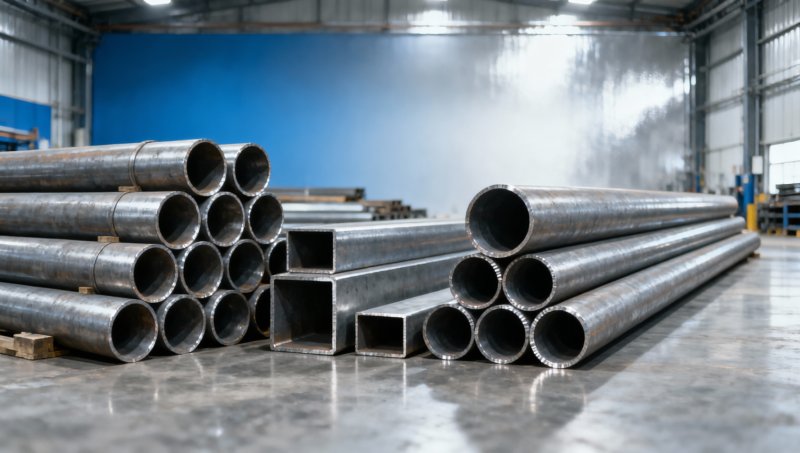
In the steel industry, weight is not only a theoretical value. It directly affects quotation, freight, loading plans, fabrication cost, and structural evaluation. For information researchers, operators, technical reviewers, procurement teams, project managers, and distributors, a fast steel tube weight calculation helps avoid delays during the first 24–48 hours of inquiry and technical comparison.
For hollow sections, even a small difference in wall thickness can create a visible gap in total tonnage across medium or large orders. On a project with 20–50 tons of tubing, an incorrect estimate can influence transport selection, packaging method, crane arrangement, and cost control. That is why steel tube weight is one of the first screening indicators in B2B steel sourcing.
It also matters for quality and safety personnel. When actual delivered weight differs too much from the expected theoretical weight, the issue may point to tolerance deviation, wrong grade substitution, or dimensional inconsistency. A fast check supports receiving inspection, inventory counting, and fabrication planning before material enters production.
For global buyers, weight affects more than product cost. It influences container loading, customs documents, inland handling, and project sequencing. A structural steel manufacturer with export experience usually supports buyers by confirming dimensions, standards, and tonnage early, especially when the project follows ASTM, EN, JIS, or GB requirements.
Who should calculate steel tube weight quickly?
- Procurement teams comparing 3–5 supplier quotations based on unit price, tonnage, and freight terms.
- Engineers checking whether a selected tube size fits structural load assumptions and fabrication plans.
- Warehouse, QA, and site personnel verifying receiving quantities and planning lifting or storage arrangements.
- Distributors and agents preparing fast offers for standard lengths such as 6 m, 9 m, or 12 m.
A simple and reliable weight method reduces sourcing risk. For companies handling repeated export orders, it also improves communication between technical teams, sales teams, and end users, because everyone works from the same mass basis per meter and per piece.
How to calculate steel tube weight fast and correctly
The most practical way is to calculate the theoretical weight per meter from the tube cross-section area and then multiply it by total length. For carbon steel, the common density used in daily engineering is 7.85 g/cm³, which is equivalent to about 7850 kg/m³. This is the standard shortcut behind most steel tube weight charts.
For round steel tube, the simplified formula is: Weight per meter = 0.02466 × wall thickness × (outside diameter − wall thickness). In this formula, diameter and thickness are in millimeters, and the result is in kilograms per meter. It is widely used for fast quotation and preliminary evaluation.
For square and rectangular tube, the idea is the same: calculate the hollow section area first, then multiply by density. In fast field work, many buyers and operators use standard tables, but understanding the formula remains valuable because non-standard sizes, OEM dimensions, and tolerance checks often require manual confirmation within 5–10 minutes.
The main variables are outside diameter or side dimensions, wall thickness, section shape, material density, and length. If the tube is galvanized, coated, or made from a special alloy, the theoretical base weight still starts from the steel section itself, while finishing layers are usually considered separately for cost and handling decisions.
Fast formulas used in daily steel sourcing
The table below gives common fast-reference formulas and what each one is best used for. This is useful when procurement and technical teams need to review tube weight, compare section types, and confirm whether a supplier quote matches the expected tonnage.
These formulas are effective for theoretical weight. In actual transactions, buyers should also ask about dimensional tolerance, production standard, and whether the quote is based on theoretical weight or actual weighbridge weight. That distinction can affect settlement, especially in repeat orders, dealer supply, or high-volume export shipments.
A quick round tube example
Assume a round tube has an outside diameter of 114 mm and wall thickness of 4 mm. The formula gives 0.02466 × 4 × (114 − 4) = about 10.85 kg/m. If one piece is 6 m long, the weight is about 65.1 kg. For 100 pieces, the theoretical total becomes about 6.51 tons, which is already enough to estimate loading and freight.
This type of quick calculation is especially useful during early-stage commercial discussions. Instead of waiting for a full BOM review, buyers can compare two or three wall-thickness options immediately and see how much the tonnage changes before requesting a formal offer.
What factors change steel tube weight and where do buyers make mistakes?
The biggest factors are diameter or section size, wall thickness, total length, and manufacturing tolerance. A 1 mm change in wall thickness can significantly raise the total mass on larger diameters. In projects with repeated lengths such as 6 m, 9 m, and 12 m, the total difference accumulates quickly and can affect transport mode or monthly procurement budget.
Another common issue is confusing tube, pipe, and solid bar calculations. Some users search by steel rod diameter and then apply the wrong formula to hollow sections. That creates obvious overestimation. Operators and technical evaluators should verify whether the section is hollow, seamless, welded, square, rectangular, or round before using any weight formula.
Buyers also overlook coating and specification status. Galvanizing, painting, or special lining do not usually redefine the steel section’s theoretical weight, but they can add handling mass and affect total shipment planning. For corrosion-resistant pipes in marine or industrial environments, both base steel weight and surface treatment should be considered during final logistics review.
At the compliance level, standards matter. Material under ASTM, EN, JIS, or GB may allow different dimensional tolerances or delivery rules. A responsible structural steel supplier should clarify whether weight is theoretical, calculated from nominal dimensions, or confirmed during shipment packing and inspection.
Common buyer mistakes and how to avoid them
The table below summarizes frequent errors made by sourcing teams, project managers, and distributors when estimating steel tube weight. It can be used as a fast checklist before RFQ approval, order confirmation, or site receiving.
This comparison shows that fast calculation is useful only when paired with clear dimensional and commercial confirmation. In steel sourcing, speed matters, but correct assumptions matter more. A 3-point check of dimensions, standard, and settlement basis can prevent many routine disputes.
A related product perspective for marine and deep foundation work
Weight calculation is also critical when buyers compare tubes with other structural steel products used in retaining, cofferdam, or deep-water construction. For example, project teams reviewing section mass, transport feasibility, and installation sequence may also evaluate Steel Sheet Piles for applications such as deep water construction and cofferdam formation.
Typical available grades include S275, S355, S390, S430, SY295, SY390, and ASTM A690, with production standards such as EN10248, EN10249, JIS5528, JIS5523, and ASTM. Buyers often compare these products with tubular solutions when high strength, waterproof performance, reusable use cycles, and long single lengths up to over 80 m are relevant to the project plan.
For technical and commercial teams, the lesson is the same: always connect section shape, weight, application scene, and installation method. A cheaper unit price may not create the best project outcome if transport, penetration performance in hard soil layers, or marine construction requirements are not aligned.
How to choose the right calculation method for quotation, logistics, and project control
Different users need different levels of precision. For first-round quotation, a fast theoretical formula is usually enough. For final procurement approval, the team should confirm nominal dimensions, standard, piece length, quantity, and settlement basis. For site execution, actual packing list weight and loading layout become more important than formula alone.
A practical B2B process often has 4 steps: define section type, calculate kg/m, convert to kg/piece by length, and summarize total tonnage by order. This method works well for small trial lots, medium project batches, and regular monthly distribution supply. It also helps decision-makers compare budget options without losing technical control.
When the project includes customized steel components, cold formed profiles, channels, beams, or multiple hollow sections, a supplier with integrated manufacturing support can reduce coordination time. That matters when delivery windows are tight, such as 2–4 weeks for standard scheduling or phased shipment arrangements for larger export projects.
Hongteng Fengda supports this process through structural steel manufacturing and export experience for global construction, industrial, and manufacturing buyers. With product coverage across angle steel, channel steel, steel beams, cold formed steel profiles, and customized structural steel components, the team can assist with standard specification review as well as OEM dimension confirmation under ASTM, EN, JIS, and GB frameworks.
A practical selection checklist before you approve an order
- Confirm whether the item is round, square, rectangular, welded, or seamless tube. This determines the correct formula and comparison basis.
- Check 5 key dimensions and terms: outside size, wall thickness, length, quantity, and standard.
- Ask whether the quote is based on theoretical weight, actual weight, or piece price. This avoids later settlement confusion.
- Review transport implications, especially when total order size approaches container loading thresholds or requires special lifting.
- For export projects, confirm documentation, inspection expectations, and lead time stage by stage before PO release.
This checklist is especially useful for procurement managers, business evaluators, and enterprise decision-makers who must balance technical fit, budget, and delivery reliability. A faster quote is helpful, but a complete purchasing decision usually depends on 3 core factors: accuracy, compliance, and schedule confidence.
When should you ask for supplier support instead of self-calculating?
You should ask for supplier confirmation when dimensions are non-standard, material grades vary by region, surface treatment changes handling mass, or the order includes mixed products in one shipment. In these cases, the best approach is to combine formula-based screening with supplier-prepared weight sheets, packing logic, and technical clarification.
This is where an experienced exporter can add value. Reliable production capacity, stable quality control, and clear lead time communication help buyers reduce sourcing risk. For project-driven orders, even a 7–15 day difference in production or documentation readiness can affect downstream construction sequencing.
FAQ: practical questions about steel tube weight, standards, and sourcing
Is theoretical weight enough for procurement?
For the first quotation round, yes. It is usually enough to compare sizes, wall thicknesses, and estimated freight. But before final PO approval, buyers should confirm whether settlement follows theoretical weight, actual shipment weight, or fixed piece quantity. This matters more on larger orders, repeated monthly supply, and projects with strict receiving procedures.
How accurate is the fast formula in daily work?
It is accurate enough for routine commercial and engineering estimation when nominal dimensions are clear. The main variation comes from tolerance, standard, and actual production condition. For most early-stage evaluations, the formula provides a strong basis within normal dimensional practice, but final acceptance should still use approved documents and inspection logic.
What should quality teams check when delivered weight looks unusual?
Start with 4 items: section type, measured dimensions, applicable standard, and settlement basis. Then check packing list, quantity, and random physical measurement. If the issue remains, review whether wall thickness tolerance, mixed batch supply, or product substitution has occurred. This sequence is practical for receiving control and supplier communication.
Does steel grade change the weight formula?
For most carbon structural steel applications, buyers use the same density basis of about 7850 kg/m³ for fast theoretical calculation. Grade selection such as ASTM, EN, JIS, or GB affects strength, compliance, and application suitability more than it changes day-to-day weight estimation. The formula logic remains broadly the same unless a special alloy is involved.
How fast can a supplier help confirm dimensions and quotation details?
For standard sections and clear specifications, initial review can often be prepared within 1–2 working days. More complex cases involving OEM dimensions, mixed product lists, or export documentation may need additional confirmation time. The key is to provide size, thickness, length, quantity, grade, standard, and destination as early as possible.
Why work with a structural steel manufacturer that understands weight, standards, and delivery
Fast steel tube weight calculation is useful, but project success depends on more than a formula. Buyers also need manufacturing consistency, standards alignment, export coordination, and clear communication across technical and commercial teams. This is especially important when the same order must satisfy engineers, procurement, QA, project managers, and final business approvers at the same time.
Hongteng Fengda, as a structural steel manufacturer and exporter from China, supports global buyers with reliable steel products and customized solutions for construction, industrial, and manufacturing projects. The company supplies standard specifications and OEM solutions across structural steel categories, backed by modern facilities, strict quality control, and familiarity with ASTM, EN, JIS, and GB requirements.
If you are comparing steel tube sizes, checking theoretical weight, planning freight, or reviewing an integrated structural steel package, you can ask for support on 6 practical points: parameter confirmation, product selection, grade and standard matching, delivery schedule, sample support, and quotation communication. This helps shorten internal review time and reduce sourcing uncertainty before order placement.
Contact us if you need help with tube weight calculation, custom section evaluation, export packing logic, or a broader structural steel sourcing plan. A clear inquiry with dimensions, grade, quantity, standard, destination, and target delivery window will make the quotation process faster and more accurate for your team.
Please give us a message


Please enter what you want to find